
Want to Learn Japanese in Monterey? Classes and Resources for Adult Beginners
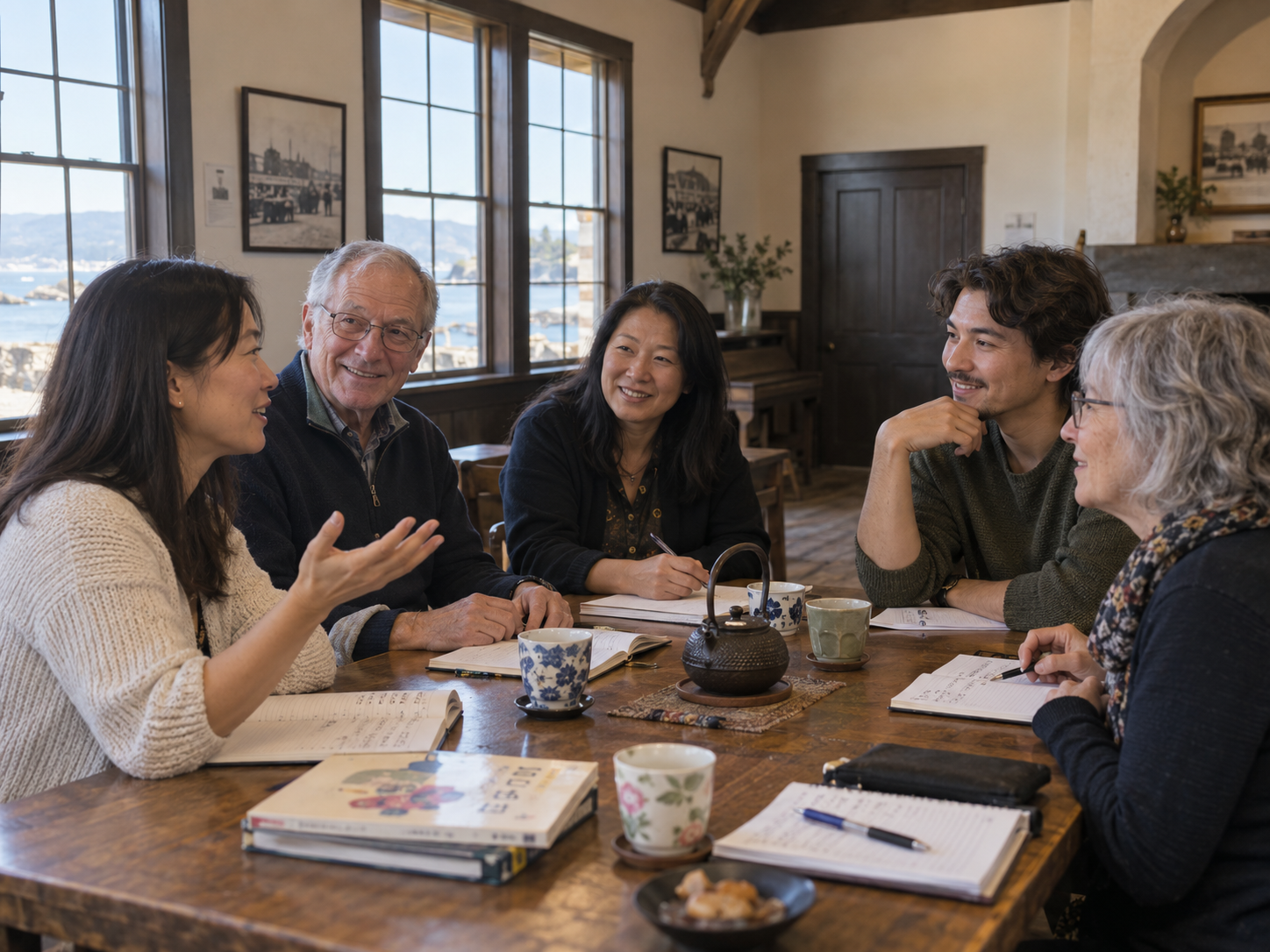
Monterey is one of those places where Japanese learning makes more sense locally than a generic class directory suggests. The area has a university with a serious Japanese program, an active Japanese American community institution, and—unusually for a city of its size—a recurring Japanese conversation group that adults can attend without pretending it is a formal course.
For a beginner, those resources serve different purposes. The useful question is not “Which one is best?” but “Which part of learning can this resource actually give me?”
CSUMB: the strongest academic Japanese option in the area
California State University Monterey Bay offers a Japanese Language & Culture B.A. and minor. Its curriculum goes well beyond a token language elective, combining Japanese language with history, culture, and social context. The program’s stated goal includes developing meaningful proficiency and it maintains partnerships with Japanese universities.
For an enrolled student, this gives a clear long-term sequence. For a working adult who simply wants an evening class, however, a university degree program is not automatically the same thing as community education. Prospective nondegree learners should check current enrollment rules rather than assume any course can be taken casually.
Still, the presence of the program matters even if you never enroll. It means Monterey Bay has faculty, students, cultural activity, and a deeper Japanese-language ecosystem than many similarly sized regions.
Monterey JACL’s monthly Japanese conversation group
The Monterey Peninsula chapter of the Japanese American Citizens League began hosting monthly Japanese Conversation Groups in 2026 at its hall on Adams Street. The group meets on second Saturdays and is explicitly described as conversation practice for all levels rather than a structured language course. It is free, with donations welcomed.
That distinction is a strength. A beginner should not arrive expecting a teacher to explain verb conjugation from the beginning. But once you have some basic Japanese, a low-pressure conversation group gives you a reason to retrieve it.
Teachers often notice that adult students can perform perfectly in a workbook and then struggle when another person says something slightly unexpected. Conversation groups create that productive messiness: accents vary, sentences are incomplete, people ask follow-up questions, and you have to negotiate meaning.
A realistic beginner combination
For many Monterey adults, the best arrangement is a structured class plus local practice. The structured class supplies sequence: kana, basic grammar, core vocabulary, correction, and homework. The JACL conversation group supplies spontaneity and community context.
If your schedule does not fit university coursework, live online classes in Pacific Time are often easier to sustain. A good online beginner class should still require speaking. Watching prerecorded explanations is useful, but it does not train the moment when someone asks 週末は何をしましたか (Shūmatsu wa nani o shimashita ka? — What did you do this weekend?) and you have to answer before the conversation moves on.
Monterey’s Japanese American history adds context
The JACL Hall itself is part of the area’s Japanese American history. In 2026 the Monterey Peninsula JACL celebrated the hall’s centennial, with programs highlighting Japanese arts and community history. The organization also maintains a Heritage Center and local-history material about Monterey’s earlier Japanese fishing and abalone industries.
For a language learner, this is more than background decoration. Words connected with immigration, family, food, occupations, and community institutions make more sense when you encounter the stories attached to them.
What complete beginners should learn first
A first course should give you hiragana early, but it should not make you wait weeks before speaking. You can learn はじめまして, basic self-introductions, numbers, simple questions, and polite verb patterns while kana is still becoming automatic.
Do not worry about mastering hundreds of kanji immediately. The early goal is to create a small network of language you can actually use: これは何ですか (What is this?), どこですか (Where is it?), 好きです (I like it), 分かりません (I don’t understand), and もう一度お願いします (One more time, please).
A class that gives you those structures and makes you use them aloud will prepare you far better for Monterey’s conversation opportunities than months of silent app work.
Polyglottist Language Academy’s online Japanese classes can provide the structured side of that equation for Monterey adults: live small-group instruction, speaking practice, and a level sequence you can combine with local conversation and cultural resources.