
How long does it take to learn Russian fluently?
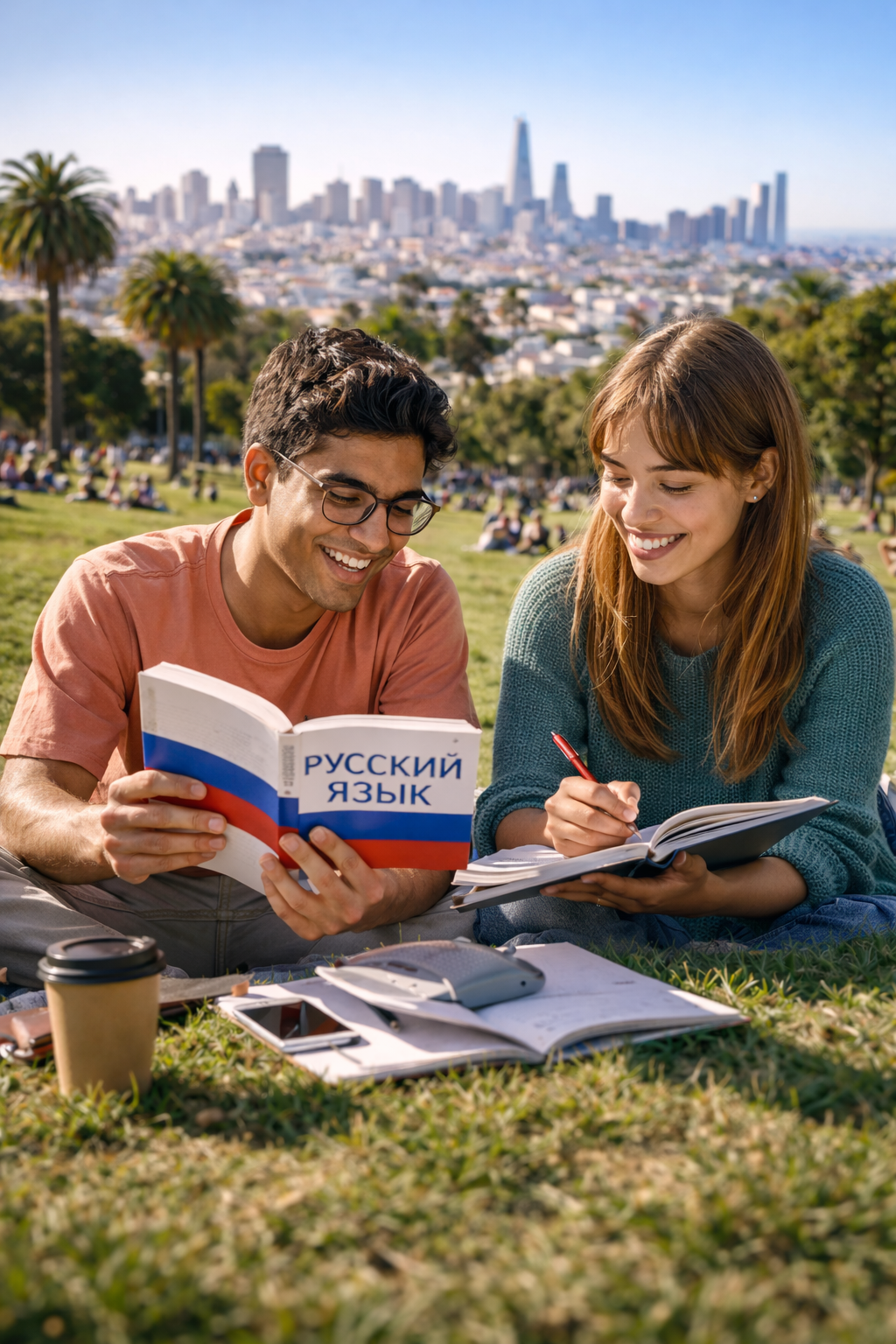
The question of how long it takes to learn Russian fluently sits at the intersection of curiosity, ambition, and realism, because Russian is one of those languages people are drawn to for deep, often personal reasons—yet hesitate to start precisely because they sense, correctly, that it is not a short or superficial journey.
Unlike languages that promise quick conversational wins, Russian asks something different of its learners. It asks for patience, structure, and a willingness to think in new patterns. At the same time, it offers an unusually rich reward: access to a culture, literature, and way of seeing the world that feels intellectually expansive rather than merely practical. Understanding how long this process takes—and what “fluency” actually means in the context of Russian—can make the difference between giving up early and committing with confidence.
This article takes a realistic, experience-based look at how long it takes to learn Russian fluently, what factors speed up or slow down progress, and what learners can expect at different stages of the journey. If you are asking how long does it take to learn Russian fluently, or how long to become fluent in Russian, the answer depends on hours invested, learning method, and your definition of fluency—but there are reliable ranges we can examine. Rather than offering optimistic shortcuts or intimidating estimates, the goal here is clarity.
What Does “Fluent” Mean When Learning Russian?
Before talking about timelines, it’s essential to clarify what fluency actually means. Fluency is not a single, fixed endpoint. In Russian, as in any language, it exists on a spectrum.
For some learners, fluency means being able to hold everyday conversations without translating in their head. For others, it means reading novels comfortably, understanding films, or working professionally in the language.
In the context of Russian, fluency typically includes:
Understanding spoken Russian at natural speed
Speaking with grammatical accuracy and confidence
Reading newspapers, books, and online content
Writing clearly and appropriately for the situation
Different goals require different timelines, and this distinction matters enormously when asking how long learning will take.
Why Russian Takes Longer Than Many Languages
Russian is considered a Category IV language for English speakers, meaning it requires significantly more time than languages closely related to English.
Several factors contribute to this:
A New Alphabet
Cyrillic is not difficult, but it is unfamiliar. Learning to read confidently usually takes a few weeks, but automatic reading takes longer.
A Case System
Russian nouns change depending on their role in a sentence. This system is logical but requires practice and repetition to internalize.
Verb Aspects
Russian verbs encode whether an action is completed or ongoing. This concept does not map neatly onto English and takes time to master.
Flexible Word Order
Russian allows flexibility in sentence structure, which adds nuance but also complexity.
These elements slow early progress—but they also create a strong foundation once mastered.
The CEFR Levels and Russian Learning Timelines
One of the clearest ways to estimate how long it takes to learn Russian fluently is by looking at CEFR levels (A1–C2) alongside realistic time commitments.
A1–A2: Foundations and Survival (0–300 Hours)
At this stage, learners focus on Cyrillic reading, pronunciation, core grammar, and everyday vocabulary. Most learners can reach A2 with approximately 250–300 hours of guided study and practice.
This typically translates to:
6–8 months of steady study at 10–12 hours per week
9–12 months at a lighter pace
B1: Conversational Independence (400–600 Hours)
Reaching B1 means you can hold conversations, understand the main idea of spoken Russian, and function independently in familiar situations.
For most learners, B1 arrives after 500–600 total study hours, usually around the one-year mark with consistent practice.
B2: Functional Fluency (700–1,000 Hours)
B2 is often what people mean when they ask how long it takes to become fluent in Russian. At this level, learners can follow films, read articles comfortably, and express complex ideas.
Most learners reach B2 after 800–1,000 hours of combined instruction and exposure, typically over 2–3 years.
C1–C2: Advanced Fluency (1,200–2,000+ Hours)
Advanced fluency requires immersion, extensive reading, and long-term engagement. This level often takes 3–5+ years, depending on intensity and goals.
How Study Method Changes the Timeline
When people ask how long does it take to learn Russian fluently, the answer changes dramatically depending on study method.
FSI Estimates vs. Real Learners
The U.S. Foreign Service Institute (FSI) estimates that Russian requires approximately 1,100 classroom hours to reach professional working proficiency. This figure assumes intensive, daily instruction.
For real learners balancing work, studies, and life, this usually translates to:
2–3 years of focused, consistent study for strong fluency
Longer timelines for casual or irregular learners
FSI estimates provide a useful benchmark, but most adult learners progress through a combination of classes, self-study, and exposure rather than full-time immersion.
Not all study methods are equal. The way you learn Russian matters as much as how long you study.
Classroom or Live Online Instruction
Structured instruction accelerates progress by:
Explaining grammar clearly
Correcting errors early
Providing guided speaking practice
Self-Study Alone
Self-study can work, but progress is often slower and less consistent.
Immersion
Living in a Russian-speaking environment speeds up listening and speaking, but does not replace structured study.
The fastest progress usually comes from combining guided instruction with regular exposure.
How Much Time Should You Study Each Week?
Consistency matters more than intensity. Typical progress looks like this:
2–3 hours/week: Slow but steady progress
4–6 hours/week: Solid progress
8–10 hours/week: Rapid improvement
Short daily practice is more effective than occasional long sessions.
Adult Learners vs. Younger Learners
Adults often worry that age makes language learning harder. In reality, adults often learn Russian more efficiently than younger learners because they:
Understand grammar explanations
Apply learning strategies consciously
Stay motivated by clear goals
What adults lack in time, they often make up for in focus.
Common Myths About Learning Russian
“You Must Live in Russia to Be Fluent”
Not true. Many learners reach high levels through online study and media exposure.
“Russian Grammar Is Impossible”
It is systematic, not impossible.
“Fluency Means Perfection”
Fluent speakers still make mistakes.
What Progress Feels Like Over Time
Learning Russian rarely feels linear. Early stages often feel slow, with heavy cognitive load and frequent uncertainty. This is normal.
Between A2 and B1, learners often experience their first major breakthrough—comprehension improves, patterns repeat, and speaking becomes less effortful.
Between B1 and B2, fluency begins to feel real. Learners stop translating word by word and start thinking directly in Russian. This is typically when learners feel the answer to how long does it take to learn Russian fluently has finally become tangible.
Learning Russian often feels slow at first, then suddenly faster.
Early stages involve effort and memorization. Later stages feel more intuitive as patterns repeat.
Most learners report a breakthrough moment around the B1 level.
How Motivation Affects Learning Speed
Learners who connect Russian to personal interests—literature, travel, culture—progress faster than those studying abstractly.
Enjoyment sustains consistency.
FAQs: How Long Does It Take to Learn Russian Fluently?
How long does it take to become conversational in Russian?
Many learners reach conversational ability in 9–12 months.
Can I become fluent in Russian in one year?
Functional fluency usually takes longer, but strong foundations can be built in a year.
Is Russian harder than other languages?
For English speakers, yes—but it is also highly logical.
Is daily study necessary?
Daily or near-daily exposure leads to faster progress.
Can online classes really work?
Yes. Live online instruction is highly effective.
Learn Russian with Polyglottist Language Academy
At Polyglottist Language Academy, we specialize in helping students progress steadily and realistically toward fluency. Our Russian classes combine structured instruction, cultural insight, and consistent speaking practice.
We offer:
Online group Russian classes
Individual lessons tailored to your goals
Experienced instructors
Flexible schedules
👉 Sign up for Russian classes at Polyglottist Language Academy and start your journey toward real fluency today.
Continue Exploring Russian Language & Culture
If you enjoyed this article, you may also want to explore: