
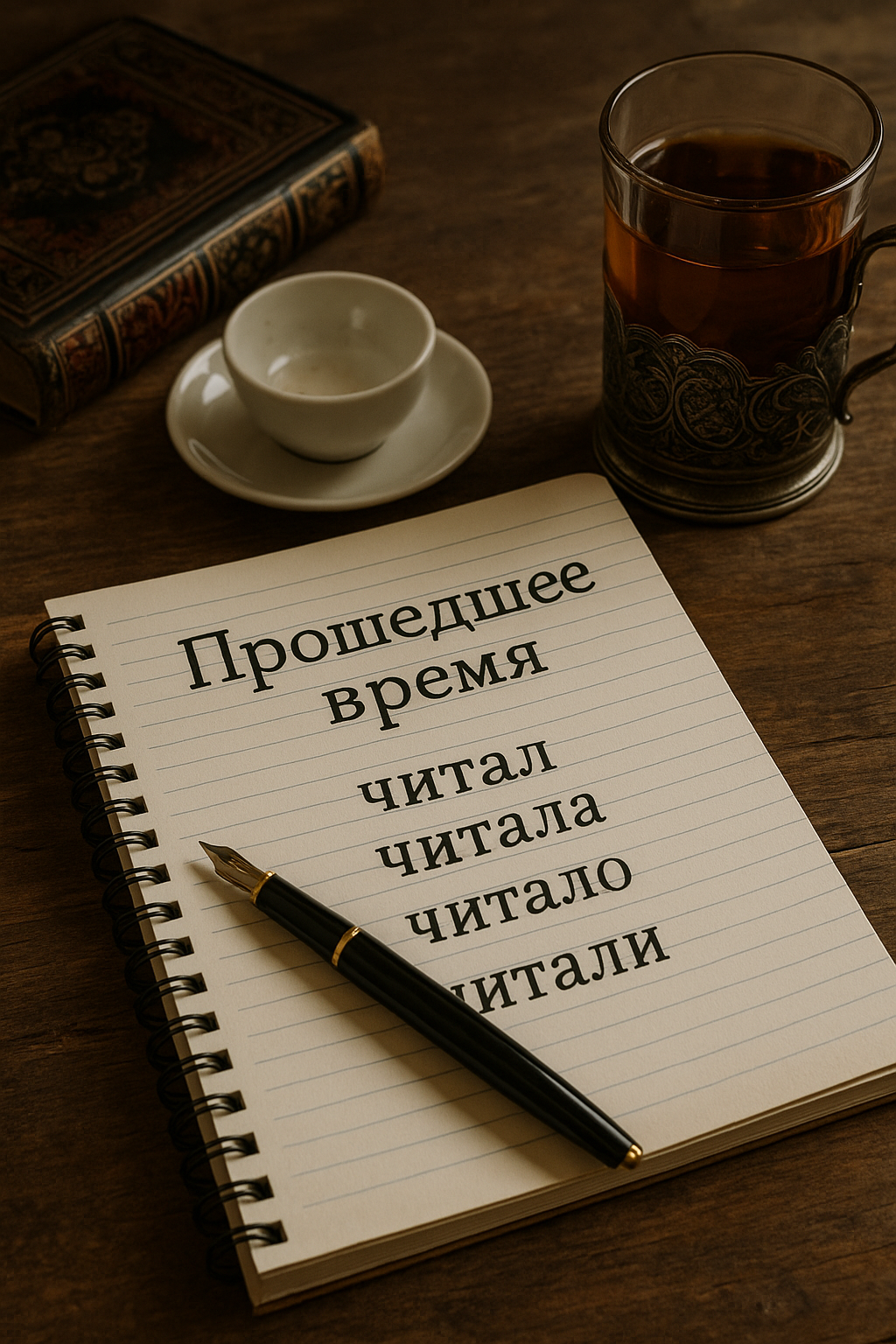
Learning Russian often feels like opening a door into a parallel world where familiar concepts take on new shapes, new sounds, and new logics. For English speakers, Russian verbs can seem like a particular challenge—not because they are inherently “hard,” but because they follow patterns that require you to step outside the habits of your own language. Among the first hurdles that learners encounter is the past tense. At first glance, it looks deceptively simple: Russian doesn’t have a million different conjugations the way English does (“I walked,” “you walked,” “he walked,” “we walked”), nor does it require elaborate auxiliary verbs like “did” or “have.” Instead, the Russian past tense is built in a way that is refreshingly straightforward, yet full of nuance once you dive deeper.
In fact, understanding how to form the past tense in Russian gives you a glimpse into the very soul of the language. It reveals how gender permeates grammar, how verbs behave depending on their stems, and how even so-called “irregular” verbs carry within them an underlying logic. Once you master the mechanics of the past tense, you’ll not only unlock the ability to tell stories in Russian—describing where you went yesterday, what you ate last weekend, or what you studied years ago—you’ll also gain confidence in navigating one of the core building blocks of Russian communication.
This article will walk you step by step through the formation of the past tense in Russian, covering both regular and irregular verbs. We’ll break down endings, gender agreement, and common patterns, as well as highlight exceptions and practical tips. By the end, you’ll be able to form and recognize past tense verbs with ease, making your Russian conversations sound more natural and connected to the rhythm of the language.
The Basics of Russian Past Tense
Unlike English, which often uses auxiliary verbs to indicate past tense, Russian verbs form their past tense using a relatively simple system. The past tense is based on the past stem of the verb, plus endings that agree with the gender and number of the subject.
The essential steps are:
Find the past stem of the verb.
To do this, take the infinitive form of the verb and remove the ending -ть.
Example: читать (“to read”) → чита-.
Add the suffix -л to the stem.
Example: чита- + -л → читал.
Add gender/number endings:
Masculine singular: no additional ending (читал).
Feminine singular: add -а (читала).
Neuter singular: add -о (читало).
Plural (all genders): add -и (читали).
So, the verb читать (“to read”) becomes:
Он читал (He read)
Она читала (She read)
Оно читало (It read)
Они читали (They read)
That’s it—at least for regular verbs.
Past Tense Endings in Detail
Here’s a concise table of endings for clarity:
SubjectEndingExample (делать – to do)Masculine singular-лделалFeminine singular-ладелалаNeuter singular-лоделалоPlural-лиделали
Notice how simple the pattern is: everything revolves around the -л suffix, with minor modifications depending on gender and number.
Gender Agreement in the Past Tense
Russian verbs in the past tense agree with the subject not in person (like in the present tense) but in gender and number. This is one of the most striking features for learners.
Masculine subjects: он читал, мой брат работал
Feminine subjects: она читала, моя сестра работала
Neuter subjects: моё письмо пришло
Plural subjects: они читали, мои друзья работали
This is why learning Russian past tense feels intuitive once you embrace the gendered nature of the language. You don’t say “I read” the same way regardless of who’s speaking; instead, you say я читал if you’re male and я читала if you’re female.
Past Tense of Reflexive Verbs
When forming the past tense of reflexive verbs (verbs ending in -ся or -сь), you simply add the reflexive particle after the past tense form.
Мы встретились – We met each other.
Она училась – She studied.
Они смеялись – They laughed.
Irregular Verbs in the Past Tense
While most Russian verbs follow the regular pattern of dropping -ть and adding -л + ending, a few common verbs have irregular past tense forms. Let’s look at the most important ones:
1. быть (to be)
Он был (He was)
Она была (She was)
Оно было (It was)
Они были (They were)
This verb is unusual because its past tense is formed without the typical stem + -л system.
2. идти (to go, on foot)
Он шёл (He went)
Она шла (She went)
Оно шло (It went)
Они шли (They went)
Notice the vowel change in the stem (ид- → шёл).
3. есть (to eat)
Он ел
Она ела
Оно ело
Они ели
This verb drops its infinitive stem and uses a special past form.
4. дать (to give)
Он дал
Она дала
Оно дало
Они дали
Here, the stress shifts in the feminine singular: дала́.
Stress and Pronunciation in the Past Tense
One of the trickiest parts of the Russian past tense is not forming the verbs but pronouncing them with the correct stress. Stress can fall on the stem or the ending, and this sometimes changes the meaning. For example:
Он зво́нил (He was calling repeatedly – imperfective)
Он позвони́л (He called once – perfective)
Stress also matters in verbs like дала́ (she gave), where misplacing the stress could confuse listeners.
Perfective vs. Imperfective Past Tense
Forming the past tense is only half the story; understanding aspect (perfective vs. imperfective) is equally important. Russian doesn’t distinguish between “I was doing” and “I did” by using different tenses—it uses verb aspect.
Imperfective: я читал книгу (I was reading / I used to read).
Perfective: я прочитал книгу (I read the book / I finished reading the book).
Aspect gives Russian its depth and precision in expressing actions in time.
Practical Tips for Mastering the Past Tense
Memorize the irregular verbs early (быть, идти, есть, дать). They appear all the time.
Pay attention to gender agreement, especially when speaking about yourself.
Practice with short stories—describe what you did yesterday, last weekend, or last year.
Work on stress patterns, since they can affect meaning.
Link aspect with past tense—think not just “when” but “how” the action happened.
Extended Examples
Let’s practice with a few verbs:
работать (to work):
Он работал вчера. (He worked yesterday.)
Она работала в банке. (She worked in a bank.)
Оно работало без ошибок. (It worked without mistakes.)
Они работали вместе. (They worked together.)
писать (to write):
Он писал письмо.
Она писала рассказ.
Оно писало текст.
Они писали статьи.
прочитать (perfective of “to read”):
Он прочитал книгу.
Она прочитала письмо.
Оно прочитало сообщение.
Они прочитали газету.
FAQs About Russian Past Tense
Q: Do I always need to indicate gender when I use the past tense in Russian?
Yes. The form of the past tense verb must agree with the subject in gender and number. Even when you use “I,” the verb reflects your gender: я читал (male), я читала (female).
Q: Are there any verbs without a past tense?
Virtually all Russian verbs have a past tense form, but some highly defective verbs (rare, archaic forms) might not. For everyday Russian, you can assume every verb has a past tense.
Q: What’s the difference between был and есть?
Был is the past tense of “to be.” Есть is the present tense of “to be” but is mostly omitted in modern Russian, except when it means “to eat.”
Q: How do I know whether to use perfective or imperfective in the past tense?
Imperfective describes ongoing, repeated, or incomplete actions. Perfective describes completed, one-time actions. Practice is key to internalizing the difference.
Q: Are irregular verbs common in Russian past tense?
Only a handful are irregular. The vast majority of verbs follow the regular -л system.
Conclusion: From Rules to Real Conversation
The Russian past tense is far less intimidating than it first appears. With a simple structure based on the stem + -л system and clear endings for gender and number, it offers a reliable pattern for most verbs. Once you’ve memorized a few irregulars and internalized the logic of aspect, you’ll be ready to tell stories, recall memories, and describe experiences naturally in Russian.
At Polyglottist Language Academy, we believe grammar is not just about rules—it’s about unlocking real communication. If you’d like to go beyond reading articles and actually practice forming the past tense in live conversation with supportive, expert teachers, we invite you to sign up for our Russian classes today. Whether you’re a beginner or already reading Tolstoy in the original, our programs will help you build fluency with confidence.
Continue Your Learning Journey
If you enjoyed this article, you may also want to check out some of our other deep dives into Russian language and culture: