
Why Russian Prefixed Verbs Are Game‑Changers for Language Learners
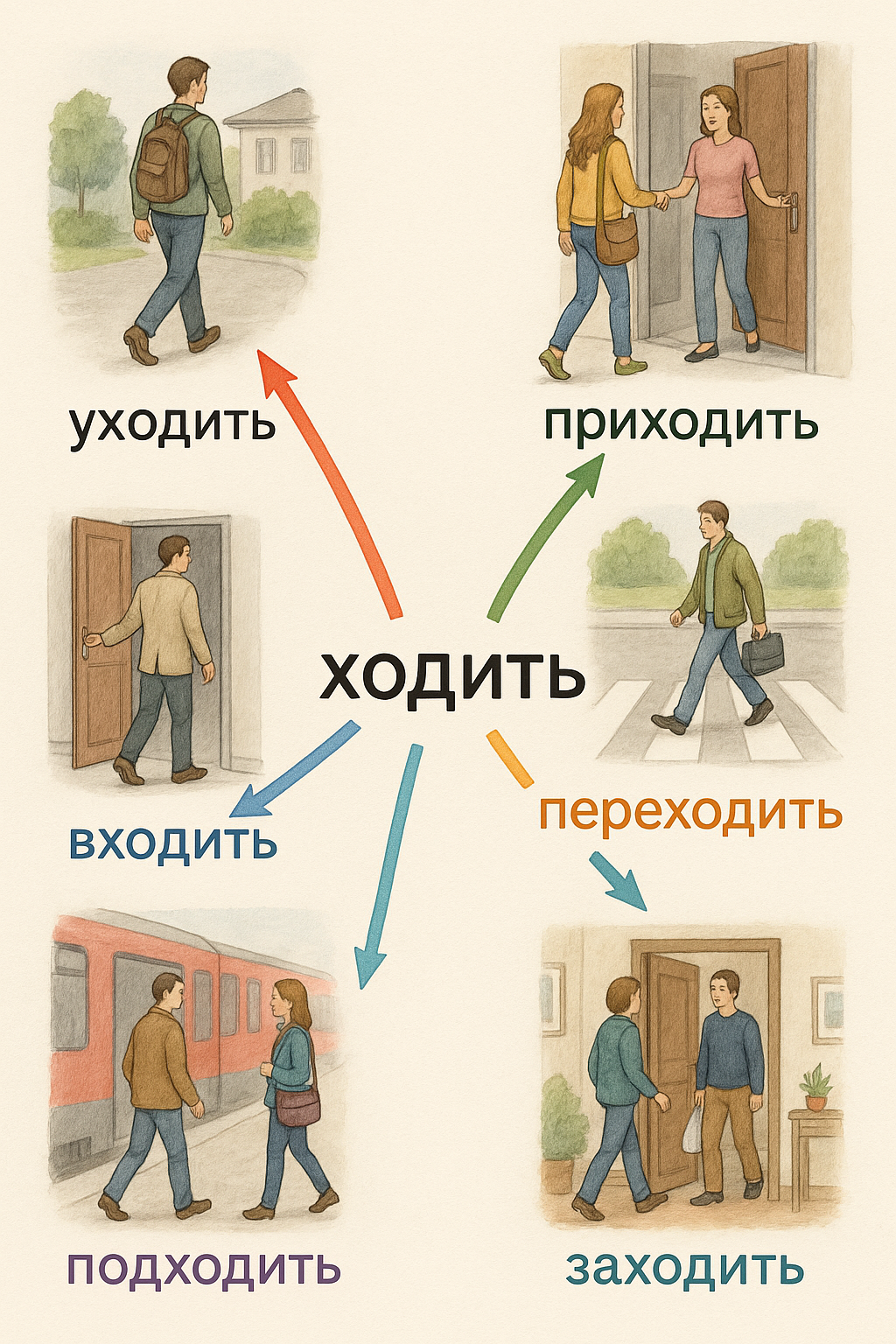
.There comes a moment in every Russian learner’s journey when things begin to click—and more often than not, that moment revolves around one deceptively simple concept: prefixes. These tiny, seemingly innocent syllables, placed in front of familiar verbs, have the power to unlock a new layer of Russian meaning, nuance, and expression that textbooks rarely do justice. Suddenly, verbs that once seemed plain—like идти (to go) or брать (to take)—begin to transform into intricate tools of thought and speech. With just one prefix, идти becomes войти (to enter), уйти (to leave), подойти (to approach), перейти (to cross), and more. The core verb stays, but the prefix flips the action like a switch, often turning it into an entirely different situation. It’s linguistic alchemy—and once you grasp it, your Russian stops sounding like a phrasebook and starts sounding like life.
The real magic of Russian verb prefixes lies not just in vocabulary expansion, but in how they mirror the Russian way of seeing and describing the world. Prefixes aren’t simply add-ons; they’re part of a deeply ingrained linguistic logic—mapping actions in space, time, motion, result, and intention. Where English uses adverbs, auxiliary verbs, or prepositions to describe subtle shades of meaning, Russian often uses a single prefixed verb to encapsulate the entire idea. This economy of expression, once understood, gives you an incredible sense of control and precision when speaking Russian.
Even more powerful is the way these prefixed verbs often take on perfective aspect automatically—helping you master one of the most intimidating parts of Russian grammar in a highly intuitive way. And once you begin to understand how different prefixes work—в- meaning “into,” у- meaning “away,” пере- meaning “across” or “again”—you start to see the logic behind hundreds of words you already know. What once seemed like endless memorization suddenly becomes a system you can navigate.
In this article, we’ll unpack the logic, purpose, and transformative potential of Russian prefixed verbs. We’ll go far beyond textbook definitions and into how they actually work in real-world Russian—how they allow you to express direction, intention, completion, beginnings, and endings all with a single tweak of a word. Whether you’re a beginner looking to fast-track your fluency or an intermediate learner trying to break through a plateau, mastering prefixed verbs could be the upgrade your Russian desperately needs.
Part 1: The Genius of the Russian Verb System
At first glance, Russian verbs can feel overwhelming: aspect (perfective vs. imperfective), conjugations, motion verbs, and then—prefixes. But here's the thing: once you understand how prefixed verbs work, many of those overwhelming parts start to make sense. Prefixed verbs often encode perfective aspect automatically. They give you clear, specific directions—like entering a space (войти) or exiting it (выйти), arriving at a destination (приехать), or beginning a task (начать).
Rather than needing a new root verb to describe a different action, Russian builds out its lexicon by modifying core verbs with a series of prefixes, each rich in spatial and conceptual meaning. That’s efficient, elegant, and incredibly expressive. Once you master a core verb and its possible prefixes, you suddenly have access to an entire constellation of meanings without having to memorize 20 unrelated verbs.
Part 2: Meet the Power Players – Common Russian Prefixes
Let’s break down some of the most common and useful Russian prefixes, not just by translation—but by logic. These are the building blocks of most Russian action:
в- / во- → "into"
войти (to enter), внести (to bring in)вы- → "out of"
выйти (to go out), вынести (to carry out)при- → "arrive" or "come toward"
прийти (to come), привезти (to bring by vehicle)у- → "away from," often with a sense of leaving or disappearance
уйти (to leave), унести (to take away)под- → "approach" or "under"
подойти (to approach), поднести (to bring closer)от- → "away from," often implying distance or detachment
отойти (to step away), отдать (to give back)пере- → "across," "re-" (do again), or "over"
перейти (to cross), перенести (to carry over or reschedule)за- → "behind," "drop by," or "begin"
зайти (to stop by), записать (to write down, start writing)до- → "up to," "reach"
дойти (to reach on foot), дозвониться (to reach by phone)с- → "off," "down," "together"
сойти (to step off), собрать (to gather)
Each of these prefixes interacts with a root verb in logical, sometimes metaphorical ways. The beauty is that once you internalize the sense of a prefix, you can begin predicting new words—even if you’ve never seen them before.
Part 3: Motion Verbs – Where Prefixes Really Shine
Motion verbs are notoriously tricky for learners, and for good reason. Russian doesn’t just have "to go"—it has multiple verbs that mean "to go," depending on how, where, and in what direction. But add a prefix, and suddenly the chaos organizes into clarity.
Take the verb ходить (to go on foot, multi-directional). Add:
в- → входить (to enter on foot)
вы- → выходить (to exit on foot)
при- → приходить (to arrive on foot)
у- → уходить (to leave on foot)
Or ехать (to go by vehicle):
приехать (to arrive by vehicle)
уехать (to leave by vehicle)
въехать (to drive into)
This system of prefixes turns a difficult category into a beautifully structured mental map. Once you get it, you don’t just memorize individual motion verbs—you understand the system behind them.
Part 4: Perfective Power – One Prefix, One Result
Another huge win with prefixed verbs is that most are automatically perfective. In Russian, aspect (perfective vs. imperfective) matters more than tense. Native speakers don’t just say что ты делал? (what were you doing?)—they say ты сделал? (did you do it?). The perfective aspect implies a finished action, and prefixes make that clear.
Compare:
писать (to write) → написать (to write [and finish])
делать (to do) → сделать (to complete doing)
By simply adding a prefix, you not only change the meaning but also flip the aspect switch—an invaluable shortcut in a language obsessed with completion and result.
Part 5: From Literal to Figurative – The Magic of Metaphor
Russian prefixes often begin as literal spatial indicators but evolve into rich metaphorical tools.
Example:
перейти улицу (to cross the street)
перейти на другую работу (to switch to another job)
перейти границу (to cross the border)
Now compare:
перейти границы дозволенного (to cross the limits of what's allowed)
This figurative expansion is everywhere in Russian. Once you grasp a prefix in its concrete sense, you can begin to see how native speakers use it poetically and conceptually. It’s not just language—it’s thought.
Part 6: A Few Traps and Tips
While Russian prefixes are powerful tools, they also come with a few pitfalls:
False friends: Some prefixed verbs look similar but don’t mean what you’d expect. For example, записатьdoesn’t mean "to go behind" (even though за- can mean that)—it means "to write down."
Stress shift: Prefixed verbs often shift the stress in a word, changing pronunciation and sometimes meaning. Don’t rely only on your eyes—train your ears too.
Perfective = no present tense: Most prefixed verbs are perfective, so they don’t have a present tense form. You can’t say я сделаю (I do); instead, it's я делаю (I am doing) vs я сделаю (I will do).
Verbs of motion double trouble: Some verbs change their stem entirely when prefixed. ходить → уйти, приходить → прийти. You’ll need to learn both imperfective and perfective pairs.
But don’t let this scare you. Like any system, the patterns emerge with practice—and soon, the same prefixes that once confused you become your allies.
Part 7: How to Learn Prefixed Verbs Efficiently
Here are smart strategies to help you master prefixed verbs:
Group them by prefix, not by root verb.
Seeing all the verbs that use при- will help you grasp the motion and meaning behind it.Use context-rich example sentences.
Don’t memorize in isolation. Example: Я зашёл в магазин по пути домой. (I stopped by the store on the way home.)Visualize the movement.
Sketch out the meaning of a verb spatially—like войти (arrow pointing inward), выйти (arrow pointing outward).Pair verbs with prepositions.
войти в комнату, выйти из дома—seeing the whole phrase helps clarify how the verb is used.Practice in opposites.
For every в- verb, find its вы- counterpart. For every при-, find an у-. This sharpens your intuition.
FAQs About Russian Prefixed Verbs
Q: Do all Russian verbs take prefixes?
A: No, but many do—especially verbs of motion, communication, and transfer. Some roots resist prefixation, while others generate entire families of words.
Q: Are all prefixed verbs perfective?
A: Most are, but not all. Some are imperfective (like переходить) and have corresponding perfective forms (перейти). You often need to learn these pairs.
Q: Can the same prefix mean different things?
A: Yes! Context is key. For example, за- can mean “start,” “behind,” or “briefly stop by.” Its meaning shifts based on the root verb.
Q: How many prefixed verbs should I learn first?
A: Focus on mastering about 5-10 root verbs (e.g., идти, брать, писать, давать, говорить) and their most common prefixed forms. That alone can give you over 100 useful verbs.
Q: What's the best way to learn them?
A: Repetition in context, visual diagrams, and active use in writing and speech. Apps and flashcards help, but don’t skip real sentences and human interaction.
Why They’re Game-Changers
Russian prefixed verbs aren’t just a quirky grammar rule—they’re the gateway to real fluency. They let you sound precise, natural, and expressive. They help you grasp perfective aspect without memorizing endless rules. They give you tools to think like a Russian speaker.
If you’re feeling stuck in intermediate Russian, diving deep into prefixed verbs could be your turning point. With them, you gain access not just to more words—but to a whole new way of structuring thought.
Ready to Unlock the Full Power of Russian?
At Polyglottist Language Academy, we specialize in teaching Russian the way it's actually spoken—nuanced, vibrant, and full of meaning. Whether you're just getting started or you're ready to tackle complex grammar like prefixed verbs and aspect pairs, our expert instructors are here to guide you.
Join one of our in-person or online Russian classes and take your language learning to the next level—no more textbook Russian. It’s time to think, move, and speak like a native.
👉 Sign up today and discover why so many language lovers choose Polyglottist to master Russian.
Want to explore more about Russian language and culture?
Check out our full collection of articles on the Polyglottist Language Academy Blog, where we dive into everything from why fluent Russian isn’t fast Russian to how to survive a Russian toast and what it’s like to be the only foreigner in a Russian dacha community. Whether you're curious about grammar tips, cultural faux pas, or how Russians navigate public space, our blog offers fresh, engaging insights to support your learning journey.