
Italian Family Dinners: Language and Rituals at the Table
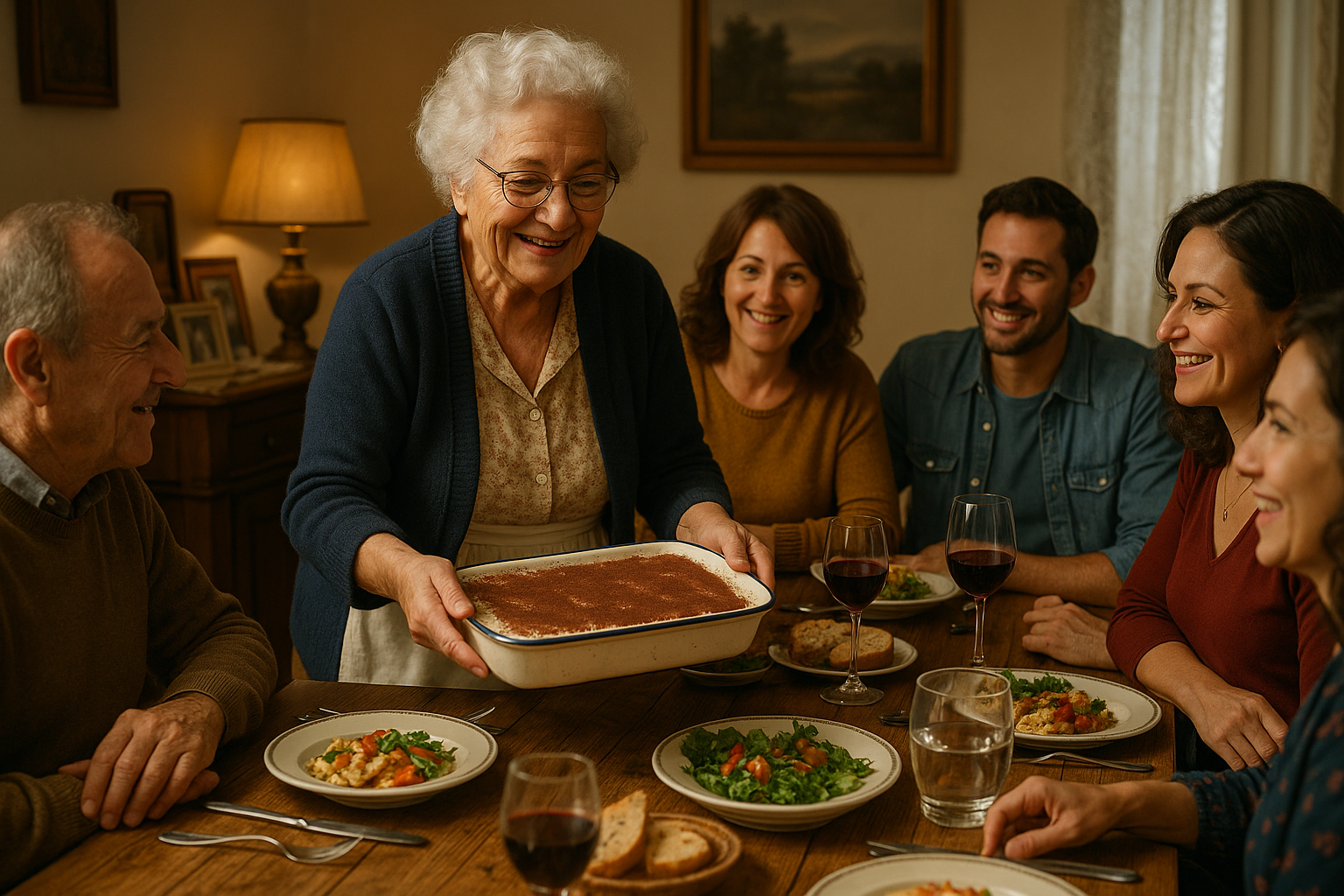
Few experiences capture the heart of Italian culture as vividly as the family dinner. More than a meal, it is a ritual that blends food, language, and tradition into something profoundly meaningful. Italians do not simply sit down to eat—they gather to share, to talk, to argue, to laugh, and to affirm bonds that stretch across generations. The Italian family dinner is both everyday and extraordinary: an ordinary evening event that, repeated over centuries, has become a cornerstone of cultural identity.
What makes Italian dinners unique is not just the food—though the food, of course, is central—but the atmosphere, the timing, and the language surrounding it. Italians often eat later than many cultures, usually around 8 p.m. or later, and the meal unfolds in multiple courses: antipasto, primo, secondo, contorno, and dolce. But more important than structure is the ritual. The table is the place where parents teach children manners and family values, where grandparents tell stories of the past, where siblings joke and bicker, and where conversation flows as richly as the wine.
Historically, the family dinner has been a site of cultural transmission. Recipes, proverbs, and traditions are handed down across the table. The grandmother (nonna) passes her wisdom by serving dishes “the way they’ve always been done.” Parents model gestures of hospitality. Children learn not only how to eat but how to talk, how to listen, and how to be Italian. In rural villages, the family dinner might once have been the only meal of the day when everyone gathered together, making it both nourishing and symbolic. Even in modern urban Italy, despite changing schedules and lifestyles, dinner remains the meal most likely to bring families together.
The rituals of the Italian dinner table also reveal the deep connection between food and language. Italians have a vast vocabulary for the dinner table, from the names of dishes to the idioms used during meals. Phrases like “A tavola!” (To the table!), “Vuoi ancora un po’?” (Do you want some more?), and “Buon appetito!” are part of the soundtrack of Italian family life. And beyond these practical expressions, the dinner table often becomes a site for storytelling and debate—Italians are famous for talking with their hands, and dinner conversations can be as lively as a political forum.
For learners of Italian, understanding family dinners is essential. It’s not just about knowing food words but about entering into a world where language and culture meet. At the table, you encounter real Italian: colloquial expressions, regional dialects, affectionate nicknames, and even playful scolding. Learning the rituals and language of the dinner table helps learners connect with Italians on one of their deepest cultural levels.
In this article, we’ll explore the Italian family dinner in depth—its structure, its cultural role, its linguistic expressions, and its evolution in modern Italy. Along the way, you’ll discover how Italians use food as a language of love, how rituals at the table strengthen identity, and what words you need to know if you’re ever lucky enough to be invited to an Italian family meal.
1. The Structure of an Italian Dinner
Italian dinners are not rushed affairs; they unfold in stages, often with pauses for conversation between courses. While not every family follows the full structure every evening, the traditional order is well-known:
Antipasto: Small appetizers such as cured meats, olives, bruschetta, or cheese.
Primo piatto: A first course, often pasta, risotto, or soup.
Secondo piatto: The main course, typically meat or fish.
Contorno: Side dishes, usually vegetables or salad.
Dolce: Dessert—anything from fruit to elaborate cakes or gelato.
Caffè e digestivo: Espresso, and sometimes a liqueur like grappa or limoncello.
2. Rituals of the Table
Timing: Italians usually eat dinner later than in many countries. In the north, around 8 p.m.; in the south, even later.
Hospitality: The host or nonna insists on second helpings, with phrases like “Mangia, mangia!” (Eat, eat!).
Seating: Elders or heads of the family often have special places at the table.
Conversation: Lively discussions are expected; silence at the table is unusual.
3. Language at the Dinner Table
Common Expressions
A tavola! – To the table!
Buon appetito! – Enjoy your meal!
Vuoi un po’ di più? – Do you want a little more?
È buonissimo! – It’s delicious!
Fai il bravo a tavola. – Behave at the table.
Idioms from the Table
Essere alla frutta – To be at the fruit (to be exhausted, at the end of one’s energy).
Non c’è pane per i tuoi denti – There’s no bread for your teeth (it’s too difficult for you).
Portare a tavola – Literally “to bring to the table,” used metaphorically for contributing something.
4. The Role of Nonna
The Italian grandmother is often the central figure at family dinners. She preserves recipes, cooks in abundance, and ensures that everyone eats enough. Her phrases—“Mangia che sei troppo magro!” (Eat, you’re too thin!)—are part of the dinner soundtrack. She embodies the continuity of tradition and is often the emotional heart of the meal.
5. Regional Variations
Family dinners vary from region to region:
North: Hearty dishes like polenta, risotto, and stews.
Center: Pastas like pici or fettuccine with rich sauces.
South: Seafood, baked pasta, and fried treats.
Islands (Sicily, Sardinia): Dinners rich in seafood, unique breads, and regional desserts.
6. Modern Italian Dinners
Life has changed in Italy—families are smaller, schedules busier—but the tradition persists. Many Italians still prioritize dinner as family time. Even when meals are simplified, the ritual of gathering together remains. Restaurants and trattorie often serve as extensions of the family table, where groups gather for long meals that replicate home rituals.
7. Lessons for Language Learners
Italian family dinners teach more than vocabulary. They show learners how Italians communicate affection through food, how hierarchy is expressed in speech and seating, and how rituals reinforce identity. By learning the language of the table, you learn the culture at its most intimate.
FAQs: ITALIAN FAMILY DINNERS
Q: Do Italians really eat multiple courses every night?
Not always. The full multi-course structure is common on Sundays, holidays, or special occasions. Weeknights may be simpler, but still balanced.
Q: Why do Italians eat so late?
Tradition, climate, and lifestyle. In warmer regions, eating later avoids the heat of the day.
Q: Do Italians always eat together as a family?
Many do, especially for dinner, though modern life makes it harder. Still, the value of shared meals is deeply ingrained.
Q: Is wine always served?
Wine is common, especially among adults, but not obligatory. Children might drink water or diluted wine.
Q: Do Italians really eat pasta every night?
Often yes—though portion sizes are smaller than many foreigners expect. Pasta is a staple but balanced with vegetables and protein.
Q: What should I say if invited to an Italian family dinner?
Always compliment the food: “È buonissimo!” or “Complimenti al cuoco/la cuoca!”
Q: How long do Italian family dinners last?
Usually at least an hour or two, and longer on weekends or holidays.
Q: Are there table manners I should know?
Yes: don’t leave food uneaten without explanation, don’t ask for substitutions, and always thank the cook.
Final Thoughts
Italian family dinners are not just about eating—they are about belonging, continuity, and cultural expression. Around the table, Italians affirm who they are, pass on traditions, and teach younger generations how to live with connection and joy. For language learners, the dinner table is a classroom like no other, full of idioms, gestures, and cultural lessons.
At Polyglottist Language Academy, we believe that learning Italian is about more than mastering grammar—it’s about stepping into the rhythms of daily life. Our courses bring the culture of the table, the vocabulary of food, and the rituals of family into your language learning, so you can experience Italian the way it’s really lived. If you’re ready to deepen your Italian through culture as well as words, sign up for our classes today—online or in-person.
And if this article inspired you, explore more of our cultural guides:
Why Italians Live With Their Parents Longer (And What It Says About Culture)
How Italians Really Eat Pasta (And The Rules Tourists Break)
How Italians Really Speak: Street Italian Vs. Textbook Italian
Italian Language Meets Italian Lifestyle: What You Can Only Learn On The Ground
Learning Italian In San Francisco: Best Places, Classes, And Meetups