
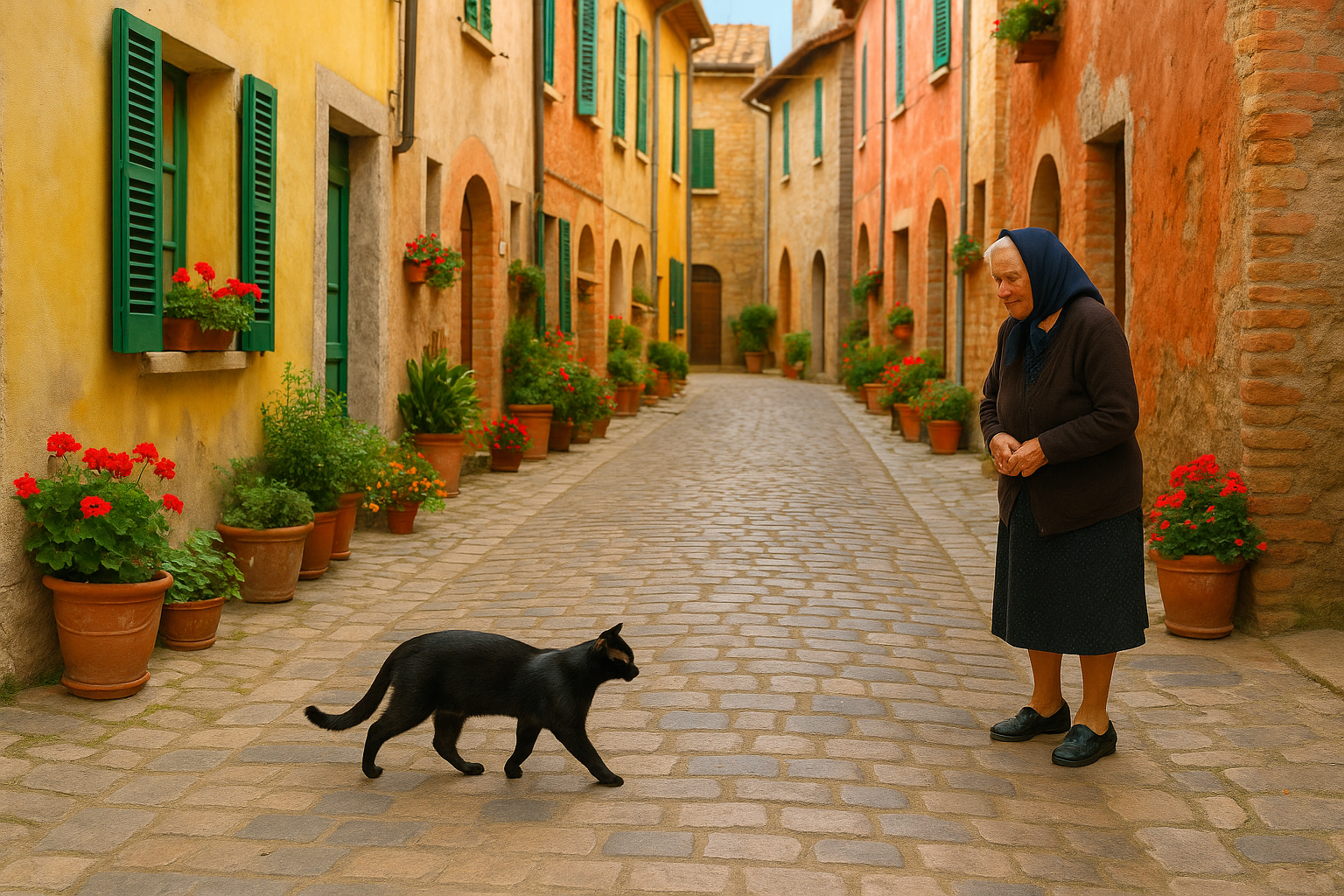
Italy is a country where the modern and the ancient coexist effortlessly, where high-speed trains glide past medieval villages and where cutting-edge design thrives alongside age-old rituals. But beneath the surface of contemporary life runs a deep current of tradition, belief, and folklore—and one of the most intriguing expressions of this cultural inheritance is superstition. Italians may be pragmatic in business and sophisticated in art, but when it comes to fate, luck, and omens, many still follow customs passed down through generations. Whether it’s touching iron to ward off misfortune, avoiding the number 17, or never placing a hat on a bed, Italian superstitions reveal a worldview where language, ritual, and everyday life intertwine.
Superstitions in Italy are not simply relics of the past. They are alive, woven into the rhythms of family gatherings, holidays, and even casual conversations. Some are taken seriously, others more lightheartedly, but all of them say something essential about Italian culture: a culture that respects the unseen, acknowledges the power of tradition, and finds poetic ways to express fear, hope, and luck. And because language is the vessel of culture, Italian is filled with idioms, phrases, and expressions that preserve and transmit these beliefs. To learn Italian superstitions is not only to understand quirky customs but also to unlock a fascinating layer of the language.
The Italian word for superstition, superstizione, comes from Latin, meaning “to stand over” or “to remain.” It suggests an idea or practice that has “remained” despite centuries of change, stubbornly persisting in the collective imagination. These practices are often tied to religion, pagan rituals, and local folklore, with each region boasting its own unique traditions. In the north, you’ll find beliefs about owls and cats; in the south, the famous “evil eye” (malocchio) holds sway; and across the entire peninsula, symbols like horns, salt, and gestures are used to guard against bad fortune.
For Italian learners, superstitions offer a playful yet meaningful way to expand vocabulary. Words like sfortuna (bad luck), fortuna (good luck), malocchio (evil eye), corna (horns), and talismano (talisman) don’t just enrich your word bank—they give you access to the cultural stories that make these words come alive. Understanding these expressions means you won’t be baffled when someone warns you against passare sotto una scala (walking under a ladder) or jokes that il numero 17 porta male (the number 17 brings bad luck).
In this article, we’ll explore Italian superstitions region by region, symbol by symbol, and phrase by phrase. We’ll uncover the cultural logic behind them, the vocabulary Italians use to talk about them, and the reasons why, even in a modern world, these ancient beliefs continue to shape daily life.
1. The Vocabulary of Luck and Superstition
Learning the language of superstition begins with some essential words and expressions:
La fortuna – luck, fortune
La sfortuna – bad luck, misfortune
Portare fortuna – to bring luck
Portare sfortuna – to bring bad luck
Il malocchio – the evil eye
Uno scongiuro – an act to ward off bad luck
Un talismano / un amuleto – a charm or amulet
Fare le corna – to make the horn gesture (against bad luck)
2. The Number 17
In many cultures, 13 is the unlucky number, but in Italy, it’s 17 that people avoid. Why? In Roman numerals, XVII can be rearranged as VIXI, which in Latin means “I have lived”—a euphemism for death. Hotels may skip room 17, and many Italians will avoid scheduling important events on the 17th of a month, especially Friday the 17th.
3. The Malocchio: The Evil Eye
The fear of the evil eye, or malocchio, is one of the most powerful Italian superstitions. It is believed that envy or a jealous look can cause misfortune. To protect against it, Italians use amulets like the corno (red horn-shaped charm) or perform rituals. Language around the malocchio is rich:
Ti ha fatto il malocchio! – They gave you the evil eye!
Devo fare le corna. – I need to make the horns (gesture) to ward it off.
4. Touch Iron, Not Wood
While English speakers knock on wood for good luck, Italians say toccare ferro—to touch iron. The origins go back to swords and armor, symbols of strength and protection.
5. Hats on the Bed and Other Everyday Omens
Hats on the bed: Said to bring bad luck, possibly linked to the past when priests placed their hats on beds of the dying.
Spilling salt: Brings misfortune unless you throw some over your left shoulder.
Bread upside down: Never place bread face-down on a table—it disrespects the sacredness of food.
6. Regional Superstitions
Southern Italy: Strong belief in the malocchio and the protective power of the corno.
Veneto: Owls are considered harbingers of bad luck.
Naples: Theater people fear saying the word “Macbeth,” similar to English traditions, but also believe in the luck-bringing power of red underwear on New Year’s Eve.
Sicily: Myths tied to volcanoes and natural phenomena influence local superstitions.
7. Language and Idioms of Superstition
Italian expressions often reference luck:
Essere nato con la camicia – To be born with a shirt (to be very lucky).
Andare a gonfie vele – To go with full sails (things are going very well).
Non dire gatto se non ce l’hai nel sacco – Don’t say cat if you don’t have it in the bag (don’t count your chickens before they hatch).
8. Superstitions in Modern Italy
Do Italians still believe? Many laugh them off, but habits persist. Even skeptical Italians may avoid placing a hat on the bed or will slip on red underwear for New Year’s just in case. Superstitions are less about literal belief and more about tradition, habit, and the sense of participating in something shared.
FAQs: ITALIAN SUPERSTITIONS
Q: Do Italians really believe in superstitions?
Some do, others follow them as cultural traditions or for fun.
Q: Why is 17 unlucky in Italy?
Because XVII can be rearranged as VIXI in Latin, meaning “I have lived”—a symbol of death.
Q: What’s the Italian version of “knock on wood”?
Toccare ferro – “to touch iron.”
Q: What’s the most famous protective symbol in Italy?
The corno (horn-shaped amulet), especially in the south.
Q: Do Italians still believe in the evil eye?
Yes, particularly in rural or southern areas, though often mixed with humor or ritual.
Q: Why can’t you put a hat on a bed?
It’s considered bad luck, connected to old traditions of death and priests’ visits.
Q: Do superstitions vary by region?
Yes. While some are national, many are tied to local folklore and history.
Q: How can learning about superstitions help language learners?
It gives cultural context to idioms, phrases, and everyday expressions Italians still use.
Final Thoughts
Italian superstitions are more than quirky customs—they are cultural stories, linguistic treasures, and windows into how Italians think about fate, luck, and tradition. Whether or not Italians believe in them literally, these practices endure because they connect people to the past, create shared rituals in the present, and enrich the language with expressive idioms.
At Polyglottist Language Academy, we know that language is never just about grammar—it’s about culture, history, and worldview. That’s why our Italian courses explore topics like superstitions, idioms, and traditions, giving you the skills to speak Italian in ways that resonate with real life. If you’re ready to learn Italian in a way that’s as cultural as it is linguistic, sign up today for our classes—online or in-person.
And if you enjoyed this article, don’t miss more of our cultural explorations:
Why Italians Live With Their Parents Longer (And What It Says About Culture)
How Italians Really Eat Pasta (And The Rules Tourists Break)
How Italians Really Speak: Street Italian Vs. Textbook Italian
Italian Language Meets Italian Lifestyle: What You Can Only Learn On The Ground
Learning Italian In San Francisco: Best Places, Classes, And Meetups