
Few topics stir as much passion, debate, and—let’s be honest—misinformation as Italian food. For many Americans, Italian cuisine is synonymous with generous plates of spaghetti drenched in marinara sauce, garlic bread as an obligatory side, and endless variations of “fettuccine Alfredo.” These dishes, while delicious in their own right, often have very little to do with the way Italians actually eat in Italy. Somewhere between immigration waves, Hollywood movies, and clever restaurant marketing, Italian food became an American institution—but also a victim of countless myths.
Italian cuisine is one of the most romanticized and misunderstood in the world, largely because it traveled so far from its roots. Authentic Italian cooking is not about complexity or extravagance; it’s about simplicity, seasonality, and respect for ingredients. And yet, when you walk into many Italian-themed restaurants in the United States, you’ll encounter dishes and customs that would leave most Italians scratching their heads. Think of spaghetti with meatballs, Caesar salad before your meal, or ordering a cappuccino after dinner. To an Italian, these things aren’t just unusual—they’re almost unthinkable.
So why do these myths persist? Partly because Italian immigrants adapted their cooking to what was available in America, and partly because American culture embraced its own version of “Italian” comfort food. Over time, these adaptations became the norm—and people assumed that’s how it’s always been. But if you’ve ever traveled to Italy, you know the experience is different: lighter sauces, smaller portions, pasta as a first course (not the main event), and coffee that comes in tiny, powerful doses.
In this article, we’re diving deep into the most common Italian food myths Americans believe—and the truth behind them. Whether you’re a foodie planning your first trip to Italy, a home cook aiming for authenticity, or simply curious about cultural differences, this guide will open your eyes (and maybe change your grocery list).
Let’s separate fact from fiction.
MYTH #1: Spaghetti and Meatballs is the Quintessential Italian Dish
If you walk into a trattoria in Rome and ask for spaghetti with meatballs, the waiter will likely smile politely—because in Italy, that dish does not exist. Meatballs, or polpette, are indeed part of Italian cuisine, but they’re served as a second course (secondo piatto), not on top of pasta. The idea of combining them into one hearty plate came from Italian immigrants in the United States in the early 20th century, who were adjusting to the abundance of meat and flour available in their new home.
The real story: In Italy, pasta and meat rarely share the same plate. Pasta is a primo, usually followed by a secondo of meat or fish. The American version of spaghetti and meatballs is a brilliant example of cultural adaptation—a fusion dish created to satisfy both Italian traditions and American appetites for bigger, heartier meals.
MYTH #2: Italians Eat Garlic Bread with Everything
Garlic bread, dripping with butter and flecked with parsley, is a beloved side dish in the U.S.—but don’t expect to find it in Italy. Italians love bread, of course, but they serve it plain, often without even butter, and certainly without garlic or herbs. Bread in Italy is meant to accompany the meal, to mop up sauce (a practice called fare la scarpetta), not to overpower it.
The real story: The closest thing to garlic bread in Italy is bruschetta, which is grilled bread rubbed with fresh garlic and drizzled with olive oil—sometimes topped with tomatoes. It’s simple, rustic, and worlds away from the cheesy, buttery loaf Americans know.
MYTH #3: Fettuccine Alfredo is a Classic Italian Dish
Walk into an Italian restaurant in the U.S., and fettuccine Alfredo will likely be a menu staple. Ask for it in Florence, and you’ll get puzzled looks. While the dish has Italian roots—it was created in Rome in the early 20th century—it was never a national staple. The original fettuccine al burro was just pasta tossed with butter and Parmigiano-Reggiano, served to soothe an actress’s upset stomach. When Hollywood stars tasted it and raved about it in America, the dish exploded in popularity—but not in Italy.
The real story: In Italy, pasta is rarely drowned in heavy cream sauces. The philosophy is “less is more,” letting the pasta and a few fresh ingredients shine.
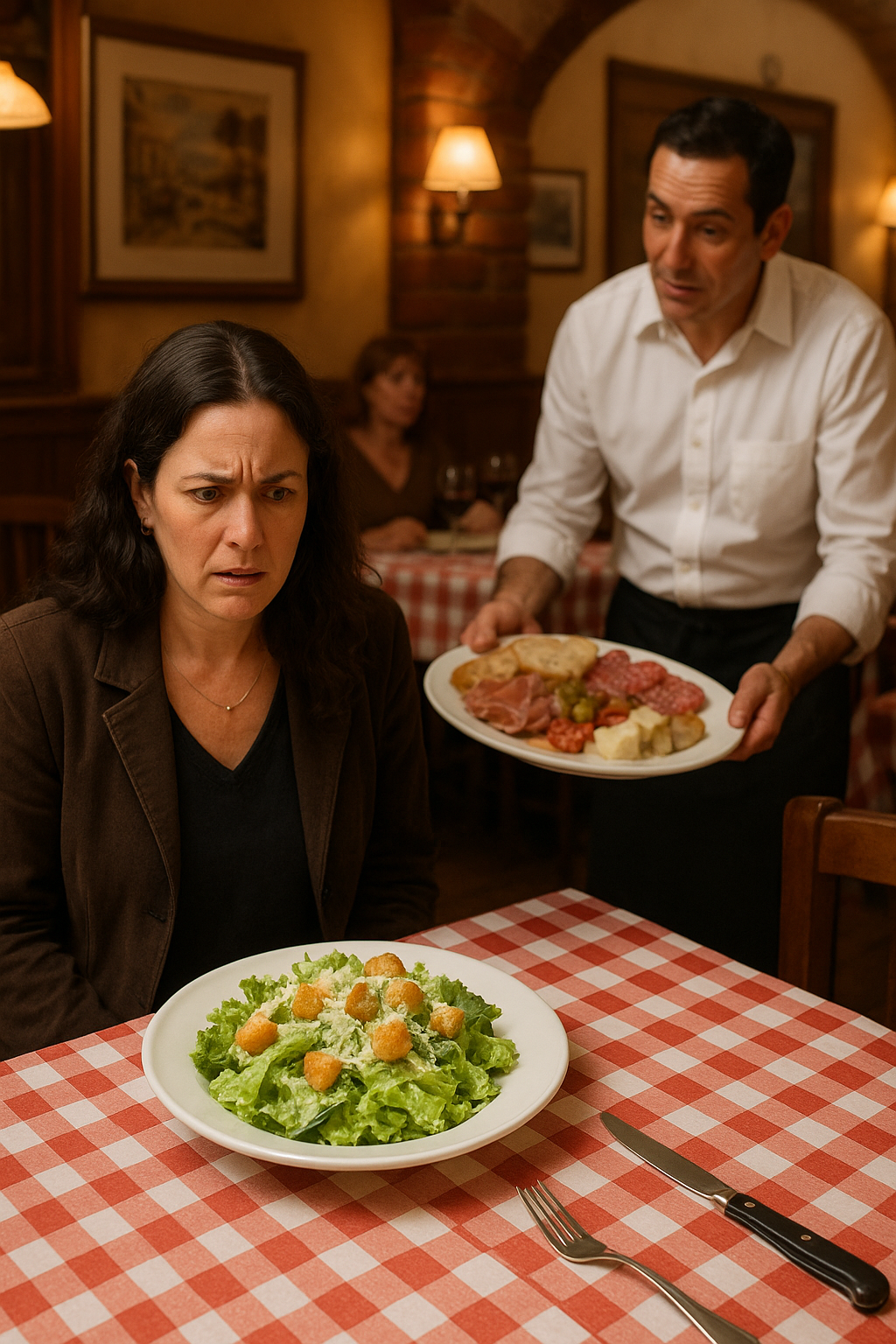
MYTH #4: Italian Meals Always Start with Caesar Salad
Caesar salad is delicious, but it’s not Italian. It was invented by an Italian-American chef—Caesar Cardini—in Mexico, not Rome. In Italy, salads (insalate) are usually served after the main course or alongside it, never as an appetizer. The idea of starting with a large, leafy salad is distinctly American.
The real story: Italians might begin with an antipasto (cured meats, cheeses, olives), but not salad. Serving salad first is seen as spoiling the appetite for what’s to come.
MYTH #5: Cappuccino After Dinner is Normal
This is one of the biggest cultural shocks for travelers. In Italy, cappuccino is strictly a morning beverage, usually consumed before 11 a.m., often with a pastry. Ordering one after dinner will out you as a tourist instantly. Why? Because Italians believe milk after a meal is heavy and interferes with digestion.
The real story: After dinner, Italians might have an espresso—small, strong, and perfect for ending the meal.
MYTH #6: Pizza in Italy is Like American Pizza
If you expect a thick crust, loaded toppings, and stuffed edges, think again. Italian pizza, especially in Naples (where pizza was born), has a thin, soft crust and minimal toppings. A classic Margherita is just tomato, mozzarella, and basil—nothing more. Italians value simplicity and balance, not excess.
The real story: American pizza evolved into a different dish altogether—delicious in its own right, but not the same thing.
MYTH #7: Pasta is Always Served with Tons of Sauce
In Italy, pasta is lightly coated, not swimming in sauce. The sauce complements the pasta, not the other way around. And yes, pasta shapes matter: certain sauces are paired with certain shapes for a reason.
MYTH #8: Italians Eat Huge Portions
Contrary to popular belief, Italian portions are smaller than American ones. Meals are structured into courses, so you eat a little of each—not one massive plate.
Other Myths to Bust Quickly
Italians don’t put chicken on pasta.
Pepperoni pizza doesn’t exist in Italy.
Garlic is used sparingly, not in excess.
Why These Myths Persist
Immigration, marketing, and Hollywood glamorized Italian food, creating a hybrid cuisine that became iconic in its own right. While it’s not “wrong,” it’s different. Understanding these differences is part of understanding Italian culture itself.
FAQs
1. Are Italian-Americans offended by these myths?
Not at all! Italian-American cuisine is its own tradition, and it’s beloved for good reason.
2. Should I avoid ordering “American-Italian” dishes in Italy?
Yes, if you want an authentic experience. Ask for local specialties instead.
3. Is it rude to ask for substitutions in Italy?
Generally, yes. Italians take pride in the chef’s choice.
4. Why do Italians care so much about food rules?
Because food is culture—and culture has rules.
Ready to Experience Authentic Italian? Learn the Language First!
Food and language are inseparable in Italy. To truly enjoy an Italian dining experience, you need more than a menu—you need the words, the expressions, and the cultural context. That’s where we come in.
At Polyglottist Language Academy, we don’t just teach Italian—we bring you into the culture. Our expert instructors offer engaging online and in-person classes for all levels, with lessons that include real-life situations like dining out, traveling, and shopping at Italian markets.
👉 Ready to order like a local in Italy?
Sign up for our Italian classes today!
Check Out Our Other Blog Articles:
Why Italians Live With Their Parents Longer (And What It Says About Culture)
How Italians Really Eat Pasta (And The Rules Tourists Break)
How Italians Really Speak: Street Italian Vs. Textbook Italian
Italian Language Meets Italian Lifestyle: What You Can Only Learn On The Ground
Learning Italian In San Francisco: Best Places, Classes, And Meetups