
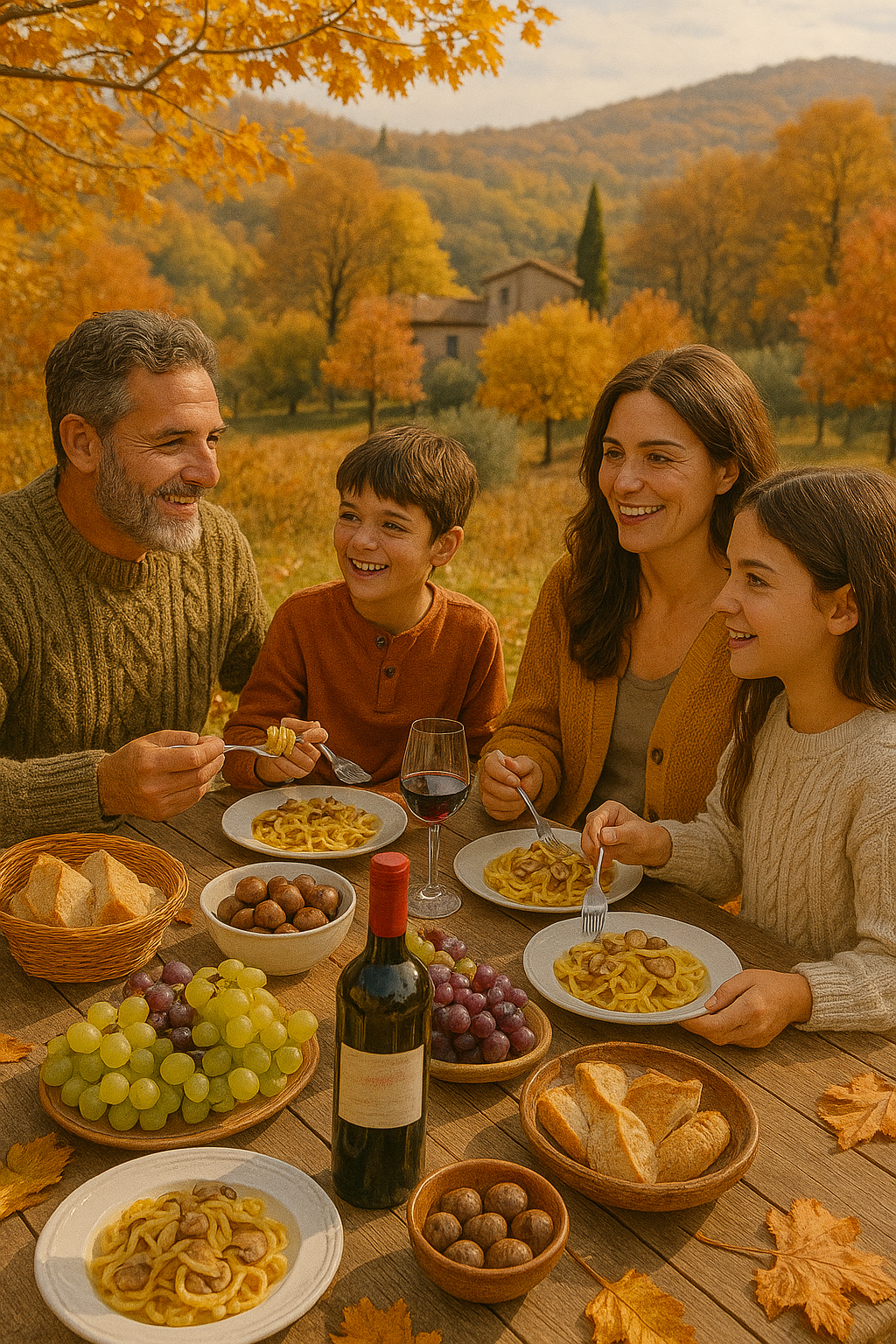
In Italy, food is not merely something to be consumed; it is a rhythm, a ritual, and a reflection of nature’s calendar. Italians have long believed that to eat well is to eat what the land offers at its peak, which is why markets overflow with artichokes in spring, tomatoes in summer, mushrooms in autumn, and citrus in winter. To live in Italy—or even to study its food culture—is to become attuned to the seasons, to recognize that meals are not built around fixed recipes but around the bounty of a particular moment in time. This philosophy of seasonal eating is so deeply ingrained that it influences not only what Italians eat, but also the language they use to describe it.
Seasonality in Italy is about more than freshness—it is about identity and connection to place. A Tuscan in October speaks of olio nuovo (new olive oil) with the same excitement that a Roman in spring feels for carciofi alla romana(Roman-style artichokes). Sicilians anticipate the citrus harvest with reverence, while northerners await the arrival of funghi porcini after autumn rains. These foods are not just ingredients; they are events on the cultural calendar, tied to festivals, family gatherings, and centuries-old traditions. The Italian way of speaking about food reveals this close relationship with the land: vocabulary is rich with terms that capture time, terroir, and tradition.
Eating seasonally also reflects an Italian resistance to uniformity. While supermarkets in many countries stock strawberries in January and asparagus in September, Italians still measure time by produce. The appearance of certain foods signals the arrival of a new season, creating an edible calendar that guides daily life. To say “It’s artichoke season” (È la stagione dei carciofi) is not just a culinary fact but a joyful declaration, a reason to gather, cook, and celebrate.
This connection between language, food, and seasonality provides a fascinating entry point for language learners. Vocabulary is shaped by availability, expressions by traditions, and idioms by the harvest cycle. Learning to speak about food in Italian is not only practical for dining—it is a way of understanding how Italians think about time, nature, and community.
In this article, we’ll explore eating with the seasons in Italy as both a culinary and linguistic journey. We’ll travel through the four seasons, highlighting typical ingredients, traditional dishes, and the words Italians use to celebrate them. Along the way, we’ll uncover how seasonal eating is embedded in Italian culture and why it matters for anyone learning the language.
SPRING: REBIRTH ON THE PLATE
Spring in Italy is a time of renewal. Fields and markets come alive with fresh greens, delicate vegetables, and the first fruits of the year. Italians celebrate the return of light foods after the heavier meals of winter.
Carciofi (artichokes): Especially beloved in Rome. Carciofi alla giudia (Jewish-style fried artichokes) and carciofi alla romana are springtime staples.
Asparagi (asparagus): Featured in risotti, frittatas, or simply grilled. Veneto’s white asparagus is especially prized.
Piselli (peas): Sweet peas often appear in pasta dishes or as a side.
Fragole (strawberries): The first sweet fruit of the year, celebrated with cream or in desserts.
Language in Use:
È la stagione degli asparagi! – It’s asparagus season!
Fresco come una fragola – Fresh as a strawberry (idiomatic).
SUMMER: ABUNDANCE AND SIMPLICITY
Summer in Italy is synonymous with abundance. Markets explode with colors: red tomatoes, green basil, golden peaches, and purple eggplants. Dishes become lighter, often requiring little cooking, since the produce speaks for itself.
Pomodori (tomatoes): The heart of Italian summer cuisine, whether in salads, sauces, or bruschette.
Basilico (basil): Essential for pesto in Liguria and caprese salads nationwide.
Melanzane (eggplants): Famous in parmigiana di melanzane.
Pesche (peaches): Juicy summer fruits often enjoyed simply or in chilled wine.
Language in Use:
Fa caldo, mangiamo un’insalata di pomodori. – It’s hot, let’s eat a tomato salad.
Essere rosso come un pomodoro – To be as red as a tomato (blushing).
AUTUMN: HARVEST AND EARTHINESS
Autumn is perhaps the most anticipated culinary season in Italy. It’s the time of harvest, festivals, and earthy flavors. Truffles, chestnuts, and mushrooms define the season, while new wine and olive oil make their debut.
Funghi porcini (porcini mushrooms): Used in risotti, pasta, or grilled with garlic and parsley.
Tartufo (truffle): Especially prized in Piedmont and Umbria, shaved over pasta.
Castagne (chestnuts): Roasted in street markets or made into flour for desserts.
Uva (grapes): Harvest season means both table grapes and wine production.
Language in Use:
Andiamo a funghi! – Let’s go mushroom picking!
È tempo di vendemmia. – It’s grape harvest time.
WINTER: COMFORT AND CITRUS
Winter in Italy brings hearty dishes and the brightness of citrus fruits. While the days are short, the markets glow with oranges, tangerines, and lemons, providing vitamin-rich bursts of flavor.
Agrumi (citrus fruits): Oranges from Sicily, lemons from the Amalfi coast.
Cavoli e broccoli (cabbages and broccoli): Staples of winter cooking.
Polenta: A northern comfort food, served with meats, cheeses, or mushrooms.
Zuppe e minestre (soups and stews): Warm, nourishing dishes for cold days.
Language in Use:
Una spremuta d’arancia fresca – A fresh orange juice.
Essere come un’arancia spremuta – To feel drained (idiomatic).
THE CULTURAL MEANING OF SEASONALITY
Eating with the seasons in Italy is not just practical; it is philosophical. It reflects respect for the land, sustainability, and an appreciation of time’s passing. Italians use seasonal foods to mark holidays, from Easter lamb with spring vegetables to Christmas sweets made with winter citrus. Festivals often center on harvests—truffle fairs, chestnut festivals, and grape harvest celebrations.
For language learners, seasonality adds texture to vocabulary. Words like vendemmia (grape harvest), olio nuovo (new olive oil), or primizie (first fruits of the season) capture ideas that go beyond literal meaning. They express excitement, tradition, and community.
FAQs: EATING WITH THE SEASONS IN ITALY
Q: Why do Italians emphasize seasonal eating?
Because seasonal foods are fresher, tastier, and tied to cultural traditions.
Q: Can I find strawberries in Italy in winter?
Yes, in supermarkets, but Italians usually wait for the natural season for best flavor.
Q: What’s the difference between Italian and American eating habits?
In Italy, meals follow seasonal rhythms more closely, while in many other countries supermarkets stock produce year-round.
Q: Do Italians talk about food differently by season?
Yes, seasonal vocabulary is common—phrases like olio nuovo or andare a funghi only make sense at certain times of year.
Q: How do Italians celebrate harvests?
With festivals, special meals, and community gatherings tied to foods like grapes, chestnuts, or truffles.
Q: Is eating seasonally cheaper in Italy?
Often, yes—seasonal produce is abundant and less expensive.
Q: How can I learn seasonal vocabulary in Italian?
Visit markets, read recipes, or take classes that integrate cultural vocabulary.
Q: Do restaurants in Italy also follow seasonal menus?
Yes. Many trattorie change menus to reflect what’s fresh.
Final Thoughts
Eating with the seasons in Italy is not just about food—it is about living in harmony with nature, celebrating community, and marking time through flavors. For Italians, the seasons are not only felt in the weather but also tasted on the plate and expressed in the language.
At Polyglottist Language Academy, we believe that learning Italian means more than memorizing grammar—it means immersing yourself in culture. Our Italian classes include discussions of food, traditions, and vocabulary that help you understand Italy through its seasons. If you’re ready to learn Italian in a way that’s fresh, authentic, and delicious, sign up today for our classes—online or in-person.
And if this article whetted your appetite for more cultural insights, check out these other posts:
Why Italians Live With Their Parents Longer (And What It Says About Culture)
How Italians Really Eat Pasta (And The Rules Tourists Break)
How Italians Really Speak: Street Italian Vs. Textbook Italian
Italian Language Meets Italian Lifestyle: What You Can Only Learn On The Ground
Learning Italian In San Francisco: Best Places, Classes, And Meetups