
Why French People Say “It’s Complicated” So Often (C’est compliqué)
Introduction: The Mystique of “C’est Compliqué”
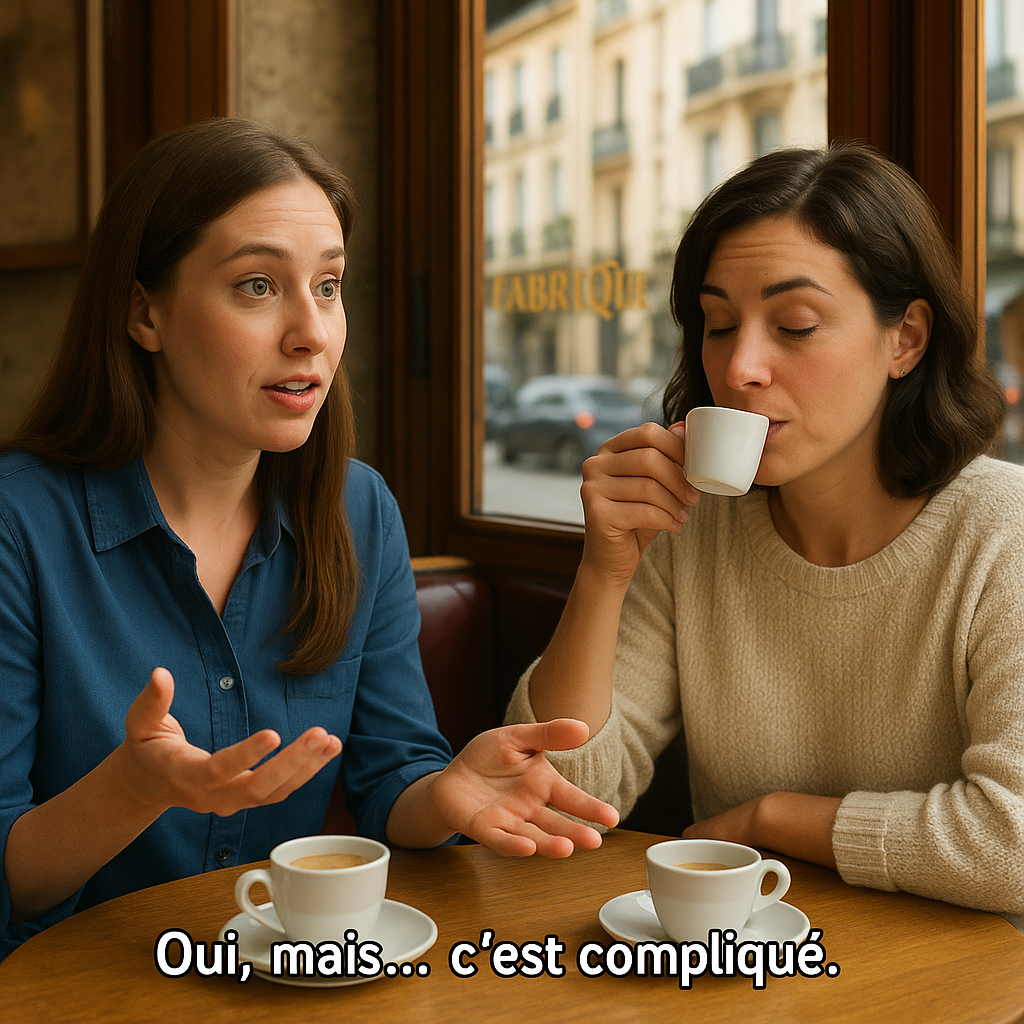
Imagine this scene: you’re sitting in a cozy Parisian café, discussing your plans to open a business in France. You’re brimming with enthusiasm. The French friend across from you takes a slow sip of espresso, tilts their head, and sighs: “Oui, mais… c’est compliqué.”
Or you ask why the train ticket prices fluctuate wildly. “C’est compliqué.”
Why can’t you simply say “tu” to your boss? “C’est compliqué.”
Why did that politician resign? “C’est compliqué.”
Why does nobody ever seem to sit on the grass in that gorgeous park? “C’est compliqué.”
For a country famous for precision in philosophy, cuisine, and fashion, France has a curious love affair with one phrase that’s anything but precise: c’est compliqué.
If you’ve ever spent time in France—or among French people—you’ll quickly notice how often this phrase pops up. It can be the polite end to a conversation, a genuine explanation of bureaucracy, or a sophisticated dodge of awkward truths. It’s not just a linguistic quirk; it’s a window into how French people see their world.
Americans and other foreigners often perceive the French as complicated people, prone to analyzing everything from their relationships to the perfect baguette crumb. Yet c’est compliqué is not necessarily about difficulty in the literal sense. Sometimes it means:
“There’s a long backstory.”
“I’d rather not explain.”
“It’s subtle and requires nuance.”
“I don’t want to offend anyone.”
“It’s too layered for a quick answer.”
The French delight in subtlety and complexity. Life, for them, is not meant to be reduced to simple black-and-white answers. Instead, it’s a mosaic of exceptions, contradictions, and elegant half-truths.
In this article, we’ll explore:
Why the French love saying c’est compliqué
The cultural mindset behind complexity
Examples of how and when it’s used
The social function of this phrase
What it reveals about French culture and communication
So if you’ve ever felt exasperated—or amused—by this seemingly all-purpose phrase, settle in. Let’s dive into the fascinating world where everything is, indeed, compliqué.
Complexity as a Cultural Virtue
To understand why c’est compliqué is so pervasive in French life, we need to appreciate one crucial cultural trait: France values nuance.
In many English-speaking cultures, simplicity is prized. People love “life hacks,” quick solutions, and clear yes-or-no answers. American business culture, for example, values efficiency, directness, and getting to the point.
In France, however:
Complexity signals intelligence and depth.
Oversimplifying something can seem childish—or even insulting.
People expect layers beneath the surface.
A French person might genuinely believe that “it’s complicated,” because in their world, things often are. Whether it’s the legal status of a historical monument, the subtleties of wine classification, or social etiquette around greeting people, there’s almost always context and tradition to consider.
C’est Compliqué and French Bureaucracy
If there’s one realm where c’est compliqué reigns supreme, it’s French bureaucracy.
Consider:
Filing taxes
Registering a car
Renting an apartment
Applying for residency
Every process seems to come with:
Extra paperwork
Forms that change every year
Rules that contradict each other
Officials who interpret regulations differently
Ask why something can’t be done quickly, and you’ll often hear:
“C’est compliqué.”
It’s not laziness. It’s the belief that rules exist for a reason—and exceptions always exist to those rules.
The Art of Indirectness
French conversation values subtlety. Saying “no” directly can be seen as harsh or impolite. Instead, people soften refusals with:
“Je ne suis pas sûr…” (I’m not sure…)
“On verra.” (We’ll see.)
“C’est pas évident…” (It’s not obvious…)
And of course, “C’est compliqué.”
This phrase is a gentle way to:
Avoid confrontation
Delay giving a firm answer
Protect someone’s feelings
Express disagreement without drama
It functions as a social buffer, allowing conversations to remain polite and fluid.
Relationships: Love is Complicated
French people often use c’est compliqué to describe personal relationships:
Exes who stay friends
Couples who separate but still vacation together
Open relationships with “rules”
Families with unresolved feuds but shared Sunday dinners
Ask a French person, “Are you and your partner together or not?” and you might hear:
“Bah… c’est compliqué.”
This reflects a broader cultural acceptance that emotions and relationships rarely fit into neat boxes.
Politics and Society: Never Simple
Another domain for c’est compliqué is politics. French people love to debate issues passionately—but also recognize the complexity in every topic.
For example:
Why can’t France lower taxes? “C’est compliqué.”
Why are protests happening again? “C’est compliqué.”
Why is secularism such a sensitive topic? “C’est compliqué.”
This isn’t a cop-out. It reflects the French belief that society operates through tangled histories, class tensions, and cultural values.
Social Etiquette and Unspoken Rules
Life in France is full of unwritten rules:
Who gets greeted with “tu” vs. “vous”
The right time to eat cheese during a meal
How many kisses on the cheek are expected in each region
A foreigner might innocently ask:
“So do I say ‘tu’ or ‘vous’ to my colleague?”
Answer:
“Ah… c’est compliqué.”
These rules often vary by:
Region
Age
Social context
The personalities involved
Hence the caution: “C’est compliqué.”
The Fear of Oversimplification
A fundamental reason the French say c’est compliqué so often is their discomfort with oversimplification.
In French culture:
Nuance = intelligence
A simple answer may seem superficial
Life’s beauty is found in its contradictions
For example:
“Is French wine better than Italian wine?”
“C’est compliqué.”
“Are the French rude?”
“C’est compliqué.”
Oversimplifying is considered intellectually lazy. C’est compliqué signals that the speaker respects the complexity of the issue.
Humor and Irony
Sometimes, c’est compliqué is used ironically.
Imagine:
A friend can’t decide between two ice cream flavors and sighs, “C’est compliqué.”
Someone struggles to choose a new phone case and mutters, “C’est compliqué.”
It’s humor through exaggeration. The phrase becomes a wink acknowledging how dramatically the French complicate even small decisions.
Emotional Honesty
Another reason the French use c’est compliqué is emotional honesty. Life is messy, and they’re not afraid to admit it.
Where other cultures might say:
“It’s fine.”
“It’s going great.”
The French might confess:
“Ça va… c’est compliqué.”
It’s refreshing, albeit sometimes exasperating for foreigners craving clear answers.
When You Hear “C’est Compliqué”
So what should you do when a French person says c’est compliqué?
Pause. They may be signaling the need for a longer explanation.
Probe gently. Ask “Comment ça?” (How so?) or “Pourquoi c’est compliqué?”
Respect privacy. If they change the subject, they might prefer not to elaborate.
Appreciate nuance. Don’t push for a black-and-white answer.
Understanding c’est compliqué means embracing a culture that prefers shades of gray.
How Learners Can Navigate It
If you’re learning French, c’est compliqué is one of those essential cultural phrases to master. Here’s how to use it like a native:
When unsure of an answer
To deflect awkward questions
To sound culturally in tune
To acknowledge complexities
For example:
“Pourquoi le subjonctif est-il si difficile?”
“C’est compliqué…”
Embracing French Complexity
So why do French people say c’est compliqué so often?
Because life, in France, is rarely straightforward:
Systems are layered with history.
Relationships come with context.
Social rules shift depending on countless variables.
Intellectual respect demands nuance.
This phrase embodies the very French spirit of seeing the world as a rich tapestry, not a checklist. It’s exasperating, fascinating, and—once you adjust to it—oddly comforting.
Next time you hear c’est compliqué, don’t roll your eyes. Smile. You’ve just unlocked one of the deepest truths about French culture: simplicity is overrated.
FAQs About “C’est Compliqué”
Q: Does “c’est compliqué” always mean something is literally difficult?
A: No! Often it signals nuance, a complex backstory, or social subtleties rather than true difficulty.
Q: Is it rude when French people say “c’est compliqué”?
A: Not at all. It’s a polite way to handle delicate topics or to avoid giving an oversimplified answer.
Q: Can I use “c’est compliqué” in casual conversations?
A: Yes! It’s widely used, even humorously. It can make you sound more natural in French.
Q: How do I respond when someone says “c’est compliqué”?
A: Try asking for more details—“Comment ça?”—but be prepared for a long explanation or none at all.
Q: Why do French people avoid direct answers?
A: Cultural values prioritize nuance and avoiding bluntness, which can seem rude.
Q: Can “c’est compliqué” be used in romantic contexts?
A: Absolutely. Relationships are a frequent context for this phrase, hinting at emotional or social entanglements.
Q: Does “c’est compliqué” appear in formal settings?
A: Yes, especially in politics, legal discussions, or bureaucracy, where issues truly are complex.
Q: How can I practice using “c’est compliqué”?
A: Listen for it in conversations, TV shows, and films. Try inserting it into your own speech when topics feel too layered for a simple answer.
Ready to Navigate French Nuance?
At Polyglottist Language Academy, we know that learning French is about more than grammar. It’s about understanding how real French people communicate, think, and navigate life’s complexities.
Our classes:
Teach practical, authentic French
Include cultural insights like c’est compliqué
Help you speak confidently in real situations
Make learning fun and engaging
Why settle for textbook French when you can speak like a true local?
👉 Sign up for our French classes today!
And if you’re fascinated by how language reflects culture, check out these other articles on our blog: