
How to Sound Warm (Not Just Polite) in French Conversations
Introduction: Why “Polite” Isn’t Always Enough
You’ve learned how to say “Bonjour, Madame,” you remember to say “s’il vous plaît” and “merci beaucoup,” and you always end emails with “cordialement.” You’re polite. Proper. Respectful.
But here’s the thing: in French, being polite doesn’t always mean you sound warm.
In fact, one of the biggest cultural misunderstandings language learners face in France is this: they assume that politesse (politeness) automatically communicates friendliness, openness, or emotional connection. But to French ears, it doesn’t. It just means you’re following protocol.
If you want to move beyond “respectful tourist” and toward real human connection—whether that’s chatting with a friend’s grandmother, building rapport with colleagues, or making conversation at a dinner party—you need to tap into the subtler signals of warmth in French. And that takes a different skill set than simply learning grammar rules or memorizing polite phrases.
In this article, we’ll unpack the subtle (and not-so-subtle) ways the French express emotional warmth in everyday conversation. We’ll also show you how to sound not just correct—but kind, approachable, and authentically human.
Because when your French reflects not just accuracy but heart, that’s when the real connections begin.
PART 1: POLITE ≠ WARM — UNDERSTANDING THE DIFFERENCE
1. Politeness in French is Culturally Structured
French society has deeply ingrained norms around vous, titles, greetings, and formality. These rules promote respect—but not necessarily closeness. Saying “Bonjour, Madame” is like knocking before entering. It opens the door. But it doesn’t start the conversation.
2. Warmth Requires Something Extra
In France, emotional warmth is often communicated through tone, phrasing, and small gestures of care. It’s not about being bubbly or oversharing, like in some Anglophone cultures. It’s about choosing words that show you see the person, not just their role.
PART 2: WAYS TO SOUND WARM IN FRENCH (WITHOUT SOUNDING FAKE)
✨ 1. Personalize Your Greetings
Instead of just “Bonjour,” try:
“Bonjour, comment allez-vous aujourd’hui ?”
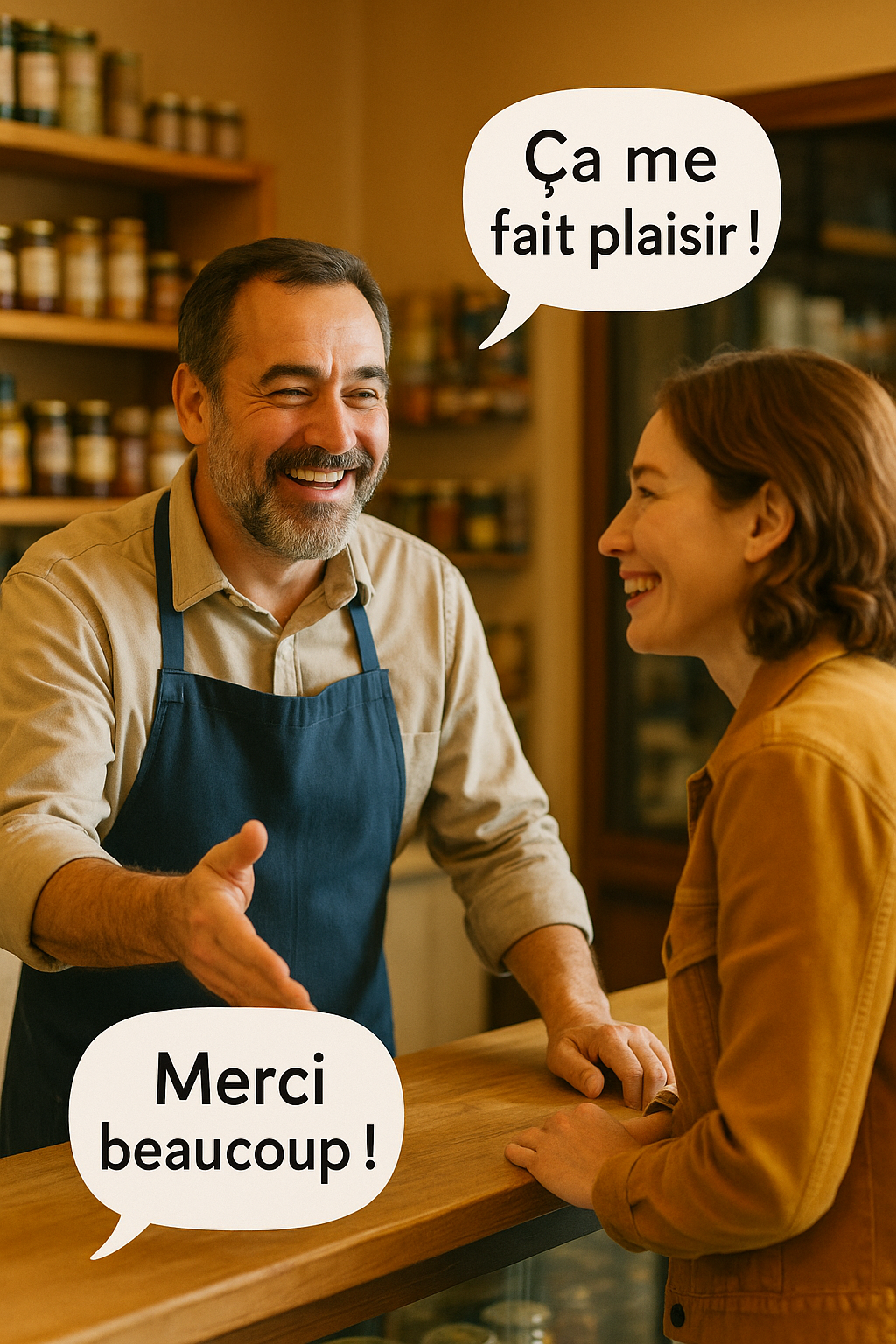
“Bonjour ! Ça me fait plaisir de vous voir.”
Adding a small phrase shows interest—and turns a formality into connection.
✨ 2. Use Diminutives and Softeners Thoughtfully
In French, certain diminutives and softeners create a sense of affection or tenderness. For example:
“un petit café” instead of “un café”
“un petit mot pour te dire merci”
“Je voulais juste te dire...” instead of jumping straight in
These “little” words are actually big warmth signals.
✨ 3. Say People’s Names More Often
The French often use names to show warmth. Try:
“Merci, Marie. C’est vraiment gentil.”
“Tu sais quoi, Paul ? Je suis content que tu sois là.”
It adds a personal touch without overdoing it.
✨ 4. Use Empathetic Phrases
When someone shares something, instead of just nodding, you can say:
“Ah mince, j’imagine que ça n’a pas été facile.”
“Tu dois être épuisé(e) après tout ça.”
“Je suis vraiment content(e) pour toi !”
This shows emotional presence—not just good manners.
✨ 5. Compliment with Care
The French don’t over-compliment. But when they do, it matters.
Try:
“Tu as fait un super boulot sur ce projet.”
“C’est une idée vraiment intelligente.”
“Tu racontes ça d’une manière très touchante.”
Genuine, specific praise goes a long way.
✨ 6. Adjust Your Tone of Voice
Warmth often comes through tone, not words. A gentle, melodic voice with natural pauses feels open. A clipped, robotic tone—even with perfect grammar—feels cold.
Record yourself. Practice sounding curious, kind, and involved.
✨ 7. Don’t Be Afraid to Express Emotion
Contrary to stereotypes, the French are deeply emotional—but controlled. You can say:
“Je suis super heureux(se) de te voir.”
“Ça me touche beaucoup.”
“C’est vraiment quelque chose qui me tient à cœur.”
It’s not over-the-top—it’s human.
PART 3: WHAT TO AVOID IF YOU WANT TO SOUND WARM
🚫 Overusing “merci” and “s’il vous plaît” like punctuation
That can come off as robotic. Make it natural and situational.
🚫 Speaking too fast or stiffly
Slow down. Warmth lives in rhythm and ease.
🚫 Over-apologizing or over-correcting
Confidence is part of sounding human. Self-effacing can read as insecure.
🚫 Using only formal phrases
Try weaving in casual expressions, even when you’re using vous.
PART 4: SAMPLE WARM PHRASES TO ADD TO YOUR CONVERSATION TOOLKIT
“Je pensais justement à toi hier !”
“Ça me fait tellement plaisir de te parler.”
“C’est vraiment chouette de t’avoir ici.”
“Tu veux un petit café ?”
“Merci pour ton aide, c’est vraiment précieux.”
“Tu as toujours les mots justes.”
Practice these aloud. Mix and match. Let them become your own.
FAQs
Q: Is it rude to be too friendly in French?
A: Not rude, but it can be perceived as “too much.” French warmth is quieter—less about smiles, more about subtle engagement.
Q: Can I still use “vous” and sound warm?
A: Absolutely. Warmth isn’t about informality—it’s about intention and tone. You can be both respectful and emotionally present.
Q: Should I mirror the other person’s tone?
A: Yes. Observe their rhythm, volume, and energy. Matching someone’s style is a form of connection in itself.
Q: How do I warm up my tone in writing (emails, texts)?
A: Add softeners: “Je vous écris juste un petit mot…”, or “J’espère que vous allez bien.” Use exclamation points gently, and avoid sounding too abrupt.
Q: Do the French use emojis to show warmth?
A: Increasingly, yes—especially younger generations. 😊, 🙏, and ❤️ are common in texts and casual emails.
Q: What if I don’t feel confident enough to improvise?
A: Start with simple phrases you can memorize. Over time, you’ll naturally develop a “warm” voice in French.
Q: What’s one phrase that always feels warm and natural?
A: “Ça me fait plaisir de te parler.” (It’s a pleasure to talk to you.)
Q: Can warmth vary by region in France?
A: Definitely! Southern France tends to be warmer in tone. But even in Paris, once you get past the formality, people open up.
Want to Speak French That Connects, Not Just Communicates?
At Polyglottist Language Academy, we help you speak French that feels human—not just correct. Our expert teachers guide you through grammar and emotional nuance, helping you gain fluency, warmth, and confidence.
Whether you're learning in Berkeley, San Francisco, Oakland, San Jose, Marin, or online, our small group and private classes are designed for real connection, not robotic fluency.
👉 Sign up today and start sounding like you—in French.
Keep Reading: Build Your Cultural Fluency with These Articles
Must-Know French Gestures And Body Language For Travelers
How To Shop At A French Market Like A Local
What Americans Find Most Surprising About France (And How To Prepare)
Using Your French In Real Life: From Check-In To Check-Out
French Supermarket Survival Guide: What To Expect And What To Say
Avoiding Tourist Mistakes In Paris: Cultural Tips That Make A Difference
Navigating French Trains, Metros, And Buses Like A Local
French Etiquette 101: Do’s And Don’ts For Visitors
What To Pack For France: A Seasonal Guide For Smart Travelers
How Much French Do You Really Need To Know For A Trip?
How To Order At A French Café Without Embarrassing Yourself