
Why French Learners Struggle with “Depuis”—and How to Master It
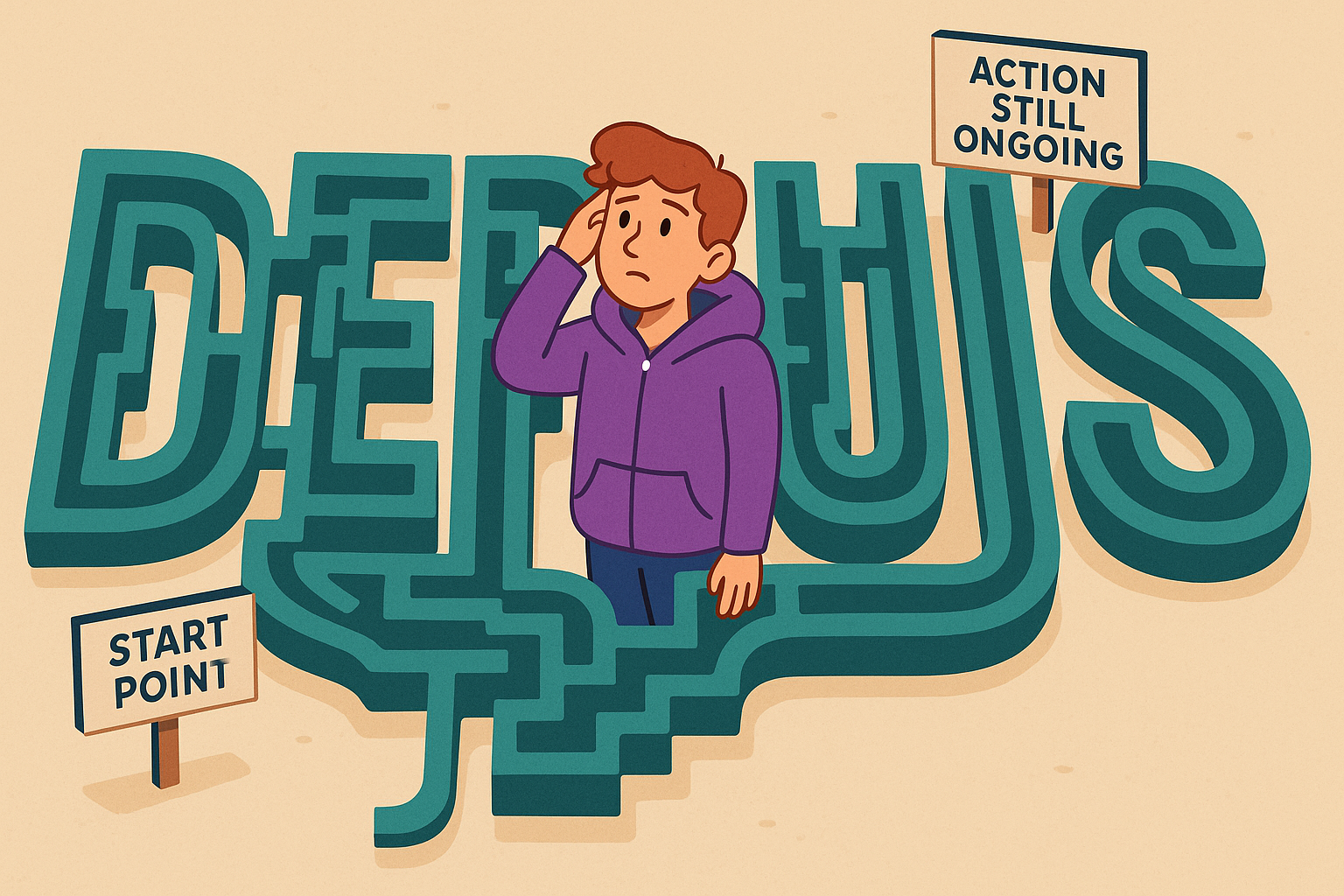
Introduction: The Little Word That Trips Up Even Confident Learners
Imagine this. You’re sitting in your French class, feeling pretty good about yourself. You’ve mastered greetings, basic conversation, and can even manage a few jokes in French. Then your teacher asks you:
“Depuis combien de temps apprends-tu le français ?”
Suddenly, your brain freezes. You stumble out something like:
“J’ai appris le français depuis trois ans.”
Your teacher gently corrects you:
“Non… Tu dois dire J’apprends le français depuis trois ans.”
Cue frustration. You thought you knew past tenses. You thought you knew how to talk about time. Yet this tiny word “depuis” has exposed a gap in your understanding.
Pourquoi ?
“Depuis” is one of those seemingly innocent words that wreak havoc on learners of French. It looks small and harmless but carries meanings and grammatical rules that don’t quite match English thinking. It deals with time—but in a uniquely French way.
English speakers especially struggle because we instinctively reach for past tense when talking about how long something has been going on. French, however, often insists on the present tense instead. It feels illogical, unnatural, and downright confusing.
But here’s the good news: Once you understand how “depuis” works, it becomes one of your best tools for sounding fluent. Mastering it unlocks the ability to talk about your life, habits, and experiences in a way that’s beautifully, authentically French.
In this guide, we’ll dissect why “depuis” causes so much trouble—and exactly how to master it once and for all. From everyday examples to grammar hacks, you’ll walk away ready to talk about time like a native.
So buckle up—it’s time to conquer “depuis”!
Why “Depuis” Is So Tricky for English Speakers
It’s Not a Direct Translation
Many learners try to translate “since” or “for” directly:
I’ve been studying French for three years.
I’ve been living here since 2020.
In French, both concepts often use “depuis,” but the verb tense changes, too.
French Loves the Present Tense for Ongoing Actions
This is the #1 reason learners get tripped up.
In English, we often say:
I’ve lived here for five years.
A past tense idea.
In French, the equivalent uses the present tense:
J’habite ici depuis cinq ans.
Literally: I live here since five years.
That sounds bizarre in English—but it’s perfectly normal in French.
Different Tenses Mean Different Things
Using “depuis” with different tenses changes the meaning dramatically:
Present tense + depuis → Action started in the past and is STILL happening.
J’étudie le français depuis deux ans.
(I’ve been studying French for two years.)
Past tense (passé composé) + depuis → Usually incorrect for ongoing actions. It implies the action is finished, so “depuis” doesn’t fit.
WRONG: J’ai étudié le français depuis deux ans.
RIGHT: J’ai étudié le français pendant deux ans.
(I studied French for two years [but no longer do].)
“Depuis” vs. “Pendant”
Another source of confusion is distinguishing “depuis” from “pendant.”
Depuis → Duration that’s still ongoing.
J’habite à Paris depuis trois ans.
(I’ve been living in Paris for three years.)
Pendant → Duration that’s complete.
J’ai habité à Paris pendant trois ans.
(I lived in Paris for three years [but no longer do].)
How to Use “Depuis” Correctly
Let’s break it down into simple rules.
Rule #1: Use the Present Tense for Ongoing Actions
Je travaille ici depuis deux ans.
(I’ve been working here for two years.)Il pleut depuis ce matin.
(It’s been raining since this morning.)
Rule #2: “Depuis” Means Either “Since” or “For”
Depending on the context:
Since a starting point in time
J’étudie le français depuis 2020.
(I’ve been studying French since 2020.)
For a duration of time
J’étudie le français depuis trois ans.
(I’ve been studying French for three years.)
Rule #3: Avoid the Passé Composé with Ongoing Actions
WRONG: J’ai travaillé ici depuis deux ans.
RIGHT: Je travaille ici depuis deux ans.
If the action is finished, switch to “pendant”:
J’ai travaillé ici pendant deux ans.
(I worked here for two years.)
Rule #4: Use “Depuis” with Negative Sentences
French uses “depuis” even in negative sentences to talk about actions that stopped:
Je n’ai pas vu Marie depuis deux semaines.
(I haven’t seen Marie for two weeks.)
In this case, passé composé is fine because the action has ceased.
Rule #5: Don’t Forget Other Tenses Exist!
In certain contexts, you might use “depuis” with the imperfect:
Il vivait à Paris depuis deux ans quand je l’ai rencontré.
(He had been living in Paris for two years when I met him.)
But that’s advanced usage. Beginners should focus first on mastering “depuis” with the present tense.
Everyday “Depuis” Examples
Let’s make this practical. Imagine you’re talking about:
Your Job
Je travaille chez Apple depuis 2018.
(I’ve been working at Apple since 2018.)
Living Somewhere
J’habite à Portland depuis cinq ans.
(I’ve been living in Portland for five years.)
Studying French
J’étudie le français depuis deux ans.
(I’ve been studying French for two years.)
Not Doing Something
Je n’ai pas mangé de chocolat depuis lundi.
(I haven’t eaten chocolate since Monday.)
Common Mistakes and How to Fix Them
Mistake #1: Using Passé Composé for Ongoing Actions
WRONG: J’ai appris le français depuis trois ans.
RIGHT: J’apprends le français depuis trois ans.
Mistake #2: Confusing “Depuis” and “Pendant”
WRONG: J’ai vécu à Paris depuis trois ans.
RIGHT: J’ai vécu à Paris pendant trois ans.
Mistake #3: Omitting “Depuis” Altogether
WRONG: J’étudie le français trois ans.
RIGHT: J’étudie le français depuis trois ans.
Mistake #4: Overthinking It!
Learners often hesitate and avoid “depuis.” Don’t! The best way to master it is to use it constantly.
Tips to Master “Depuis”
✅ Practice Short Sentences
Je travaille ici depuis…
Il pleut depuis…
Je n’ai pas vu Paul depuis…
✅ Read French News or Books
Look for “depuis” in context. Notice how often the present tense is used.
✅ Speak About Your Life
Every day, say one thing you’ve been doing “depuis.”
J’habite ici depuis deux mois.
J’étudie le français depuis un an.
✅ Drill Negative Sentences
Negatives help you remember the different tense:
Je n’ai pas mangé de fromage depuis hier.
Il n’a pas parlé à son frère depuis longtemps.
The Cultural Angle: Why the French Think This Way
French uses the present tense because they see time differently.
When an action is ongoing, French treats it as part of the present reality rather than something finished. It’s not just a grammar point—it’s a mindset:
English → focuses on the past duration.
French → focuses on the ongoing nature.
This reflects the French tendency to live in the present moment. It’s linguistic proof that language is a mirror of culture!
Quick Reference Guide
English French
I’ve been living here for two years. J’habite ici depuis deux ans.
I’ve been studying French since 2021. J’étudie le français depuis 2021.
I haven’t seen her for a week. Je ne l’ai pas vue depuis une semaine.
I worked there for two years. J’ai travaillé là-bas pendant deux ans.
FAQs About “Depuis”
Q: Can I use “depuis” with the passé composé?
Generally, no—not for ongoing actions. Use it only in negative sentences for actions that have stopped:
Je n’ai pas vu Paul depuis deux semaines.
Q: What’s the difference between “depuis” and “pendant”?
Depuis → Ongoing actions.
Pendant → Completed actions in the past.
Q: Is it okay to say “Depuis combien de temps…”?
Yes! That’s how to ask how long someone’s been doing something:
Depuis combien de temps étudies-tu le français ?
Q: Why does French use the present tense with “depuis”?
Because the action started in the past and is still happening. French treats it as part of the present.
Q: Can I use “depuis” for future actions?
No. “Depuis” refers to actions from the past continuing into the present.
Q: How can I practice using “depuis”?
Talk about your habits.
Use daily routines.
Create sentences with durations.
Q: What about the imperfect tense with “depuis”?
Use the imperfect if the sentence sets a background in the past:
Il vivait à Paris depuis deux ans quand je l’ai rencontré.
Q: Should I avoid “depuis” because it’s confusing?
No! Embrace it. It’s essential for sounding fluent and natural.
Ready to Conquer “Depuis”—and Everything Else French?
At Polyglottist Language Academy, we believe in demystifying tricky grammar. Our French classes don’t just teach you rules—they help you understand why French works the way it does.
From mastering “depuis” to navigating cultural nuances, our teachers will help you speak confidently and naturally.
👉 Sign up for our classes today and unlock real, fluent French!
Check Out More of Our Blog!
Why Fluent French Isn’t Perfect French—And Why That’s A Good Thing
A Crash Course In “French Filler Words” (Eh Bien, Tu Vois, Genre...)
Street French Vs. School French: What You’ll Hear Vs. What You Learn
What Learning French Teaches You About English (Yes, Really!)
10 “Invisible Words” In Spoken French That Aren’t In Your Textbook
The Sound Of French: How To Train Your Ear To Understand Spoken French Fast
From Oui To Oops: The Funniest Mistakes French Learners Make (And What They Teach Us)