
The Sound of French: How to Train Your Ear to Understand Spoken French Fast
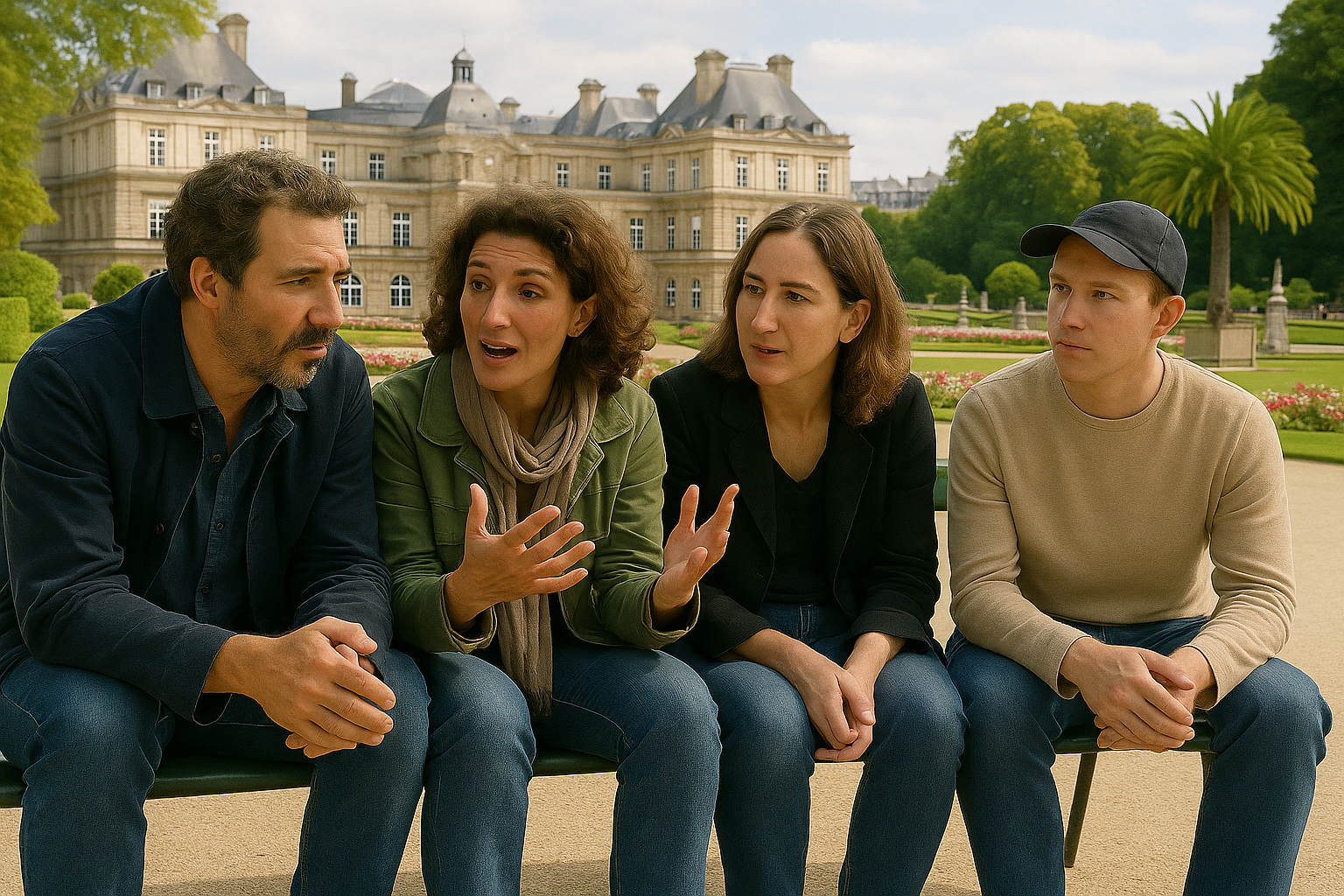
Struggling to understand spoken French? Learn how to train your ear with proven strategies to boost your French listening comprehension fast.
Introduction: When French Sounds Like a Blur
You know the feeling. You’ve studied the vocabulary, you’ve reviewed the grammar, and you’re feeling confident—until you press play on a French podcast or try to follow a conversation between native speakers. Suddenly, French isn’t a language. It’s a rapid blur of vowels, swallowed syllables, and mystery sounds that seem to defy all logic.
You catch a word here, a phrase there. You’re sure someone just said “chien,” but wait—maybe it was “tiens”? Was that “j’ai vu” or “je veux”? Why is everything slurred together?
Understanding spoken French is one of the biggest hurdles learners face. It’s not because French is inherently harder than other languages—it’s because real spoken French differs dramatically from the carefully articulated sentences you find in textbooks or apps.
Native French is fast, fluid, and full of contractions, glidings, silent letters, and cultural expressions that don’t always follow the rules. But here’s the truth: your ear can adapt. With the right strategies, you can train your brain to catch the rhythms, patterns, and shortcuts of authentic spoken French—and it doesn’t have to take years.
In this guide, we’ll explore:
Why spoken French is so tricky to understand
How to rewire your listening habits
The best tools and techniques to train your ear fast
What not to do if you want to make real progress
Whether you're preparing for a trip to France, working on your listening comprehension for a test, or just tired of smiling and nodding through conversations, this article will give you everything you need to make French sound less like noise—and more like music.
Part 1: Why Spoken French Is So Hard to Understand at First
1. It’s Not What You Learned in Class
In your French class, the teacher enunciated every syllable. But real French? Entire syllables vanish. Vowels glide into each other. Words merge and morph in ways you weren’t warned about.
Example:
Written: “Je ne sais pas.”
Spoken: “Chais pas.”
You studied the rules. But spoken French breaks them—all the time.
2. Liaisons and Elisions
French speech is full of liaisons (linking sounds) and elisions (dropping sounds).
Examples:
“Ils ont” → sounds like “ilzon”
“Je ne sais pas” → “J’sais pas”
“Tu as” → “T’as”
If you’re not expecting these changes, it sounds like a different language.
3. Silent Letters and Nasal Vowels
French words often contain silent letters that change how words look vs. sound. Add in nasal vowels like an, on, in and it’s no wonder your brain gets overwhelmed.
Example:
“Pain” (bread) sounds like [pɛ̃]
“Parle” ends in a silent “e”
The gap between written and spoken French is significant—and mastering it takes listening-specific training.
4. Speed and Rhythm
French speakers don’t slow down for learners. Native speech can reach speeds of 200+ words per minute. Plus, French has its own musicality—its own stress and rhythm—which differs from English.
To truly understand, you need to train your ear to follow the melody of the language, not just individual words.
Part 2: How to Train Your Ear—Step by Step
1. Start With Slow Authentic French
Before diving into fast-paced radio or films, start with material made for learners—but not robotic or artificial. Use resources like:
Français Facile or News in Slow French
YouTube channels like Comme Une Française or FrenchPod101
Podcasts like Coffee Break French
Use audio that feels real but is paced for understanding. Listen actively—pause, repeat, shadow (repeat aloud after the speaker).
2. Shadowing: Repeat What You Hear
Shadowing means listening to a native speaker and repeating immediately after, mimicking their speed, intonation, and pronunciation.
Benefits:
Trains muscle memory for speech sounds
Helps identify patterns in contractions
Boosts both listening and speaking fluency
Start with 10-second clips. Repeat them multiple times until you can shadow fluently.
3. Use Subtitles—But Wisely
Don’t start by watching Netflix in French with English subtitles. You’ll read instead of listen.
Here’s the smart way:
Watch with French subtitles first.
Watch again without subtitles.
Then try shadowing or repeating key lines.
Use tools like Language Reactor for YouTube or Netflix, which allows dual subtitles and lets you click any word for instant translation.
4. Train With “Chunked” Listening
Break down listening into manageable pieces:
Choose a short audio clip (1–2 minutes).
Listen once for general meaning.
Then listen sentence by sentence, writing down what you hear.
Compare to the transcript and correct.
This “dictation-style” approach builds listening accuracy and reveals the gap between sound and spelling.
5. Focus on High-Frequency Words and Phrases
Did you know that just 600 words make up 80% of spoken French? Focus on listening to these in context.
Practice:
Modal verbs (vouloir, pouvoir, devoir)
Time expressions (hier, demain, tout de suite)
Everyday phrases (Tu vois ? C’est clair ? Qu’est-ce que tu fais ?)
The more you hear them, the easier they’ll be to pick out at full speed.
6. Get Used to Different Accents and Voices
French isn’t just one accent. Parisians, Québécois, Belgians, Africans—all sound different. The earlier you expose yourself to variety, the more adaptable your ear becomes.
Try:
Watching French YouTubers from different regions
Listening to African French music or interviews
Exploring Francophone news channels
7. Make Listening a Daily Habit
Consistency is more important than intensity. 10 minutes a day of active listening will take you further than an hour once a week.
Create a French audio routine:
Morning podcast while making coffee
Song review during your commute
5-minute shadowing session after dinner
Your brain will start “tuning in” naturally.
Part 3: What NOT to Do
❌ Don’t Rely on English Subtitles Forever
You’ll improve reading, not listening.
❌ Don’t Avoid Fast Speech
Avoidance delays progress. Instead, build up to it.
❌ Don’t Expect to Understand 100%
Even advanced learners miss words. Focus on gist first, detail later.
❌ Don’t Panic
Your brain is learning—even when it feels like it’s not. Comprehension grows slowly, then suddenly.
FAQs: Training Your Ear for French
Q: How long does it take to understand native French?
A: With daily practice, many learners report big improvements in 3–6 months. Full comprehension takes longer, but you’ll feel more confident quickly.
Q: Should I memorize vocabulary before listening?
A: It helps, but you can learn vocabulary through listening too—especially high-frequency words.
Q: What if I understand written French but not spoken?
A: Totally normal! That’s because French writing and pronunciation are very different. You need to train specifically for listening.
Q: Are movies too difficult to start with?
A: Full-speed films are advanced-level. Start with learner-focused videos or slower interviews before moving to cinema.
Q: Do children’s shows help adults?
A: Sometimes—but beware: some use silly voices or fast speech. Opt for shows with clear pronunciation, like Peppa Pigor Petit Ours Brun.
Want to Improve Fast? Join Our French Classes at Polyglottist!
At Polyglottist Language Academy, we make listening comprehension a core part of our curriculum. We don’t just teach grammar—we train your ear to handle real spoken French.
Here’s how we help you:
Small-group or private classes with authentic audio
Listening drills and dictation for all levels
French conversation practice with native speakers
Local classes in Berkeley, San Francisco, Oakland—or online from anywhere!
👉 Ready to finally understand real spoken French? Sign up for a class today and start listening like a native.