
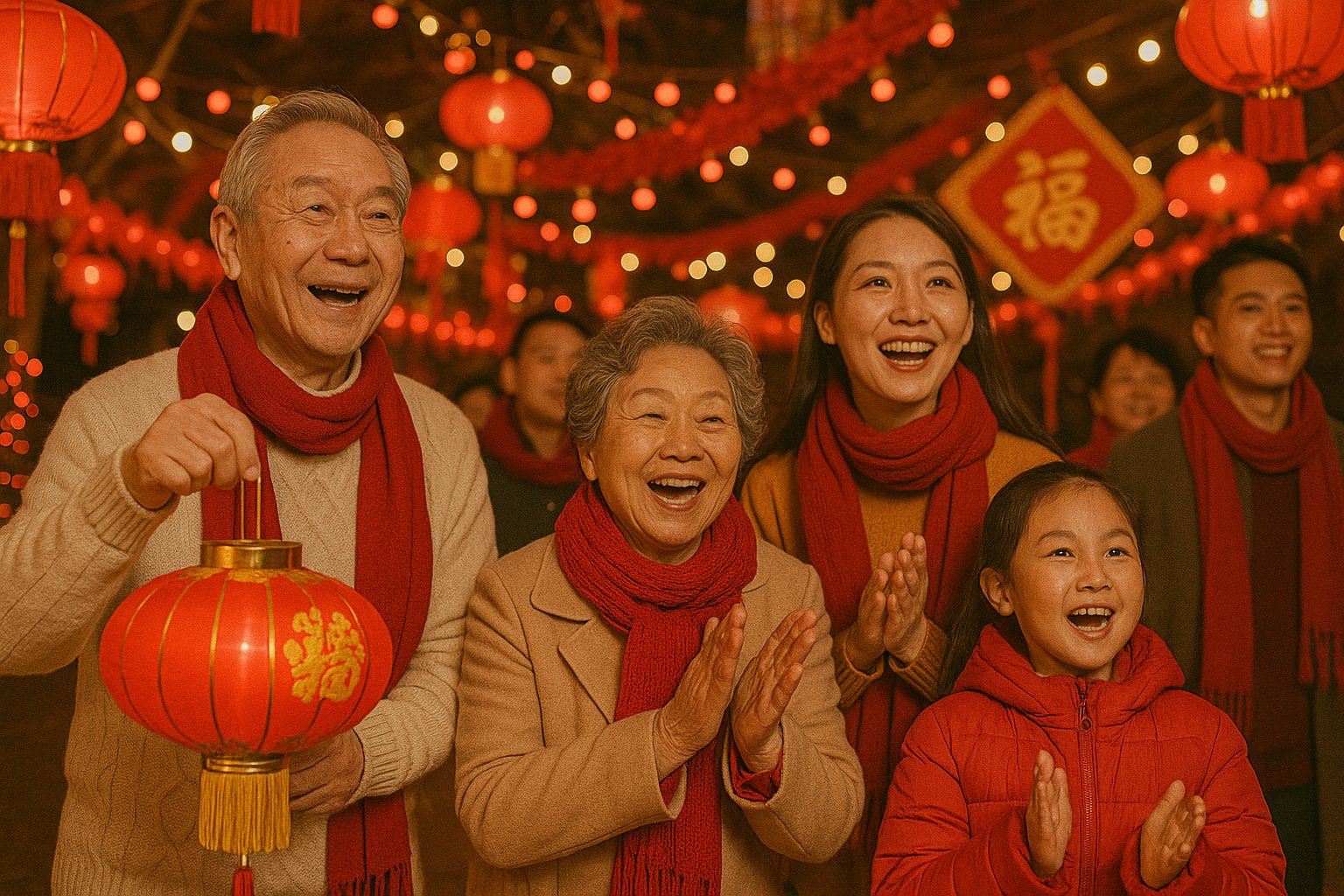
🧧 Introduction: More Than Just Fireworks and Red Envelopes
Every winter, as Western cultures wind down from the New Year festivities, another celebration is just beginning—and it's anything but quiet. Streets in Beijing, Singapore, San Francisco’s Chinatown, and homes across the Chinese diaspora light up with lanterns, lion dances, red banners, and the crackling of firecrackers. It’s Chinese New Year, also known as Lunar New Year or Spring Festival (春节 – Chūnjié)—and it’s the most important cultural holiday across much of East Asia.
But Chinese New Year is far more than a party. It's a deeply symbolic event rooted in over 4,000 years of tradition. It’s about family reunion, renewal, and luck for the year ahead. From preparing auspicious dishes and decorating homes to observing centuries-old superstitions, each tradition has meaning—and learning about it offers incredible insight into Chinese language and culture.
Whether you're a Mandarin student, a cultural enthusiast, or simply curious, this article will guide you through the heart of Chinese New Year: the customs, the foods, the symbolism, and the superstitions that make this holiday so fascinating—and still so relevant in modern China and around the world.
🏮 What Is Chinese New Year?
Chinese New Year marks the first day of the lunar calendar, usually falling between late January and mid-February. Each year corresponds to one of the 12 animals in the Chinese zodiac, rotating in a 12-year cycle.
The celebration lasts 15 days, starting on New Year’s Eve and ending with the Lantern Festival (元宵节 – Yuánxiāo Jié). It's a time for letting go of the old, welcoming in the new, and bringing good fortune to your family, home, and life.
🏠 Traditional Customs
🧹 1. House Cleaning (But Not on Day One!)
Before New Year's Day, homes are thoroughly cleaned to sweep away bad luck. But here’s the twist: cleaning on New Year’s Day is a no-no, or you risk sweeping away your good fortune.
🎉 2. Red Decorations
Red symbolizes good luck and protection. Families hang red couplets (春联 – chūnlián), red paper cuttings, and decorative banners at the entrance to invite prosperity.
🧧 3. Red Envelopes (红包 – hóngbāo)
Elders gift red envelopes filled with money to children and unmarried younger relatives. These aren’t just gifts—they’re blessings for a prosperous year.
🐉 4. Fireworks and Lion Dances
To ward off evil spirits—especially the mythical monster Nian, which was scared away by noise and color—firecrackers and lion dances light up the holiday.
👨👩👧👦 5. Family Reunion Dinner
On New Year's Eve, families gather for a lavish meal—sometimes traveling thousands of miles to reunite. This dinner is the emotional core of the holiday.
🥟 Foods with Meaning
In Chinese culture, food is more than nourishment—it's symbolic.
🥟 Dumplings (饺子 – jiǎozi)
Shaped like ancient gold ingots, dumplings symbolize wealth and prosperity. Eating them at midnight is a tradition in northern China.
🐟 Fish (鱼 – yú)
Served whole, fish represents surplus because the word for fish sounds like “abundance” (余 – yú). But don’t finish it—it’s auspicious to “have leftovers.”
🧁 Nian Gao (年糕)
A sticky rice cake that means “higher year”—a wish for growth, promotions, and rising fortune.
🍊 Mandarin Oranges (橘子 – júzi)
Given as gifts and used in decor, they symbolize luck and wealth due to their golden color and auspicious pronunciation.
🧿 Common Superstitions to Avoid Bad Luck
Even in today’s modern cities, many Chinese people observe these do’s and don’ts to stay on the right side of fortune:
❌ No sweeping or taking out the trash on Day One
❌ Avoid using sharp objects (like knives or scissors)
❌ Don’t say unlucky words (like “death” or “sickness”)
❌ No breaking things – it’s bad luck! If you do, say “岁岁平安” (suìsuì píng'ān) to counter the bad omen.
✅ Wear red, not white or black – red attracts luck, while white/black are mourning colors.
📅 Key Days to Know
Day Name Meaning
New Year's Eve (除夕) Family reunion dinner and fireworks
Day 1 Welcoming the gods, visiting family
Day 5 Welcoming the God of Wealth (财神节 – Cáishén Jié)
Day 15 Lantern Festival (元宵节). – marks the end of celebrations
🧠 What It Teaches Language Learners
Chinese New Year is one of the best entry points into understanding how Mandarin reflects Chinese values—from greetings to symbolic wordplay.
Learn words like 恭喜发财 (gōngxǐ fācái) – “Wishing you prosperity”
Understand why tone matters: “鱼” (yú – fish) and “余” (yú – surplus) sound the same
Practice politeness and honorific phrases used in family gatherings
Learning the language with culture adds depth, connection, and joy to your Mandarin journey.
📚 FAQs About Chinese New Year
❓Is Chinese New Year only celebrated in China?
No! It's celebrated in Taiwan, Singapore, Malaysia, Hong Kong, Vietnam (as Tết), and Chinatowns worldwide.
❓What’s the difference between Chinese New Year and Lunar New Year?
Lunar New Year is the broader term. Chinese New Year is one version of it—Korean Seollal and Vietnamese Tết are others.
❓How do you say “Happy New Year” in Mandarin?
新年快乐 (xīnnián kuàilè) – literally “New Year Happy!”
You can also say 恭喜发财 (gōngxǐ fācái) – “Wishing you wealth and prosperity.”
❓Can non-Chinese people participate?
Absolutely! Sharing food, saying greetings, and learning customs is a wonderful way to engage with Chinese friends or colleagues.
❓What if I accidentally break a taboo?
Most people will be understanding. Say “岁岁平安” (suìsuì píng’ān) if you break something—it means “peace year after year.”
📣 Learn Mandarin with Cultural Insight at Polyglottist
At Polyglottist Language Academy, we don’t just teach you how to say words—we show you how to live the language. Our Mandarin classes include real conversation, cultural context, and seasonal traditions like Chinese New Year so you feel connected, not confused.
Our small-group classes (3–6 students max) are available in Berkeley, with online options for students in San Francisco, Oakland, San Jose, and beyond.
👉 Join us today and celebrate your learning with meaning. Click here to enroll!
📖 More Mandarin and Culture Articles You’ll Love:
What To Expect In Your First Adult Mandarin Class (And Why You’ll Love It)
How Mandarin Can Boost Your Career In The Bay Area Tech And Business Scene
Why Learning Mandarin As An Adult Is More Doable Than You Think
From Dumplings To Dialogues: How To Speak Mandarin At Bay Area Restaurants
Best Mandarin Classes For Busy Professionals In The Bay Area
Managing Language Anxiety: Psychological Strategies For Relaxation And Focus
Mastering Politeness Levels And Formality In Different Cultures
Building A Daily Language Routine: How Consistency Drives Fluency
Understanding Chinese New Year is more than a cultural footnote—it’s a gateway to empathy, fluency, and joyful connection. Celebrate language and culture together with Polyglottist Language Academy.
🀄🧧🎇