
The French Bathroom Situation Explained (With Useful Vocabulary)
Introduction: The Great Bathroom Mystery of France
Picture this: you’re wandering the charming streets of Paris. You’ve spent the morning admiring art at the Musée d’Orsay, sipping café crème, and nibbling on a flaky croissant. But suddenly—disaster strikes. You really need a bathroom.
You dart into a café and ask:
“Excusez-moi, où sont les toilettes ?”
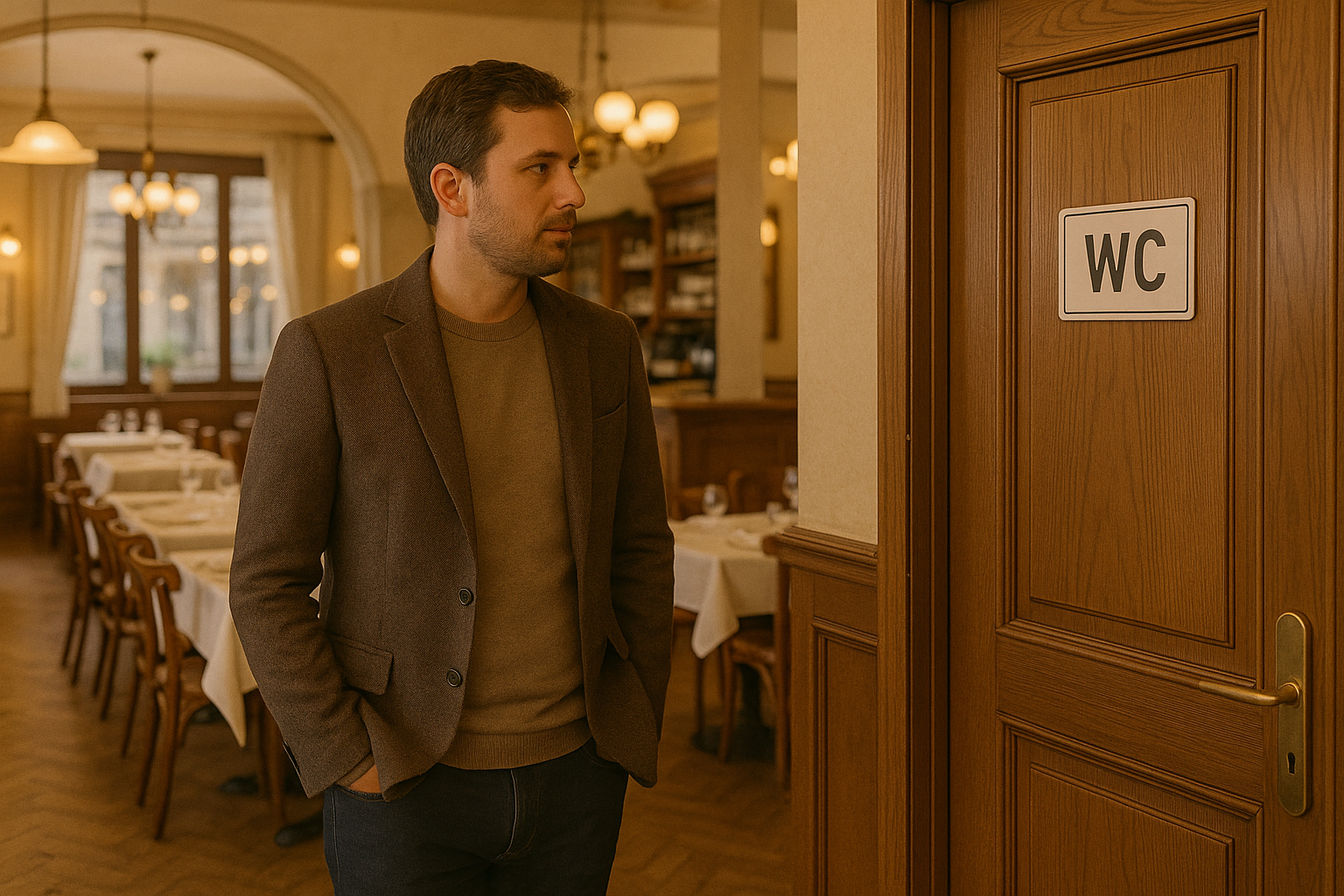
The server raises an eyebrow and replies with an elaborate gesture toward a winding staircase. You follow the cryptic directions only to find a door labeled “WC.” Behind it? A single room with a sink and toilet squeezed into a space barely big enough to turn around. Or maybe you open the door and find only a toilet—but no sink at all. Worse yet, perhaps there’s a separate door labeled “lavabo.”
Or perhaps you’re in a private home and discover that the toilet isn’t even in the same room as the bath or shower. You’re left pondering life’s big questions while standing in a hallway with shampoo in hand.
Welcome to the French bathroom situation—a subject that has mystified, baffled, and amused countless visitors for generations.
For French people, these quirks are perfectly normal. But for foreigners, especially Americans used to spacious bathrooms where everything’s in one room, it can feel like stepping into a parallel universe.
Why the separation? What do all the different signs mean? And how can you navigate this essential part of daily life without embarrassment or confusion?
In this article, we’ll explore:
✅ The differences between les toilettes, la salle de bains, and le WC
✅ Why the French separate toilets and bathrooms
✅ Practical vocabulary and phrases you’ll actually use
✅ Tips for finding public restrooms without panic
✅ Cultural etiquette around using the bathroom in France
By the end, you’ll not only understand the mysteries of the French bathroom—you’ll be able to talk about it like a local.
So grab a glass of water (but maybe not too much), and let’s dive in.
Part 1: Toilettes vs. Salle de Bains vs. WC
Let’s start with the most important distinction. In France, there are three main terms for places related to bathroom functions. They are not interchangeable:
Les Toilettes
Refers specifically to the toilet itself—where you “do your business.”
May be a single, tiny room with only a toilet, no sink.
In public places, usually labeled “WC.”
Example:
“Où sont les toilettes, s’il vous plaît ?”
(Where is the bathroom, please?)
La Salle de Bains
Literally means “the room of baths.”
Refers to a room containing a bathtub or shower and sink.
Often does not contain a toilet in French homes.
Example:
“Je vais me laver dans la salle de bains.”
(I’m going to wash up in the bathroom.)
Le WC (Water Closet)
Common sign in public places for toilets.
Pronounced roughly “Vay-Say.”
Short for “water closet”—an older British term still alive in French.
Example:
“Les WC sont au sous-sol.”
(The toilets are in the basement.)
Why Are Toilets Separate in France?
Americans often find it puzzling that many French homes have the toilet in a separate room from the shower or bath.
Reasons include:
✅ Hygiene: Keeping the toilet away from bathing areas was historically seen as cleaner.
✅ Practicality: In older buildings, plumbing was added over time, often wherever there was space.
✅ Cultural habits: French people view bathing and toilet functions as distinctly separate.
Thus, in many French apartments:
Toilettes → Small room with just a toilet (and maybe a tiny sink).
Salle de bains → Room with bath/shower and sink, no toilet.
Part 2: Public Toilets in France
Ah, public toilets—a source of both relief and frustration for travelers.
Where to Find Them
✅ Cafés and Restaurants
Often the safest bet.
Be polite: order a coffee before asking to use the facilities.
✅ Public Toilets (Toilettes Publiques)
Found in parks, tourist areas, and train stations.
Often labeled “Sanisette.”
Many require payment (typically 50 cents to 1 euro).
✅ Shopping Centers
Large malls often have free restrooms.
✅ Museums and Tourist Sites
Usually well-maintained.
How to Ask
“Où sont les toilettes, s’il vous plaît ?”
(Where are the toilets, please?)“Est-ce qu’il y a des toilettes publiques près d’ici ?”
(Are there public toilets nearby?)
Be Prepared
Carry coins for pay toilets.
Don’t be surprised by squat toilets in rural areas (less common today but still possible).
Some public toilets self-clean between users—watch for “Occupé” and “Libre” signs.
Part 3: Useful Vocabulary
Let’s build your French bathroom vocabulary so you can navigate any situation.
Essential Words
Les toilettes → The toilet(s)
La salle de bains → Bathroom (with shower/bath)
Le lavabo → Sink (in a bathroom)
Le WC → Water closet (toilet)
Les sanitaires → Bathroom facilities (general)
La douche → Shower
La baignoire → Bathtub
Le papier toilette → Toilet paper
Le savon → Soap
La serviette → Towel
L’essuie-mains → Hand towel
La chasse d’eau → The toilet flush
La cuvette → Toilet bowl
Common Phrases
“Puis-je utiliser vos toilettes ?”
May I use your restroom?“Les toilettes sont occupées.”
The toilet is occupied.“Il faut payer pour entrer ?”
Do you have to pay to get in?“Il y a du papier toilette ?”
Is there toilet paper?“La chasse d’eau ne fonctionne pas.”
The flush doesn’t work.
Part 4: Cultural Bathroom Etiquette
Learning the words is one thing—but understanding the culture is just as crucial.
Don’t Just Walk In
In cafés or restaurants:
Order something first before using the bathroom.
Walking straight in to use the toilet can seem rude.
Toilet Paper May Be Scarce
Carry tissues or small packs of toilet paper when out and about.
Some public toilets do not provide paper.
Close the Door
In homes, always close the toilet door—even if no one’s home. It’s considered polite and private.
Talking About Toilets
The French are discreet about bathroom topics.
Keep requests polite and brief.
Fun French Toilet Facts
✅ George V’s Hotel in Paris installed one of the first luxury public toilets in the city.
✅ Paris introduced “sanisettes,” futuristic self-cleaning toilets, in the 1980s.
✅ The term WC remains widely used due to early British plumbing influence in Europe.
Real-Life Scenarios
Here’s how you might use your new knowledge:
At a Café:
“Excusez-moi, où sont les toilettes ?”
(Excuse me, where are the toilets?)
In a Home:
“Où est la salle de bains ?”
(Where is the bathroom?)
At a Park:
“Est-ce qu’il y a des toilettes publiques ici ?”
(Are there public toilets here?)
Why Knowing Bathroom Vocabulary Matters
Some people think bathroom vocabulary is trivial. It’s not.
✅ It’s essential for comfort and emergencies while traveling.
✅ It prevents embarrassing misunderstandings.
✅ It helps you navigate daily life like a local.
Plus, talking about everyday topics like bathrooms is how you go from textbook French to real-world fluency.
Frequently Asked Questions (FAQs)
Q1: Can I just say “bathroom” in French?
Careful! Saying “salle de bains” might confuse people if you want a toilet. Ask for les toilettes or le WC in public.
Q2: Are public toilets free in France?
Some are free, but many require payment (50 cents to €1). Always carry small coins.
Q3: Why are toilets separate from bathrooms in French homes?
Historically for hygiene and practicality. It’s still common today, though newer apartments sometimes combine them.
Q4: Is it rude to use a café’s toilet without buying something?
Yes—it’s polite to order a coffee or pastry first.
Q5: Do French homes usually have a shower and bath in the same room?
Yes, but not always. Older homes might only have a bathtub.
Q6: Do French people talk openly about bathroom topics?
Not generally. The French tend to be discreet about bodily functions.
Q7: What does “WC” stand for?
“Water Closet.” It’s a British term adopted into French.
Q8: Are there squat toilets in France?
Rare in cities now, but still possible in rural areas or older public facilities.
Unlock Real-Life French with Polyglottist Language Academy!
At Polyglottist Language Academy, we believe true fluency means being ready for real-life situations—even the awkward ones! We teach practical language, cultural tips, and confidence so you can navigate every part of your French adventure—from museums to markets to, yes, the bathroom.
Ready to learn French you can actually use? Join us today, and let’s make your French not just fluent—but fearless!
Check Out More Articles On Our Blog!
Curious to keep exploring? Dive into these other helpful reads:
Why Fluent French Isn’t Perfect French—And Why That’s A Good Thing
A Crash Course In “French Filler Words” (Eh Bien, Tu Vois, Genre...)
Street French Vs. School French: What You’ll Hear Vs. What You Learn
What Learning French Teaches You About English (Yes, Really!)
10 “Invisible Words” In Spoken French That Aren’t In Your Textbook
The Sound Of French: How To Train Your Ear To Understand Spoken French Fast
From Oui To Oops: The Funniest Mistakes French Learners Make (And What They Teach Us)