
What Your Favorite French Expressions Say About You
Introduction: The Secret Life of Words
Imagine walking through a bustling Parisian street. The clink of coffee cups echoes through the air. A man shouts “C’est la vie!” as he shrugs off a spilled coffee. A woman sighs “Oh là là” at the price of a dress in a shop window. Two friends laugh, tossing around words like “Bof” and “Ça marche!”
These are more than just words—they’re windows into the soul.
French is a language known for its elegance, precision, and music. But it’s the expressions—those colorful, often untranslatable turns of phrase—that truly give French its personality. For learners and fluent speakers alike, favorite French expressions become a kind of secret code, reflecting not just language skill but deeper truths about who you are and how you see the world.
Some expressions are playful. Others are philosophical. Some are practical tools for everyday life, while others serve as the perfect flourish to an emotional conversation. When you adopt a favorite French phrase, you’re revealing a slice of your personality. Are you a romantic dreamer, a philosophical observer, a joker, or a cool-headed pragmatist?
In this article, we’ll explore some of the most beloved French expressions and what they might say about you. Along the way, you’ll discover linguistic gems, cultural insights, and perhaps even a few new favorites to add to your own repertoire.
So grab a café crème, settle into your favorite chair, and let’s dive into the delightful world of French expressions—and the secrets they reveal about those who use them.
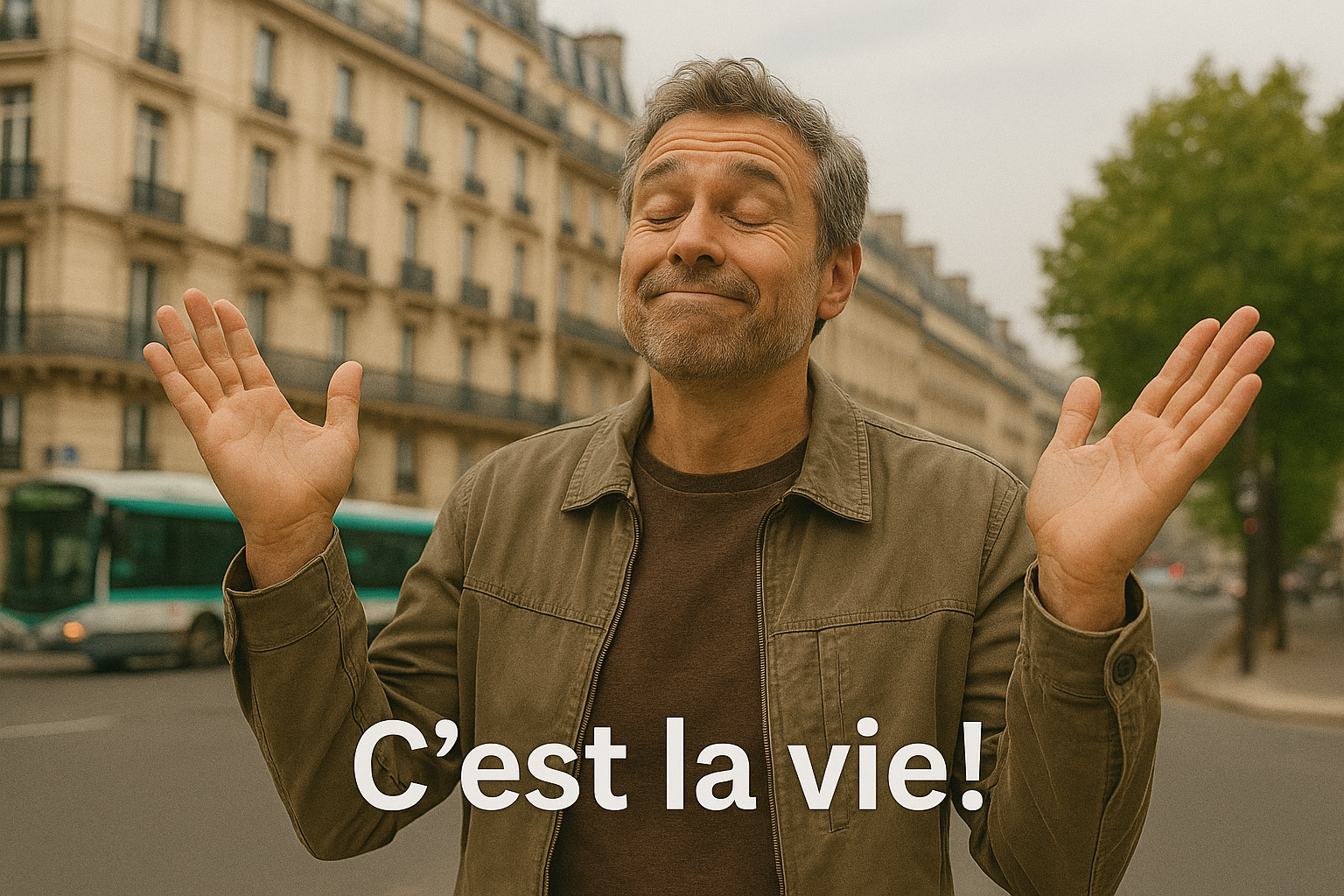
“C’est la vie” → You’re a Philosophical Optimist
Literal meaning: That’s life.
Used when: Life doesn’t go as planned, but you accept it with grace.
If “C’est la vie” is your go-to phrase, you’re someone who takes life in stride. You don’t dwell on disappointments or mishaps. Instead, you recognize that life is unpredictable and choose to keep moving forward.
Your friends admire your calm and your refusal to get rattled. You’re the one who shrugs off traffic jams, spilled coffee, and minor setbacks. Your outlook is philosophical, and you believe that everything—even challenges—is part of the grand adventure.
Example: “Le métro est en grève encore… c’est la vie !”
“Ça marche!” → You’re a Pragmatic Go-Getter
Literal meaning: That works!
Used when: Agreeing to a plan, confirming arrangements.
You’re the person who likes clear plans and solutions. When you say “Ça marche,” you’re decisive and action-oriented. You like efficiency and are happiest when things run smoothly.
People see you as dependable and practical. You’re the friend who organizes outings, the colleague who nails project deadlines, and the traveler who figures out train schedules without breaking a sweat.
Example: “On se retrouve à 19h au café ? – Ça marche !”
“Bof” → You’re a Nonchalant Realist
Literal meaning: Meh.
Used when: Expressing indifference, lack of enthusiasm.
If “Bof” peppers your speech, you’re someone who keeps your expectations realistic. You’re not easily impressed, and you don’t fake enthusiasm just to please others.
This doesn’t mean you’re cynical—you simply prefer honesty. You’d rather express mild disinterest than pretend excitement. You’re probably the friend who gives the most genuine restaurant reviews.
Example: “Tu as aimé le film ? – Bof.”
“Oh là là” → You’re Expressive and Emotional
Literal meaning: Oh dear! Oh wow! Oh my!
Used when: Surprised, impressed, frustrated, delighted.
“Oh là là” is one of the most versatile expressions in French. If it’s your favorite, you’re probably someone who wears your heart on your sleeve.
Your emotions are vivid, and you love sharing them with the world. Whether you’re ecstatic about a new pastry shop or outraged by bad service, your reactions are big, and your friends love your energy.
Example: “Oh là là, ce gâteau est délicieux !”
“Je ne sais quoi” → You’re All About Mystery and Charm
Literal meaning: A certain “I don’t know what.”
Used when: Describing an elusive, irresistible quality.
If you love “je ne sais quoi,” you’re probably a lover of elegance and subtlety. You appreciate the intangible, the mysterious. You value nuance and find beauty in the small details others overlook.
Your friends might describe you as stylish, refined, or even a bit enigmatic. You’re drawn to art, fashion, and conversations that explore deeper meanings.
Example: “Elle a un je ne sais quoi qui la rend irrésistible.”
“Ça m’est égal” → You’re Easygoing and Adaptable
Literal meaning: It’s all the same to me.
Used when: You have no strong preference.
If “Ça m’est égal” is your motto, you’re easy to get along with. You’re flexible, patient, and not prone to drama.
Your friends love you for your relaxed attitude. You’re the person who’s happy to go wherever the group decides, whether it’s sushi or pizza. Yet your laid-back nature doesn’t mean you lack opinions—you simply save your energy for what truly matters.
Example: “On va au ciné ou au théâtre ? – Ça m’est égal.”
“Coup de foudre” → You’re a Romantic Dreamer
Literal meaning: A bolt of lightning.
Used when: Describing love at first sight.
You’re a romantic at heart, passionate and a bit dramatic. You believe in love stories, destiny, and the power of instant connections.
When you talk about your travels, friendships, or passions, your eyes light up. Life is poetry for you, and you seek experiences that make your heart race.
Example: “Quand je l’ai vu, ça a été le coup de foudre.”
“L’esprit d’escalier” → You’re a Reflective Thinker
Literal meaning: The spirit of the staircase.
Used when: You think of the perfect comeback too late.
If this is your favorite phrase, you’re deeply thoughtful and reflective. You replay conversations in your mind and wish you’d delivered that perfect witty line at the right moment.
Your friends know you as the quiet observer. You’re often insightful, and your humor tends to be subtle and dry.
Example: “J’ai pensé à la réponse parfaite en rentrant chez moi. L’esprit d’escalier…”
“Comme ci, comme ça” → You’re Balanced and Moderate
Literal meaning: So-so.
Used when: Things are neither great nor terrible.
You’re a moderate soul, someone who sees shades of gray where others see black and white. You’re not prone to extremes and tend to give honest, measured opinions.
Your friends appreciate your level-headedness. You’re a great listener, the person who offers calm, practical advice without drama.
Example: “Tu aimes ton nouveau travail ? – Comme ci, comme ça.”
“Chapeau!” → You’re Admirative and Generous
Literal meaning: Hat off!
Used when: Expressing admiration or respect.
If you say “Chapeau!” often, you’re generous with praise and genuinely happy to see others succeed. You notice people’s talents and aren’t afraid to celebrate them.
Your friends love you for your kindness and positivity. You lift people up and make them feel valued.
Example: “Tu as couru un marathon ? Chapeau !”
How Favorite Expressions Shape Your Language Identity
Choosing and using favorite expressions isn’t random—it’s an expression of who you are. They shape how you interact with others and how others perceive you.
When you adopt French phrases into your speech, you’re not only practicing language—you’re crafting an identity, creating a bridge between cultures, and giving your personality a new dimension.
Why Learn French Expressions?
✅ They make you sound more authentic.
✅ They help you connect culturally.
✅ They reveal nuance and emotional subtlety.
✅ They’re fun!
Learning French expressions is the difference between speaking “correct French” and speaking French that lives and breathes.
Frequently Asked Questions (FAQs)
Q1: Are French expressions hard to learn?
Not really! Many are short and used daily. Start with a few and practice in context.
Q2: Will people laugh at me for using expressions?
Quite the opposite—people love when learners embrace idioms and expressions. It shows genuine interest in the language.
Q3: Do all regions of France use the same expressions?
Many expressions are national, but regional slang exists. For instance, Marseille has its own colorful phrases.
Q4: How do I know when to use “tu” vs. “vous” in expressions?
Most expressions are neutral, but politeness still applies. Use “vous” with strangers or older people.
Q5: Is it okay to mix French expressions into English conversations?
Many bilingual people do! Just be sure your listener understands them.
Q6: What’s a good way to remember expressions?
Use them in conversation, write them down, or create flashcards with examples.
Q7: Are expressions the same in French-speaking countries like Canada or Belgium?
Some are shared, but each region has unique idioms. Quebec French, for instance, has its own slang.
Q8: Which expression should I start with as a beginner?
“Ça va” is a great start—it’s versatile and used everywhere.
Bring French to Life with Polyglottist Language Academy!
At Polyglottist Language Academy, we believe language learning should be joyful, engaging, and culturally rich. Our classes go beyond grammar to help you embrace expressions, humor, and the cultural insights that make French truly alive.
Ready to discover what your favorite French expressions say about you? Join us, and let’s bring your French personality to life!
Check Out More Articles On Our Blog!
Craving more French culture and language tips? Explore these articles:
Why Fluent French Isn’t Perfect French—And Why That’s A Good Thing
A Crash Course In “French Filler Words” (Eh Bien, Tu Vois, Genre...)
Street French Vs. School French: What You’ll Hear Vs. What You Learn
What Learning French Teaches You About English (Yes, Really!)
10 “Invisible Words” In Spoken French That Aren’t In Your Textbook
The Sound Of French: How To Train Your Ear To Understand Spoken French Fast
From Oui To Oops: The Funniest Mistakes French Learners Make (And What They Teach Us)