
French Social Rituals Americans Often Misunderstand
Introduction: The Invisible Script of French Life
Picture this: you’re at a dinner party in Paris. The table is set with elegant simplicity, candles flicker in crystal holders, and the scent of garlic and thyme floats through the room. You greet your host, excited and slightly nervous. You say “Hi!” and lean in for a hug. Your host freezes, eyebrows lifting slightly. The conversation pauses. A subtle awkwardness fills the air, so slight you wonder if you’ve imagined it.
Welcome to the world of French social rituals—a fascinating, sometimes baffling network of rules and customs that shape everyday interactions in France.
Americans often arrive in France armed with textbooks full of grammar and vocab but unprepared for the unwritten social script that governs French life. While France and the United States share many Western values, their cultural codes can differ dramatically, leading to misunderstanding and sometimes social faux pas.
French people can seem aloof when they’re simply being polite. Americans may come across as overly familiar when trying to be friendly. Little rituals—like how to say hello, when to use formal language, how to behave at a dinner table, or even how to smile—carry powerful cultural meaning in France.
Yet these rituals are not barriers. They’re gateways. Understanding them doesn’t just help you avoid embarrassment—it unlocks a deeper, richer connection to French society. The French, after all, prize subtlety, elegance, and respect in social dealings. Learning to navigate these nuances is as important as knowing how to conjugate verbs.
In this article, we’ll explore French social rituals Americans often misunderstand. We’ll decode the subtleties, share real-life examples, and offer tips for blending in seamlessly. Whether you’re planning a trip, living as an expat, or simply fascinated by French culture, this guide will help you cross the invisible bridge between “outsider” and “insider.”
So take a deep breath, and let’s step into the artful world of French social life.
1. The Importance of Greetings
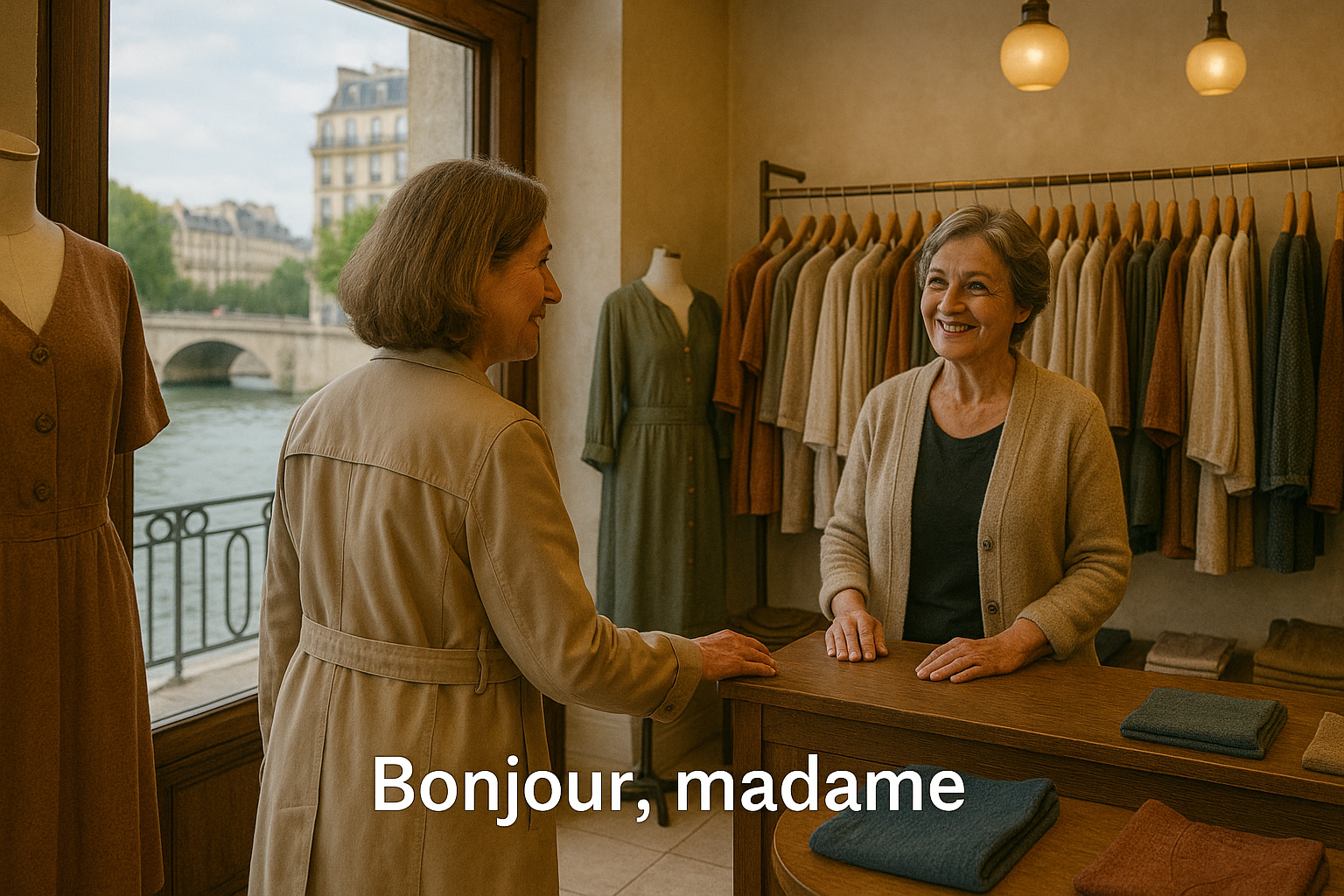
In France, greetings are sacred. They set the tone for every interaction—business or personal. Americans often dive right into conversation without a greeting, which can seem abrupt or rude in French culture.
Always say hello: When you enter a shop, café, or office, greet with “Bonjour, Monsieur/Madame.”
Even a quick stop for bread demands a greeting and farewell. Failing to do so can earn you cold service or suspicion.
Pro Tip: In the evening, switch to “Bonsoir.”
2. The Rules of La Bise
Ah, the famous bise—the cheek kiss. Americans often misunderstand this ritual:
It’s not romantic. It’s a standard greeting among friends, family, and sometimes colleagues.
The number of kisses varies by region—from 2 to 4.
Not everyone does la bise. Wait for the French person to initiate it.
It’s light—a mere touch of cheeks, no actual lip-to-skin contact.
Americans who attempt a hug instead of la bise can throw French friends off balance.
3. The Formality of Vous and Tu
French has two forms of “you”: tu (informal) and vous (formal). Americans often default to friendliness, using “tu” prematurely. Big mistake.
Use vous with strangers, older people, and in professional settings.
Switch to tu only when invited.
Using “tu” too soon can feel intrusive or disrespectful.
4. Smiling: Less is More
Americans smile often as a sign of friendliness. In France:
Smiling too broadly at strangers can seem insincere or naïve.
French people save smiles for genuine emotion, not casual encounters.
A neutral face isn’t rude—it’s normal.
5. Small Talk Isn’t Small
In the US, small talk is casual: “How’s your day?” or “Nice weather!” In France, conversations tend to have substance, even among acquaintances.
Topics like politics, culture, literature, and social issues are normal.
Superficial chatter feels empty.
Don’t be afraid of debate—it’s seen as engaging, not aggressive.
6. Politeness in Shops and Restaurants
American service culture often prioritizes “the customer is always right.” In France:
Staff expect polite interactions.
Always greet your server with “Bonjour.”
Don’t snap fingers or call loudly for service.
A raised hand and eye contact suffice.
Ignoring these rules can result in slower service or curt replies.
7. Dining Etiquette
French meals are rituals in themselves, governed by codes that Americans may overlook:
Keep both hands visible on the table (but elbows off).
Bread goes directly on the tablecloth, not on your plate.
Never split the check in small amounts. The French prefer one person pays, and others pay back later.
Talking loudly or gesturing wildly is frowned upon.
8. The Art of Debate
French culture embraces lively discussion. Americans may misinterpret this as arguing:
Debate is a form of intellectual engagement, not hostility.
Expect directness. French people don’t always sugarcoat opinions.
It’s normal to disagree, then continue the friendship as if nothing happened.
9. Keeping Your Distance
Americans value openness and quick friendships. In France:
Friendships develop slowly and deeply.
Oversharing personal details early on can feel intrusive.
The French draw a line between acquaintances and true friends.
10. Invitations and Hospitality
In the US, an invitation might be casual: “Stop by anytime!” In France, invitations are precise:
Always RSVP.
Never show up unannounced.
If invited to dinner, bring a small gift (wine, flowers, chocolates).
Don’t arrive exactly on time. Arriving 10-15 minutes late is polite.
Why These Rituals Matter
Understanding these rituals helps Americans:
✅ Avoid awkward moments.
✅ Build genuine connections.
✅ Show respect for French culture.
✅ Enjoy smoother interactions in daily life.
The French love to help foreigners navigate their customs—provided the effort to respect their norms is there. Learning these social codes is part of speaking French fluently—not just linguistically, but culturally.
Frequently Asked Questions (FAQs)
Q1: Should I always say “Bonjour” in shops?
Yes! Not greeting shop staff is seen as rude. Always say “Bonjour” when entering, and “Au revoir” when leaving.
Q2: Is it rude to hug someone instead of doing la bise?
In France, hugging is reserved for close relationships. Use la bise with friends, but wait for the French person to initiate.
Q3: Can I use “tu” with people my age?
Not automatically. Use “vous” until the other person suggests switching to “tu.”
Q4: Why don’t French people smile as much as Americans?
Smiling is used more sparingly in France, reserved for sincere emotion rather than social courtesy.
Q5: Is it rude to be late in France?
For social events, arriving 10-15 minutes late is often polite. For business, be punctual.
Q6: Can I split the bill in a French restaurant?
It’s possible but less common. Often, one person pays, and others settle up privately later.
Q7: Is debating politics at dinner normal?
Yes! Lively debate is part of French culture. It’s seen as stimulating, not rude.
Q8: What small gift should I bring if invited to dinner?
Wine, chocolates, or flowers are perfect choices. Avoid chrysanthemums—they’re associated with funerals.
Join the Conversation at Polyglottist Language Academy!
Mastering French goes far beyond memorizing verbs and vocabulary. It’s about stepping into the social dance of French life, understanding its nuances, and connecting on a deeper level.
At Polyglottist Language Academy, we don’t just teach language—we help you navigate real-life situations like greetings, dining, and social etiquette so you can blend in confidently anywhere in the Francophone world.
Ready to go beyond the textbook? Sign up today and let’s make you not only fluent but culturally savvy!
Check Out More Articles On Our Blog!
Curious about more French cultural secrets? Explore these reads:
Why Fluent French Isn’t Perfect French—And Why That’s A Good Thing
A Crash Course In “French Filler Words” (Eh Bien, Tu Vois, Genre...)
Street French Vs. School French: What You’ll Hear Vs. What You Learn
What Learning French Teaches You About English (Yes, Really!)
10 “Invisible Words” In Spoken French That Aren’t In Your Textbook
The Sound Of French: How To Train Your Ear To Understand Spoken French Fast
From Oui To Oops: The Funniest Mistakes French Learners Make (And What They Teach Us)