
Why Listening to Fast French Is Hard—and What to Do About It
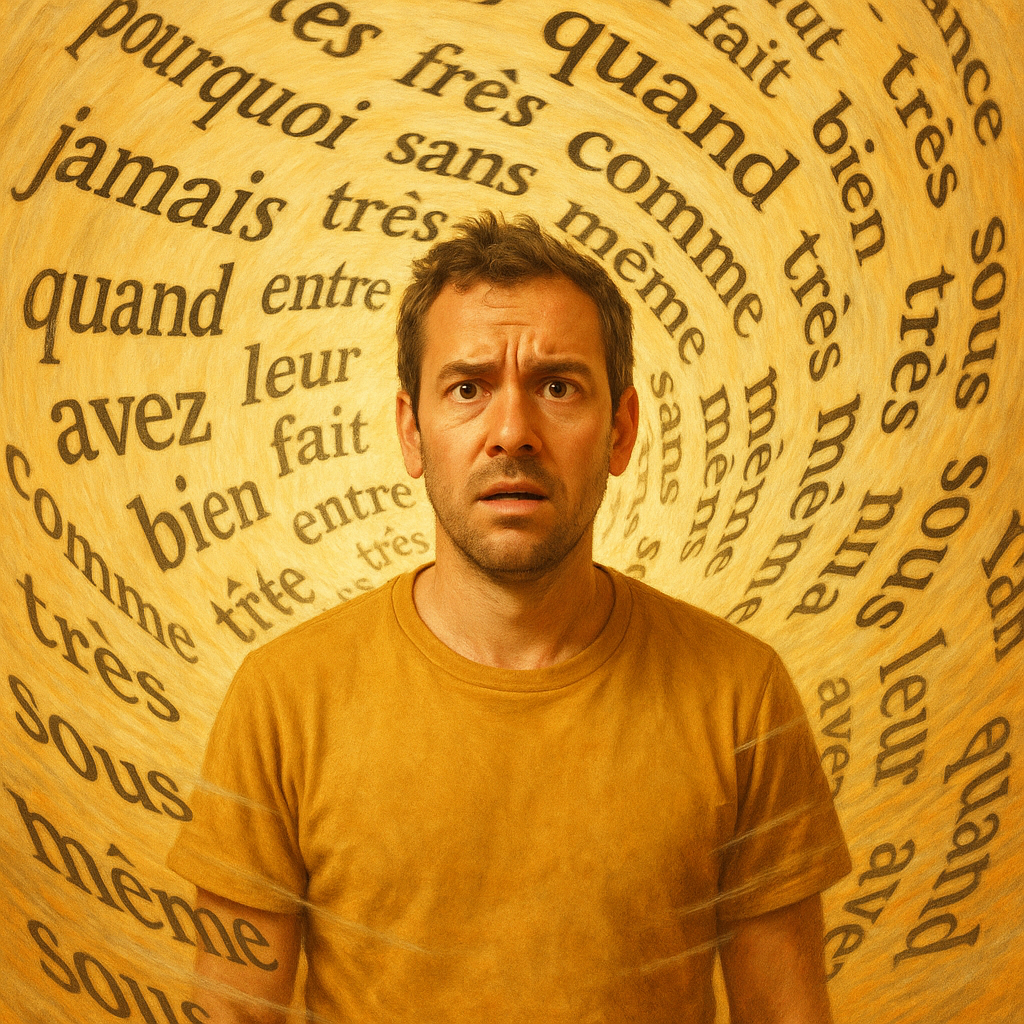
Introduction: When “Fluent” Meets “What Did They Just Say?”
You’ve been studying French for months—or maybe even years. You can conjugate verbs in the passé composé, describe your weekend plans, and order a croissant with confidence. You feel ready. You turn on a French movie or try to follow a casual conversation—and suddenly, it’s like you’ve never studied at all.
Words blur into one another. Entire phrases vanish before your ears can catch them. You recognize nothing except the occasional “bah oui” or “tu vois.” And worst of all, it seems like everyone else is keeping up—except you.
If this sounds familiar, you’re not alone.
Understanding fast, natural French is one of the hardest milestones for learners to reach. In fact, it’s often the last piece of the fluency puzzle. You may be great at reading and decent at speaking, but listening? That’s where French throws you a curveball.
But here’s the good news: It’s not your fault. And it’s not a sign that you’re bad at languages.
Fast spoken French follows its own set of rules—rhythmic, fluid, and full of shortcuts. Native speakers drop syllables, link words together, and swallow endings in ways you won’t find in textbooks or even most language apps.
The problem isn’t you—it’s your training.
In this article, we’ll unpack:
Why fast spoken French is so difficult to understand,
The top features of real-life French that learners struggle with,
Practical strategies to train your ear and decode natural speech,
And how to make listening a strength, not a weakness.
Whether you’re preparing for a trip to France, watching Netflix in French, or just tired of asking people to repeat themselves, this guide will help you bridge the gap between classroom French and the real thing.
1. Why Fast French Feels Like a Different Language
Let’s start with some honesty: classroom French and street French are not the same.
In school, you hear clear, slow, carefully articulated sentences:
Je ne sais pas. Je vais au marché. Tu veux venir ?
In real life? It sounds more like:
Ch’ais pas. J’vais au marché. Tu veux v’nir ?
This difference is huge—and confusing. But it's also predictable. French is full of patterns that speed up speech by cutting, linking, and smoothing sounds.
Here’s why listening is uniquely hard in French:
a. Liaisons and Elisions
Words often link together through a process called liaison, where the ending consonant of one word connects to the next:
Ils ont → il-Z-on
Vous avez → vou-Z-avé
Add elision (dropping of vowels or syllables), and you get:
Je ne sais pas → Ch’ais pas
b. Dropped Sounds and Slurred Endings
French is notorious for silent letters. But in fast speech, entire syllables can disappear:
Tu es allé où ? becomes T’es allé où ?
Je ne comprends pas becomes J’comprends pas or even Ch’prends pas
c. Speed and Rhythm
French speakers don’t pause between words the way English speakers do. Their speech is syllable-timed and smooth, which can make it feel like one long word.
2. Common Features of Spoken French That Trip Learners Up
🌀 Enchaînement
When one word ends in a vowel and the next starts with one, French blends them together:
Il a une idée → Ilaunidé
🔗 Liaison
As mentioned above, consonants that are normally silent appear at the start of the next word:
Vous avez entendu ? → vou-Z-avé entendu
✂️ Elision
Words like je, ne, ce often lose their vowels in speech:
Je ne sais pas → Ché pas
😬 Informal Reductions
Informal speech is full of contractions and dropped syllables:
Tu vas y aller ? → T’vas y aller ?
Qu’est-ce que tu fais ? → Kess tu fais ?
🎭 Filler Words and Colloquialisms
French is full of little expressions that add flavor but confuse learners:
Ben, euh, bah, tu vois, genre, en fait, quoi…
They’re often skipped in formal learning—but dominate real conversation.
3. Why Textbooks Don’t Prepare You for This
Your French class might teach you grammar, vocabulary, and even pronunciation—but most don't train your ear for natural spoken French.
Textbook dialogues are:
Slower
Clearer
Carefully scripted
Void of hesitation, slang, or messy speech
It’s like learning to swim in a bathtub—then being thrown into the ocean.
To bridge the gap, you need to expose yourself to the messy, beautiful chaos of real French—and train your brain to recognize its rhythm and shortcuts.
4. How to Train Your Ear to Understand Fast French
The solution isn't to slow the language down. It's to speed your ear up.
Here’s how.
🎧 a. Listen Every Day (Even for 5 Minutes)
Frequency matters more than duration. A little every day is better than one long session a week.
🎯 b. Choose Level-Appropriate Audio
Start with slow news (Journal en français facile), then work your way up to podcasts, YouTubers, and full-speed TV.
🐢 c. Use Playback Speed Tools
Slow things down (temporarily) to catch pronunciation. Then re-listen at full speed to connect the dots.
✍️ d. Do Dictation
Listen to a short clip. Write what you hear. Then check the transcript. This sharpens listening and spelling simultaneously.
🧠 e. Shadowing
Repeat what you hear as you hear it. It trains your brain to anticipate sounds and speech flow.
📺 f. Watch with Subtitles—Then Without
First watch with French subtitles. Then rewatch without. Then watch again with transcripts. Layer your exposure.
🤓 g. Study Filler Words and Informal Expressions
Don’t skip bah oui, tu vois, en fait, genre. They carry meaning—and mark fluency.
5. Real-Life Examples: What Fast French Sounds Like (and What It Means)
Here are a few real-world examples of how French sounds—and how you can decode it.
🎬 Example 1
Spoken: T’as vu c’qu’y a dit ?
Written: Tu as vu ce qu’il a dit ?
Meaning: Did you see what he said?
🎬 Example 2
Spoken: Ch’peux pas venir, j’suis crevé.
Written: Je ne peux pas venir, je suis crevé.
Meaning: I can’t come, I’m exhausted.
🎬 Example 3
Spoken: J’me demande si ça va marcher.
Written: Je me demande si cela va marcher.
Meaning: I wonder if that’s going to work.
These shortcuts are consistent—once you recognize the patterns, you stop hearing “noise” and start hearing meaning.
6. Don’t Just Listen—Interact
One of the fastest ways to improve listening is to practice speaking with a real person. Why?
You start recognizing how speech feels in your mouth
You get used to hearing responses in real time
Your brain becomes more engaged and alert
Live conversation is a powerful accelerator.
Whether it’s a teacher, tutor, language partner, or fellow learner—talk often, and listen with intention.
7. Tools and Resources We Recommend
🎙️ Podcasts
Journal en français facile – News in easy French
InnerFrench – Slow, clear, intermediate-level podcast
Transfert – Real-life French storytelling
📺 YouTube Channels
Français Authentique
Comme Une Française
HugoDécrypte (for current events)
🧩 Language Tools
LingQ – Interactive transcripts
YouGlish – Search word pronunciation in real contexts
Speechling – Great for shadowing
FAQs
Q: Will I ever be able to understand native French speakers at full speed?
Yes! With regular exposure and the right strategies, your brain will adapt to the speed and rhythm of spoken French.
Q: Should I focus on slow French first, or dive into fast French right away?
Start with slow or intermediate-level audio, then gradually introduce fast, real-life French. Don’t avoid it—just ease in.
Q: Why do I understand written French but not spoken French?
Because spoken French follows different rules—shortcuts, slang, and speech rhythms that you don’t see on paper.
Q: What’s the best way to improve my listening fast?
Combine daily listening, transcript reading, shadowing, and real conversation. Immersion beats isolated study.
Q: Are movies and series good practice?
Absolutely—but start with French subtitles, and choose series with everyday dialogue (like Dix pour cent or Call My Agent!).
Q: Should I memorize filler words?
Yes! They're essential for understanding real speech and sounding natural yourself.
Q: How long does it take to get good at listening?
Everyone’s pace is different, but consistent daily practice can yield huge results in 1–3 months.
Q: Is it okay to ask someone to repeat themselves in French?
Of course! Try: Pardon ?, Vous pouvez répéter ?, or Je n’ai pas bien compris.
Ready to Master French Listening?
At Polyglottist Language Academy, we don’t just teach you textbook grammar—we train your ear to really understand French the way it’s spoken.
🎧 Our French classes emphasize listening comprehension, real conversation, and the fast, casual French you actually hear in the real world.
🗣️ Whether you’re a beginner or advanced learner, our small-group and private online classes help you unlock confidence in both understanding and speaking.
👉 Sign up today for online or in-person French lessons—and never say “Quoi ?” in confusion again.
You Might Also Like…
Explore more articles to level up your French:
Must-Know French Gestures And Body Language For Travelers
How To Shop At A French Market Like A Local
What Americans Find Most Surprising About France (And How To Prepare)
Using Your French In Real Life: From Check-In To Check-Out
French Supermarket Survival Guide: What To Expect And What To Say
Avoiding Tourist Mistakes In Paris: Cultural Tips That Make A Difference
Navigating French Trains, Metros, And Buses Like A Local
French Etiquette 101: Do’s And Don’ts For Visitors
What To Pack For France: A Seasonal Guide For Smart Travelers
How Much French Do You Really Need To Know For A Trip?
How To Order At A French Café Without Embarrassing Yourself