
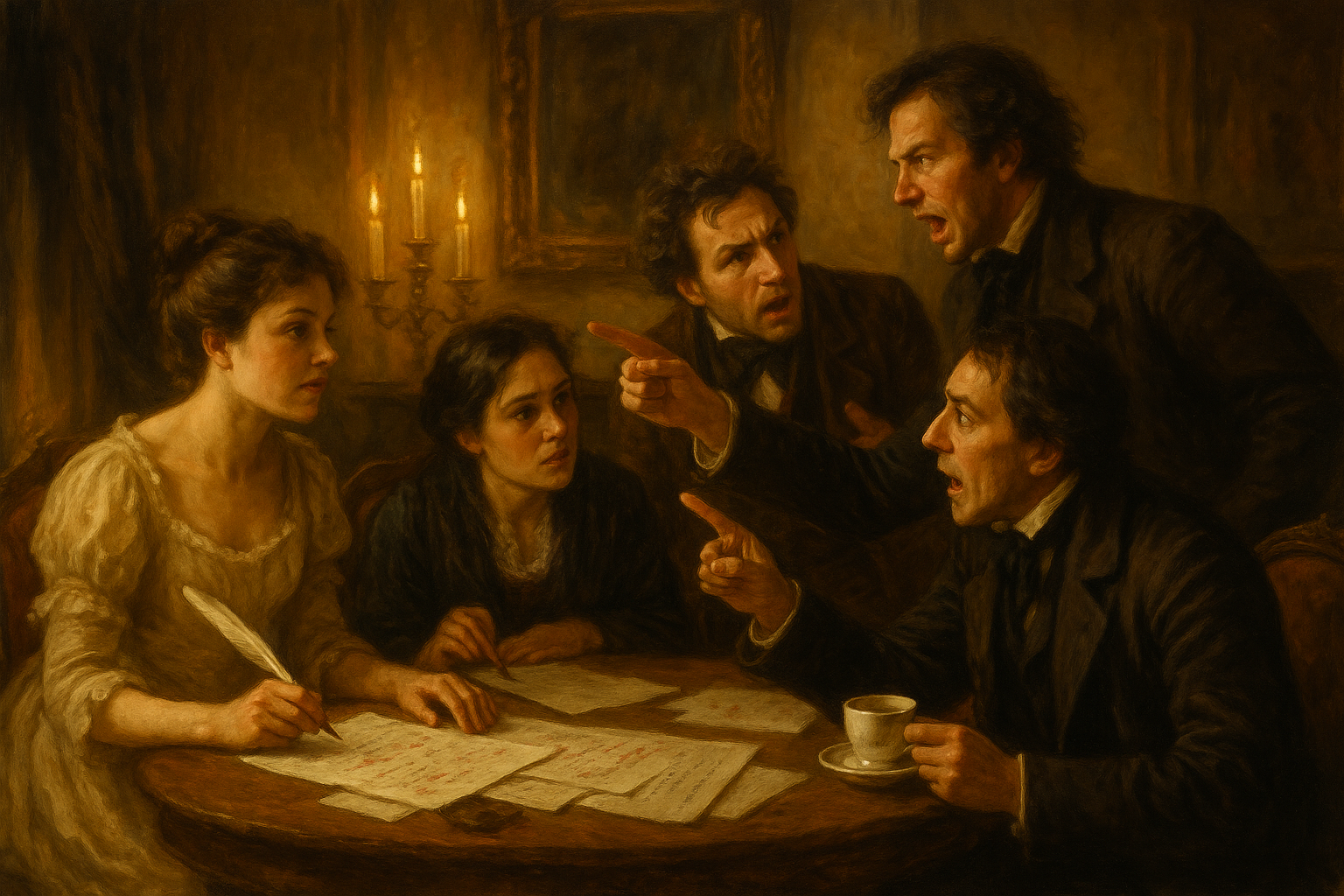
Introduction: Debating as a National Pastime
Picture this. You’re sitting in a bustling Parisian café, espresso cooling slightly in its tiny porcelain cup. At the next table, two friends—both stylishly dressed, animated, gesturing emphatically—are locked in a lively exchange. Voices rise and fall, arms wave, brows furrow, laughter bursts out unexpectedly.
At first, you might think they’re having a heated argument. But as you listen closer, you realize they’re discussing something seemingly trivial: a film they saw last night, the merits of a new government policy, or whether camembert is truly superior to brie.
Welcome to France, where disagreement isn’t a social taboo—it’s practically an art form.
In many cultures, disagreement can be awkward or avoided altogether to preserve harmony. Not so in France. Here, debate and contradiction are woven into the fabric of daily life. People relish intellectual sparring, seeing it as a sign of engagement, intelligence, and respect. Far from being impolite, a spirited debate can be the ultimate proof that you care about the topic—and about the person you’re debating with.
Yet for foreigners, navigating this cultural terrain can feel disorienting. A conversation that seems confrontational might actually be friendly. A polite nod might be perceived as a lack of interest. Learning French words and grammar is only half the challenge; understanding how to disagree—gracefully, cleverly, and without offense—is crucial to fitting in.
Why is disagreement so central to French culture? How do French people express dissent without breaking social bonds? What language tools and conversational strategies do they use to debate without descending into hostility? And how can you, as a language learner or traveler, participate in this uniquely French ritual without feeling uncomfortable—or accidentally causing offense?
In this article, we’ll dive deep into the art of disagreement in French culture. We’ll explore its historical roots, the linguistic nuances involved, and practical tips for handling debates like a true Parisian. We’ll show you how disagreement, far from being rude, can be one of the most vibrant and rewarding parts of speaking French.
So grab a glass of wine—or perhaps a strong café noir—and let’s unravel the secrets of arguing à la française.
1. Why the French Love to Disagree
Historical Roots of Debate
France’s love of debate has deep historical roots. Think of the salons of the Enlightenment, where philosophers like Voltaire and Rousseau argued passionately about society, religion, and politics. Intellectual discourse was—and still is—considered a pillar of civilization.
A Sign of Engagement
In France, disagreeing doesn’t mean you dislike someone. On the contrary, it shows you’re listening, thinking critically, and willing to engage deeply. Silence, or blind agreement, can be perceived as disinterest.
The Value of Eloquence
French culture prizes eloquence. Crafting a clever counter-argument, delivering a witty retort, or making a philosophical point elevates a conversation from mundane chatter to an intellectual dance.
2. How Disagreement Feels Different in France
To outsiders, French conversations can seem blunt. But there’s a subtle code:
French people may contradict you openly but maintain a respectful, even affectionate, tone.
Raising one’s voice doesn’t necessarily signal anger—it’s part of passionate discussion.
Debating for the sake of debate is common. A person might argue a point they don’t personally believe, simply for the mental exercise.
3. Language Tools for Disagreement
Softening Phrases
While French people enjoy debate, they still use linguistic “cushions” to soften disagreement:
Je ne suis pas sûr(e) que… (I’m not sure that…)
Il me semble que… (It seems to me that…)
Je comprends, mais… (I understand, but…)
Tu as raison sur ce point, mais… (You’re right about that point, but…)
The Art of Nuance
French is rich in subtle expressions that allow you to disagree politely:
C’est possible, mais… (It’s possible, but…)
Je ne dirais pas ça. (I wouldn’t say that.)
Je vois ce que tu veux dire, cependant… (I see what you mean, however…)
Expressing Strong Disagreement
When the French want to firmly disagree, they don’t hold back—but they often do so elegantly:
Pas du tout ! (Not at all!)
C’est faux. (That’s false.)
Je ne suis absolument pas d’accord. (I absolutely disagree.)
Tu exagères ! (You’re exaggerating!)
4. Body Language and Tone
French debates are not just verbal—they’re physical performances.
Gestures: A flick of the hand, a shrug, a raised eyebrow.
Facial expressions: Animated, expressive, sometimes dramatic.
Proximity: Standing close signals engagement, not aggression.
Vocal Range
French people often raise their voices during debate, which can alarm foreigners. Remember: volume does not always equal hostility.
5. Debate Topics: Safe vs. Dangerous
Safe Topics for Debating
✅ Food: Is Bordeaux better than Burgundy wine?
✅ Cinema: Which French director is overrated?
✅ Art: Impressionists vs. modernists.
✅ Philosophy: Existentialism’s merits.
Caution Zones
🚫 Politics: Especially hot-button issues.
🚫 Religion: Deeply personal and potentially divisive.
🚫 Personal finances: Considered private.
When in doubt, test the waters gently before diving in.
6. How to Disagree Without Offending
Acknowledge the Other Person
Even if you disagree strongly, start by recognizing the validity of their point:
Je vois ce que tu veux dire. (I see what you mean.)
C’est intéressant comme point de vue. (That’s an interesting point of view.)
Avoid Absolute Language
Instead of “you’re wrong,” try:
Je ne suis pas d’accord. (I don’t agree.)
Pour ma part… (As for me…)
Keep Humor in Play
French conversations are sprinkled with irony and humor, even during disagreement. A gentle joke can diffuse tension.
7. Why Learning to Disagree Helps Language Learners
Mastering disagreement in French isn’t just about argument—it’s about:
✅ Speaking with nuance.
✅ Understanding social signals.
✅ Participating in meaningful conversation.
✅ Sounding natural and confident.
It also helps you avoid misunderstandings. For instance, mistaking a lively debate for hostility can cause unnecessary awkwardness.
8. The Joy of Debating à la Française
Once you grow comfortable with disagreement, French conversations become exhilarating. You’ll find yourself:
Engaging in debates over dinner.
Holding your own in philosophical discussions.
Feeling connected to French culture at a deeper level.
Disagreement, when handled gracefully, can lead to laughter, new friendships, and fascinating insights.
9. Practical Phrases for Disagreeing Politely
Here’s a toolkit for your next conversation:
Je ne suis pas sûr(e) que ce soit le cas. (I’m not sure that’s the case.)
Je vois ton point de vue, mais… (I see your point of view, but…)
C’est intéressant, mais j’ai une autre opinion. (That’s interesting, but I have another opinion.)
Ça se discute. (That’s debatable.)
Je ne partage pas cet avis. (I don’t share that opinion.)
On peut voir ça autrement. (One could see it differently.)
10. Embrace the Art, Not Just the Argument
Don’t fear disagreement in France—it’s one of the best ways to:
✅ Improve your language skills.
✅ Gain respect among French friends.
✅ Connect deeply with French culture.
Remember: debate is not war—it’s conversation, passion, and sometimes, performance art.
FAQs: Disagreement in French Culture
Q: Do French people enjoy arguing for fun?
A: Absolutely. Debating is seen as intellectual sport and social engagement.
Q: Is it rude to disagree openly in France?
A: Not at all—if you do it politely. Disagreement is expected and respected.
Q: Why do French people argue about small things?
A: Because it’s engaging! Debating even trivial topics sharpens wit and social bonds.
Q: How can I tell if someone is angry or just debating?
A: Listen to tone and watch body language. A smile or laugh usually signals friendly debate.
Q: Can humor help when disagreeing?
A: Yes! Humor diffuses tension and keeps the debate friendly.
Q: Are there topics I should avoid debating?
A: Politics and religion can be sensitive, especially with strangers. Start with lighter topics.
Q: Will French people respect me more if I disagree?
A: Often, yes. Engaging in debate shows you’re involved and thinking critically.
Q: Should I practice debating in French as a learner?
A: Absolutely. It builds vocabulary, confidence, and cultural understanding.
Master French Conversations with Polyglottist Language Academy
At Polyglottist Language Academy, we know that speaking French isn’t just about perfect grammar—it’s about engaging in real conversations, including debates.
Our small-group and private classes go beyond textbooks, teaching you how to navigate lively discussions, disagree politely, and express your opinions confidently.
Whether you’re preparing for life in France, working with French clients, or simply falling in love with the language, we’ll help you master the true art of French conversation.
✨ Ready to debate—and thrive—in French? Join Polyglottist Language Academy today and unlock the confidence to speak your mind like a native. ✨
Check Out More Articles on Our Blog!
Explore more of the fascinating world of French culture and language: