
Introduction: The Silent Currency of French Conversation
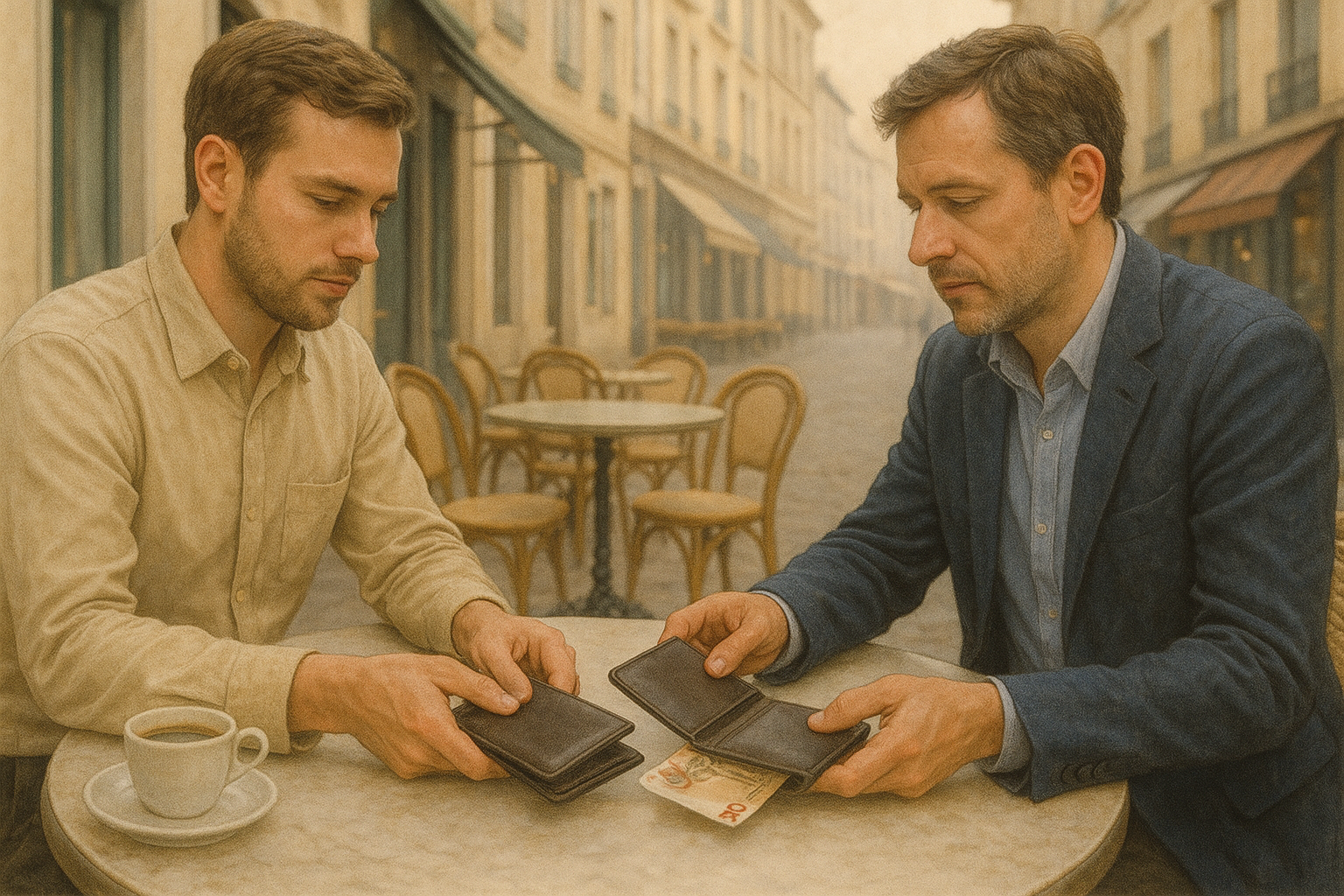
Imagine this: You’re sharing a café table in Paris with some new French acquaintances. The conversation flows smoothly—politics, literature, food, art. Suddenly, feeling curious, you ask how much they paid for their chic apartment, or what their salary might be. An awkward silence descends, as though someone just dropped a fork on fine crystal. Eyes dart away, smiles become fixed, and the topic changes… fast.
Welcome to the fascinating French relationship with money—and, more specifically, with talking about it.
For many English speakers, especially those from cultures where discussing money is relatively open (think Americans comparing salaries, Australians chatting about home prices, Brits obsessing over property values), France can feel like an enigma. In the French cultural code, money exists and matters greatly—but discussing it openly can be considered vulgar, indiscreet, or even gauche. There’s an almost ritualistic dance around the topic: hinting without stating, implying without disclosing, using understatement and euphemism rather than blunt figures.
Yet this silence isn’t universal. It depends on context, social class, region, and even age. Wealth is on display everywhere in France—in elegant fashion, Michelin-starred dinners, and centuries-old properties. But talk about it? That’s another story. The French way of discussing (or not discussing) money reveals deep truths about the culture: notions of equality, class sensitivity, discretion, and the idea that true sophistication means never showing off—or at least pretending not to.
In this article, we’re going to dig into this complex French attitude toward money. We’ll look at why talking about finances is taboo in many contexts, where it’s acceptable (or even strategic), the linguistic tricks the French use to navigate these conversations, and the cultural values underpinning it all. Whether you’re moving to France, doing business there, or simply want to understand your French friends better, this knowledge is invaluable.
So grab an espresso, settle into a comfy chair, and let’s unlock the discreet, fascinating world of how the French talk (or avoid talking) about money.
Why the French Avoid Talking Openly About Money
Historical Roots: Liberty, Equality… Discretion?
To understand the modern French relationship with money talk, we have to go back to history. Post-Revolution France developed a deep cultural suspicion of visible inequality. Flaunting wealth, or even discussing it too openly, could feel like a violation of the republican ideals of égalité (equality). Even today, there’s a subtle tension between the desire for social equality and the reality of wealth differences.
The Value of Discretion
In French culture, discretion is considered an essential mark of sophistication. Discussing money is often seen as:
Vulgarité (vulgar): It’s thought to reduce people to mere economic beings.
Indiscrétion (indiscreet): It’s invasive and pries into private matters.
Manque de classe (lack of class): Good taste means not boasting.
This doesn’t mean the French don’t care about money. They absolutely do. They simply prefer to signal wealth or status subtly through refined tastes rather than explicit declarations.
When the French Do Talk About Money
Despite the taboos, there are moments when talking about money becomes necessary—or even strategic.
Negotiations and Business
In business, the French can be shrewd negotiators. Money is discussed—but with a certain formality and decorum. Figures are presented precisely, but people still avoid personal disclosures like:
“How much do you earn?”
“What’s your net worth?”
“How much is your house worth?”
Business remains separate from personal life.
Close Friends and Family
Among trusted family or friends, financial matters are sometimes discussed—but even then, people tread carefully. It’s more acceptable to:
Discuss cost-of-living issues.
Talk about taxation (a favorite French pastime!).
Express frustration over expenses.
However, people rarely reveal precise incomes or net worth.
Politics and Social Debates
The French are passionate debaters, especially about social inequality, taxes, and economic reforms. In these contexts, money is a topic—but more abstractly:
“The wealthy should pay more taxes.”
“It’s unfair that the rich avoid contributions.”
Yet individuals still avoid revealing personal figures.
Subtle Ways the French Talk About Money
So how do the French discuss money without discussing it? Through:
Euphemisms and Vague Terms
Rather than giving precise figures, the French often use vague expressions:
C’est pas donné. → “It’s not cheap.”
Ça coûte un bras. → “It costs an arm.”
C’est un certain prix. → “It’s a certain price.”
Ça chiffre vite. → “It adds up quickly.”
Passive Constructions
French sometimes uses passive phrases to distance the speaker from money talk:
On dit que cet appartement vaut cher. → “They say this apartment is expensive.”
Il paraît que c’est hors de prix. → “Apparently it’s overpriced.”
Downplaying Wealth
Even wealthy people often pretend to be modest:
Oh, c’est un petit appartement. → “Oh, it’s a small apartment.” (Which may actually be 100m² in a prime Paris district.)
C’est pas grand-chose. → “It’s nothing much.”
This humility can sometimes feel performative—a kind of “modest chic.”
Class, Status, and Money
Taste as a Social Marker
In France, “good taste” is often valued over raw wealth. It’s not about how much you spend—but how you spend:
A simple but perfect baguette from a local boulangerie.
A carefully chosen bottle of wine.
Stylish clothing that whispers, rather than shouts, luxury.
Luxury brands exist, of course, but flaunting logos or talking about prices is often frowned upon.
Regional Differences
Money talk also varies across France:
Paris: Subtlety reigns. Money is discreetly implied through brands, neighborhoods, or restaurants.
Provinces: Conversations might be more practical—talking about property values, renovation costs, and local economic realities.
Money and Romance in France
An interesting cultural quirk: while Americans might openly discuss “who pays” in dating, French couples rarely talk money explicitly, especially early on. Instead:
Men may pay for early dates, but there’s an increasing push toward equality.
Splitting the bill is becoming more common among younger people—but often discreetly.
Talking openly about money too early can seem transactional or unromantic.
Even in long-term relationships, finances can remain surprisingly separate, with each partner maintaining a private account.
The Impact on Language Learners
For language learners, the French attitude toward money presents a unique challenge:
You might not learn financial terms in depth because they’re rarely used socially.
Direct questions can come off as rude, even if well-intentioned.
Small talk about real estate prices, salaries, or personal wealth is best avoided unless invited.
Learning the subtleties of how French people skirt around financial topics can make your conversations smoother and help you avoid social missteps.
Practical Tips for Navigating Money Talk in France
Avoid direct questions about salary, property value, or wealth unless you’re very close to someone.
If someone offers information voluntarily, listen but don’t press for details.
Use vague expressions if you need to mention money.
Remember: good taste, modesty, and discretion often trump financial boasting.
FAQs
Do the French talk about their salaries?
Rarely. Even close friends may avoid this topic, considering it personal and private.
Is it rude to ask how much something costs in France?
It depends on context. Asking prices in shops is fine. Asking what someone paid for their house or how much they earn is usually inappropriate unless you’re close friends.
Why are the French so discreet about money?
It’s linked to cultural values of equality, good taste, and privacy. Open money talk is often seen as vulgar or boastful.
Can I discuss money in business situations in France?
Yes—but keep it professional, respectful, and precise. Personal financial details remain off-limits.
Do young people in France feel the same way?
Younger generations are slowly becoming more open, especially influenced by social media. But even so, cultural caution persists.
Are there exceptions to the money taboo?
Yes—when talking about taxes, cost of living, or social issues, the French can be very vocal about money. But personal figures remain private.
Is discussing money in romantic relationships normal?
Not early on. Even in serious relationships, some couples maintain financial privacy. It’s more discreet than in some other cultures.
How can I avoid awkwardness when speaking French about money?
Stick to indirect language, avoid personal questions, and watch how native speakers handle the topic.
Ready to Speak French with True Cultural Fluency?
At Polyglottist Language Academy, we believe that speaking French is about far more than grammar and vocabulary. It’s about understanding the cultural codes that shape how people communicate—including the delicate dance around talking (or not talking) about money.
Join our French classes to learn not just the language, but the nuances that help you navigate French society like an insider. Our expert teachers will help you build fluency and cultural confidence, whether you’re chatting about art, politics… or tactfully avoiding money talk!