
French News for Learners: What to Read and How to Use It
Introduction: The Secret Door to Fluent, Real-World French
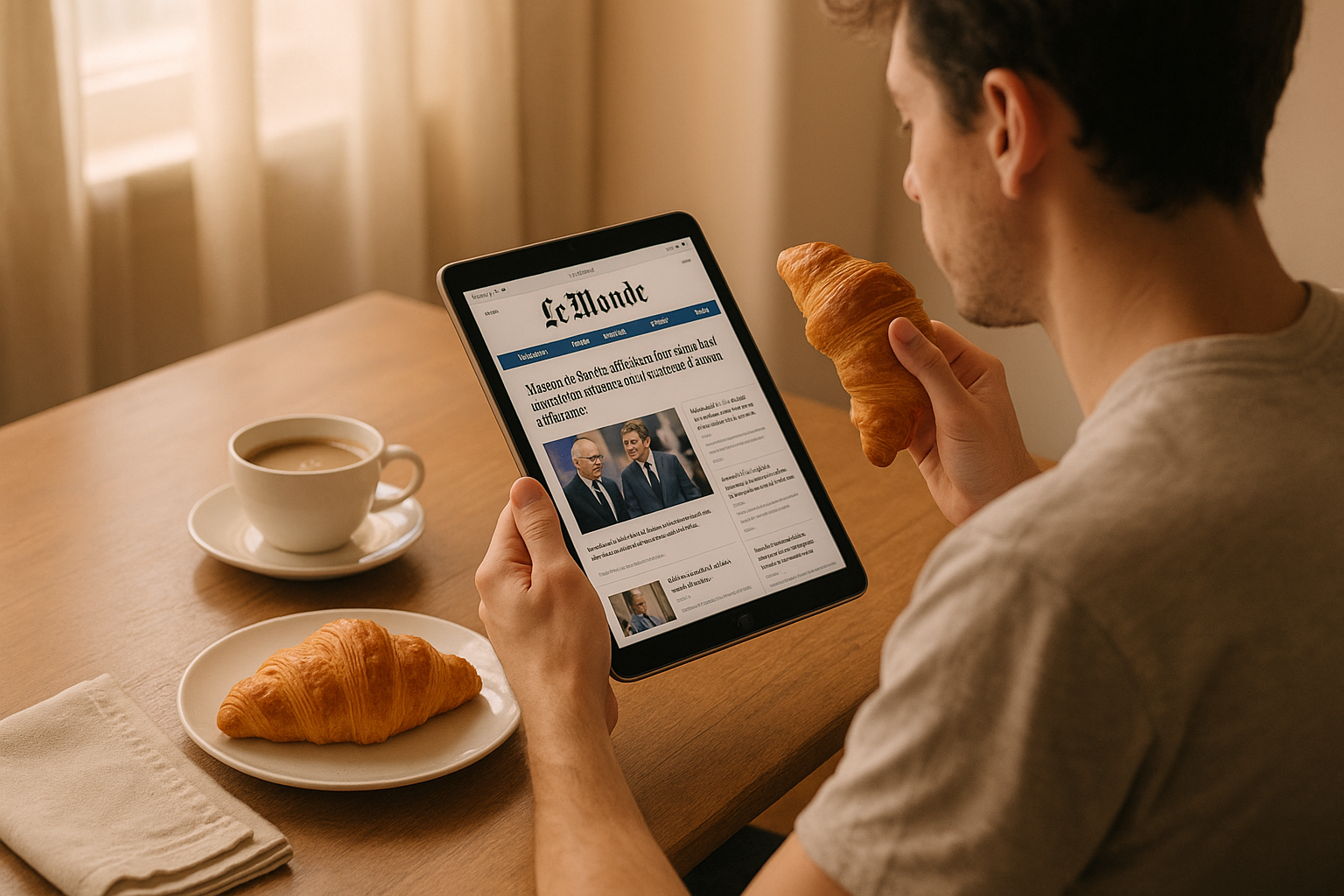
Imagine waking up one morning and, instead of scrolling through your usual news app in English, you pour yourself a coffee, open your phone, and start reading about world events, celebrity scandals, political debates, or climate breakthroughs… in French.
Not just any French, but the living, breathing language spoken in cafés, political debates, newsrooms, and street protests.
The headlines are punchy. The vocabulary is rich and modern. The expressions go far beyond what your textbook ever dared to teach you.
And the best part? It’s not just reading practice—it’s a daily window into how French people think, argue, joke, and connect with the world.
For many French learners, reading the news is one of the fastest ways to upgrade from “school French” to real-world fluency. Yet it’s also one of the most intimidating. The sentences feel long. The references are political or cultural. The style changes from journalistic neutrality to biting satire in a heartbeat.
But here’s the truth: French news isn’t just for native speakers. It’s one of the best, most authentic tools for learning the language—if you know how to approach it.
In this guide, we’re going to unlock that door for you. You’ll discover:
✅ The best French news sources for learners—whether you’re a total beginner or a fluent speaker polishing your skills.
✅ How to choose articles that won’t frustrate you.
✅ How to turn the news into a powerful language-learning resource, step by step.
✅ Clever hacks for using news stories to boost not just reading, but speaking, listening, and cultural understanding.
If you’ve ever wanted to break free from boring textbooks, discover what’s actually happening in French-speaking countries, and sound like a cultured global citizen… keep reading. This article is your roadmap to turning French news into your secret weapon.
Why Read News in French?
Real Language, Real Life
One of the biggest challenges in language learning is the “classroom bubble.” Textbooks and apps often stick to polite, predictable phrases. News exposes you to:
Authentic vocabulary: idioms, jargon, and everyday terms
Current topics: social debates, technology trends, environmental issues
Cultural context: humor, irony, social values
Varied writing styles: from formal editorials to casual human-interest pieces
Efficiency: One Habit, Multiple Skills
Reading the news in French doesn’t just build your reading comprehension. It helps:
Expand your vocabulary
Improve grammar awareness
Boost listening (if you use audio/video news)
Spark speaking and writing topics
Keep you culturally informed
It’s Addictive (In a Good Way)
The news changes daily. Even a few minutes a day keeps your learning fresh and engaging. It’s far more motivating than re-reading the same textbook dialogues.
How to Choose the Right News Sources
French news is vast and diverse. Let’s look at the best options for learners, from easiest to most advanced.
1. Easy-Reading News Platforms
News in Slow French
Slow audio + transcripts
Vocabulary explanations
Great for beginners to low-intermediates
1jour1actu
News for children and teenagers
Short, clear articles
Simple language
Le Petit Journal (beginner sections)
Expat-focused, but simpler articles
Cultural insights
2. Mainstream French Media (Intermediate and Above)
Le Monde
France’s flagship daily newspaper
Balanced reporting
Good for serious news
France Info
Free news radio and website
Short articles + audio reports
20 Minutes
Short, casual news bites
Perfect for fast reading practice
Le Parisien
Regional stories and national news
More conversational tone
3. Opinion, Culture, and Satire
Libération
Left-leaning, strong editorial voice
Creative, modern vocabulary
L’Obs
News + deeper cultural essays
Good for advanced learners
Charlie Hebdo
Satirical weekly
Full of slang and cultural references
Challenging, but fascinating for advanced readers
4. Global French News
RFI (Radio France Internationale)
Global news focus
Audio + text
Very useful for practicing listening skills
TV5MONDE
News programs, cultural shows
Website offers “Apprendre le français” news-based activities
How to Use French News as a Learning Tool
Here’s how to turn reading the news into a powerful daily practice, no matter your level.
Step 1: Choose the Right Level
Beginner: Pick simplified news like 1jour1actu or “News in Slow French.”
Intermediate: Read short articles from 20 Minutes or listen to France Info segments.
Advanced: Dive into opinion pieces or satire for nuanced vocabulary.
Step 2: Read Strategically
Skim first. Don’t panic over every word. Get the gist.
Look at headlines, sub-headlines, and photos.
Predict the topic before reading details.
Read for key facts. Identify:
Who?
What?
Where?
When?
Why?
Step 3: Note New Vocabulary
Keep a news notebook or app for new words.
Write words in context, not just isolated lists.
Don’t try to memorize everything in one sitting.
Step 4: Use Bilingual Tools Wisely
Bilingual news sites help bridge the gap.
If reading monolingual French news, look up only key words. Avoid stopping every few seconds.
Step 5: Listen AND Read
Combine news reading with audio:
Listen to news radio like RFI or France Info.
Watch video news with subtitles on TV5MONDE.
Read the transcript while listening for pronunciation.
Step 6: Turn News into Speaking Practice
Summarize an article aloud.
Discuss news stories with your language partner or tutor.
Record yourself explaining a news topic.
Step 7: Write About What You Read
Write a quick summary in French.
Give your opinion about a controversial issue.
Translate a short paragraph into French, then back into English for practice.
News Topics That Help Your French Shine
Certain topics repeat frequently in French media and are goldmines for vocabulary:
Politics & elections – élections, parti politique, manifester, réforme
Climate change – réchauffement climatique, biodiversité, accord de Paris
Health & science – vaccin, pandémie, recherche scientifique
Sports – match, victoire, championnat, supporter
Culture & cinema – festival, acteur, critique, réalisateur
Learning words tied to these topics helps you understand not just the news—but also conversations, debates, and cultural references.
Common Obstacles—and How to Beat Them
“I Don’t Understand Everything.”
Solution: You’re not supposed to! Skim for main ideas. Build tolerance for ambiguity.
“French Sentences Are So Long.”
Solution: Journalistic French often uses long, complex sentences. Break them into chunks. Focus on subject-verb-object first.
“I’m Overwhelmed by Unknown Words.”
Solution: Accept that you’ll look up words at first. Over time, the same vocabulary repeats. It gets easier!
Using News to Prepare for Real-Life French
Reading French news prepares you for:
✅ Travel — Know local issues and feel more connected to conversations.
✅ Business French — Discuss global markets, politics, and economics.
✅ Living abroad — Understand debates shaping French society.
✅ Language exams — Many DELF/DALF topics come straight from current events.
French News and Cultural Insight
Beyond vocabulary, news reveals how French society works. For instance:
The deep value placed on laïcité (secularism).
Frequent strikes and protests as expressions of democracy.
A passion for political debate.
Humor that can be biting, ironic, or absurd.
Understanding these cultural layers makes you not just fluent—but also truly connected to the Francophone world.
News as Your Lifelong French Companion
Think of the news as your endlessly refreshing French textbook. You’ll never run out of new:
Words to learn
Stories to discuss
Insights into French-speaking cultures
Even 10 minutes a day can transform your French.
So tomorrow morning, instead of scrolling your usual feed, try this:
☕ Make coffee.
📰 Pull up 20 Minutes or France Info.
🖊️ Jot down 5 new words.
🗣️ Summarize what you read out loud.
Voilà! You’re officially learning French the authentic way.
FAQs About Reading French News
Q: Is French news too hard for beginners?
A: Not necessarily! Start with simplified news platforms like 1jour1actu or “News in Slow French.” Short daily practice builds confidence.
Q: How much time should I spend reading the news each day?
A: Even 5-10 minutes daily helps. Consistency matters more than long sessions.
Q: Should I translate every word?
A: No. Focus on main ideas first. Only look up essential vocabulary.
Q: Can I use French news for listening practice too?
A: Absolutely. Many outlets offer audio reports, podcasts, or videos. Pair listening with reading for maximum learning.
Q: Which French news site is best for intermediate learners?
A: 20 Minutes is excellent for shorter articles in accessible language. France Info is also great for intermediate-level listening and reading.
Q: Is satire like Charlie Hebdo useful for learners?
A: For advanced learners, yes. It’s fantastic for cultural insights and humor—but it’s dense, slang-filled, and challenging.
Q: Can reading news help me speak French?
A: Yes! News articles give you conversation topics, vocabulary, and cultural knowledge for real-life discussions.
Q: How do I avoid feeling overwhelmed by French news?
A: Start small. One article a day. Accept not understanding everything. Over time, you’ll recognize patterns and vocabulary.
A Note from Polyglottist Language Academy
At Polyglottist Language Academy, we believe that language isn’t just a subject—it’s a living connection to people and cultures. Reading the news in French is one of the most powerful ways to transform your language skills and stay plugged into the real Francophone world.
Ready to take your French to the next level? Join our French classes, where we integrate real-world materials like news articles, audio, and debates to help you become confident and culturally fluent.
Sign up today and discover how learning French can truly open the world to you.