
Introduction: The Beauty of Disagreement
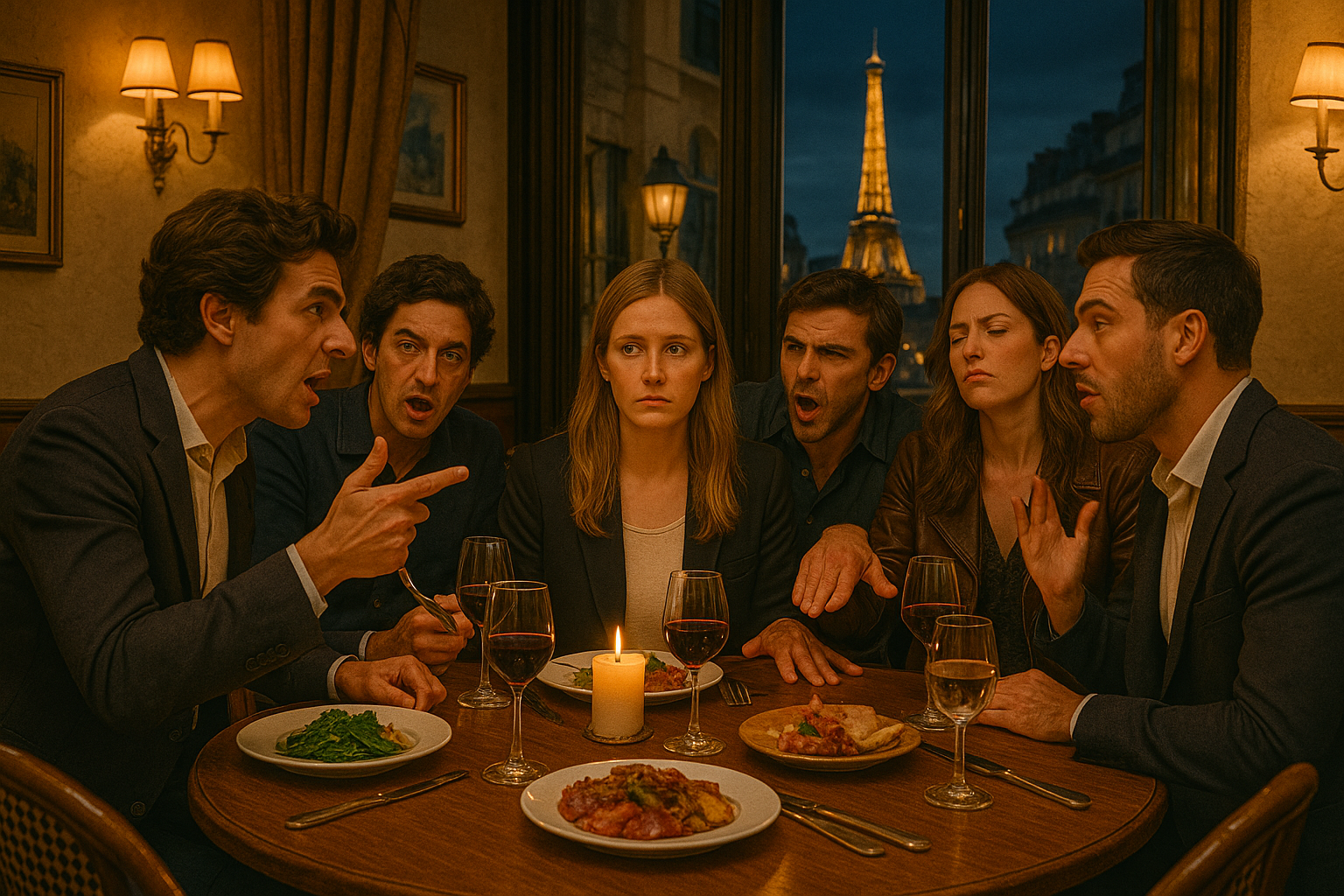
Imagine walking into a dinner party in Paris. Candles flicker, wine is poured, and a conversation is already in full swing. At one end of the table, someone is quoting Voltaire. At the other, a guest slams their palm down and insists, "Mais non, tu ne comprends rien !" Voices rise. Interruptions fly. One person gestures dramatically with a fork. Another dismisses a point with a theatrical eye roll. Are they fighting? Is someone about to storm out?
Not at all.
This is just another night in France.
If you’ve ever witnessed a French argument—whether in a café, a classroom, or around a dinner table—you know it’s nothing like the conflict-avoidant niceties common in many English-speaking cultures. The French don’t fear disagreement; they relentlessly pursue it. They argue not just to win but to think, to refine ideas, to clarify values, and—yes—to enjoy the intellectual sport of it all.
In France, argument is an art form. It’s not seen as rude or confrontational, but as a vital part of life. If you disagree with someone and stay silent, you risk seeming passive or unengaged. If you raise your voice, gesticulate wildly, or challenge someone’s opinion in front of others, it’s not necessarily impolite—it might actually be expected.
This blog post will take you inside the French mind when it comes to arguing and debating. We’ll explore where this cultural habit comes from, how it works in everyday life, and how you can understand (and maybe even join in) with elegance and confidence. Whether you're a language learner, a Francophile, or planning your next trip to France, understanding the French approach to argumentation is essential to navigating—and enjoying—their culture.
Part 1: Why Arguing Is a National Pastime
1. France, the Land of Rhetoric
From the Enlightenment to the salons of the 19th century to today’s televised debates, rhetoric has always had a privileged place in French culture. It’s not enough to have an opinion in France—you must defend it, ideally with elegance and logic.
French students are trained in rhetorical thinking from an early age. In high school, students must master the dissertation—a structured essay format that requires building and defending a thesis with precision. Later, in university and professional settings, debate and discussion continue to be prized skills.
2. A Culture That Worships Ideas
The French take pride in intellectual independence. Whether it’s politics, literature, philosophy, or daily life, the ability to challenge assumptions is admired. This doesn’t mean being contrarian for the sake of it (though some might be!)—it means demonstrating that you’ve thought deeply and critically about a subject.
In the French worldview, disagreement isn’t a sign of conflict—it’s a sign of engagement. A passionate argument shows you care. It shows you’re alive.
Part 2: What a French Argument Looks Like
Let’s break down the anatomy of a classic French argument:
1. It’s Loud (But Not Angry)
Yes, voices may rise. People might talk over each other. Hands fly. But volume doesn’t mean hostility—it often means enthusiasm. What might seem like fighting to an outsider is often just animated conversation.
2. It’s Full of Interruptions
In many French debates, interruptions aren’t rude—they’re the sign of a lively exchange. Cutting someone off can show that you’re listening, excited, or eager to respond. The key is not to dominate, but to re-engage the discussion with sharper ideas or clearer logic.
3. It’s Structured, Even When It Doesn’t Seem Like It
Beneath the emotion, most French arguments follow a logical flow. There's often a clear thesis, an antithesis, and a synthesis—what French students learn as la dialectique. Even when the tone is heated, the structure is surprisingly formal.
4. It’s Personal—But Not (Always) Offending
Yes, French debaters may say things like “tu dis n’importe quoi” (you’re talking nonsense) or “tu ne comprends rien”(you understand nothing). But this doesn’t always lead to hurt feelings. There's a cultural resilience around debate. People expect to be challenged.
5. It’s Sprinkled with Authority
French debaters often bolster their arguments with references to literature, history, or philosophy. You might hear quotes from Rousseau, Simone de Beauvoir, or contemporary intellectuals. Citing ideas from great thinkers elevates the argument and shows you’re not just reacting—you’re reasoning.
Part 3: Where French Arguments Happen
You’ll find French arguments erupting almost anywhere, but some settings are especially prone:
The Family Table: Whether it’s Sunday lunch or a holiday meal, families often engage in spirited debate. Politics, social issues, and even religion are not off-limits.
University Classrooms: Students are encouraged to question professors and debate their peers.
TV Talk Shows: French television features highly intellectual (and very fiery) panels where guests argue passionately about current events.
Cafés and Bistros: Friends meet for a drink—and sometimes leave red-faced and exhilarated from verbal sparring.
Workplaces: Debating ideas in meetings is seen as part of doing good work, especially in more academic or creative industries.
Part 4: Common French Phrases Used in Debate
Want to follow—or even participate—in a French argument? Here are a few phrases you’re likely to hear:
“C’est faux.” – That’s false.
“Tu ne peux pas dire ça.” – You can’t say that.
“Soyons sérieux.” – Let’s be serious.
“Tu mélanges tout.” – You’re mixing everything up.
“Ce n’est pas aussi simple que ça.” – It’s not that simple.
“Il faut nuancer.” – We need to be more nuanced.
“Tu n’as rien compris.” – You didn’t understand a thing.
“Je vois les choses autrement.” – I see things differently.
These expressions are often delivered with precision and just the right amount of dramatic flair.
Part 5: How to Hold Your Own (Even as a Foreigner)
If you find yourself in the middle of a French debate, don’t panic. You don’t need to become a Sorbonne-trained philosopher overnight. But understanding a few rules of the game can help you participate without feeling overwhelmed.
1. Stay Calm (Even If They’re Not)
Remember: volume and passion don’t mean someone is mad at you. Try to separate tone from intention.
2. Make Your Point Clearly
Structure is everything. The French appreciate logic. Avoid rambling. If possible, give your opinion, support it with reasoning, and be ready for counterpoints.
3. Don’t Be Afraid to Disagree
You won’t be seen as rude if you say, “Je ne suis pas d’accord” (I disagree). In fact, you’ll likely be respected for it—especially if you do it thoughtfully.
4. Use Humor and Irony
The French love wit. A well-placed joke or clever turn of phrase can disarm even the fiercest opponent.
5. Know When to Step Back
Sometimes, it’s okay to say, “On ne tombera pas d’accord, mais c’est pas grave.” (We won’t agree, but that’s okay.) Not every argument has to end in consensus.
Part 6: The Role of Debate in French Identity
Arguing isn’t just something the French do—it’s part of how they see themselves.
It reflects national values like:
Liberty of expression – Debate is a cornerstone of democratic life.
Critical thinking – Being able to analyze, evaluate, and challenge ideas is highly prized.
Individualism – Everyone is entitled to an opinion—and is expected to defend it.
Refined culture – Intellectual engagement is a sign of sophistication.
This tradition can be traced back to French philosophy, revolutionary politics, and even the culture of literary salons where ideas were dissected over wine and éclairs. Today, the legacy lives on—in schools, media, and everyday conversation.
Part 7: What Language Learners Can Take Away
Even if you’re not ready to dive into a heated debate en français, you can learn a lot by paying attention to how the French argue.
Improve listening comprehension by watching talk shows or debates.
Practice structuring arguments in writing exercises or classroom discussions.
Expand your vocabulary with phrases used in persuasive speech.
Build cultural fluency by understanding emotional cues, tone, and body language.
French isn’t just about pronunciation and verbs—it’s about how people interact, challenge each other, and connect. Learning to appreciate the French style of argument is one of the most powerful ways to understand the culture behind the language.
FAQs
Q: Are French people always arguing?
A: Not always! But animated debate is common and often seen as a healthy part of social life—not a conflict.
Q: Is it rude to disagree openly in France?
A: Not at all. Disagreement is seen as a sign of engagement. As long as it’s done with respect and structure, it’s encouraged.
Q: How do I join a French argument without offending anyone?
A: Use polite language, keep your tone respectful, and support your points with logic. Don’t attack the person—attack the idea.
Q: Why are French arguments so loud?
A: What might seem loud to outsiders is often just passionate, animated speech. It doesn’t necessarily mean someone is angry.
Q: Is this style of argument unique to Paris?
A: It’s common throughout France, though Parisian culture tends to emphasize intellectual debate even more.
Q: Can I practice this in language classes?
A: Absolutely. At Polyglottist Language Academy, we incorporate debate and discussion into advanced classes so learners can build real-world fluency.
Q: What’s the best way to observe French argument style?
A: Watch French political talk shows, films with dialogue-heavy scenes, or listen to podcasts with panel discussions.
Q: Is it okay to step away from a debate?
A: Yes—especially if you feel uncomfortable. You can always say something like “Je préfère ne pas en discuter maintenant.”
Ready to Speak with Confidence?
At Polyglottist Language Academy, we believe that language learning is about real-life communication—not just memorizing rules. That’s why our French courses focus on conversation, critical thinking, and cultural fluency.
Whether you’re debating philosophy or ordering a croissant, our teachers will help you develop the skills to express yourself clearly, confidently, and authentically—in French.
We offer small group and individual classes in the San Francisco Bay Area (Berkeley, Oakland, San Jose, Marin) and online for learners everywhere.
👉 Enroll now and bring your voice to the table. Debate, discuss, and discover what it means to speak French.
Explore More on Our Blog:
📘 French Etiquette 101: Do’s And Don’ts For Visitors
🎧 Thinking Of Moving To France? 10 Things To Know Before You Go
🤔What To Pack For France: A Seasonal Guide For Smart Travelers
😂 How Much French Do You Really Need To Know For A Trip?
🇫🇷 How To Blend In While Traveling In France (Hint: It's Not Just About Clothes)
🔡 How Polyglottist Language Academy Makes French Learning Feel Like Travel
📚 Bay Area French Cafés, And Cultural Events You’ll Love
🛍️The French Riviera: Where Writers, Painters, And Celebrities Found Paradise