Jeep Tour to the East of Madeira: My Experience and What I Would Do Differently
Yesterday, I took a jeep tour to the eastern part of Madeira. Before going, several tourists I had talked to told me that they thought the nature in the east was more impressive than in other parts of the island. After doing the tour, I could see what they meant. What surprised me most was how much the scenery changes during the day. One minute you are high in the mountains, then you are surrounded by forest, later you are in a village, and by the end you are looking at cliffs and the open Atlantic. What I was definitely not prepared for was the cold.
I Was Not Prepared for Pico do Areeiro
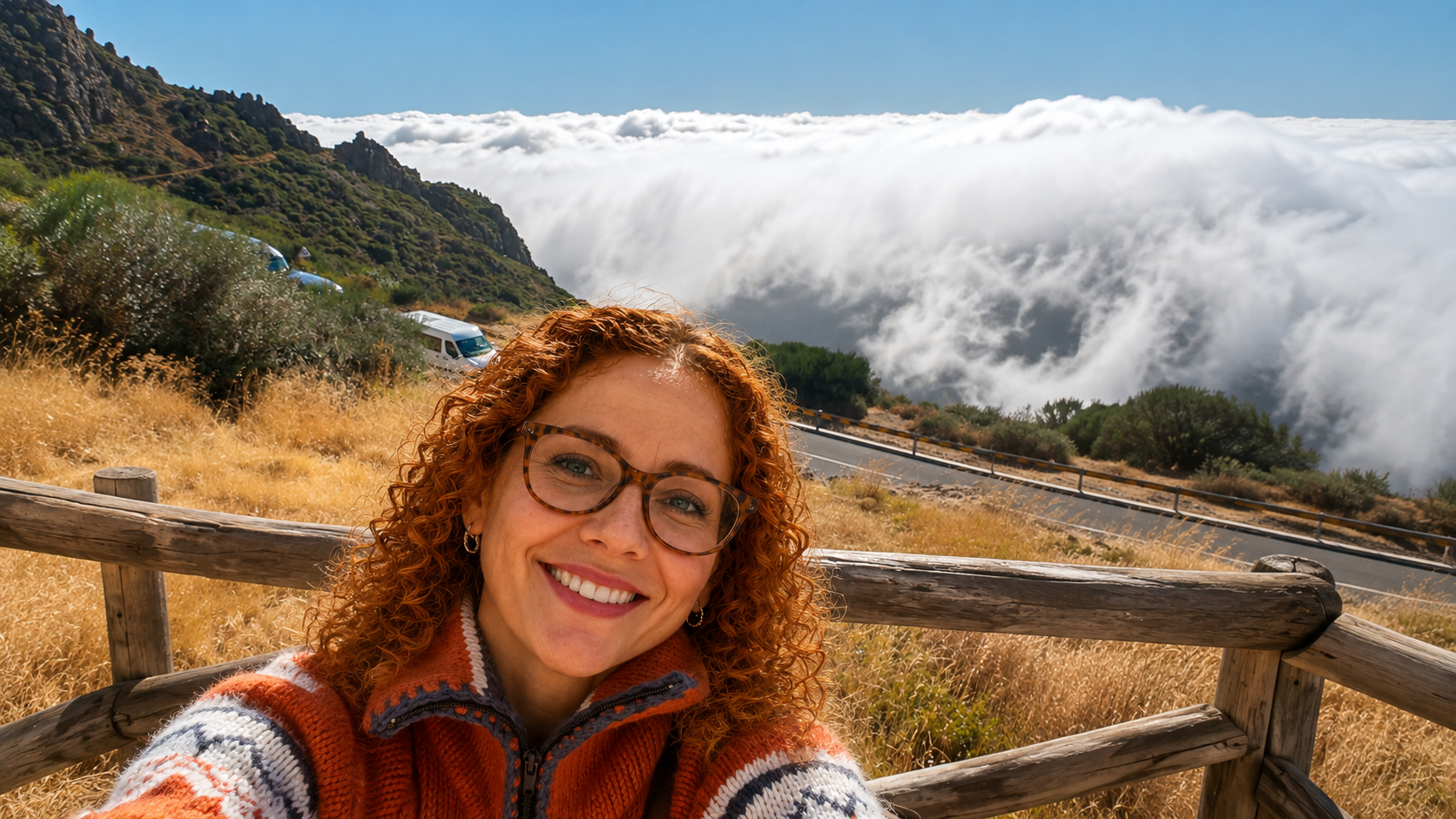
One of our main stops was Pico do Areeiro, one of the highest points in Madeira. When we left the lower part of the island, the weather was perfectly pleasant, so I did not give much thought to bringing warm clothes. That was a mistake. As the jeep climbed higher, it became colder and colder, and because we were in an open jeep, you really felt it. By the time we reached Pico do Areeiro, I was freezing.
I was clearly not the only person who had underestimated the temperature. Quite a few tourists around us looked like they had dressed for the coast, not for the top of a mountain. Luckily, there are a couple of small shops up there, and one of them was selling wool jackets and ponchos. I bought one immediately. At that point, I did not care very much what it looked like. I was just happy to be warm.
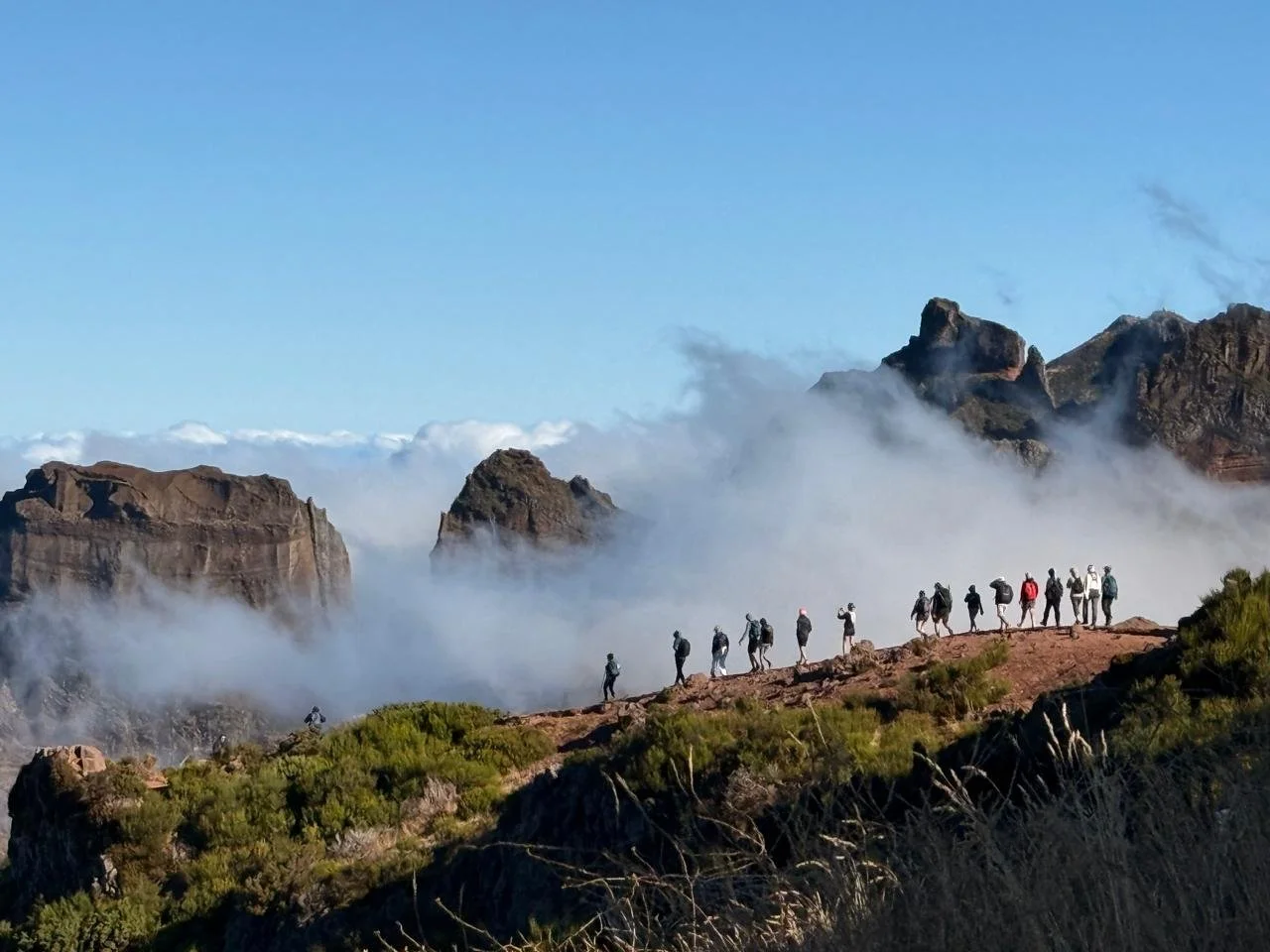
Once I stopped thinking about how cold I was, I could actually look around properly. The view really is surreal. You are standing high in the mountains with clouds below you and mountain peaks coming up through them. I had seen plenty of photos of Pico do Areeiro before, but it still looked different in person. Of course, everyone was taking pictures, and I probably took far too many myself. Every few steps there seems to be another angle that looks even better than the one before.
So my advice is very simple: bring layers. Do not look at the weather in Funchal and assume that is what you are going to get in the mountains. It can be warm near the ocean and surprisingly cold at the top.
Ribeiro Frio and Balcões
After Pico do Areeiro, we continued to Ribeiro Frio. The change in scenery was immediate. Instead of exposed mountains and open skies, suddenly everything was green and you were surrounded by forest. This is also a very popular hiking area, and many visitors come here specifically to walk toward the Balcões viewpoint.
If you want to do the walk all the way to the viewpoint, I would check the current trail access and ticket requirements before going. Madeira now regulates access to some of its popular trails, so it is much better to know what you need in advance. We were not there for a serious hike, but I still liked this stop. It was quiet, green, and completely different from what we had just seen at Pico do Areeiro.
That is something I kept noticing during the day. Madeira changes very quickly, and you do not have to drive very far before the landscape feels different again.
Santana: Tourist-Oriented, but Still Worth Seeing
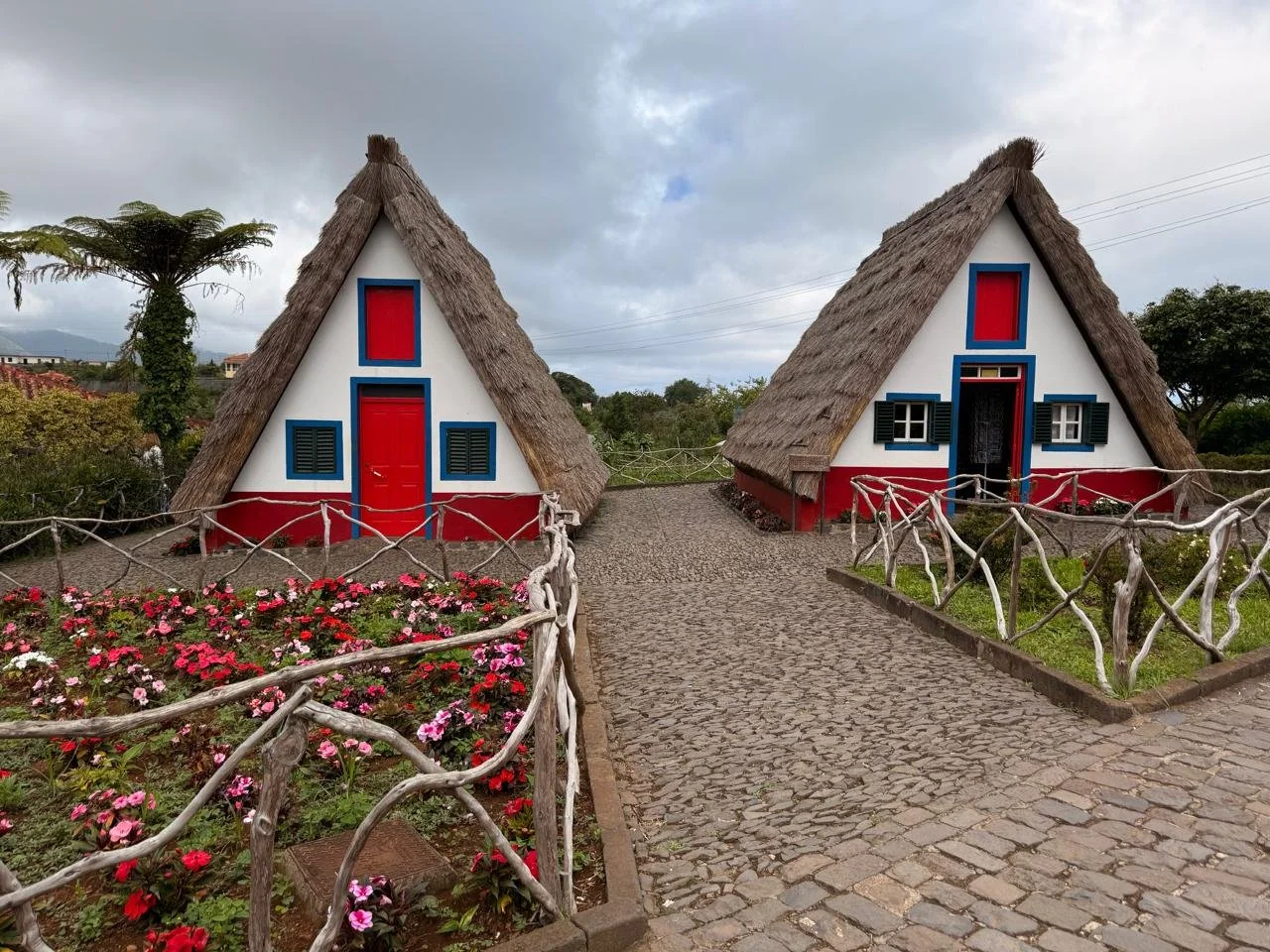
Of course, we also stopped in Santana to see the famous traditional Madeiran houses. They are small, brightly colored, and have very steep triangular roofs, so they are probably among the most recognizable images of the island. What I did not realize was how few of these houses are actually left.
Our guide explained that over time people replaced them with newer and more practical homes until almost all of the traditional houses disappeared. You can go inside one of the preserved houses, and I think it is worth doing. They are tiny. According to our guide, families of six, eight, and sometimes even ten people lived in houses like these, which I found very difficult to imagine.
There were basically two small rooms, while the kitchen and toilet were outside. Standing inside, I kept wondering how an entire family managed to live there. Santana itself is very touristy today. There are tour buses, souvenir shops, restaurants, and plenty of visitors, so you are not going there expecting to discover an untouched traditional village. But I still think it is worth seeing, especially on a first trip to Madeira.
The Food Around the Tourist Areas Was a Little Disappointing
Lunch was probably the least interesting part of the day for me. There are several restaurants around the main tourist area in Santana, but most of them seemed very much designed for tourists. While we were there, we met a few young hikers who were looking for somewhere serving authentic Madeiran food. They seemed genuinely frustrated because they could not find anything that looked particularly local.
They asked our guide for recommendations, and his answer was basically that if they wanted something more authentic, they needed to go farther away from the main tourist areas. That matched my experience in Madeira so far. I do not mean that there is no good traditional food on the island. Obviously there is. But in many places where tourists naturally end up during organized sightseeing trips, the menus can be quite predictable.
There is a lot of standard tourist food and then a few Madeiran dishes added to the menu. The traditional dish I have seen most often is espetada, the Madeiran beef skewer. I have had it a couple of times. People have also recommended black scabbardfish to me several times, usually as a fillet, but unfortunately I still have not tried it.
If local food is a big part of your trip, I would probably research restaurants separately rather than simply eating wherever your tour stops for lunch.
Porto da Cruz: Rum, Traditional Cookies, and Another Beautiful View
We also stopped in Porto da Cruz, and this was one of the more relaxed parts of the day. There, we had a small tasting of Madeira rum together with traditional cookies. It was a simple stop, but I enjoyed it because it felt very different from the mountain viewpoints and hiking areas we had visited earlier. The rum was strong, as you would expect, and the cookies were a nice addition.
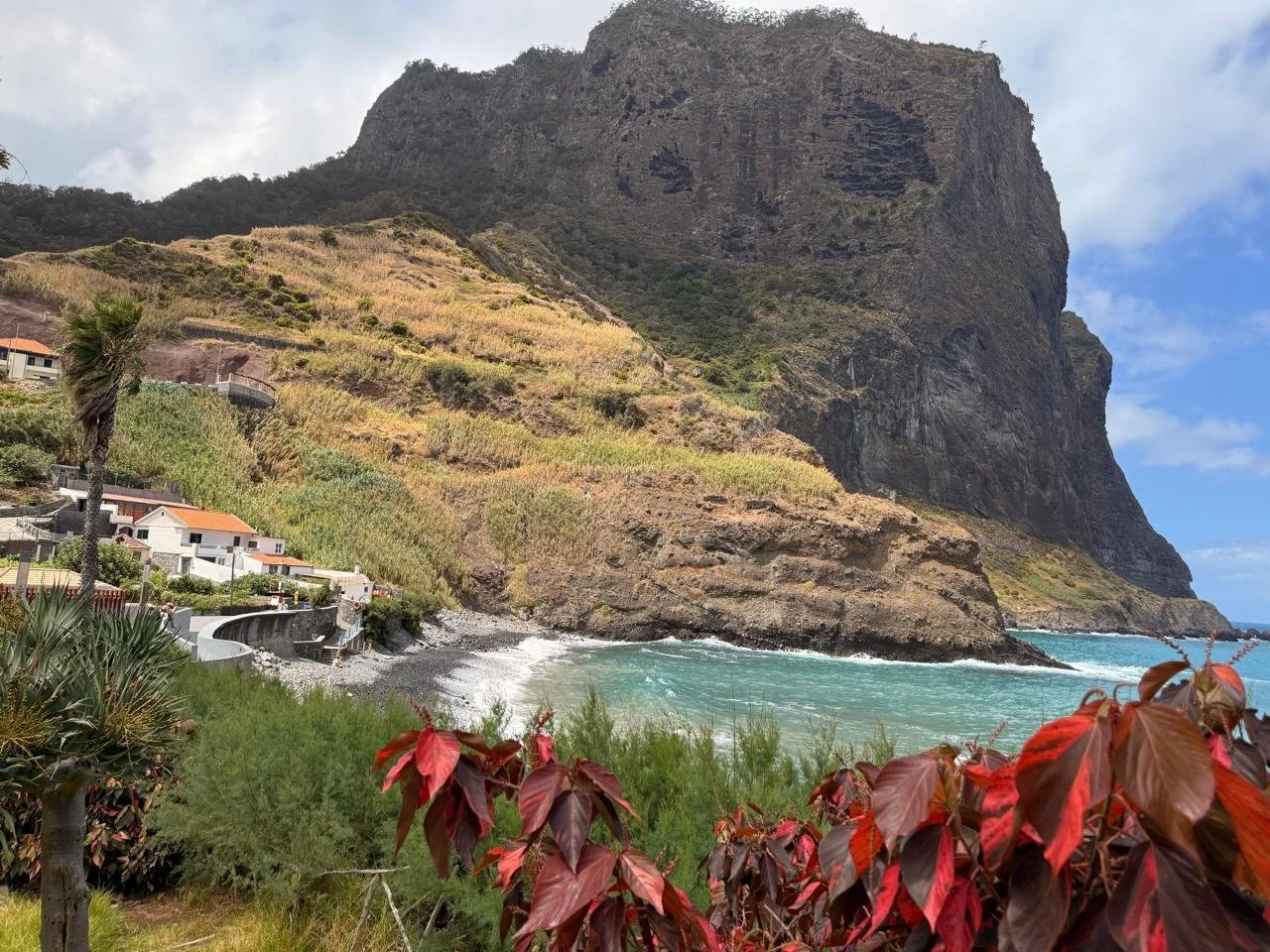
Porto da Cruz is also another place where you immediately want to take out your phone. The surrounding mountains, the village, and the ocean create some very beautiful views, and we spent some time simply taking pictures before continuing the tour. By that point, I had already taken more than enough photos during the day, but Madeira has a way of making you take a few more anyway.
Ponta do Rosto Was Completely Different Again
Later in the day, we stopped at several viewpoints, including Miradouro da Ponta do Rosto near Caniçal. By then, Madeira looked completely different again. This part of the island is not the lush green Madeira that people usually imagine. It feels much more exposed, dry, and volcanic.
You see cliffs, different colors in the rock, volcanic formations, and the Atlantic stretching out around you. I liked this area a lot, probably because it was such a contrast to everything we had seen earlier in the day. And yes, I took another ridiculous number of photos.
At some point during a Madeira tour, you start thinking that you already have enough pictures of cliffs and ocean. Then you arrive at the next viewpoint and take another twenty.
Would I Recommend an East Madeira Jeep Tour?
Yes, especially if it is your first trip to Madeira and you want to see several very different parts of the island in one day. We started high above the clouds at Pico do Areeiro, drove through green mountain areas, saw the traditional houses in Santana, and later ended up looking at volcanic cliffs and the Atlantic.
Doing it by jeep also makes things easy. You do not have to think about parking, mountain roads, or how to connect all of these places yourself. If I did the same tour again, though, I would change one thing: I would bring much warmer clothes.
When I left in the morning, I would never have imagined that a few hours later I would be standing at the top of a mountain buying a wool jacket because I was so cold. So if Pico do Areeiro is part of your tour, bring the jacket, even if you are completely convinced you will not need it.
Traveling around Madeira has also reminded me how much more enjoyable a place can be when you understand even a little of the local language. If a trip to Madeira or Portugal has inspired you to learn Portuguese, Polyglottist Language Academy offers European Portuguese classes for adults, including complete beginner and higher-level options. Our classes focus on practical language that you can actually use while traveling, speaking with locals, and getting to know Portuguese culture beyond the tourist experience.
I’ll also be writing more about Madeira while the trip is still fresh in my mind. If you’re planning your own visit, you can read my other articles about traveling in Madeira for more first-hand impressions, practical tips, and the small things I noticed while traveling around the island.