
MADEIRA FOR FIRST-TIME VISITORS: EVERYTHING YOU SHOULD KNOW BEFORE YOU GO
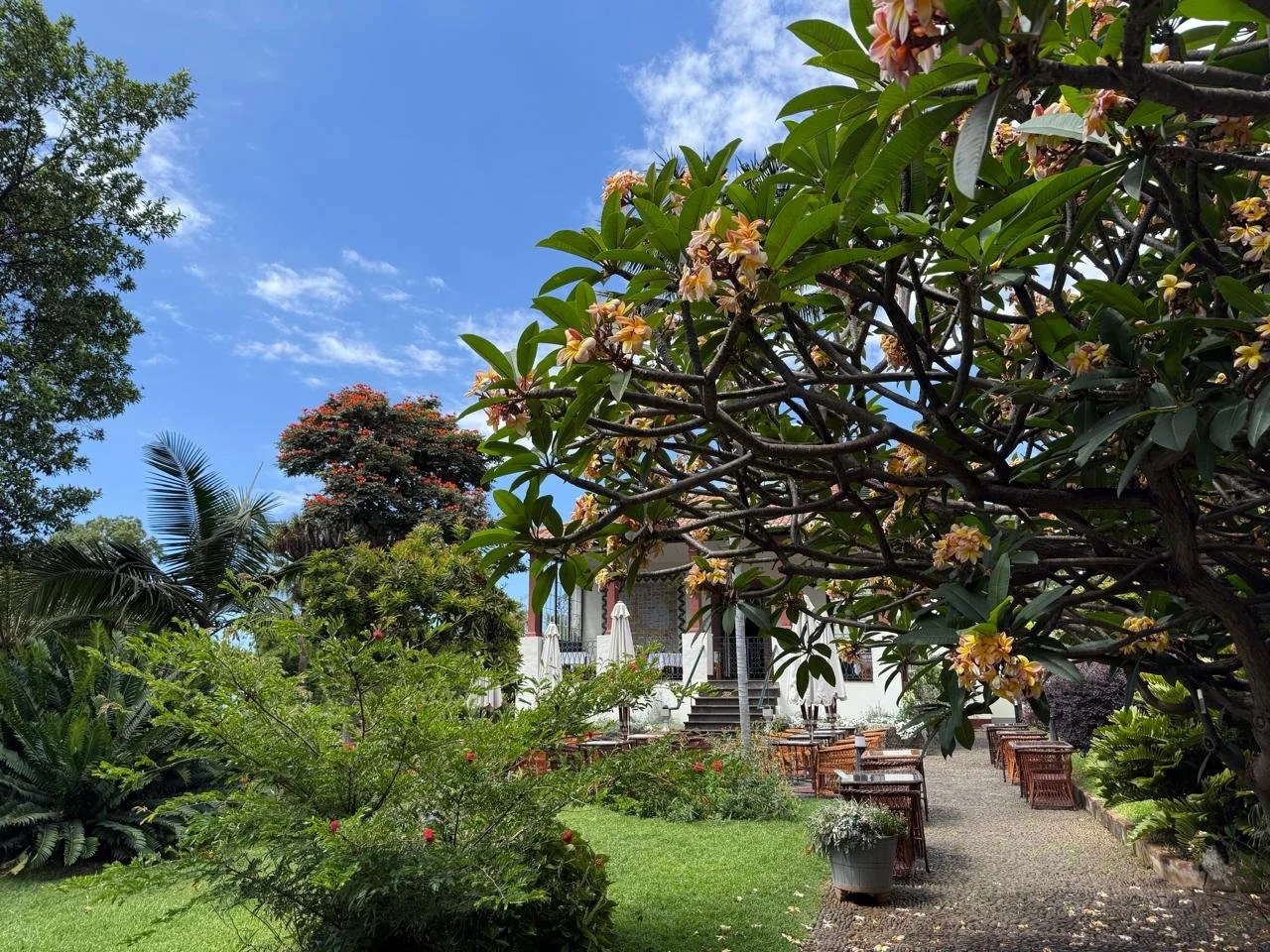
Madeira had been in my imagination long before I had any concrete plans to visit it. I had never even been to mainland Portugal, but for some reason I always wanted to come here. Perhaps part of it was literary. I remembered Madeira being mentioned in books I had read years ago, including Jules Verne’s The Children of Captain Grant, and the name itself always sounded slightly romantic to me: a mountainous island somewhere far out in the Atlantic.
This summer, I finally came.
I flew from Stockholm to Madeira on SAS, a flight of about five and a half hours. Before leaving, I had seen enough Instagram videos about Madeira Airport to prepare myself for turbulence, a dramatic approach, or even a diversion to Lisbon. Instead, the entire flight and landing were completely smooth.
The first real surprise came before I had even left the airport. Through the large glass windows, you can already see what makes the island unusual: steep green slopes, houses climbing the hills, the ocean just beyond them, and colors that somehow look brighter than expected.
Once we started driving toward Funchal, it became even more striking. The roads curve around the mountains, but they are in very good condition. Houses seem substantial and are often topped with orange tiles, which stand out beautifully against the vegetation. Sometimes the Atlantic appears directly beside you; a few moments later you are looking up at houses scattered impossibly high on a hillside.
I am probably not the only person who thinks that mountains and ocean together are one of the most beautiful combinations in nature. Madeira gives you both almost constantly.
And that geography turns out to explain much of what a first-time visitor needs to know about the island.
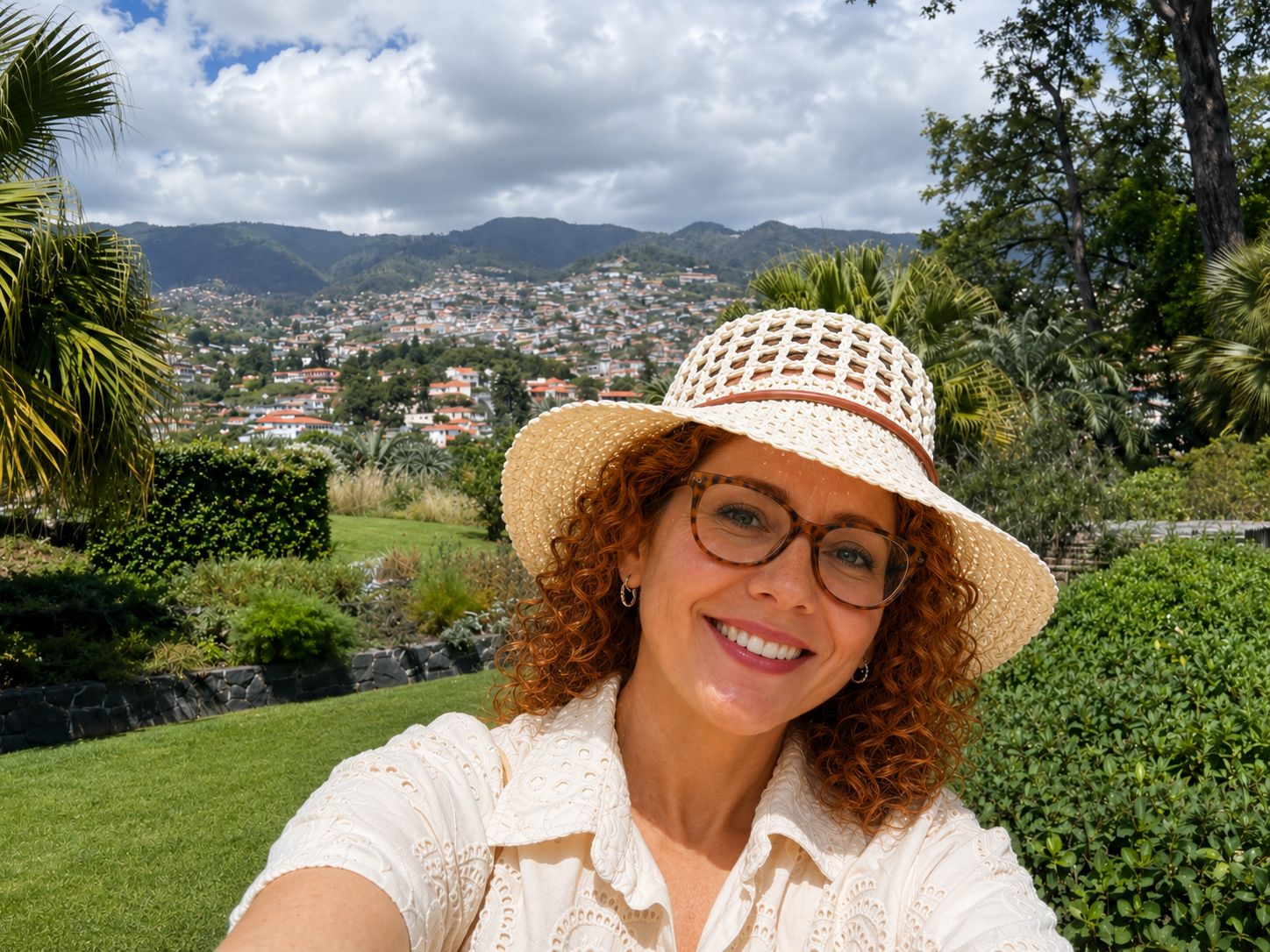
Madeira is not quite the beach vacation you may be imagining
Before coming, I kept checking the weather forecast and became slightly worried. It was August, yet the temperatures Google was showing seemed surprisingly mild.
Once here, I realized that looking at one general “Madeira weather” forecast does not tell you very much.
The island has numerous microclimates. Funchal and much of the southern coast can be sunny and pleasantly warm while the mountains are cooler, cloudy or covered in mist. The north can feel different again. You can leave your hotel in sunshine and find yourself reaching for a jacket later the same day.
In Funchal, I have found the August weather close to ideal. It is warm, but not the kind of heat that makes walking around unpleasant by midday. I can spend a large part of the day outside, go sightseeing, visit gardens and take excursions without constantly searching for air conditioning.
If what you want is 90-95°F weather, very warm sea water and long days on a sandy beach, Madeira may disappoint you. This is not really the classic Mediterranean beach-island experience.
But if you like comfortable temperatures, walking, hiking, excursions and spending most of your day outdoors, the climate makes a great deal of sense. For a first trip, I would probably choose June through September, although Madeira seems much less seasonal than many European island destinations. I can easily understand why people come here throughout the year.
One practical lesson is to check the forecast for the actual place you are visiting rather than simply searching for Madeira. If you are heading into the mountains, bring a layer even when Funchal looks perfectly warm.
Funchal makes sense as a first base
Funchal is Madeira’s capital and, in my opinion, a very practical place to stay on a first visit. You have restaurants, shops, the waterfront and the Old Town, but it is also easy to arrange trips from here to other parts of the island.
What I like about Funchal is that it never really feels separated from the landscape around it. The mountains remain visible, and the city climbs into the hills rather than sitting on a flat coastal strip.
The Old Town is worth walking through, and there is the cable car up toward Monte, gardens, markets and the waterfront. But I would also leave time simply to wander rather than trying to turn Funchal into another list of attractions to complete.
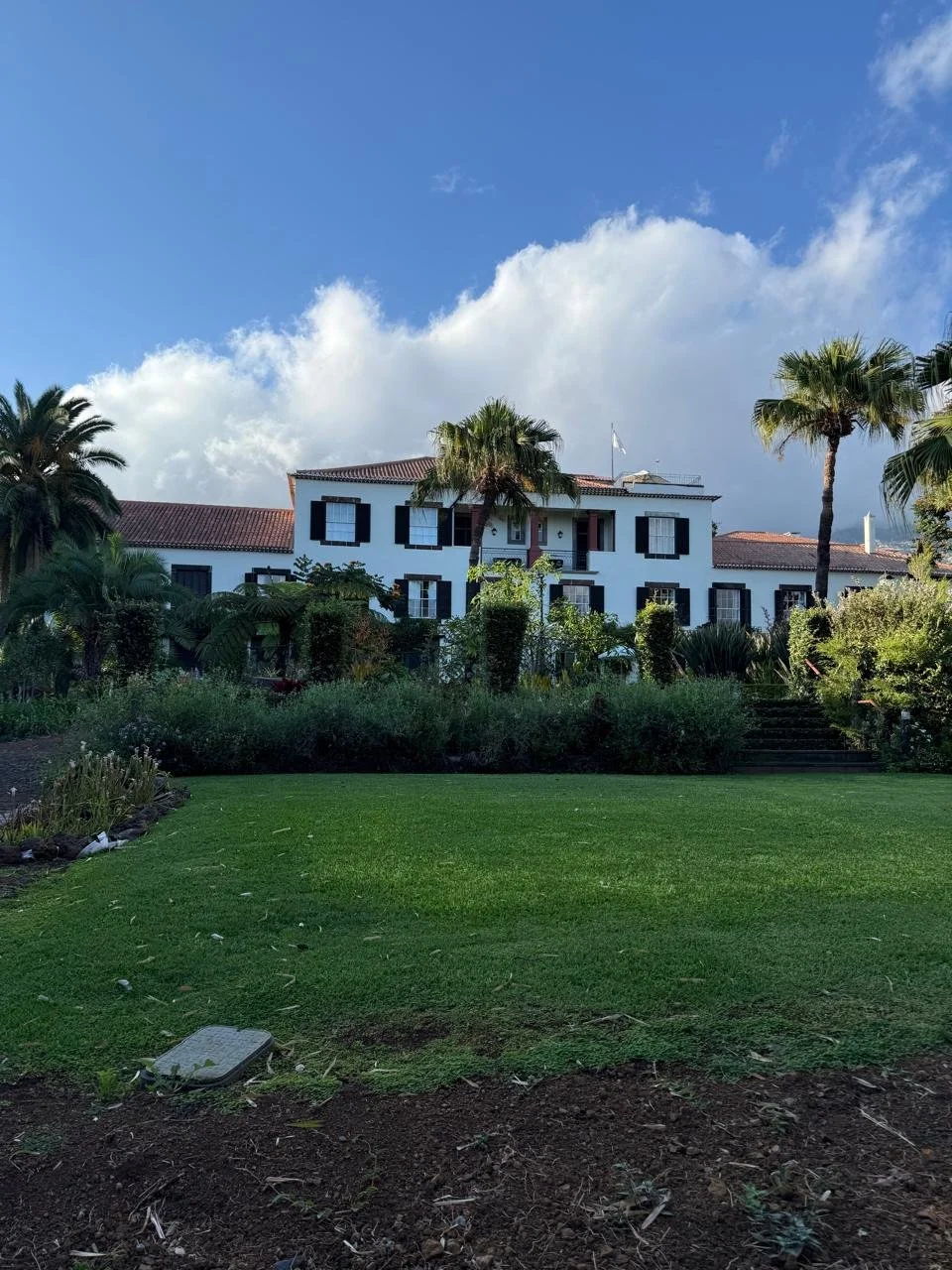
My own hotel is not particularly close to a beach, and I do not regret that at all. It has an extraordinary tropical garden that is almost a sightseeing attraction in itself. I expected to use the hotel mainly as a base, yet walking through the garden has become part of the trip.
That made me rethink the usual way I choose accommodation on an island. In Madeira, I would not automatically prioritize being as close to the beach as possible. A beautiful garden, a view, quiet surroundings, a good pool or convenient access to Funchal may add much more to the experience.
The landscape is such a large part of Madeira that where you stay can become part of the sightseeing.
Transportation takes some planning because everything is vertical
Madeira looks small on a map, but distances can be misleading.
This is an island of steep slopes, deep valleys, tunnels and mountain roads. A place can appear geographically close and still take longer to reach than you expect because you are constantly dealing with elevation.
If you are comfortable driving in the mountains, renting a car gives you the most freedom. The roads I have seen are in very good condition, but they can also be steep, winding and narrow in places. I would not automatically rent a car here simply because that is what I normally do on vacation. If mountain driving makes you nervous, Madeira is not the place where I would force myself to become enthusiastic about it.
Taxis are easy to use, and ride-hailing services are also available. For shorter trips around Funchal, that may be all you need.
The other surprisingly convenient option is organized excursions. Many tours collect guests from hotels and bring them back afterward. On an island like Madeira, this is more useful than it sounds. You can spend a day seeing mountain viewpoints, villages or another part of the island without worrying about parking or spending the entire drive concentrating on hairpin turns.
For a first visit, I think a combination works very well: stay in or near Funchal, use taxis for shorter journeys, and take organized excursions for some of the longer days.
There are public buses, and it is certainly possible to travel without either a car or tours, but I would not build my entire first trip around them unless I were prepared to spend some time understanding the routes.
And whatever transportation you choose, do not underestimate the hills even within Funchal. A hotel that appears to be a short walk from somewhere may involve a serious climb. On Madeira, I would pay attention to elevation as well as distance.
Comfortable shoes are not optional here.
If you like hiking, Madeira could keep you busy for weeks
I knew before arriving that Madeira was considered a hiking destination. Now that I am here, I think that description almost undersells it.
If you are the type of traveler who enjoys spending several hours walking through mountains, forests, cliffs and valleys, you could stay here for a considerable amount of time without becoming bored.
The famous levadas are one reason hiking here is so distinctive. These irrigation channels run across large parts of the island, and many walking routes follow them through forests and mountainous terrain. Other trails are more exposed and dramatic, with enormous views over the island and Atlantic.
This is not casual countryside walking everywhere, though. Madeira has proper mountains. Pico do Areeiro rises to more than 1,800 meters, and weather at elevation can be completely different from what you left behind in Funchal.
One practical thing I discovered while looking into the hikes is that the system changed in 2026. Madeira’s classified PR trails now require advance reservations, and there is an access fee for visitors. Entry is organized through timed slots, so for the most popular walks it is worth planning rather than simply arriving whenever you feel like it.
I would also check the official trail status shortly before setting out. Wind, rain, fog, fires or maintenance can affect access, and a trail that was open when you planned the trip is not necessarily guaranteed to remain so.
For summer hiking, I would bring proper walking shoes, a light rain layer and something warmer for the mountains even if you are leaving a sunny Funchal in short sleeves.
The difference between the coast and the mountains is one of Madeira’s charms, but it can catch you out if you dress for only one of them.
English is easy enough in tourist areas, but I still use Portuguese when I can
Portuguese is, of course, the local language, and this is my first time anywhere in Portugal, so I do not have a meaningful point of comparison with the mainland.
In the places I have visited so far, English has not been a problem. People working in hotels, restaurants, excursions and other tourist-oriented businesses generally speak decent English.
Still, I think it is worth learning at least a few words:
Bom dia — Good morning
Boa tarde — Good afternoon
Por favor — Please
Obrigado / Obrigada — Thank you
Desculpe — Excuse me / Sorry
I have also had one cultural impression that I hesitate to generalize from because I have only been here a short time.
People have been friendly and helpful, but I have occasionally sensed a certain reserve or seriousness that I initially interpreted almost as sadness. I may be misreading it completely. It could simply be a different communication style from what I am accustomed to. It could also be that people who work in heavily visited places are tired of tourists expecting constant friendliness and attention.
Whatever the explanation, it has made me a little more conscious of how I interact with people here. I greet people, ask rather than assume, and try not to occupy someone’s time unnecessarily when they are clearly working.
That is probably good advice anywhere.
Money is uncomplicated
Madeira uses the euro, and paying for things has been straightforward. Cards are widely accepted, particularly in Funchal and tourist areas, although I still like carrying a small amount of cash for minor purchases.
Tipping is also much less formalized than in the United States. I would not approach every restaurant bill with the assumption that another 20 percent has to be added. Leaving something for good service is fine, but it does not have the same compulsory feeling.
If your bank card gives you the option of paying either in euros or in your home currency, I would normally choose euros and let your own bank handle the conversion.
Beyond that, money has not been one of the things I have had to think much about here, which is exactly how I prefer it when traveling.
Madeira has its own food identity
Because I have never visited mainland Portugal, I cannot honestly tell you how different Madeira’s food feels from Portuguese food elsewhere. I am also still working my way through what is available here rather than pretending I have already developed an expert opinion after a few days.
But there are several foods you quickly notice on menus that are very specifically associated with Madeira.
Bolo do caco is probably one of the easiest to encounter: a round local bread traditionally made with sweet potato and often served warm with garlic butter. It appears everywhere and is one of those foods that immediately feels connected to the place.
Espetada is another Madeira classic—chunks of beef traditionally grilled on skewers. You will also see black scabbardfish, tuna, grilled limpets and picado, small pieces of meat usually intended for sharing.
Another very Madeiran combination is prego no bolo do caco: steak served inside the local bread.
Then there are the drinks. Madeira wine is the obvious one, but poncha appears everywhere as well. It is made with sugar-cane spirit, citrus and honey or sugar and can taste considerably more innocent than its alcohol content suggests.
What I would avoid is spending the entire trip eating only in places that could exist in any international resort. Madeira is distinctive enough that trying some local dishes is part of understanding the island, even if, like me, you are still discovering which ones you actually like.
Pack for more than one version of Madeira
The weather differences across the island mean I would not pack based on one forecast.
For a summer trip, I would bring light clothing for Funchal and the coast, comfortable walking shoes, a light jacket or fleece, a thin rain layer, sunscreen, sunglasses and swimwear.
If you are planning serious hikes, bring proper hiking shoes and whatever additional gear is appropriate for the route.
I would also take a small backpack on excursion days. It is useful for water, an extra layer and anything else you may suddenly need when the weather changes halfway up a mountain.
Madeira’s climate is mild, but “mild” does not mean uniform.
I would not schedule every day from morning until evening
Madeira makes it tempting to over-plan. There are famous hikes, viewpoints, gardens, villages, coastal drives and excursions in every direction, and before arriving it is easy to start filling every day.
I would resist that.
Some of what I have enjoyed most has not been a major attraction. It has been walking through the tropical garden at my hotel, looking at the mountains from an ordinary road, sitting somewhere in Funchal or simply noticing how quickly the light and clouds change over the slopes.
I would probably alternate busier days with slower ones: a major excursion or hike one day, then Funchal and a long lunch the next.
There is no shortage of things to see here. The danger is more that you spend so much time moving from one sight to another that you forget to enjoy where you are.
Who will like Madeira most?
Now that I am here, I think Madeira makes much more sense once you understand what kind of island it is.
I would recommend it very strongly to someone who loves mountains, ocean views, gardens, hiking, scenic drives and active sightseeing. It is also an excellent choice if you want warm weather without the exhausting heat that can make parts of southern Europe difficult in the middle of summer.
It may be less ideal if the entire purpose of your vacation is to lie on a long sandy beach beside very warm water. Madeira has places to swim, but I do not think that is where its greatest appeal lies.
For me, the attraction became obvious almost as soon as I left the airport. The road twisted along the island, the Atlantic kept appearing between the mountains, houses climbed improbably high above us, and everything looked greener and brighter than I had expected.
I had imagined Madeira for years, but I had imagined it rather vaguely.
What I found is an island that is easy enough to visit but still feels geographically dramatic. You can spend the morning in a city, the afternoon high in the mountains and the evening looking at the Atlantic from a garden.
For a first visit, I would bring good shoes, pack a few layers, plan some excursions or hikes but leave a little empty space in the schedule, and stop worrying if the weather app does not show tropical temperatures.
Madeira is not really about tropical heat. It is about being outdoors, looking up at the mountains and then turning around and finding the ocean behind you.
That combination is even better in person than it sounded to me all those years ago.
A Small Language Connection: European Portuguese
One thing Madeira also reminded me of is how much more interesting a place becomes when you understand even a little of the language around you. English is widely spoken in tourist areas, but Portuguese is what you hear in cafés, shops, taxis, and everyday conversations. For travelers who want to go beyond bom dia and obrigado, Polyglottist Language Academy offers European Portuguese classes for adults. Even a basic foundation can make a trip to Madeira or mainland Portugal feel more connected, especially when you begin to recognize the expressions and rhythms of the language you are hearing every day.