Porto Moniz Natural Swimming Pools: Free vs. Paid Pools, Prices, Hours & What to Know Before You Go
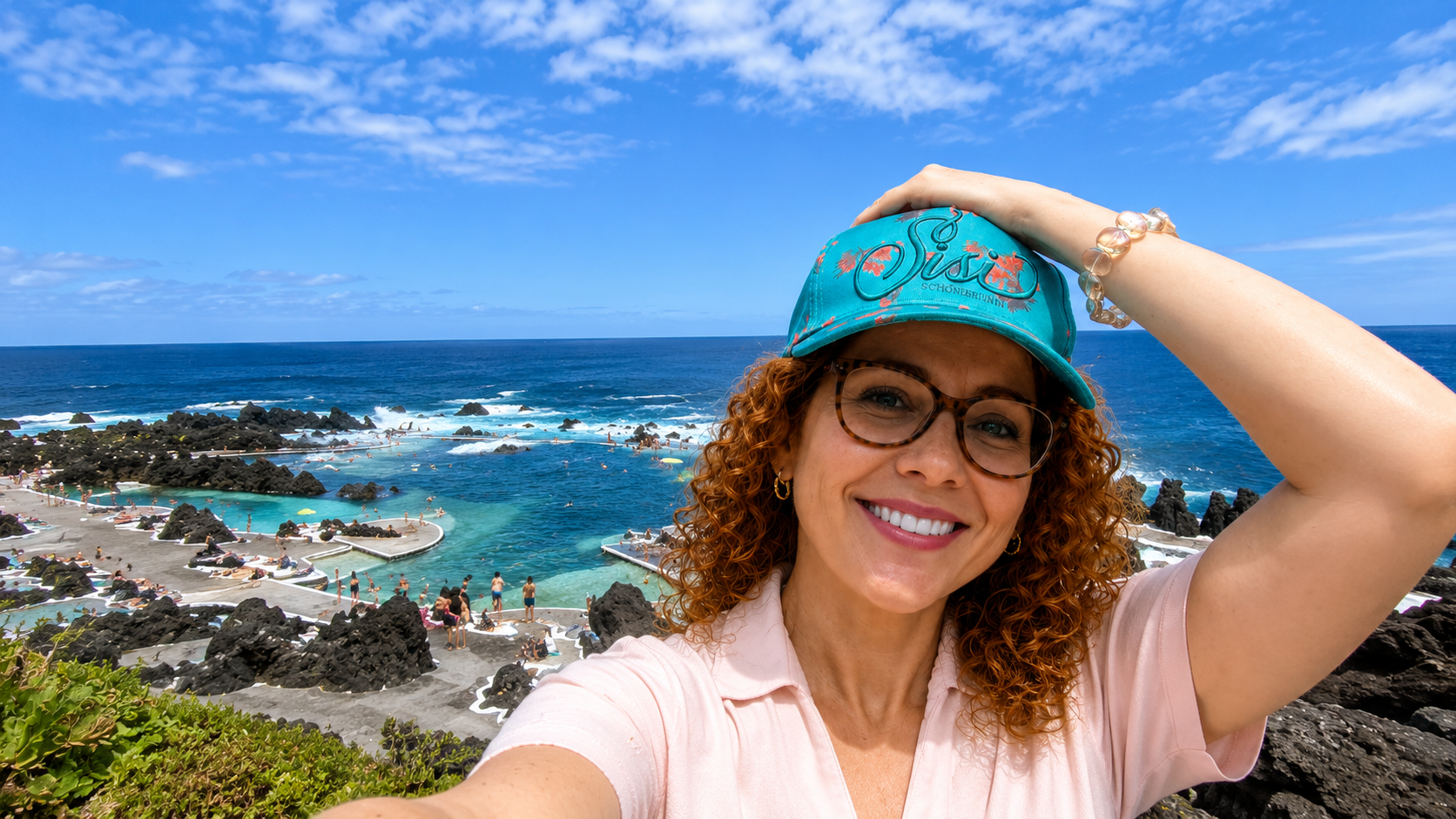
Madeira has no shortage of dramatic scenery, but the Porto Moniz Natural Swimming Pools still managed to surprise me.
I visited Porto Moniz as part of a full-day excursion around Madeira. These tours are very common here, and after taking three of them myself, I think they are one of the easiest ways to see a lot of the island, especially if you don't have much time. You cover a surprising amount of ground in one day, and Porto Moniz is one stop I would definitely not skip.
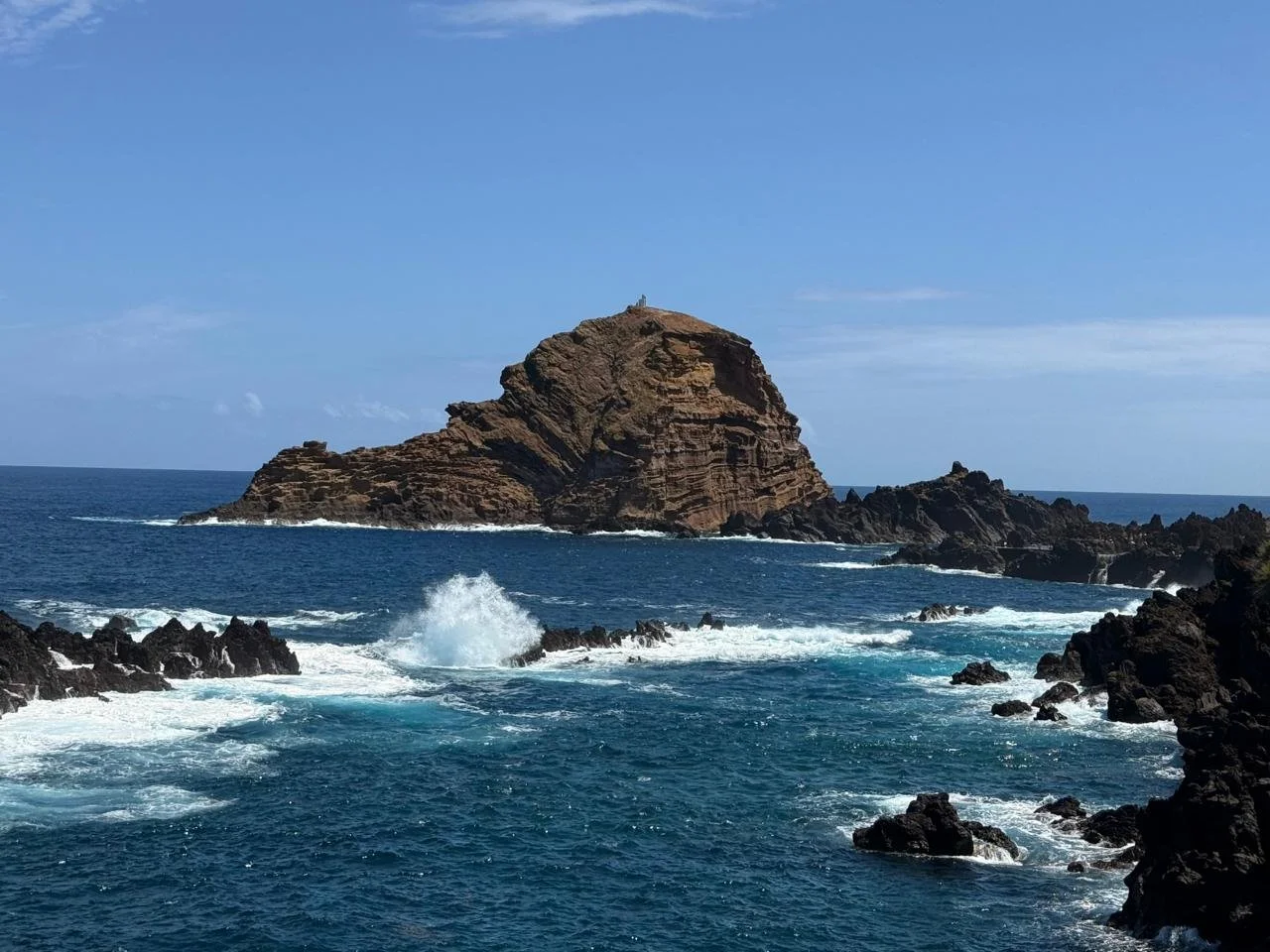
Before I even thought about swimming, I was struck by the scenery. The contrast is extraordinary: enormous black volcanic rocks against the deep purple-blue color of the Atlantic Ocean. The first thing I did was walk around taking pictures from every possible angle. I probably spent more time photographing the place than I expected to.
And then there are the pools.
What Are the Porto Moniz Natural Swimming Pools Like?
I had seen photographs before visiting, but they didn't quite prepare me for how unusual the pools would feel in person. I had never swum anywhere quite like this before.
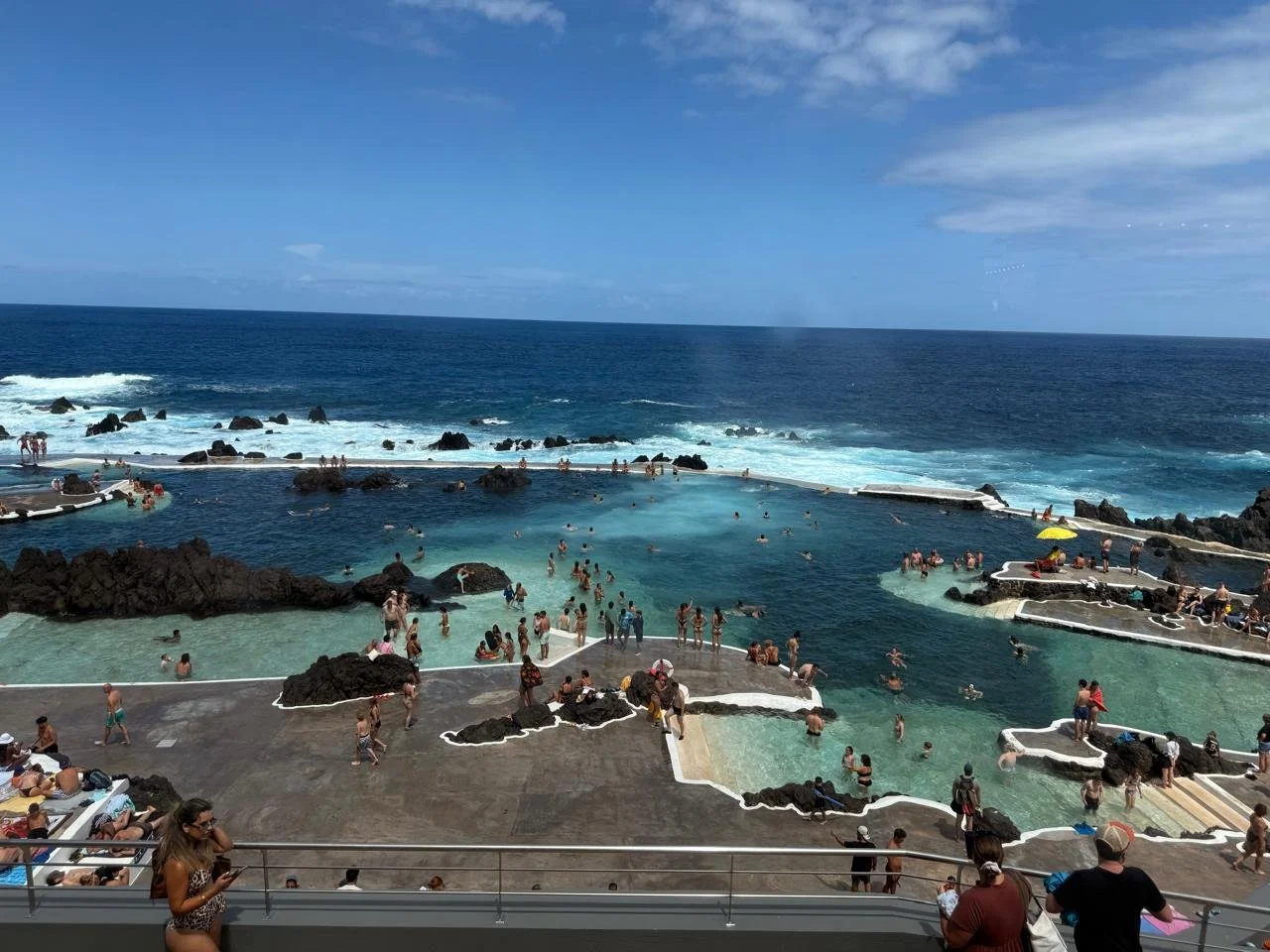
Huge black volcanic rocks form protected swimming areas right beside the Atlantic. Inside, the water is strikingly blue, while just beyond the pools you can see the much rougher ocean. Waves keep bringing fresh seawater into the pools.
When I visited, there was also a lot of white foam on the water from the waves. The combination of black lava rock, bright blue water, and white foam made the whole place look almost unreal.
The pools are volcanic in origin. According to Madeira's official tourism website, the Porto Moniz swimming area covers about 3,800 square meters, with seawater naturally renewed by the ocean.
In person, though, what stood out to me was simply how different it felt from a normal swimming pool. Even in the more developed paid area, you are still very aware that you are right next to the open Atlantic.
Porto Moniz Has Free and Paid Natural Pools
One thing that can be confusing when researching Porto Moniz is that there isn't just one swimming area.
There are two main places to swim, and one is paid while the other is free.
The best-known complex—the one most visitors mean when they talk about the Porto Moniz Natural Swimming Pools—charges an entrance fee.
At the time of writing, admission is:
€3 per person over age 3
Free for children age 3 and under
There are also reduced rates for some students, seniors, residents, and qualifying visitors with disabilities.
For €3, I think the entrance fee is extremely reasonable. You are not paying for a short timed visit, so if you come independently you can stay and actually enjoy the place rather than rushing through it.
The paid complex also has the facilities you would expect if you want to spend several hours there, including changing rooms, a children's pool, a playground, a bar, first-aid facilities, parking, and accessible facilities. Sun loungers and umbrellas can also be rented.
The Free Cachalote Natural Swimming Pools
The free option is the Cachalote Natural Swimming Pools, sometimes also referred to as the Aquarium natural pools.
These are also volcanic pools filled with Atlantic seawater, but there is no entrance fee. They are much less developed than the paid complex. There are no toilets or full visitor facilities, although there is an outdoor shower, and the area is supervised during the official bathing season.
I didn't personally swim in the free pools, so I can't honestly compare the actual swimming experience. From what I saw and researched, they make more sense if you prefer a more rugged setting and don't care much about facilities.
Considering that the paid pools cost only €3, I personally wouldn't choose based on price alone.
Porto Moniz Natural Pools Opening Hours
The paid Porto Moniz pools are open throughout the year.
Current official opening hours are:
Summer: 9:00 a.m. to 7:00 p.m.
Winter: 9:00 a.m. to 5:00 p.m.
The entrance fee is charged year-round.
Of course, the official opening hours are only part of the story. Porto Moniz is on Madeira's exposed northern coast, and the weather and ocean conditions can change a lot. Our guide made that very clear to us.
The Weather and Waves Can Completely Change the Experience
We apparently got lucky. Our guide told us that the tourists who had come the previous day had dealt with much bigger waves and strong winds. During our visit, conditions were much calmer. That was a useful reminder that the beautiful photographs you see online don't necessarily tell you what Porto Moniz will look like on the exact day you arrive. The Atlantic here can be powerful, and conditions are unpredictable. Personally, I think that makes the place more interesting. It isn't a resort pool where everything looks exactly the same every day.
If Porto Moniz is one of the main reasons you are visiting Madeira, I wouldn't build your entire schedule around the assumption that you will have perfect swimming conditions at one specific time. Even if the weather isn't ideal for swimming, though, I would still come. The scenery alone is worth seeing.
Is Porto Moniz Crowded?
When we arrived, there were already a lot of people in the pools and quite a few people waiting to enter. At first, I looked at the line and wondered how much of our limited tour time we were going to lose standing there. Fortunately, it moved very quickly.
Porto Moniz is one of Madeira's best-known attractions, so crowds in summer aren't exactly surprising. If I were coming independently and wanted a quieter experience, I would try to arrive close to opening time rather than in the middle of the day, when many organized tours are also stopping there. Still, I wouldn't be put off immediately if you see a line. During our visit, it looked more intimidating than it actually was.
How Much Time Do You Need at Porto Moniz?
For us, the tour stop was enough to see the pools, take pictures, swim a little, and understand what the place was like. But I also left feeling that I could easily have stayed much longer. If I were visiting Porto Moniz independently and really wanted to enjoy the pools, I would give myself at least a few hours. Half a day would not feel excessive at all, and I can easily imagine spending most of the day there. There are also plenty of places nearby to eat or have a drink, plus small shops, so you are not stuck with nothing to do once you get out of the water.
Eating and Drinking Around the Porto Moniz Pools
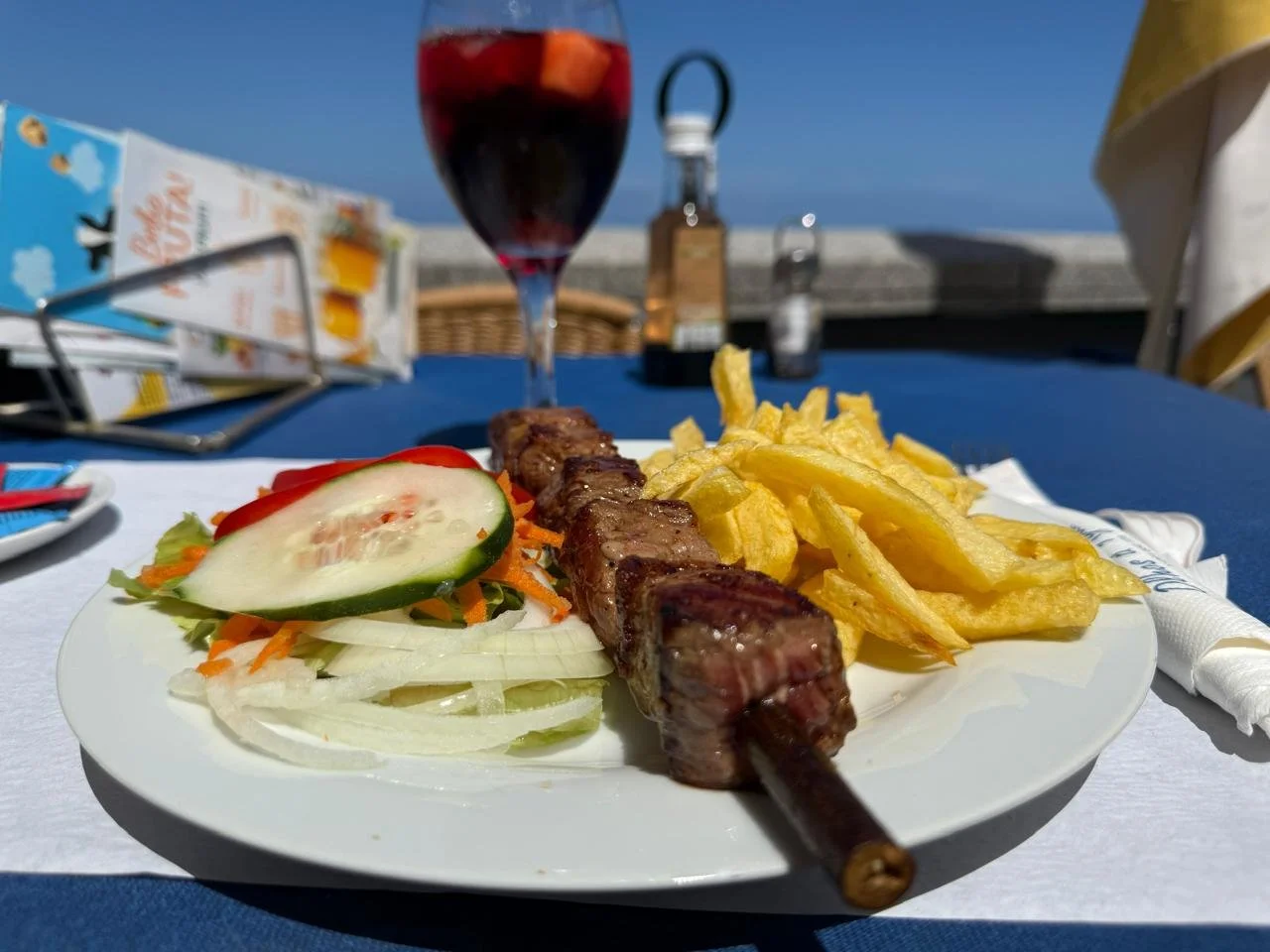
I stopped at a restaurant that had been recommended to us for traditional Madeiran food. Most of the dishes were quite similar: fish or meat with French fries and a basic salad. Main dishes were around €20–24. I haven't been to a huge number of restaurants in Madeira yet, but I have to say that I haven't been particularly impressed by the food at the places I've tried so far. A lot of it has felt rather touristy and basic.
The drinks are a different story. I love Nikita, poncha, the many kinds of sangria you find here, and, of course, Madeira wine.
One thing I would definitely warn visitors about is the service. Don't expect to eat quickly. Porto Moniz gets a huge number of tourists, and the restaurants around the pools can be packed. Service can be very slow. This is much easier to accept if you have planned to spend half a day in Porto Moniz than if you are sitting there watching the clock because your tour bus is leaving soon.
After lunch, I went to a beer bar because our guide had been insisting that we should try Madeira's banana beer. The funny part was that the bar was advertising banana beer but didn't actually have any. So that didn't quite work out.
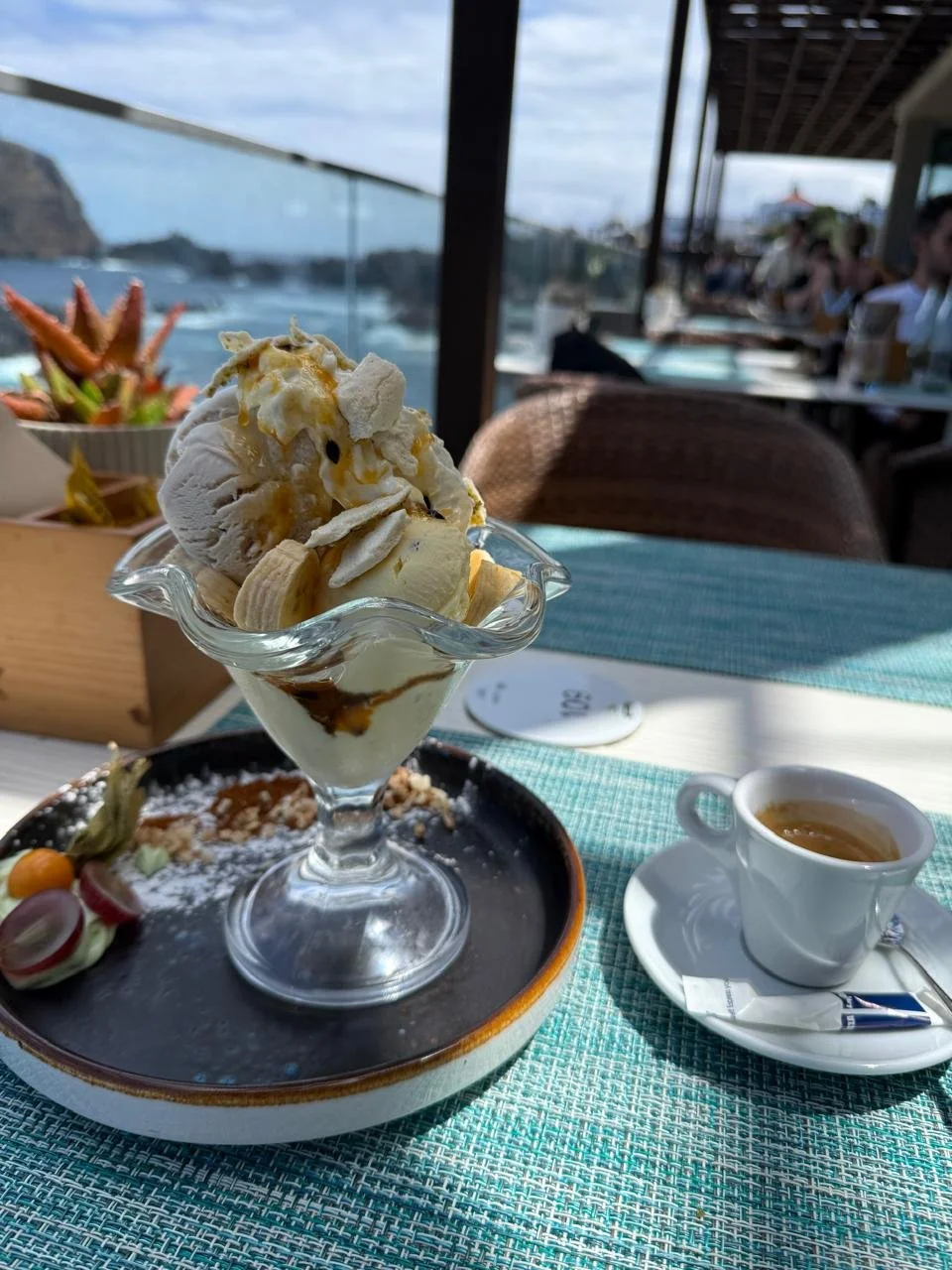
Instead, I ended up having passion fruit ice cream and an espresso, which was delicious and probably a better choice anyway.
What to Bring to Porto Moniz Natural Swimming Pools
You don't need anything unusual, but I would bring a swimsuit, towel, sunscreen, and possibly water shoes because of the volcanic rock. I would also bring something light to put on if the wind picks up. The north coast can feel noticeably different from Funchal, even in summer. And definitely have your phone or camera ready. For me, photographing Porto Moniz was almost as much fun as swimming there. The black volcanic rock against the blue Atlantic is what I remember most clearly.
Are the Porto Moniz Natural Swimming Pools Worth Visiting?
For me, absolutely.
Madeira has plenty of spectacular viewpoints, mountains, and coastlines, but Porto Moniz is different because you don't just stand somewhere and look at the landscape. You actually get into the water and become part of it. Swimming among huge black volcanic rocks while the Atlantic is crashing just beyond the protected pools is a very unusual experience.
I also liked the fact that it didn't feel completely predictable. We had fairly good conditions, while people who visited only one day earlier apparently dealt with strong winds and much bigger waves. Your experience may be quite different depending on the day you go.
My own suggestion is this: if you just want to experience Porto Moniz and check it off your Madeira list, visiting as part of a full-day island tour is totally fine. In fact, I highly recommend these tours if you want to see a lot of Madeira in a limited amount of time.
But if you really want to enjoy Porto Moniz rather than simply see it, I would try to spend at least half a day, or even the whole day, there. Your entrance ticket allows you to stay, and there are enough cafés, bars, restaurants, and small shops around that you won't be bored. You can swim, have lunch, walk along the waterfront, take far too many pictures, look for that elusive banana beer, or settle for passion fruit ice cream and an espresso like I did.
If your interest in Madeira makes you want to learn more about Portugal itself—its language, culture, history, or even what it might be like to live there—you can also take online European Portuguese classes at Polyglottist Language Academy. The classes are taught by native Portuguese-speaking instructors with extensive teaching experience and are very small, usually just 3–6 students. They can be useful whether you're preparing for a trip, considering a move to Portugal, or simply want to meet other people who are interested in the Portuguese language and culture.
I’ll also be writing more about Madeira while the trip is still fresh in my mind. If you’re planning your own visit, you can read my other articles about traveling in Madeira for more first-hand impressions, practical tips, and the small things I noticed while traveling around the island.