
Vietnamese Food Culture: What Language Learners Should Know Before Ordering
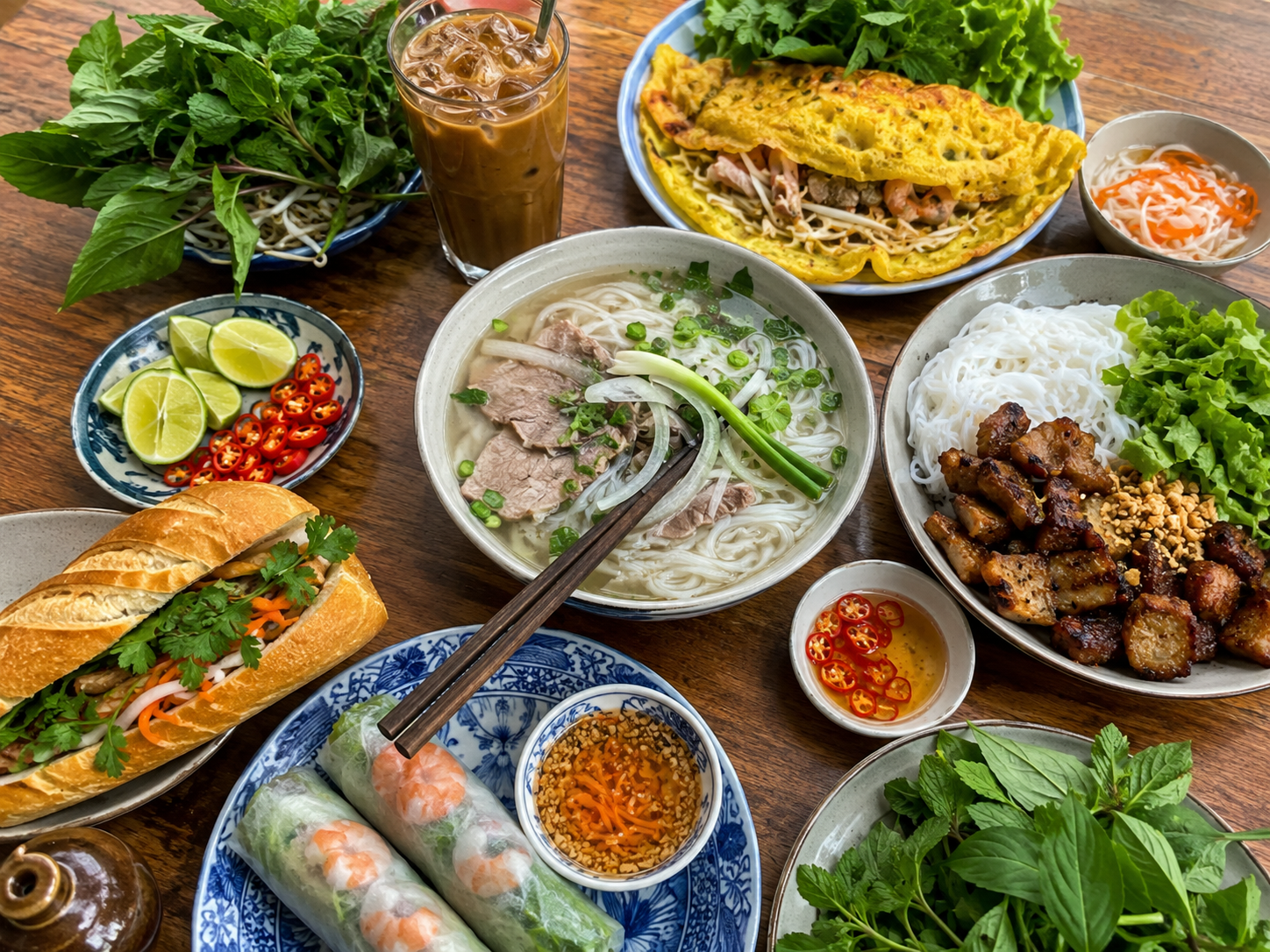
There are few better ways to enter a culture than through its food, and in Vietnam, food is not simply something people eat when they are hungry—it is a language of family, geography, hospitality, memory, history, rhythm, and daily life, spoken through steaming bowls of phở at sunrise, tiny plastic stools on busy sidewalks, baskets of fresh herbs, strong glasses of iced coffee, grilled pork over charcoal, fish sauce brightened with lime and chili, and the simple but meaningful question: “Ăn cơm chưa?”—“Have you eaten yet?”
For a Vietnamese learner, food is one of the most practical and rewarding places to begin. You may not be ready to discuss politics, literature, or complex emotions in Vietnamese, but you can learn how to say “I would like a bowl of phở,” “not too spicy,” “no ice,” “I am vegetarian,” or “How much is this?” very early in your studies. These phrases are not abstract textbook exercises. They are words you can use immediately at a restaurant, café, market, street stall, family gathering, or Vietnamese restaurant in your own city.
Vietnamese food culture is especially important because eating in Vietnam is rarely just a private act. It is social. It is communal. Dishes are shared. Bowls are passed. People invite one another to eat. Hosts encourage guests to take more. Vendors remember regular customers. A simple meal can become a moment of connection, and a small phrase spoken in Vietnamese can completely change the tone of an interaction.
This is why language learners should study Vietnamese food vocabulary early. Food gives you a map of real life. It teaches you nouns, verbs, numbers, politeness, tones, regional differences, and cultural expectations all at once. When you learn the word cơm, you are not only learning “rice.” You are learning that rice is so central to Vietnamese eating that ăn cơm can mean “to eat a meal” in general. When you learn cà phê sữa đá, you are not only learning “iced coffee with condensed milk.” You are stepping into Vietnam’s café culture, where people linger, talk, work, flirt, study, and watch the world pass by. When you learn phở, bún, mì, gỏi cuốn, bánh mì, and cơm tấm, you are learning how geography, history, colonial influence, climate, and local taste appear on the plate.
For English speakers, Vietnamese food names can seem intimidating at first because of the tone marks. Words like bún, bò, Huế, gỏi, cuốn, cơm, tấm, phở, chả, and xèo all require attention to sound. But this is also what makes food such a useful training ground. You see the words. You hear them. You say them. You taste the result. The memory becomes physical.
A Vietnamese menu can look like a puzzle to a beginner. Yet once you understand a few patterns, it becomes far less mysterious. Bò often means beef. Gà means chicken. Heo means pork in the South. Bún usually means rice vermicelli noodles. Cơm means cooked rice. Nước can mean water, drink, or sauce depending on context. Chay signals vegetarian food. Đá means ice. Không means no or not. These small words unlock a surprising amount.
This guide will walk you through the essential food culture, vocabulary, etiquette, and ordering phrases that Vietnamese learners should know before ordering. Whether you are planning a trip to Vietnam, visiting a Vietnamese restaurant in the Bay Area, studying Vietnamese online, or simply trying to understand the culture behind the dishes you already love, this article will help you approach Vietnamese food with more confidence, curiosity, and respect.
Why Food Matters So Much in Vietnamese Culture
Vietnamese cuisine is often described as fresh, balanced, light, and herb-driven. Many dishes combine sweet, sour, salty, bitter, spicy, and umami flavors in careful proportion. A bowl of noodles may come with lime, chili, bean sprouts, basil, mint, lettuce, fish sauce, and pickled vegetables so that each person can adjust the dish to taste.
But Vietnamese food is not only about flavor. It is also about relationship.
In many Vietnamese homes, meals are shared family-style. Instead of each person ordering a separate entrée, dishes are placed in the center: vegetables, soup, fish, meat, tofu, pickles, and dipping sauces. Each person has a bowl of rice and takes small portions from the shared plates. Elders are respected. Guests are encouraged to eat. Children may invite older relatives to begin. Food becomes part of the social structure of the meal.
This is why learners should be careful not to treat Vietnamese food only as a list of famous dishes. Yes, phở and bánh mì are globally recognized, but Vietnamese food culture is much broader. It includes home cooking, street food, café culture, market shopping, Buddhist vegetarian meals, regional specialties, festival foods, family rituals, and everyday phrases that express care.
If someone asks, “Ăn cơm chưa?” they may literally be asking whether you have eaten rice, but culturally the phrase can function like “Have you eaten?” or even “How are you?” Food is a way of checking in.
For a learner, this is valuable because it reveals something essential: Vietnamese language and Vietnamese culture cannot be separated. Learning how to order food is not only a travel skill. It is an introduction to Vietnamese social life.
Regional Differences: North, Central, and South
Vietnam is long and narrow, stretching from the cooler northern regions around Hanoi to the central coast around Huế, Đà Nẵng, and Hội An, down to Ho Chi Minh City and the tropical Mekong Delta. This geography shapes the food dramatically.
Northern Vietnamese Cuisine
Northern cuisine, especially around Hanoi, is often described as subtle, balanced, and elegant. The flavors tend to be less sweet and less spicy than in the South or Central regions. Broths are clear. Seasoning is careful. Fresh herbs are important, but the overall flavor profile is often restrained.
Hanoi is famous for dishes such as phở, bún chả, and chả cá. Northern phở often has a cleaner, lighter broth than southern phở, with fewer garnishes. Bún chả, one of Hanoi’s great contributions to Vietnamese cuisine, combines grilled pork patties and slices with rice vermicelli, herbs, and a bowl of dipping sauce. Chả cá features turmeric-marinated fish with dill, noodles, herbs, and peanuts.
For learners, Northern cuisine is a good reminder that Vietnamese food is not always sweet, spicy, or heavily sauced. It can be delicate, aromatic, and deeply traditional.
Central Vietnamese Cuisine
Central Vietnam, especially Huế, is known for stronger flavors, more spice, more chili, and beautiful presentation. Huế was once the imperial capital, and its culinary culture still reflects royal influence. Dishes can be smaller, more detailed, and more elaborate.
Bún bò Huế is one of the most famous central dishes. It is a spicy beef noodle soup with lemongrass, chili oil, thick rice noodles, beef, and often pork. It is richer and more intense than phở. Huế is also known for small rice cakes and savory snacks, many of which are served with fish sauce or shrimp-based condiments.
Central Vietnam also gives us dishes like mì Quảng and cao lầu. Mì Quảng, associated with Quảng Nam and Đà Nẵng, uses turmeric-colored noodles, a small amount of rich broth, herbs, peanuts, and rice crackers. Cao lầu, strongly associated with Hội An, features chewy noodles, pork, greens, and crispy toppings.
For language learners, Central food is a wonderful way to learn regional identity. If you see Huế, Quảng, or Hội An in a dish name, you are seeing geography inside the language.
Southern Vietnamese Cuisine
Southern Vietnamese food, especially around Ho Chi Minh City and the Mekong Delta, is often sweeter, more herb-filled, and more tropical. Coconut, sugar, tropical fruit, fresh vegetables, and abundant herbs appear frequently. The South is also famous for its relaxed and vibrant street food culture.
Cơm tấm is a classic southern dish. It means “broken rice” and is often served with grilled pork, shredded pork skin, egg, pickled vegetables, scallion oil, and fish sauce. Hủ tiếu, a noodle soup popular in the South, reflects Chinese and Cambodian influences. Gỏi cuốn, fresh spring rolls wrapped in rice paper, are also especially popular in the South.
Southern phở is often served with a large plate of herbs, bean sprouts, lime, chili, and sauces, allowing each person to customize the bowl. Compared to northern phở, it is often slightly sweeter and more heavily garnished.
For learners, the South is a great place to practice customization phrases: không cay, ít đường, không đá, thêm rau, and mang về.
Essential Vietnamese Dishes Every Learner Should Know
Phở
Phở is probably the most internationally famous Vietnamese dish. It is a rice noodle soup usually made with beef or chicken. Phở bò means beef phở. Phở gà means chicken phở.
A bowl of phở usually includes rice noodles, broth, herbs, onion, and meat. Depending on the region, it may come with lime, chili, bean sprouts, basil, hoisin sauce, or chili sauce.
Pronunciation note: Phở is not pronounced “foe.” It is closer to “fuh,” with a rising-question-like tone. The tone matters, but don’t panic. Context helps.
Useful phrase:
Cho tôi một tô phở bò.
I would like one bowl of beef phở.
Bánh mì
Bánh mì is a Vietnamese baguette sandwich, a delicious example of how Vietnamese cuisine absorbed and transformed French colonial influence. A typical bánh mì may include pâté, pork, pickled carrot and daikon, cucumber, cilantro, chili, and sauce.
Bánh can refer to many cake, bread, or pastry-like foods, while mì can mean wheat noodles or bread depending on context. In this case, bánh mì means bread or a baguette sandwich.
Useful phrase:
Cho tôi một bánh mì, không ớt.
I would like one bánh mì, no chili.
Bún bò Huế
Bún bò Huế is a spicy noodle soup from Huế. Bún refers to rice vermicelli noodles, bò means beef, and Huế is the city associated with the dish. It is often richer, spicier, and more aromatic than phở, with lemongrass and chili oil.
If you do not like spicy food, this is one dish where you should ask first.
Useful phrase:
Món này cay không?
Is this dish spicy?
Gỏi cuốn
Gỏi cuốn are fresh spring rolls, often made with rice paper, shrimp, pork, herbs, lettuce, and vermicelli noodles. They are usually served with dipping sauce, sometimes peanut-based.
They are light, fresh, and beginner-friendly, but learners with peanut allergies should be careful and ask about the sauce.
Useful phrase:
Tôi bị dị ứng đậu phộng.
I am allergic to peanuts.
Bún chả
Bún chả is a Hanoi dish made with grilled pork, rice vermicelli, herbs, and a dipping sauce. It is smoky, savory, fresh, and one of the best examples of how Vietnamese food balances meat, noodles, herbs, and sauce.
Useful phrase:
Ở đây có bún chả không?
Do you have bún chả here?
Cơm tấm
Cơm tấm means broken rice. It is strongly associated with southern Vietnam, especially Ho Chi Minh City. It often comes with grilled pork, egg, pickled vegetables, and fish sauce.
Useful phrase:
Cho tôi cơm tấm sườn.
I would like broken rice with pork chop.
Bánh xèo
Bánh xèo is a crispy yellow rice flour crepe filled with pork, shrimp, and bean sprouts. The name xèo refers to the sizzling sound the batter makes when it hits the pan. It is usually eaten wrapped in lettuce and herbs, then dipped in fish sauce.
Useful phrase:
Ăn món này như thế nào?
How do you eat this dish?
Cao lầu
Cao lầu is a specialty of Hội An. It has thick, chewy noodles, pork, greens, and crispy toppings, usually with only a small amount of broth. If you travel to Hội An, this is one of the must-try dishes.
Mì Quảng
Mì Quảng is a Central Vietnamese noodle dish with turmeric-colored noodles, herbs, peanuts, rice crackers, and a rich but shallow broth. It is often served with chicken, pork, shrimp, or egg.
Chè
Chè is a broad category of Vietnamese desserts, sweet soups, puddings, beans, jellies, fruits, and coconut milk sweets. It can be hot or cold, simple or colorful. If you see a chè shop, you may find many varieties displayed in glass containers.
Useful phrase:
Món nào ngon?
Which one is delicious?
Vietnamese Coffee
Vietnamese coffee is strong, bold, and culturally important. Cà phê sữa đá is iced coffee with condensed milk. Cà phê đen is black coffee. Cà phê trứng is egg coffee, especially associated with Hanoi. Cà phê dừa is coconut coffee.
Useful phrases:
Cho tôi một cà phê sữa đá.
I would like one iced coffee with condensed milk.
Không đường, làm ơn.
No sugar, please.
Không đá, làm ơn.
No ice, please.
Essential Vietnamese Food Vocabulary
Here are some key words language learners should know before ordering.
Basic Food Words
Cơm — cooked rice; meal
Gạo — uncooked rice
Phở — flat rice noodle soup
Bún — rice vermicelli noodles
Mì — wheat noodles or bread, depending on context
Thịt — meat
Thịt bò — beef
Thịt gà — chicken
Thịt heo — pork, common in Southern Vietnamese
Cá — fish
Hải sản — seafood
Rau — vegetables or greens
Rau thơm — herbs
Nước — water, drink, or liquid
Nước mắm — fish sauce
Nước chấm — dipping sauce
Chè — sweet dessert or sweet soup
Trà — tea
Cà phê — coffee
Useful Restaurant Words
Quán — casual eatery or shop
Nhà hàng — restaurant
Thực đơn — menu
Món — dish
Gọi món — to order food
Tính tiền — to calculate the bill / ask for the bill
Mang về — take away / to go
Ở đây — here
Có — to have
Không — no / not
Bao nhiêu — how much
Ngon — delicious
Cay — spicy
Ngọt — sweet
Nóng — hot
Lạnh — cold
Đá — ice
Dietary and Allergy Words
Ăn chay — vegetarian
Thuần chay — vegan
Không thịt — no meat
Không heo — no pork
Không hải sản — no seafood
Dị ứng — allergy / allergic
Đậu phộng — peanuts
Tôi bị dị ứng… — I am allergic to…
For serious allergies, do not rely only on pronunciation. Carry a written card in Vietnamese and show it clearly to staff.
How Ordering Works in Vietnam
Ordering food in Vietnam depends on where you are.
At a street food stall, the menu may be short or not written at all. The stall may specialize in one dish, so the main question is not “What do they serve?” but “How many portions do you want?” You might point, sit down, and the vendor brings the food. In some places, you order at the cart first and then sit.
At a casual restaurant, there may be a laminated menu or a menu on the wall. You may need to call the server politely. In Vietnamese, people often use kinship terms or age-based forms of address. If you are unsure, a simple polite phrase like “Em ơi” or “Anh ơi” may get attention, but as a beginner, you can also smile, make eye contact, and say “Xin lỗi” or “Cho tôi gọi món.”
At a formal restaurant, the experience may feel more familiar to Western diners. You receive a menu, order from a server, and pay at the end. But even there, service may not involve constant check-ins. If you need something, you may need to ask.
Payment can happen at the table, at the front counter, or directly with the vendor. In local eateries and street stalls, tipping is usually not expected. In upscale restaurants or tourist areas, a small tip may be appreciated but is not mandatory in the same way it is in the United States.
To ask for the bill, say:
Tính tiền, làm ơn.
The bill, please.
Useful Vietnamese Phrases for Ordering
I would like…
Cho tôi…
I would like…
Cho tôi một tô phở bò.
I would like one bowl of beef phở.
Cho tôi một cà phê sữa đá.
I would like one iced coffee with condensed milk.
Do you have…?
Ở đây có… không?
Do you have… here?
Ở đây có món chay không?
Do you have vegetarian food here?
How much is this?
Cái này bao nhiêu?
How much is this?
Bao nhiêu tiền?
How much money?
Not too spicy, please.
Đừng cay quá, làm ơn.
Not too spicy, please.
Ít cay thôi.
Only a little spicy.
Không cay.
Not spicy.
No ice, please.
Không đá, làm ơn.
No ice, please.
Less sugar, please.
Ít đường, làm ơn.
Less sugar, please.
Không đường.
No sugar.
I am vegetarian.
Tôi ăn chay.
I am vegetarian.
I am allergic to…
Tôi bị dị ứng với…
I am allergic to…
Tôi bị dị ứng đậu phộng.
I am allergic to peanuts.
Tôi bị dị ứng hải sản.
I am allergic to seafood.
To go, please.
Cho tôi mang về.
Please make it to go.
What do you recommend?
Ở đây món nào ngon?
Which dish is good here?
Bạn gợi ý món gì?
What dish do you recommend?
Thank you, it was delicious.
Cảm ơn, ngon quá!
Thank you, it was delicious!
Vietnamese Dining Etiquette
Vietnamese dining etiquette is not about stiff formality. It is about respect, awareness, and shared enjoyment.
In a family meal, dishes are often shared. Take a little at a time. Do not pile your bowl too high from the communal dishes. If you are offered food, it is polite to accept a small portion unless you have a real dietary reason not to.
Chopsticks should be handled respectfully. Do not stick chopsticks upright in a bowl of rice, because this resembles incense used in rituals for the dead. Do not use chopsticks to point at people. If you are sharing food from a communal plate, try to use serving utensils when available.
If you are a guest, complimenting the food is always welcome.
Ngon quá!
So delicious!
Cảm ơn nhiều.
Thank you very much.
In Vietnamese culture, hosts may encourage you to eat more. This is usually a sign of care, not pressure. If you are full, you can smile and say:
Tôi no rồi, cảm ơn.
I am full, thank you.
Street Food Culture: What Learners Should Expect
Street food is one of the great joys of Vietnam. It is fast, social, affordable, and often highly specialized. A vendor may sell only one dish and do it extremely well. A tiny stall with plastic stools may serve some of the best food you will eat on your trip.
For beginners, street food can feel chaotic at first. There may be no English menu. There may be no obvious line. People may sit close together. Motorbikes may pass nearby. Dishes may arrive quickly. The vendor may not have time for long explanations.
But this is also a perfect place for language practice because the interaction is short and repetitive. You can order one dish, ask the price, say thank you, and leave.
Look for busy stalls with high turnover. Choose hot, freshly cooked food. Watch what locals are ordering. If you are unsure, point and say:
Cho tôi món này.
I would like this dish.
If you want to be polite and curious, ask:
Món này là gì?
What is this dish?
Street food teaches learners an important lesson: communication does not have to be perfect to be successful. A few words, a smile, and respectful attention can carry you surprisingly far.
Vietnamese Café Culture
Vietnamese café culture deserves special attention. Coffee in Vietnam is strong, slow, social, and deeply woven into daily life. A café may be a place to meet friends, work, study, escape the heat, watch the street, or spend hours over one drink.
The most famous drink is cà phê sữa đá: strong coffee with sweetened condensed milk and ice. Cà phê đen is black coffee. Cà phê trứng, or egg coffee, is creamy and dessert-like. Cà phê dừa, coconut coffee, is rich, sweet, and refreshing.
Other drinks learners should know include:
Trà đá — iced tea
Nước mía — sugarcane juice
Sinh tố — smoothie
Nước cam — orange juice
Nước chanh — limeade or lemonade-style drink
Cafés are also excellent places to study Vietnamese. You can read the menu, listen to conversations, practice ordering, and review vocabulary. If you are nervous about speaking Vietnamese, ordering coffee is one of the easiest daily rituals to practice.
Try this:
Cho tôi một cà phê sữa đá, ít đường.
I would like one iced coffee with condensed milk, less sugar.
Why Food Vocabulary Helps You Learn Vietnamese Faster
Food vocabulary is powerful because it is concrete. You can see it, smell it, taste it, order it, and remember where you learned it. This makes it much easier to retain than abstract vocabulary.
Food also helps you practice tones. Vietnamese is a tonal language, and many dish names are short, common, and tone-rich: phở, bún, bò, Huế, cơm, tấm, chả, chè, gỏi, cuốn. Saying these words correctly trains your ear and mouth.
Menus also teach patterns. Once you know that bò means beef and gà means chicken, you can recognize those words in many dishes. Once you know không means no or not, you can say không cay, không đường, không đá, không thịt, and không heo. Once you know cho tôi means “give me” or “I would like,” you can order many things.
Food vocabulary gives beginners the wonderful feeling of immediate usefulness. Instead of waiting months to “really speak Vietnamese,” you can start using the language in real situations almost right away.
Common Mistakes Foreigners Make When Ordering
One common mistake is assuming that all Vietnamese food is phở and bánh mì. These dishes are important, but Vietnam’s cuisine is far more regional and varied. A learner who only knows those two dishes misses the world of bún chả, bún bò Huế, cao lầu, mì Quảng, cơm tấm, hủ tiếu, bánh xèo, chè, and countless local specialties.
Another mistake is ignoring tones completely. Vietnamese people are often patient with learners, and context helps, but tones still matter. If you flatten every word, you may be harder to understand. You do not need perfect pronunciation, but you should try to hear and imitate the tone.
A third mistake is expecting Western-style restaurant service everywhere. At many local places, you may need to get someone’s attention. The server may not check on you repeatedly. The bill may not come until you ask. This is not rude. It is simply a different service rhythm.
Another mistake is failing to learn customization phrases. If you do not like spicy food, learn không cay. If you want less sugar, learn ít đường. If you do not want ice, learn không đá. If you are vegetarian, learn Tôi ăn chay. These phrases can make your meals much more comfortable.
Finally, some foreigners forget basic politeness. A simple cảm ơn can make a big difference. Vietnamese does not require you to be fluent before being respectful.
Practical Advice for Learners Before a Trip to Vietnam
Before traveling to Vietnam, learn a small set of survival food words. You do not need hundreds of terms. Start with the essentials:
Cơm
Phở
Bún
Mì
Gà
Bò
Heo
Cá
Rau
Nước
Cà phê
Không cay
Không đá
Ít đường
Ăn chay
Tính tiền
Cảm ơn
Practice saying the dish names out loud. Watch videos of native speakers ordering food. Look at menus online. Visit Vietnamese restaurants in your city and try ordering one small thing in Vietnamese. Even if the staff switches to English, the practice helps.
If you have allergies, prepare written Vietnamese notes before your trip. Do not improvise serious medical information. Show the note clearly and repeat the important words.
If you use translation apps, use them as support, not as your only tool. Apps can help with ingredients, but they may translate dish names too literally. A dish name is often cultural, regional, or idiomatic. When in doubt, look at pictures, ask locals, or point politely.
Most importantly, stay curious. Vietnamese food culture rewards openness. Try unfamiliar dishes. Ask what people recommend. Notice how herbs are used. Watch how locals combine noodles, sauce, lime, chili, and greens. Vietnamese cuisine is interactive. You are not just eating a finished product; you are often adjusting, mixing, wrapping, dipping, and balancing the dish yourself.
Learn Vietnamese Through Food
One of the best ways to study Vietnamese is to build your lessons around real-life situations. Food is ideal for this. You can create a personal food vocabulary notebook, watch Vietnamese cooking videos, label ingredients in your kitchen, practice ordering dialogues, and learn one new dish name each week.
For example, you might choose phở one week. Learn the words phở bò, phở gà, nước dùng, hành, rau thơm, chanh, ớt, and tô. Then practice the phrase:
Cho tôi một tô phở gà, không cay.
The next week, choose Vietnamese coffee. Learn cà phê, sữa, đá, đường, nóng, đen, trứng, and dừa. Practice:
Cho tôi một cà phê sữa đá, ít đường.
This method makes Vietnamese feel less abstract. You are not memorizing random words. You are building a practical world.
FAQs About Vietnamese Food Culture and Ordering
Is Vietnamese food spicy?
Some Vietnamese food is spicy, especially in Central Vietnam, but not all Vietnamese food is spicy. Many dishes are mild and served with chili on the side so that each person can adjust the heat.
Is it easy to order food in Vietnam without speaking Vietnamese?
In tourist areas, yes, you can often manage with English, pointing, pictures, and translation apps. In local places, basic Vietnamese helps a lot. Even simple phrases like Cho tôi…, bao nhiêu?, không cay, and cảm ơn can make ordering easier.
What are the most important Vietnamese food words to learn first?
Start with cơm, phở, bún, mì, gà, bò, heo, cá, rau, nước, cà phê, không, có, ngon, cay, đá, đường, ăn chay, and tính tiền.
Is Vietnamese food healthy?
Many Vietnamese dishes include fresh herbs, vegetables, rice noodles, broth, seafood, and moderate portions of meat. However, like any cuisine, it depends on the dish. Fried foods, sweet drinks, rich sauces, and desserts can be heavier.
What should vegetarians know before ordering in Vietnam?
Learn Tôi ăn chay and không thịt. Also remember that fish sauce and meat broth are common, so you may need to ask more specifically if you avoid all animal products. Look for vegetarian Buddhist restaurants or signs with the word chay.
What is the difference between northern and southern phở?
Northern phở is often simpler, clearer, and less sweet, with fewer garnishes. Southern phở is often sweeter and served with more herbs, bean sprouts, lime, and sauces.
Is street food safe in Vietnam?
Many people enjoy street food safely by choosing busy stalls with high turnover and freshly cooked food. If you have a sensitive stomach, start with hot cooked dishes and be cautious with raw ingredients, water, and ice in less developed areas.
Do Vietnamese people tip in restaurants?
Tipping is not generally expected at street stalls or local eateries. In more upscale restaurants, hotels, or tourist-oriented places, a small tip may be appreciated.
What is the most useful phrase for ordering food in Vietnamese?
Cho tôi… is one of the most useful phrases. It means “I would like…” or “Give me…” You can combine it with many dishes: Cho tôi một phở bò. Cho tôi một cà phê sữa đá. Cho tôi mang về.
Can learning food vocabulary help me learn Vietnamese faster?
Yes. Food vocabulary is memorable, practical, and used often. It helps you practice tones, pronunciation, ordering, numbers, politeness, and cultural understanding in real-life situations.
Learn Vietnamese with Polyglottist Language Academy
At Polyglottist Language Academy, we offer Vietnamese classes for adult learners who want structure, support, and practical communication. Our classes are designed to help students build a strong foundation in pronunciation, tones, vocabulary, grammar, listening, and conversation. We also believe that culture belongs in the language classroom.
If you are ready to go beyond ordering phở and start understanding the language behind the culture, we invite you to explore our Vietnamese classes at Polyglottist Language Academy:
Explore Vietnamese Classes at Polyglottist Language Academy
Check Out Our Other Blog Articles
If you enjoyed this article, you may also like these related posts from the Polyglottist Language Academy blog: