
Beginner Russian Classes in San Francisco: Start Speaking Faster
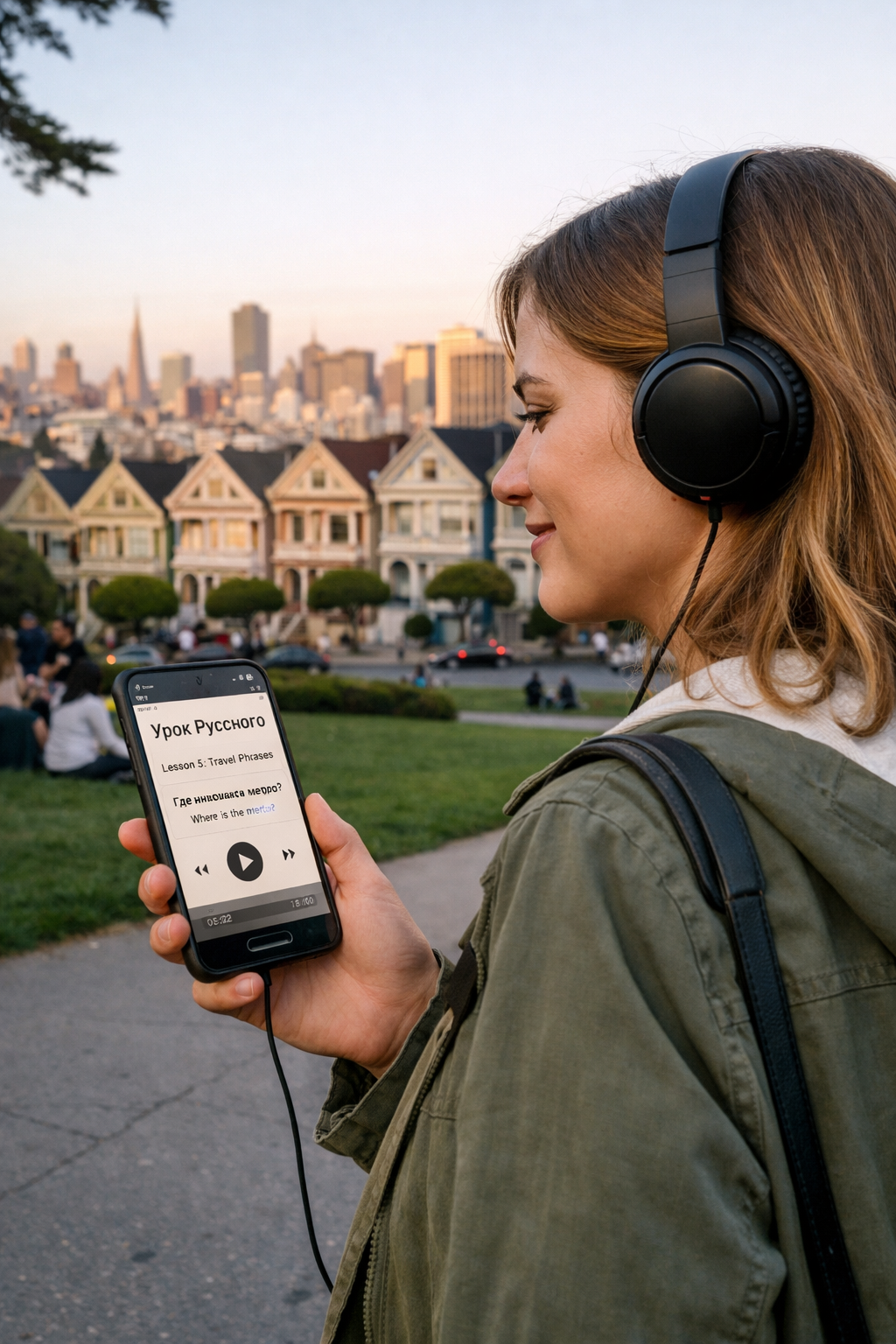
If you live in San Francisco or the Bay Area and want to finally speak Russian—not just dabble in apps—you’re in an excellent place to start. The region has a long-standing Russian-speaking community, growing professional ties to Eastern Europe and Central Asia, and plenty of adult-focused classes that fit around a busy schedule. This article will walk you through why Russian is worth learning in 2026, what to expect as a beginner, how to choose the right class, and how to start speaking faster instead of getting stuck at “hello.”
You’ll also find practical guidance tailored to working professionals in San Francisco, Oakland, Berkeley, and Silicon Valley. From balancing evening classes with long tech hours to deciding between in-person and online learning, the goal here is to help you make a confident, informed choice—and actually use your Russian in real conversations.
Why Learn Russian in San Francisco in 2026
Russian in Bay Area business, tech, and geopolitics
San Francisco and Silicon Valley remain deeply connected to global tech and startup ecosystems, including Russian-speaking engineers, researchers, and remote teams across Eastern Europe and Central Asia. Russian is still widely used in technical communities, open-source projects, and distributed teams, especially in fields like software engineering, data, cybersecurity, and AI. Even if your daily meetings are in English, being able to read Russian-language documentation, chat informally with colleagues, or understand what’s happening on Russian-speaking platforms gives you a different level of access and trust.
Beyond tech, Russian shows up in roles that touch policy, security, or international collaboration. Analysts monitoring disinformation, NGO workers focused on Eastern Europe, and journalists covering global politics all benefit from being able to read or listen in Russian rather than relying on translated filters. In that sense, Russian is not just a “personal enrichment” language—it can be a strategic skill in a city where careers are often global by default.
Russian-speaking communities in the Bay Area
Learning Russian in San Francisco isn’t just about a distant map; it’s about people you might already pass on the street. The city has a long history of Russian-speaking immigration, with especially visible communities in the Richmond District—sometimes dubbed “Little Russia”—where you can still find Russian bakeries, shops, churches, and cultural centers. Similar communities are present in parts of the East Bay and South Bay, including families with roots not only in Russia but also in Ukraine, Belarus, and other former Soviet republics.
For a learner, this means two things. First, there are plenty of authentic places to hear Russian in everyday life—grocery stores, cafés, community events. Second, if you’re learning Russian for relationships, in-laws, neighbors, or coworkers, you’re far from alone. Many adult students in the Bay Area are motivated by partners or family who speak Russian at home and want to be able to participate more fully in that world.
Relevance for travel and global communication
When you start Russian in San Francisco, you are gearing up for a language that goes far beyond one country. Russian remains a major lingua franca across large parts of Eastern Europe, the Caucasus, and Central Asia, and you’ll encounter it widely in cities across the region. For travel, this means you can navigate menus, train stations, and small talk in more than just Moscow or Saint Petersburg. It also opens doors in diasporic communities across Europe, Israel, and North America.
If your job involves remote collaboration with freelancers, development teams, or research partners in Russian-speaking regions, the language becomes a practical communication tool. Even basic conversational ability—being able to greet people, ask simple questions, and understand key phrases—can improve rapport and working relationships. And on a purely personal level, Russian gives you access to a different alphabet, grammar system, and worldview, and eventually to literature, film, music, and media that you simply don’t experience the same way in translation.
Common Challenges for Beginner Russian Learners
No matter how motivated you are, Russian looks intimidating from the outside. That impression is normal—and manageable once you know what to expect and how good beginner classes are designed.
The Cyrillic alphabet looks scary
For many English speakers, the Cyrillic alphabet is the first psychological barrier. Letters that look familiar but sound different (like “P” pronounced like R) or unfamiliar shapes can make learners feel like they are starting from scratch. On top of that, adults often carry a belief that “I’m bad at languages,” which amplifies the fear.
In practice, the alphabet is usually the part that becomes comfortable faster than people expect. With structured guidance, you can learn to recognize and sound out most letters within a week or two. Good beginner courses don’t leave you stuck in an “alphabet phase” for months—they introduce Cyrillic step by step and immediately connect it to useful words, signs, and short phrases, so reading becomes part of speaking, not a separate chore.
Pronunciation feels difficult and unfamiliar
Russian pronunciation introduces several challenges: consonant clusters, soft versus hard consonants, rolled or tapped “r,” and stress patterns that can change meaning. Many learners feel self-conscious, worried about sounding “silly” or “too American,” and end up speaking less or reverting to English.
This is where a well-designed class makes a big difference. Instead of overwhelming you with phonetic theory, an effective teacher will model sounds slowly, use clear repetition, and build up from syllables to words and short phrases. In a small group, you get enough time to experiment, be corrected, and hear your classmates—an important part of realizing you’re not alone in making mistakes. This kind of targeted pronunciation work early on saves you from fossilizing habits that are harder to fix later.
Grammar complexity: cases and verbs of motion
Russian grammar has a reputation for being “brutal,” mainly because of its case system and verbs of motion. Textbooks often present six cases in big charts full of endings, then layer on verb aspect and pairs of verbs for moving “by foot,” “by vehicle,” “to somewhere,” “from somewhere,” and so on. It’s a lot.
Most beginners get stuck when they try to memorize abstract charts without connecting them to real speech. The solution is not to pretend the complexity doesn’t exist, but to introduce it through small, meaningful patterns. Instead of starting from “the genitive case,” a good beginner class might focus on useful chunks like “I live in Oakland,” “I work in San Francisco,” or “I’m going to Berkeley,” repeating them in different contexts. Verbs of motion can start with familiar routines—commuting between neighborhoods, going to a café, traveling to another city—so you feel the logic through stories and real-life situations rather than slogging through an entire chapter at once.
Why many learners feel stuck early
A lot of adults in the Bay Area have already “tried” Russian in one way or another: a language app, a self-study book, a few YouTube videos. It’s common to learn the alphabet, some greetings, and a handful of phrases—and then stall. Without regular speaking, feedback, and a clear progression, passive knowledge builds up while active speaking stays frozen.
This feeling of being stuck often comes from three factors: learning only through apps or textbooks, attending irregular meetups without a syllabus, and having vague goals like “I’d like to learn Russian someday.” A structured beginner course changes that dynamic by giving you a defined starting point, weekly building blocks, and visible milestones. Instead of circling around the same basic phrases, you feel yourself moving into new territory—and using what you already know more confidently.
How the Best Beginner Russian Classes Help You Progress Faster
If your main goal is to speak Russian, not just “study” it, the way a class is designed matters as much as the number of hours you put in.
Speaking from day one
In effective beginner classes, students start speaking Russian in the first session. This doesn’t mean giving speeches; it means doing simple, realistic dialogues: introducing yourself, saying where you’re from, talking about your job, ordering coffee, or asking for directions. You may rely on prompts, visuals, or sentence starters, but you still produce real Russian out loud.
The key is that speaking is not postponed until “after you learn enough grammar.” Instead, grammar is introduced as a tool to say things you actually need. For example, you might first practice saying where you live in the Bay Area or what you do for work, then notice the patterns in the endings or verb forms. This approach keeps motivation high because you experience communication, not just rules.
Small group versus large class
Class size has a direct impact on how fast you start speaking. In a small group—typically 4 to 10 students—you can expect to speak multiple times per lesson, rotate partners, and receive individual corrections. This setup is especially supportive for shy learners or those who haven’t studied a language in years.
Larger, lecture-style classes can be more affordable or familiar from school, but they often limit how much each student talks. It’s easy to attend, take notes, and passively understand without ever being pushed to form sentences in real time. If your priority is real-world speaking, smaller groups usually offer better value per minute of active practice, even if the headline price per hour is a bit higher.
Structured curriculum versus casual learning
Casual meetups, language exchanges, and conversation groups can be fantastic supplements, but they rarely provide the structure that beginners need. You might chat in English as much as in Russian, repeat the same introductions every time, or jump between topics without building a foundation.
A strong beginner Russian course uses a clear curriculum with defined goals for each level. By the end of A1, for instance, you should be able to introduce yourself, talk about your daily routine, handle simple travel tasks, and ask and answer questions about work and hobbies. Each unit in the course builds toward those outcomes with new vocabulary, grammar patterns, and plenty of practice. This trajectory transforms “random exposure” into a sense of real progress.
The value of trained, native or expert instructors
Russian is not a language where any fluent speaker automatically makes a good teacher. The most effective beginner instructors are native or near-native speakers who also understand how to teach adults. They know which parts of Russian grammar confuse English speakers, can explain concepts clearly, and choose examples that make sense for your life.
Good teachers also manage classroom dynamics: they ensure everyone speaks, correct errors in a supportive way, and adapt explanations when something isn’t landing. You’ll feel this difference quickly. Instead of leaving class more confused by grammar, you walk away thinking, “Oh—that finally makes sense, and I can actually use it.”
In-Person vs Online Russian Classes in San Francisco
Choosing a format is often the first big decision for Bay Area professionals fitting Russian around work, commutes, and family life.
In-person classes: strengths and trade-offs
In-person Russian classes offer a rich sense of presence. You hear the language in a real room, pick up body language and facial expressions, and feel more anchored in the learning process. It’s easier to build camaraderie with classmates when you share physical space each week, and classes can incorporate hands-on activities or even short field trips—like visiting Russian shops or attending local cultural events together.
The downside, especially in San Francisco and across the Bay Area, is logistics. Evening traffic, parking, and long commutes can make a 90‑minute class stretch into a three-hour block in your schedule. If you work late or unpredictably in tech, law, or healthcare, getting to a physical classroom at the same time every week can be the main barrier—not your motivation.
Online classes: flexibility and focus
Online Russian classes solve the commute problem. You can join from your apartment in the Mission, your home in Oakland, or a co-working space in Palo Alto, and you have access to teachers and classmates across time zones. This flexibility is especially attractive if your work schedule shifts, if you travel frequently, or if you prefer late-evening or early-morning lessons.
The trade-off is that online learning requires a bit more self-management: finding a quiet space, turning the camera on, and resisting the urge to multitask. Group size also matters—very large online groups can feel impersonal, while smaller ones preserve the speaking opportunities of an in-person class. Still, with a good platform, clear audio, and an interactive teacher, online classes can be just as engaging and effective as traditional classrooms.
Hybrid and mixed approaches
Many learners now combine formats, sometimes within the same school. For example, you might take a weekly in-person class in downtown Berkeley, then join an online conversation club or additional grammar session on another evening. Others commit to an online group class, then schedule occasional one-on-one sessions with a tutor to work on pronunciation or specific goals like preparing for travel.
Hybrid approaches are particularly powerful for busy professionals. They give you the accountability of fixed sessions and the flexibility of online practice, while letting you scale your workload up or down as life demands.
What to Look for in a Beginner Russian Course
Once you’ve decided you want to move beyond apps and YouTube, choosing the right course will determine how quickly you start speaking.
Class size and interaction
For real speaking progress, look closely at class size. A good beginner group will be small enough that you can practice with different partners, ask questions, and receive feedback each session. Ask how the school handles it if more students sign up than expected—do they cap enrollment, split classes, or let the group grow?
If you’re anxious about speaking or feel very out of practice with learning, a small group or semi-private class can help you ease into Russian without feeling exposed. On the other hand, if you’re already comfortable in group settings, a mid-size group with lots of pair and small-group work might suit you well.
Curriculum and materials
A strong beginner curriculum is transparent. You should be able to see a syllabus or course overview that shows what you’ll cover over the term: topics (introductions, work, daily routines, travel), grammar (present tense, basic cases), and skills (speaking, listening, reading, writing). Each unit should have a clear purpose and build on previous material.
Good course materials balance structure and real-life relevance. This might mean using a modern textbook plus custom handouts and dialogues that reference Bay Area life—commuting between Oakland and San Francisco, working in tech, or visiting local Russian cultural events. You want content that feels connected to the way you actually live, not just scripted stories from decades ago.
Speaking opportunities and feedback
Before you enroll, try to find out roughly how much each student speaks in a typical class. Will you mostly listen to lectures and explanations, or will you spend a lot of time doing dialogues, role-plays, and pair work? The more you speak, the faster you’ll move from passive recognition to active use.
Feedback is just as important as volume. An effective teacher will correct you without interrupting every sentence, draw attention to patterns, and give you simple, memorable ways to improve. Over time, you should notice that your sentences are getting longer, more accurate, and more automatic.
Cultural immersion elements
Language and culture are closely linked, especially in a city that already has Russian-speaking communities and cultural institutions. A good beginner Russian class weaves in cultural insight from the start: how people greet each other, what holidays matter, how family and friendship are expressed, how etiquette works in different contexts.
Some programs organize film nights, cultural talks, or group visits to events. Others integrate culture through in-class materials: songs, videos, short texts, or stories. Even if your main goal is travel or business, cultural context makes the language more memorable and gives you more opportunities to connect with real people.
Typical Prices for Russian Classes in San Francisco
Exact prices vary across providers, but you can use broad ranges and trade-offs to set your expectations.
Group class pricing
Adult group Russian classes in San Francisco and the broader Bay Area are commonly priced as multi-week courses. When you break it down, the hourly rate is usually moderate to high compared to some other cities, reflecting local costs and the benefit of small class sizes. Independent language schools and community-based programs often position themselves between university tuition on one end and lower-cost, large online platforms on the other.
University courses—like those at local state or community colleges—operate on a different model. They tend to offer many classroom hours over a semester, with tuition calculated per credit. If you are already a student or qualify for certain rates, this can be cost-effective, though the classes may be larger and less tailored to working professionals’ schedules.
Private lessons and semi-private options
Private Russian lessons, whether in person or online, cost more per hour but give you complete personalization. Rates vary depending on teacher experience, local versus remote setting, and whether you work through a platform or directly with a tutor. In-person one-to-one lessons in the Bay Area generally sit on the higher end due to cost of living and travel time. Online one-to-one lessons offer a wider spread of options across time zones and price points.
A useful middle ground is semi-private instruction: two learners sharing one teacher. You still receive a lot of individual attention but at a lower price per person than full private lessons. This format works well for couples learning together, colleagues preparing for travel, or friends with similar goals.
How to think about value
Instead of focusing solely on the per-hour price, consider the return in speaking progress. A slightly more expensive small group class where you speak a lot, feel accountable, and receive clear feedback can be more efficient than a cheaper, larger class where you mostly listen. Similarly, occasional private sessions can be very cost-effective if they unlock something you’ve been stuck on for months.
Think about your goals and timeframe. If you’re preparing for a trip in six months, investing a bit more now to secure a structured and speaking-heavy course will likely feel worth it once you land in a Russian-speaking environment and realize you can actually use what you learned.
How Long It Takes to Start Speaking Russian
Most adults want to know, “How long before I can actually talk to someone?” The answer depends on intensity, consistency, and what you mean by “speaking.”
Realistic beginner timelines
If you take one structured class per week and do regular homework and light self-study, you can usually reach solid beginner (A1) skills within several months to about a year. At this point, you should be able to handle everyday conversations: introducing yourself, talking about your work and city, describing your daily routine, and managing simple travel situations such as ordering food or buying tickets.
Learners who take more intensive routes—two or more classes per week plus several hours of self-study—typically reach and consolidate A1 faster and start pushing into A2 within a similar overall timeframe. The main variable is not your inherent “talent,” but how much quality, guided practice you fit into your weeks.
What “speaking” means at beginner level
At beginner level, “speaking Russian” does not mean flawless grammar or endless vocabulary. It means you can form basic sentences without freezing, understand predictable answers, and navigate short exchanges with some help from context and gestures. You’ll still make plenty of mistakes with cases and word order, and you’ll often search for vocabulary, but you will be understood and able to keep the conversation going.
Framing your expectations this way is important. If you expect to discuss politics or philosophy after a few months, you’ll be disappointed. If you define success as being able to introduce yourself, talk a little about your life in San Francisco or Berkeley, and manage simple travel conversations, you’ll see clear wins much sooner.
Intensity versus sustainability
You might be tempted to sign up for the most intensive option possible, but consistency usually beats intensity. A busy engineer taking one well-designed class per week plus 15 minutes of daily review can outpace someone who crams for a month and then stops altogether. Before enrolling, ask yourself what you can sustain for at least one full term.
A good rule of thumb is to choose the class frequency that fits your life, then commit to a realistic minimum of self-study on top—often 15–30 minutes a day or a few focused sessions per week. As your routine stabilizes and you start to enjoy the process, you can always add more later.
Practical Tips to Learn Russian Faster
Even the best class will work better if you support it with smart daily habits.
Build small daily routines
Instead of waiting for long “perfect” study sessions, aim for short, consistent touchpoints with Russian. This might mean 10 minutes of vocabulary review with your morning coffee, listening to a short dialogue while walking through Golden Gate Park, or repeating phrases out loud during your commute (silently, if you prefer).
Small routines compound over time. The brain retains language better when it sees it frequently in small doses rather than in big, irregular chunks. By embedding Russian into your day—especially in moments you already have, like commuting or walking—you make progress feel less like a separate project and more like part of your normal life.
Combine classes with focused self-study
Think of your class as the backbone that gives structure and feedback. Self-study is how you reinforce and recycle what you learn. After each lesson, review your notes within 24 hours, complete assigned homework, and spend a bit of extra time with the week’s vocabulary and phrases. Simple flashcards, short writing exercises, or listening to a dialogue a few times can be enough.
If you have extra energy, add one or two trusted resources: a beginner-friendly podcast, a YouTube channel that explains grammar with examples, or graded reading materials. The key is not to drown yourself in resources, but to pick a few and stick with them long enough to see results.
Train your ear and your mouth
Listening and pronunciation often lag behind reading and grammar, especially for adults used to learning visually. To speed up your speaking, include some “ear and mouth” training in your routine. Shadowing—listening to a short audio clip and repeating along with the speaker—is particularly powerful. Focus on rhythm and stress rather than perfection.
Recording yourself can also be eye-opening. Say a set of phrases, then compare them to a native model. You’ll start to hear where your stress or vowel quality differs. Bring these questions to your teacher; a few targeted corrections can dramatically change how confidently you speak.
Common mistakes to avoid
Several patterns slow beginners down. One is waiting to speak until the alphabet or grammar feels “mastered.” In reality, you need to speak while you’re still shaky; that’s how fluency is built. Another is relying solely on apps. Apps are great supplements for vocabulary and repetition, but they don’t replace real-time interaction or feedback.
Perfectionism is another trap. If you treat every mistake as a failure, you’ll avoid speaking, which is exactly what you need most. Instead, aim for “good enough to be understood” and treat every correction as useful information. Finally, try not to jump between too many books or courses at once. Choose one main path, give it a full term or level, and then reassess.
FAQs About Learning Russian in San Francisco
Is Russian hard for English speakers?
Russian is challenging in some areas—like grammar and pronunciation—but it is very learnable with consistent practice and a clear path. The early months often feel steep because you’re learning a new alphabet and grammatical structure at the same time. Once you get used to the patterns, progress starts to feel more predictable.
Can I learn Russian without the alphabet first?
You can start by learning phrases with transliteration, but you will quickly run into problems with pronunciation, spelling, and real-world reading. Most successful beginners learn Cyrillic early in a structured, low-stress way, integrated with speaking. Within a short time, reading becomes a tool rather than an obstacle.
How many classes per week should I take?
For most busy adults, one or two classes per week works well. One weekly class plus daily short review provides steady progress without overwhelming your schedule. If you have a specific deadline—like an upcoming move or trip—you might add a second weekly class or occasional private lessons to accelerate.
Is Russian useful in 2026?
Yes. Russian remains a major world language, widely used across Eastern Europe and Central Asia, as well as in diplomacy, energy, cybersecurity, and technical fields. In the Bay Area, it also connects you to local communities, professional opportunities, and personal relationships that won’t be accessible in English alone.
Do I need to be “good at languages” to succeed?
No. What you need is a realistic plan, consistent practice, and a supportive environment. Adults often underestimate how much previous learning experience—university, professional life, other skills—can help them learn a language methodically.
How long before I can use Russian on a trip?
If you start now and follow a beginner course with regular practice for several months, you can realistically expect to handle simple travel tasks: greeting people, reading basic signs, ordering food, and asking simple questions. Fluency takes longer, but basic travel communication is very achievable in that timeframe.
Learn Russian with Polyglottist Language Academy (Berkeley & Online)
If you’re ready to move from “someday I’ll learn Russian” to actually speaking, Polyglottist Language Academy offers beginner-friendly Russian classes designed specifically for adults in the San Francisco Bay Area and beyond. The school is based in downtown Berkeley, just steps from BART, and also provides live online classes you can join from anywhere.
Polyglottist’s Russian program is built around small groups, conversation from day one, and a clear, level-based curriculum. Complete beginners start with learning the Cyrillic alphabet, essential phrases, and core grammar structures in a supportive environment that assumes no prior knowledge. As you progress, you build the skills to talk about your work, daily life, and travel plans, all while gaining insight into Russian-speaking cultures.
In-person classes in Berkeley are held in small groups, giving you plenty of time to speak and receive feedback. These classes are particularly convenient if you live or work in Berkeley, Oakland, or other East Bay cities, or if you commute from San Francisco via BART. Online Russian classes follow the same structured approach and are ideal if you live elsewhere in the Bay Area or have a schedule that makes commuting difficult.
To explore current beginner Russian offerings—both in-person in downtown Berkeley and live online—visit Polyglottist’s Russian course page:
Russian Classes at Polyglottist Language Academy
Further Reading on Russian Language and Culture
If you’d like to dive deeper into Russian before or alongside your classes, these topics make excellent next reads on a blog focused on language and culture:
How To Start Learning Russian In Portland Without Leaving Home
Beginner Russian Classes In Berkeley: Where To Start Learning
Learn Russian In San Jose: A Practical Guide For Busy Professionals
Learn Russian In Portland: Practical Language Courses For Adult Students
Top Russian Language Classes In Santa Cruz For Beginners And Beyond