
Learn Russian in Fremont: Flexible Online Classes for All Levels
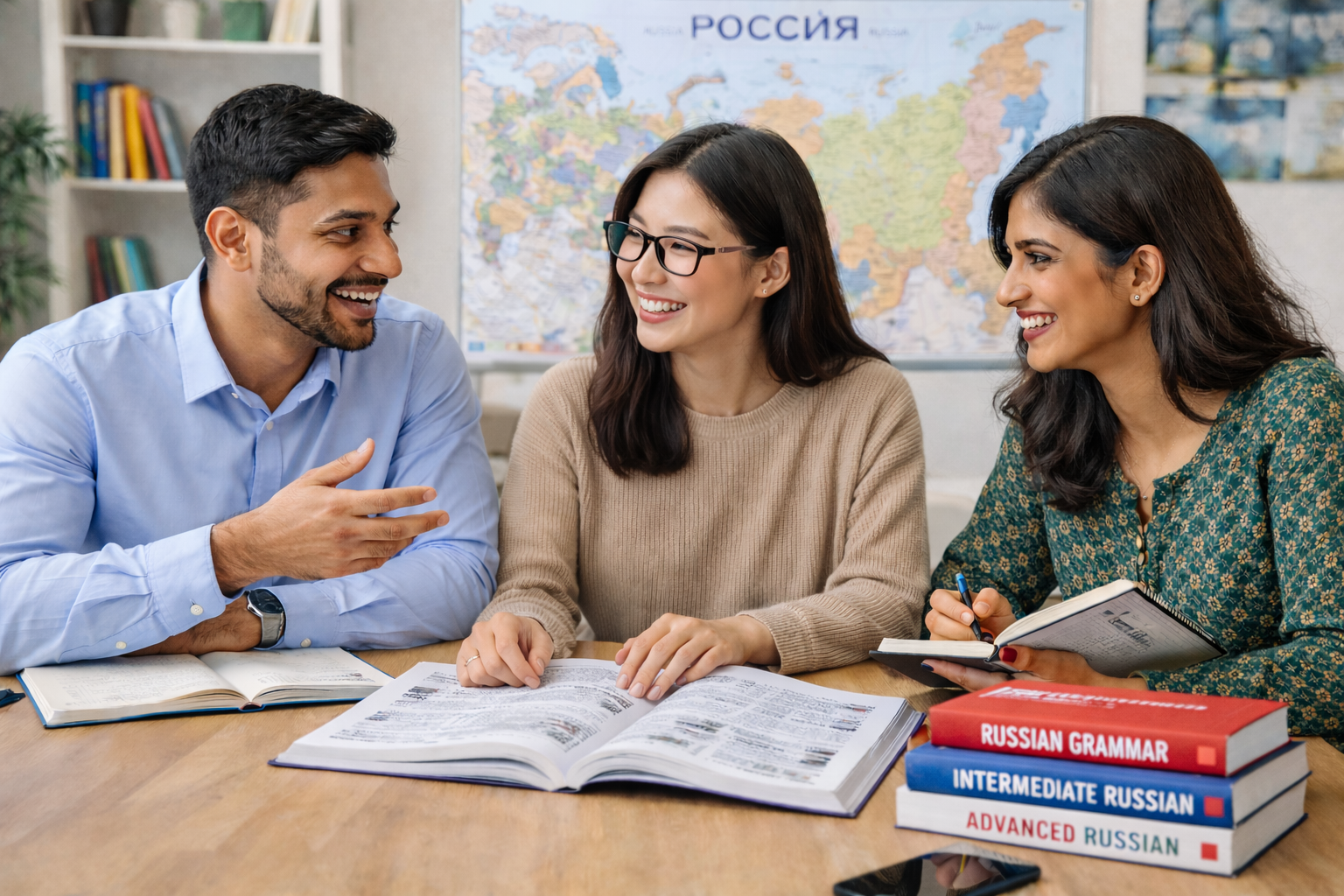
In a city where innovation, global careers, multicultural families, and international friendships intersect on a daily basis, learning a language like Russian is no longer a niche intellectual pursuit but a practical, enriching skill that opens doors to new communities, professional opportunities, and cultural understanding far beyond what most people initially expect when they begin their first lesson.
Fremont, California — one of the most diverse and internationally connected cities in the Bay Area — reflects the realities of a globalized world. Engineers collaborate across continents, students grow up hearing multiple languages at home, and professionals regularly interact with colleagues, partners, or clients from Eastern Europe and Central Asia. Within this environment, Russian stands out as a uniquely powerful language: widely spoken across multiple countries, culturally rich, intellectually stimulating, and increasingly relevant in fields ranging from technology and science to literature, travel, and international relations.
Yet despite growing interest, many learners hesitate to start Russian. They assume the alphabet is impossible, grammar is overwhelming, or fluency requires years of struggle. The truth is very different. With the right teaching approach — structured, supportive, and designed for adult learners — Russian becomes not only achievable but deeply enjoyable.
Today, flexible online Russian classes make it easier than ever for Fremont residents to learn effectively while balancing busy schedules, careers, and family life.
This guide explores how to learn Russian successfully, why online learning works especially well, and how students of all levels — from complete beginners to advanced speakers — can build real communication skills through modern, flexible instruction.
Why Learn Russian in Fremont?
Fremont’s population reflects global mobility. Many residents have professional or personal ties abroad, and language learning often begins with a specific motivation:
Career advancement in international industries
Travel across Eastern Europe or Central Asia
Cultural curiosity and literature
Family heritage or relationships
Academic interests in history, politics, or linguistics
Russian is spoken by more than 250 million people worldwide, making it one of the most influential languages across Eurasia. It serves as a common language not only in Russia but also in Ukraine, Kazakhstan, Latvia, Armenia, Georgia, and many other regions.
For Fremont professionals working in tech, engineering, science, or academia, Russian frequently appears in unexpected contexts:
Scientific publications
AI and mathematics communities
Space and aerospace research
Classical music and performing arts
Chess, programming, and academic networks
Learning Russian expands both intellectual horizons and practical communication abilities.
The Biggest Myth About Learning Russian
Many people believe Russian is “too hard.”
This misconception usually comes from three things:
The Cyrillic alphabet looks unfamiliar.
Grammar includes cases.
Pronunciation seems intimidating at first.
But here’s what experienced learners discover quickly:
The alphabet can be learned in one to two weeks.
Russian pronunciation is logical and consistent.
Grammar becomes manageable when taught through communication rather than memorization.
Unlike English spelling, Russian words are largely pronounced as written. Once students understand sound patterns, reading becomes surprisingly fast.
The challenge is not difficulty — it is methodology. Traditional textbook-heavy approaches often overwhelm learners. Modern communicative teaching changes everything.
Why Online Russian Classes Work So Well
Flexible online instruction has transformed language learning, especially for busy adults in Fremont.
1. Learn From Anywhere
Whether you live in Mission San Jose, Warm Springs, Ardenwood, or Irvington, online classes eliminate commuting time. Students can learn from home, office, or even while traveling.
2. Access to Specialized Teachers
Local availability no longer limits learning. Online programs connect students with highly qualified instructors who specialize in teaching Russian as a foreign language.
3. Consistent Scheduling
Professionals with unpredictable calendars benefit from flexible evening and weekend options.
4. Small-Group Interaction
Unlike large university lectures, small online groups allow real speaking practice — the key to fluency.
5. Recorded Materials and Structured Progress
Students receive organized materials, homework guidance, and clear progression between levels.
Russian for Complete Beginners
Starting Russian from zero can feel exciting and slightly mysterious. A well-designed beginner course focuses on confidence first.
Students typically learn:
Cyrillic alphabet reading skills
Basic pronunciation patterns
Essential greetings and introductions
Numbers and everyday expressions
Simple sentence structure
Survival conversation skills
Within just a few weeks, beginners can:
Read signs and menus
Introduce themselves
Ask simple questions
Understand basic conversations
The early progress surprises most learners — Russian quickly stops feeling foreign and begins to feel logical.
Building Conversation Skills: The Intermediate Stage
After foundational learning, students shift toward communication.
Intermediate learners work on:
Past and future tense usage
Expanded vocabulary
Real conversations
Listening comprehension
Cultural expressions and humor
This stage is where Russian truly becomes alive. Students begin understanding films, podcasts, and authentic dialogue.
Online classes excel here because frequent speaking practice accelerates progress far more than self-study alone.
Advanced Russian: Thinking in the Language
Advanced learners often pursue deeper goals:
Professional fluency
Academic reading
Literature and media comprehension
Nuanced conversation
Cultural understanding
Russian’s expressive nature allows speakers to convey subtle emotions and complex ideas. Many advanced students describe the experience as gaining access to a new intellectual perspective.
Russian Culture: Language Beyond Words
Learning Russian is inseparable from cultural discovery.
Students encounter:
Hospitality traditions
Humor and irony
Social etiquette
Literary heritage
Historical perspectives
Understanding phrases often requires cultural context. For example, Russian conversations frequently emphasize sincerity and depth rather than small talk — a difference many American learners find fascinating.
Language becomes a gateway to understanding worldview.
Who Takes Russian Classes in Fremont?
Online Russian programs attract diverse learners:
Professionals
Engineers, researchers, and entrepreneurs working globally.
Heritage Learners
Individuals reconnecting with family roots.
Travelers
Preparing for long-term travel or relocation.
Language Enthusiasts
Polyglots seeking linguistic challenge.
Students
Preparing for academic programs or research.
The shared environment of motivated adult learners creates supportive group dynamics.
Flexible Learning for Busy Adults
One major advantage of online Russian classes is adaptability.
Students can choose:
Weekly small-group courses
Private lessons
Intensive sessions
Conversation-focused classes
Flexibility allows consistent learning without disrupting work or family commitments — a critical factor in long-term success.
What Makes a Russian Program Effective?
Not all language classes produce results. Effective programs share several characteristics:
Structured Curriculum
Clear progression between levels.
Speaking From Day One
Communication begins immediately.
Cultural Integration
Language taught alongside real-life context.
Experienced Instructors
Teachers trained specifically in second-language acquisition.
Small Class Sizes
More individual attention and speaking time.
The Role of Consistency in Language Learning
Fluency does not require daily marathon study sessions. Instead, success comes from consistent exposure.
Ideal rhythm:
2–3 classes per week
Short daily review
Regular listening practice
Active speaking opportunities
Students who maintain steady routines progress dramatically faster than those studying sporadically.
How Long Does It Take to Learn Russian?
Timelines vary, but realistic expectations help learners stay motivated.
LevelApproximate TimeBeginner conversation3–4 monthsIntermediate ability9–12 monthsAdvanced communication2–3 years
The key factor is guided instruction combined with regular speaking practice.
Online Learning vs Self-Study Apps
Apps are useful supplements but rarely produce fluency alone.
Apps help with:
Vocabulary exposure
Basic grammar drills
Classes provide:
Real conversation
Feedback and correction
Motivation and accountability
Cultural understanding
Most successful learners combine both.
Russian as an Intellectual Adventure
Russian appeals to analytical thinkers because its structure reveals patterns and logic.
Learners often notice improvements in:
Memory
Listening skills
Linguistic awareness
Cross-cultural empathy
Many students begin for practical reasons but continue because they genuinely enjoy the mental challenge.
Preparing for Your First Russian Class
New students should not worry about preparation. Successful programs assume zero knowledge.
Helpful mindset tips:
Accept mistakes as progress
Focus on communication, not perfection
Practice pronunciation aloud
Stay curious
Confidence grows faster than expected.
FAQs: Learning Russian in Fremont
Is Russian too difficult for adults?
No. Adults often learn faster because they understand grammar concepts and maintain consistent motivation.
Do I need to learn the alphabet before starting?
No. Beginner classes teach Cyrillic step by step.
Are online classes as effective as in-person classes?
Yes — often more effective due to flexibility and access to specialized instructors.
How many students are in a class?
Small-group classes typically include 3–6 students to maximize speaking time.
Can I join if I already know some Russian?
Yes. Placement helps determine the correct level.
How much homework is required?
Usually light but consistent practice designed for busy professionals.
Can children join adult classes?
Adult programs are specifically designed for adult learners; separate youth programs may be available.
Will I actually speak Russian?
Yes. Speaking practice begins immediately.
Start Learning Russian with Polyglottist Language Academy
At Polyglottist Language Academy, we believe language learning should feel practical, engaging, and intellectually rewarding from the very first class. Our Russian programs are designed specifically for adult learners who want real communication skills — not just textbook knowledge.
We offer:
Small-group online Russian classes
Courses for complete beginners through advanced levels
Highly qualified instructors with advanced degrees (MA and PhD)
Structured curriculum with clear progression
Flexible scheduling for busy professionals
Our students come from Fremont and across the Bay Area, joining interactive online classes that combine language, culture, and real conversation.
Whether your goal is travel, professional growth, cultural exploration, or personal enrichment, Russian can become one of the most rewarding skills you ever develop.
👉 Ready to begin? Sign up for Russian classes at Polyglottist Language Academy and start speaking Russian with confidence.
Continue Exploring Language Learning
If you enjoyed this article, you may also like: