
Best Russian Classes in Napa for Adults: Where Wine Country Meets a Powerful Global Language
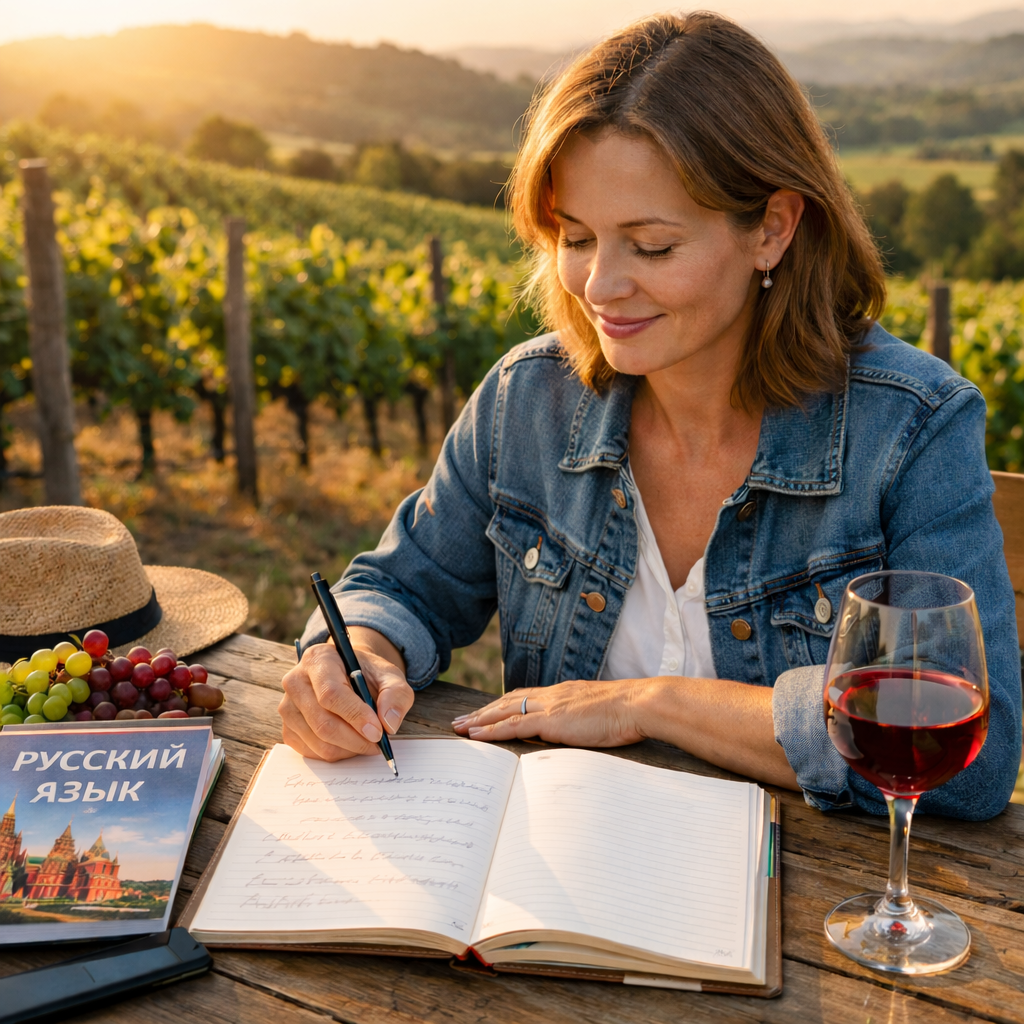
In a region celebrated for its vineyards, slow afternoons, and conversations that stretch over glasses of Cabernet and plates of local cheese, it might seem surprising that a growing number of adults in Napa are turning their attention to one of the world’s most expressive, complex, and culturally rich languages—Russian, a language that opens doors not only to business and travel, but also to a vast emotional and intellectual landscape shaped by centuries of literature, philosophy, music, cinema, and everyday life.
Russian is not a language people usually learn by accident. Unlike Spanish or French, it rarely appears in high-school curricula in the United States. It is not the obvious choice for a quick trip abroad. And yet, those who choose it tend to do so with a sense of purpose. Some are drawn to its literature—Tolstoy, Dostoevsky, Chekhov, Bulgakov. Others have professional ties to Eastern Europe or Central Asia. Some simply fall in love with the sound of the language, its rhythm, its depth, and the surprising emotional precision it allows.
In Napa, where global connections and cultural curiosity are part of everyday life, Russian classes for adults have quietly gained popularity among professionals, retirees, artists, travelers, and lifelong learners who want something more intellectually stimulating than a standard beginner language course.
This guide will walk you through everything you need to know about finding the best Russian classes in Napa for adults, what to look for in a program, how the language works, and why learning Russian might be one of the most rewarding intellectual journeys you can undertake.
Why Learn Russian as an Adult?
Learning Russian as an adult is not just about mastering grammar or memorizing vocabulary. It is about entering a different way of thinking. Russian is known for its emotional nuance, philosophical depth, and poetic expressiveness. It is a language where a single word can convey complex shades of meaning that might take a full sentence in English.
Adults in Napa choose Russian for many different reasons:
1. Cultural and Literary Curiosity
Russian literature remains one of the most influential in the world. Reading Anna Karenina, Crime and Punishment, or The Master and Margarita in the original language is an entirely different experience from reading translations.
2. Professional Opportunities
Russian is spoken by over 250 million people worldwide. It is widely used across Eastern Europe, Central Asia, and parts of the Caucasus. Professionals in fields like tech, finance, international trade, and academia often find Russian a valuable asset.
3. Travel and Personal Connections
Whether traveling to Moscow, St. Petersburg, or smaller cities across the region, even basic Russian dramatically changes the travel experience. It allows you to communicate with locals, navigate daily life, and understand cultural subtleties.
4. Intellectual Challenge
Many adult learners are drawn to Russian because it is different. The alphabet, the grammar system, and the structure of the language offer a refreshing mental challenge.
What Makes Russian Different from Other Languages?
Russian belongs to the Slavic language family, which means its structure is quite different from English or Romance languages like Spanish, French, or Italian.
The Cyrillic Alphabet
One of the first things learners encounter is the Cyrillic alphabet. While it may look intimidating at first, most students learn it within a few weeks.
Many letters are actually familiar:
А, К, М, О, Т look similar to English letters.
Others look similar but sound different:
В = V
Н = N
Р = R
С = S
And some are entirely new, like Ж, Ц, Ч, Ш, Щ.
The good news: once you learn the alphabet, Russian spelling is very logical and phonetic compared to English.
The Case System
Russian uses a case system, which means that the endings of nouns, adjectives, and pronouns change depending on their role in the sentence.
For example:
Я вижу друга.
“I see a friend.” (accusative case)Я говорю с другом.
“I speak with a friend.” (instrumental case)
While this may sound complex, well-structured classes introduce cases gradually and in context.
What to Look for in a Russian Class in Napa
Not all language classes are created equal. If you’re searching for the best Russian classes in Napa, here are a few key factors to consider.
1. Adult-Focused Curriculum
Adult learners have different needs from children or university students. A good program should:
Focus on practical communication.
Include cultural insights.
Respect busy schedules.
2. Small Class Sizes
Smaller classes mean:
More speaking time.
Personalized feedback.
Faster progress.
3. Experienced Instructors
Look for instructors who:
Are native or near-native speakers.
Have experience teaching adults.
Can explain grammar clearly and simply.
4. Structured Levels
A good program should offer:
Complete Beginner
Low Beginner
High Beginner
Intermediate
Advanced levels
This allows you to progress steadily without repeating material.
Typical Structure of Russian Classes for Adults
Most adult Russian courses in Napa follow a practical, communicative approach.
Beginner Level (A1)
At this stage, students learn:
The Cyrillic alphabet.
Basic pronunciation.
Simple greetings.
Numbers and time.
Everyday vocabulary.
Typical phrases:
Здравствуйте! (Hello!)
Как вас зовут? (What is your name?)
Спасибо! (Thank you!)
Elementary Level (A2)
Students begin to:
Form longer sentences.
Use basic cases.
Talk about daily routines.
Describe places and people.
Topics often include:
Food and restaurants.
Travel.
Shopping.
Work and hobbies.
Intermediate Level (B1)
At this stage, students can:
Hold conversations.
Express opinions.
Talk about past and future events.
Understand short texts and dialogues.
This is where the language starts to feel truly usable in real life.
How Long Does It Take to Learn Russian?
Progress depends on consistency, not just talent.
For adult learners studying 4–6 hours per week:
A1 level: about 3–4 months
A2 level: about 6–9 months total
B1 level: about 12–18 months total
Many Napa students combine:
Weekly group classes
Occasional private lessons
Light self-study
This balanced approach leads to steady progress without burnout.
Benefits of Learning Russian in a Group Class
Group classes remain one of the most effective ways to learn a language.
Social Motivation
Learning with others keeps you accountable and motivated.
Real Conversations
You practice speaking with different accents and personalities.
Shared Experience
Students often form friendships and study groups.
In a place like Napa, where community and conversation are part of the culture, group classes feel especially natural.
Online vs. In-Person Russian Classes in Napa
Both formats have advantages.
In-Person Classes
Best for:
Local residents.
Those who enjoy face-to-face interaction.
Learners who prefer structured environments.
Online Classes
Best for:
Busy professionals.
People with unpredictable schedules.
Those who prefer learning from home.
Many adult learners combine both formats.
Common Challenges for Adult Russian Learners
1. The Alphabet
Most students master it within two to three weeks.
2. Pronunciation
Russian has sounds not found in English, but with practice, they become natural.
3. Grammar Cases
Cases seem intimidating at first, but good teachers introduce them step by step.
The key is consistency, not perfection.
Tips for Success in Russian Classes
Study a little every day.
Review vocabulary regularly.
Listen to Russian music or podcasts.
Practice speaking as much as possible.
Don’t be afraid of mistakes.
Russian rewards persistence.
Who Typically Takes Russian Classes in Napa?
Adult Russian students often include:
Wine industry professionals working with Eastern European markets.
Tech professionals with international teams.
Retirees exploring new intellectual challenges.
Travelers planning extended trips.
Heritage learners reconnecting with family roots.
Frequently Asked Questions About Russian Classes in Napa
Is Russian too difficult to learn as an adult?
Not at all. While it is different from English, adult learners often progress quickly with consistent practice and structured lessons.
Do I need to learn the alphabet before starting a class?
No. Most beginner courses teach the alphabet during the first few lessons.
How many hours per week should I study?
Ideally, 4–6 hours per week, including class time and light self-study.
Are group classes or private lessons better?
Both have advantages. Group classes are more affordable and social, while private lessons offer personalized attention.
Can I become conversational in a year?
Yes. Many students reach a conversational level (B1) within 12–18 months of consistent study.
Is Russian useful for travel?
Absolutely. Even basic Russian transforms the travel experience in Russian-speaking regions.
What is the best age to start learning Russian?
Any age. Adult learners often have strong motivation, which is more important than age.
Do I need special textbooks?
Most programs provide a recommended textbook, but many also use custom materials and multimedia resources.
Learn Russian with Polyglottist Language Academy
If you’re searching for the best Russian classes in Napa for adults, Polyglottist Language Academy offers a practical, engaging, and culturally rich approach to language learning.
We offer:
Small group Russian classes for adults.
Complete beginner to advanced levels.
Online and in-person options.
Experienced, professional instructors.
Flexible schedules designed for busy adults.
Our courses focus on real communication, cultural insight, and steady progress—so you don’t just learn Russian, you start living it.
Whether you’re learning for travel, work, or pure intellectual curiosity, our Russian classes provide the structure, support, and community you need to succeed.
Ready to start your Russian journey?
Explore our upcoming classes and sign up today.
Continue Exploring Russian Language and Culture
If you’re curious about Russian language, culture, and learning strategies, check out these popular articles from our blog:
How Long Does It Take To Learn Russian Fluently?
Is Russian Still Useful In 2026?
Learn Russian Online In Los Angeles: Flexible Classes For Busy Creatives & Professionals
Why Learning Russian In Portland Is A Game-Changer For Your Career
Beyond “Спасибо”: How Russians Actually Say Thank You (And When It Really Matters)