
How Russian Women Dress in Winter: Chic at -20°C
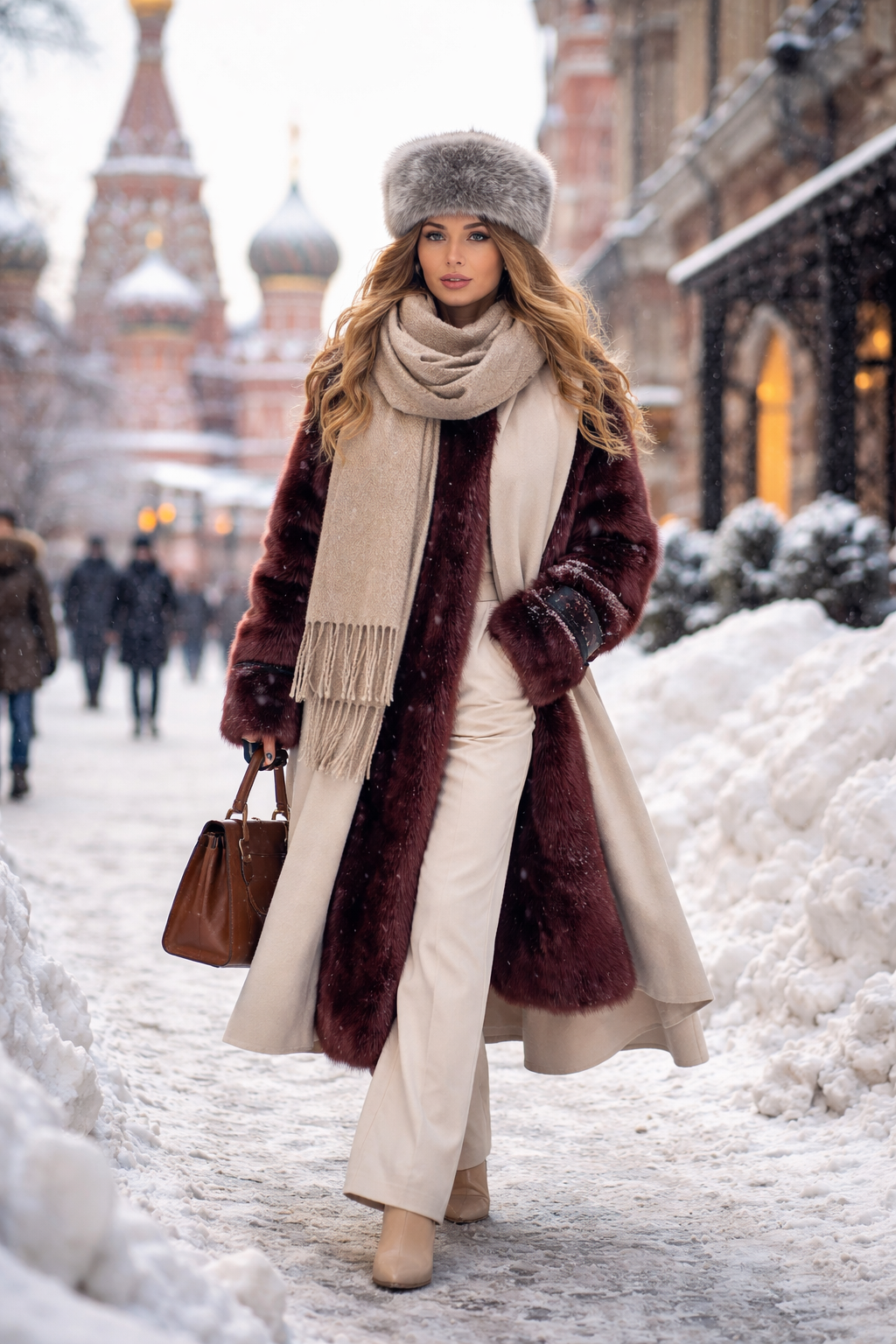
Winter in Russia is not a season—it’s a state of being, a test of endurance, and, for many women, a canvas on which elegance, resilience, and identity are expressed with startling clarity, even when the thermometer plunges far below zero and the streets of cities like Moscow and Saint Petersburg become landscapes of ice, snow, and breath crystallizing in the air.
There is something quietly defiant about how Russian women dress in winter: not reckless, not impractical, but deeply intentional, as if every coat, boot, scarf, and silhouette is chosen with the understanding that beauty does not need to disappear simply because comfort is required, and that warmth, when done right, can be part of the aesthetic rather than its enemy. This is not about fashion trends lifted straight from Paris runways or Instagram algorithms; it’s about a lived style that evolved in harsh climates, shaped by history, economics, and social expectations, where clothing must function first—but where looking “put together” remains non-negotiable.
To outsiders, the result can seem almost paradoxical: sleek wool coats at temperatures that would make others reach for shapeless parkas, heeled boots on icy sidewalks, carefully styled hair peeking out from under hats, and an overall polish that feels deliberate rather than accidental. Yet for Russian women, this approach to winter dressing is neither performance nor vanity—it’s normal. It’s practical elegance, built on rules that are rarely spelled out but widely understood.
In this article, we’ll unpack how Russian women actually dress in winter, why their style looks the way it does, what cultural logic sits behind those choices, and what visitors often misunderstand when they try to copy the look. We’ll talk about coats and boots, yes—but also about posture, grooming, social norms, and the unspoken idea that how you present yourself in public is a form of respect, both toward yourself and others.
Winter as a Social Stage
Russian winters are long, dark, and physically demanding. In many regions, subzero temperatures last for months, daylight is scarce, and commuting involves navigating snowbanks, icy staircases, and gusts of wind that feel personal. Clothing, therefore, becomes armor. But unlike purely utilitarian armor, Russian winter clothing is expected to signal competence, adulthood, and self-respect.
There is an underlying belief—especially among women—that hardship does not excuse sloppiness. Showing up wrapped in something formless and purely functional can be read not as practicality but as giving up. This doesn’t mean suffering for fashion; it means mastering conditions well enough that you can still look intentional.
That’s why Russian winter style is less about constant novelty and more about mastery: knowing which coat works at which temperature, how to layer without bulk, how to move gracefully in boots designed for ice, and how to balance warmth with a clean silhouette.
The Coat: The Centerpiece of the Entire Look
If there is one item that defines Russian winter fashion, it’s the coat. Everything else—boots, scarf, bag, gloves—is chosen in relation to it.
Wool Coats (Yes, Even at -20°C)
Visitors are often shocked to see Russian women wearing tailored wool coats in temperatures they would consider dangerous. The key detail outsiders miss is quality and layering. These coats are usually thick, dense, and often worn over thermal layers, sweaters, and sometimes even down vests hidden underneath.
The silhouette matters. Coats tend to be structured, knee-length or longer, with defined shoulders and a clear shape. Oversized styles exist, but they are controlled oversized—not sloppy. Black, charcoal, camel, and deep jewel tones dominate, with trends changing slowly rather than season by season.
Down Coats, But Make Them Elegant
Puffer coats are common too, especially in extreme cold, but Russian women often choose long, slim-cut down coats rather than boxy ski-style versions. Belting at the waist is popular, reinforcing the idea that even winterwear should have form.
Glossy fabrics, matte finishes, and subtle quilting patterns are preferred over loud logos. The goal is warmth without visual noise.
Fur (Real and Faux) as Tradition, Not Trend
Fur—whether real or faux—still plays a visible role in Russian winter wardrobes, particularly in collars, hoods, or hats. Historically, fur was essential for survival, and that legacy remains embedded in winter style.
Today, many women opt for high-quality faux fur, but the aesthetic remains: plush, dense, and substantial, not flimsy. Fur is not worn ironically or as a statement—it’s worn because it works.
Boots: Built for Ice, Chosen for Style
Russian sidewalks in winter are unforgiving. Ice is common, salt is inconsistent, and walking confidently requires footwear that grips without sacrificing dignity.
Knee-High and Mid-Calf Boots
Boots are often tall, made of leather or suede treated for weather resistance. Knee-high boots paired with skirts or tucked-in trousers are a winter staple. The shaft is usually sleek rather than bulky, contributing to an elongated silhouette.
Heels (Yes, Really)
Heeled boots are common, though the heels are typically sturdy—block heels, wedges, or thick platforms rather than stilettos. Walking in them is a learned skill, developed over years. Many Russian women grow up navigating winter streets in heeled boots and develop a particular gait that balances caution with confidence.
That said, flats and low heels are also widely worn, especially for long commutes. The key difference is that “flat” does not mean sloppy. Even flat boots are polished, structured, and intentional.
Skirts, Dresses, and the Refusal to Disappear
One of the most striking aspects of Russian winter style is how rarely women completely abandon skirts and dresses. Even in deep winter, many continue to wear them, paired with thick tights, knee-high boots, and long coats.
This isn’t about discomfort—it’s about maintaining a familiar visual language of femininity. Tights in winter are often opaque and thermal, sometimes layered (yes, two pairs), allowing skirts to remain practical.
Pants are, of course, common too, especially tailored trousers and wool blends. Leggings worn as pants, however, are less socially accepted in public spaces compared to some Western countries.
Layering Without Bulk
Russian women are masters of invisible layering. Thermal underwear, silk camisoles, thin merino sweaters, and fitted cardigans are used to build warmth without adding volume.
The emphasis is always on clean lines. Bulky layers that distort the outer silhouette are avoided whenever possible. This is why fitted base layers are preferred over chunky knits unless the knit itself is meant to be seen.
Accessories: Small Details, Big Impact
Scarves as Protection and Style
Scarves in Russia are not decorative afterthoughts—they are essential. Large wool, cashmere, or blended scarves are wrapped generously around the neck, sometimes covering part of the face in extreme cold.
Colors are often neutral or coordinated with the coat, though patterned scarves—especially traditional motifs—remain popular.
Hats: Practical, Not Optional
Going hatless in winter is uncommon and often criticized, especially by older generations. Hats range from knit beanies to structured wool hats and fur styles. Hair is tucked in carefully, and the hat is chosen to complement the face shape and coat rather than clash with it.
Gloves and Bags
Leather gloves are preferred over fabric ones, even for everyday wear. Bags tend to be structured, medium-sized, and practical enough to handle winter without looking utilitarian. Backpacks exist, but handbags still dominate in urban settings.
Hair, Makeup, and Grooming in Winter
Cold weather does not suspend grooming standards. Hair is usually styled, even if simply. Makeup tends toward polished rather than heavy: even skin, defined brows, and often lipstick, even on ordinary days.
The logic is cultural: being well-groomed is seen as part of being an adult woman in public. Winter is not an excuse to disappear behind layers.
Regional Differences
While Moscow and Saint Petersburg set the tone, regional variations exist. In Siberian cities, functionality plays a stronger role, with heavier coats and boots dominating. In southern regions, winters are milder, allowing for lighter outerwear.
Yet across regions, the core philosophy remains the same: warmth first, but never at the cost of self-presentation.
Common Misunderstandings by Visitors
Many visitors try to copy Russian winter style and fail—not because the clothes are inaccessible, but because the mindset is missing. Buying a wool coat without proper layering leads to misery. Wearing heeled boots without knowing how to walk on ice leads to fear.
Russian winter style is not about isolated items; it’s a system built on experience.
Why This Style Exists
Historically, public space in Russia has always carried a sense of formality. Showing yourself well has been a way to assert dignity in difficult circumstances. Winter, being one of the hardest of those circumstances, becomes the ultimate test of that value.
FAQs
Do Russian women really wear heels in winter?
Yes, many do—especially block heels or platforms designed for stability. It’s a learned skill, not recklessness.
Is fur still common in Russia?
Yes, both real and faux fur are widely worn, particularly in collars, hats, and coats, due to tradition and practicality.
Why do Russian women look so “put together” in winter?
Because grooming and presentation are cultural values, not seasonal choices.
Do women ever dress casually?
Absolutely—but “casual” still tends to be neat, intentional, and coordinated.
Is this style changing with younger generations?
It’s evolving, but the core emphasis on looking polished in public remains strong.
What Winter Fashion Teaches You About Russian Culture
Understanding how Russian women dress in winter offers insight into broader cultural values: resilience, self-respect, and the belief that external hardship doesn’t cancel internal standards. Clothing becomes a quiet language—one that communicates competence, adulthood, and belonging.
Learning to read that language requires more than observation; it requires understanding the cultural context behind it.
Learn the Language Behind the Style
At Polyglottist Language Academy, we believe that language learning is inseparable from cultural understanding. Our Russian classes don’t just teach grammar and vocabulary—they help you understand the social codes, habits, and unspoken rules that shape everyday life, from winter fashion to conversation etiquette.
Whether you’re preparing to travel, live, or simply engage more deeply with Russian culture, our online Russian courses for adults are designed to give you practical, real-world fluency.
👉 Explore our Russian classes at Polyglottist Language Academy and start learning the language that unlocks the culture.
Continue Reading
If this article sparked your curiosity, you might also enjoy these pieces from our blog: