
A History of Russian Folk Instruments and Their Music
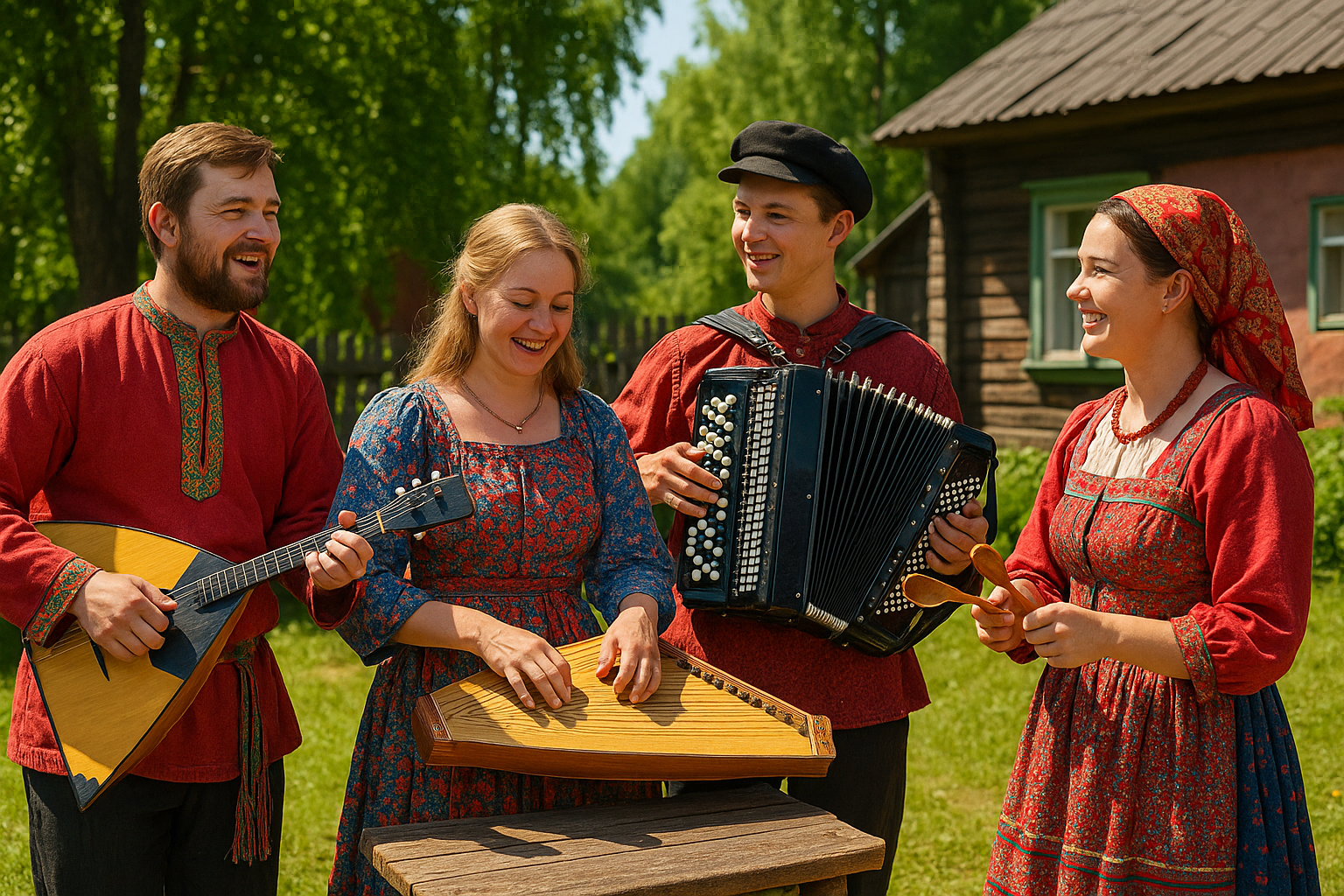
The story of Russia cannot be told only through its vast geography, its turbulent history, or its great literature—it must also be heard in its music. Russian folk instruments, with their earthy timbres and distinctive voices, carry within them centuries of tradition, joy, hardship, and communal life. Long before symphonies echoed through the concert halls of St. Petersburg or Moscow, simple instruments crafted from wood, string, and reed were filling village gatherings, weddings, and harvest festivals with melodies that bound communities together. The history of Russian folk instruments is not just about the tools themselves, but about how people used them to express resilience, humor, spirituality, and the rhythms of everyday life.
For language learners, studying these instruments provides more than just cultural trivia. Each instrument is tied to Russian vocabulary, idioms, and folklore. They show us how Russians saw the world—whether through the playful plucking of the balalaika, the mournful sigh of the gusli, or the powerful breath of the bayan. They remind us that language and music are intertwined: both are systems of sound, rhythm, and meaning that capture what it feels like to be human.
In this article, we’ll trace the history of Russian folk instruments from their ancient origins to their modern revivals, exploring their cultural significance, the stories attached to them, and the way they continue to shape Russian identity today.
Ancient Origins of Russian Folk Music
Folk instruments in Russia have roots stretching back to pagan times, when music was inseparable from ritual and spirituality. Archaeological evidence suggests that early Slavic peoples used simple flutes made of bone, wooden horns, and percussion instruments like rattles and drums during agricultural and religious ceremonies.
These instruments were not seen merely as entertainment—they were believed to connect humans with nature and the divine. Flutes mimicked birdsong, drums echoed the heartbeat of the earth, and stringed instruments were linked to storytelling and memory. Music was functional: it was used to bless the harvest, to accompany weddings, and to mourn the dead.
As Christianity spread through Kievan Rus’ in the 10th century, the Orthodox Church disapproved of many folk instruments, associating them with paganism and disorderly celebrations. Yet the instruments survived, living on in villages and among wandering musicians known as skomorokhi, who traveled between towns performing songs, dances, and satirical plays.
The Skomorokhi and Their Legacy
The skomorokhi were medieval entertainers who embodied the spirit of Russian folk culture. They played multiple instruments, sang humorous songs, and used satire to poke fun at boyars (nobles), priests, and even tsars. The instruments they carried—gusli, balalaikas, and simple flutes—became tools of resistance as well as joy.
Despite periodic crackdowns by church and state, the skomorokhi left a lasting legacy. They preserved folk melodies and rhythms that later inspired classical Russian composers like Glinka, Rimsky-Korsakov, and Stravinsky. Their playful, irreverent use of music can still be felt in Russian folk ensembles today.
The Balalaika: Symbol of Russian Folk Culture
If one instrument could be said to symbolize Russia in the global imagination, it would be the balalaika.
Origins: The balalaika appeared in the 17th century, evolving from older string instruments.
Shape: Its triangular body is instantly recognizable, with three strings (sometimes six in modern versions).
Music: The balalaika’s bright, plucky sound makes it perfect for dance tunes and humorous songs.
At first, the balalaika was associated with peasants and street musicians. Tsarist authorities even tried to suppress it at times, fearing it encouraged idleness. But by the 19th century, the balalaika gained respectability thanks to the efforts of Vasily Andreyev, who standardized the instrument and created orchestras that toured internationally.
Today, the balalaika is both a folk instrument and a symbol of Russian identity, appearing in everything from Soviet posters to contemporary folk-rock bands.
The Gusli: Harp of the Russian Soul
Older than the balalaika, the gusli is a zither-like instrument often linked to Russia’s epic songs and fairy tales.
Appearance: Flat, wing-shaped, with anywhere from 5 to 30 strings.
Sound: Resonant and ethereal, well-suited for accompanying epic poetry.
Cultural role: Associated with byliny—heroic epic tales sung by bards.
The gusli carries a mystical aura. In folklore, it is often played by wise old storytellers or magical beings. Some versions were small enough to rest on the lap, while others were large and meant for ensembles. Though it fell out of popularity in some regions, it has seen revivals in modern folk groups seeking to reconnect with ancient Slavic traditions.
Wind Instruments: Voices of Nature
Russian folk music also features a wide variety of wind instruments, many designed to echo the natural world.
Svirel’: A wooden flute, one of the oldest Slavic instruments, often played by shepherds.
Rozhok: A shepherd’s horn with a haunting, powerful tone.
Zhaleika: A reed instrument often called the “Russian folk clarinet.”
These instruments often accompanied dances or outdoor festivities. Their timbres—whether bright and piercing or deep and mournful—captured the sounds of forests, steppes, and rivers.
Percussion Instruments: The Rhythm of Village Life
In Russian villages, rhythm came from simple but effective percussion:
Buben: A frame drum similar to a tambourine, often used in rituals.
Lozhki: Wooden spoons clicked together, still popular in folk ensembles.
Treshchotka: A set of wooden boards that clap together, producing a rattling rhythm.
Percussion instruments were often homemade, accessible to anyone. They gave folk music its communal, participatory character—anyone could join in.
The Bayan: Russian Accordion
Introduced in the 19th century, the bayan is a type of button accordion that quickly became integral to Russian music.
Why unique: Unlike Western accordions, the bayan has a deeper, richer sound and a different keyboard system.
Cultural reach: It became popular not only in folk ensembles but also in Soviet music, military bands, and even classical concert halls.
The bayan represents the blending of Russian tradition with European influence, showing how folk instruments continually adapt.
Soviet Influence on Folk Instruments
During the Soviet era, folk instruments were both celebrated and standardized. The government promoted folk orchestras as symbols of national pride and unity. Instruments like the balalaika and domra were mass-produced, and ensembles toured abroad as cultural ambassadors.
At the same time, the spontaneity of folk traditions was often suppressed in favor of polished, choreographed performances. Still, this period ensured the survival and spread of many instruments that might otherwise have disappeared.
Russian Folk Ensembles Today
In modern Russia, folk instruments continue to thrive:
Conservatories offer courses in balalaika, bayan, and gusli.
Ensembles mix traditional instruments with contemporary genres.
Festivals celebrate folk music as part of national heritage.
Young musicians are rediscovering folk sounds, often blending them with jazz, rock, or electronic music. This fusion keeps the tradition alive while making it relevant to new audiences.
Learning About Russian Instruments as a Language Learner
Studying these instruments can enrich your Russian learning journey in several ways:
Vocabulary: Words like балалайка, гусли, баян expand your lexicon.
Idioms: “Играть первую скрипку” (to play first violin) has the same metaphorical meaning in Russian as in English.
Cultural fluency: Understanding why the balalaika is iconic helps you grasp references in literature, film, and conversation.
FAQs About Russian Folk Instruments
Q: Which Russian folk instrument is the oldest?
A: The gusli is considered one of the oldest, with roots in the early medieval period.
Q: Is the balalaika still played today?
A: Absolutely. It is taught in conservatories, featured in ensembles, and still popular in folk and popular music.
Q: Are Russian folk instruments hard to learn?
A: Some, like the lozhki (spoons), are very accessible. Others, like the gusli or bayan, require training.
Q: Do Russian children learn folk instruments in school?
A: Many do, especially the balalaika and bayan, which are part of music education in some regions.
Q: Can foreigners learn to play these instruments?
A: Yes, and many do! Some folk ensembles welcome international students, and instructional materials exist in English.
Final Thoughts
The history of Russian folk instruments is more than a history of sound—it is a history of people. From shepherds playing wooden flutes to skomorokhi strumming the gusli, from Soviet balalaika orchestras to today’s folk-rock fusions, these instruments have carried the Russian soul across centuries. They speak of resilience, creativity, and the enduring power of music to connect communities.
At Polyglottist Language Academy, we believe that learning a language means diving into the full spectrum of its culture—and music is at the heart of that. Our Russian classes don’t just teach you grammar and vocabulary; they bring alive the stories, songs, and traditions that make the language resonate. If you’re ready to enrich your Russian learning journey, join us today and experience the culture as well as the words.
Keep Reading
Explore more of our articles on Russian language and culture: