
What It Really Means When French People Say “Bon Courage”
Introduction: More Than Just “Good Luck”—The Heart Behind “Bon Courage”
You’re in France. Maybe it’s your first time. You walk into a government office to deal with some infamous French paperwork, or perhaps you’re heading out of the pharmacy with a stack of antibiotics after a rough night. Maybe you're simply telling your barista that you’re heading back to work after lunch. And then, with a slight nod and a half-smile, they say it:
“Bon courage.”
At first glance, it seems simple. A polite parting phrase. Something like “good luck,” right?
Wrong—at least not quite.
“Bon courage” is one of those uniquely French expressions that, once understood, reveals a lot about the culture’s values, emotional landscape, and social habits. It's not quite encouragement, not quite sympathy, and definitely not just luck. It carries with it layers of meaning: quiet solidarity, acknowledgment of effort, a shared understanding of difficulty, and—sometimes—a polite distance.
In English, we have phrases like “hang in there,” “you got this,” or “stay strong.” But “bon courage” doesn’t fit neatly into any of them. It’s less dramatic than “you got this!” and more formal than “good luck.” It’s a little detached, yet surprisingly heartfelt. And in a culture that prides itself on intellectual distance, stoic resilience, and undercurrents of empathy expressed subtly, that’s exactly the point.
In this article, we’ll take a deep look at what French people really mean when they say “bon courage”—when they use it, why it matters, and how understanding it can deepen your appreciation of the French language and mindset. Whether you’re a student of French, planning a trip to Paris, or just someone fascinated by the nuances of cultural expression, you’re about to discover how a tiny phrase can say an awful lot.
Part I: What “Bon Courage” Literally Means (And Why That’s Only the Beginning)
Let’s break it down:
Bon = good
Courage = courage
So… good courage?
In English, that sounds a bit off. We don’t say “good courage” before someone takes a test or goes to work. But that’s precisely why translating “bon courage” word-for-word misses the deeper meaning.
In French, “courage” isn’t just reserved for acts of bravery on a battlefield. It refers broadly to strength of heart, endurance, inner resolve—the ability to keep going, especially in the face of difficulty or monotony. In daily life, "bon courage" is the go-to way to acknowledge someone’s struggle or effort, no matter how small.
When your colleague heads into a long day of meetings: “Bon courage.”
When your friend tells you she has to clean out her attic: “Bon courage.”
When the cashier hears you’ve got a job interview this afternoon: “Bon courage.”
It’s empathy—expressed without drama.
Part II: When Do French People Say “Bon Courage”?
At Work
France has a famously complicated relationship with work. There’s pride in doing things well, yes—but also a cultural awareness that work can be exhausting, tedious, and soul-draining. Saying “bon courage” before or during the workday is a way to acknowledge that reality without making a fuss.
➡️ You’re heading back to your office? Bon courage.
➡️ You have a deadline tomorrow? Bon courage.
It’s not necessarily enthusiastic encouragement. It’s more like a nod of solidarity.
During Illness or Difficulty
Another common usage: when someone is dealing with health issues, stress, bureaucracy, or personal difficulty.
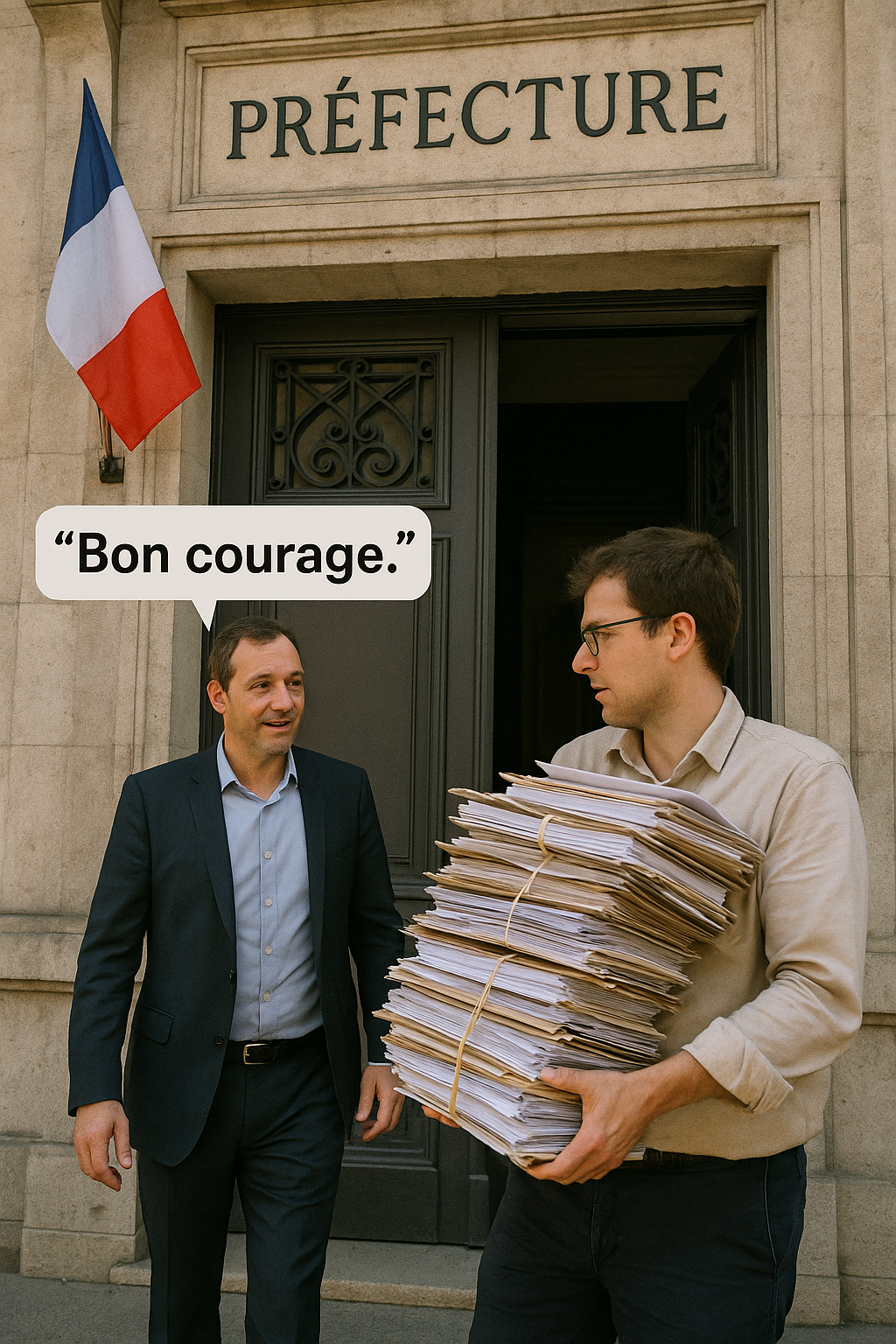
➡️ “I have to go to the prefecture to sort out my visa.”
➡️ “Ah, bon courage…”
Here, it becomes part sympathy, part resigned recognition. The struggle is real—and they see you.
🧹 For Mundane Tasks
One of the most beautiful things about “bon courage” is that it dignifies even the most boring or repetitive jobs.
➡️ A garbage collector picking up trash: “Bon courage, monsieur.”
➡️ Your neighbor raking leaves in the cold: “Bon courage.”
➡️ A tired barista cleaning up at the end of the day: “Bon courage.”
It turns mundane labor into something noble, something seen. In a society that values résistance and effort, this phrase becomes a small, quiet act of respect.
Part III: What “Bon Courage” Reveals About French Culture
1. Empathy Without Enthusiasm
French culture leans toward understatement. Saying “bon courage” is a way to acknowledge effort without overstepping boundaries or offering false cheer.
It’s the opposite of the American “You got this!” pep-talk style. Instead, it’s a way of saying: I see your situation. It’s not easy. I wish you strength.
2. Endurance Is Valued More Than Optimism
In France, persevering is a virtue. Whether you’re putting up with a difficult job, surviving a broken heater in winter, or sitting through another three-hour union negotiation—what matters is tenacity, not just positivity.
“Bon courage” honors that. It doesn’t try to sugarcoat the difficulty. It just wishes you the heart to carry on.
3. Language as Social Glue
Expressions like “bon courage” are a daily part of small interactions with strangers. These phrases soften the edges of daily life. They show that you’re not just a cog in the machine. You’re a person, doing your best—and someone took the time to say so.
Part IV: Mistaking “Bon Courage” for “Bonne Chance”
English speakers often confuse “bon courage” with “bonne chance” (good luck). But in French, these are quite distinct.
Bonne chance is used when the outcome is uncertain—gambling, interviews, tests.
Bon courage is used when the task is difficult, but not luck-based—work, effort, hardship.
➡️ You're going into a surgery? Bon courage.
➡️ You're playing the lottery? Bonne chance.
➡️ You’re moving furniture all weekend? Bon courage.
➡️ You’re going on “Who Wants to Be a Millionaire?” Bonne chance.
Sometimes, French speakers will even gently correct you if you use one in the wrong context. They’re close, but not interchangeable—and understanding this distinction shows real cultural fluency.
Part V: How to Respond to “Bon Courage”
There’s no complex etiquette here. A simple “Merci” (thank you) is all you need.
If you want to mirror the politeness or return the sentiment, you can say:
“Merci, à vous aussi.” — Thanks, you too.
“Merci, c’est gentil.” — Thanks, that’s kind.
Just don’t overthink it. The phrase is meant to be light, quick, and supportive—like a warm scarf handed to you on a cold day.
Part VI: Should You Use It as a French Learner?
Absolutely. In fact, using “bon courage” correctly is a great way to sound instantly more natural and respectful in French.
✅ Say it to your French teacher at the end of class.
✅ Use it with a barista who’s clearly exhausted.
✅ Offer it to a colleague before a big deadline.
✅ Say it to a friend going through a tough time.
Just don’t confuse it with “bonne chance” when they’re off to a poker game.
Mastering these micro-phrases is key to transitioning from textbook French to real-world French. The more you use them, the more naturally you'll fit into French conversation—and the more appreciated you’ll be by native speakers.
FAQs About “Bon Courage”
Q: Is “bon courage” formal or informal?
It’s neutral. You can use it with strangers or colleagues. It’s slightly more formal than “bonne chance,” but still very accessible.
Q: Can I use “bon courage” in writing?
Yes—especially in emails, text messages, or letters. It's a thoughtful way to end a note, especially when someone’s going through something.
Q: What’s the best English translation of “bon courage”?
There isn’t a perfect one. Depending on context, it could mean “hang in there,” “take care,” “you got this,” or simply “strength to you.”
Q: Is it rude if I don’t say “bon courage” in France?
Not at all—but saying it in the right moment can go a long way in showing that you understand the cultural tone and care about the person’s situation.
Q: Can you say “bon courage” at the end of a workday?
Yes! It’s a common way to say goodbye to someone still working when you're heading out.
Ready to Learn More Everyday French?
If you’ve enjoyed this article, imagine how much more you’ll get out of learning French with guidance, structure, and a passionate instructor who brings these cultural insights into every lesson.
At Polyglottist Language Academy, we offer online and in-person French classes for students in Berkeley, San Francisco, Oakland, and beyond. Our small class sizes (3–6 students), expert instructors, and culture-rich curriculum help you move beyond the textbook and into the world of real French—phrases like “bon courage” included.
Whether you're a total beginner or brushing up after years away from the language, we’re here to guide your journey.
👉 Explore our French classes and sign up today at Polyglottist Language Academy