
Is French Still a Romantic Language? A Linguistic Exploration
Introduction: The Language of Love, or Just a Language?
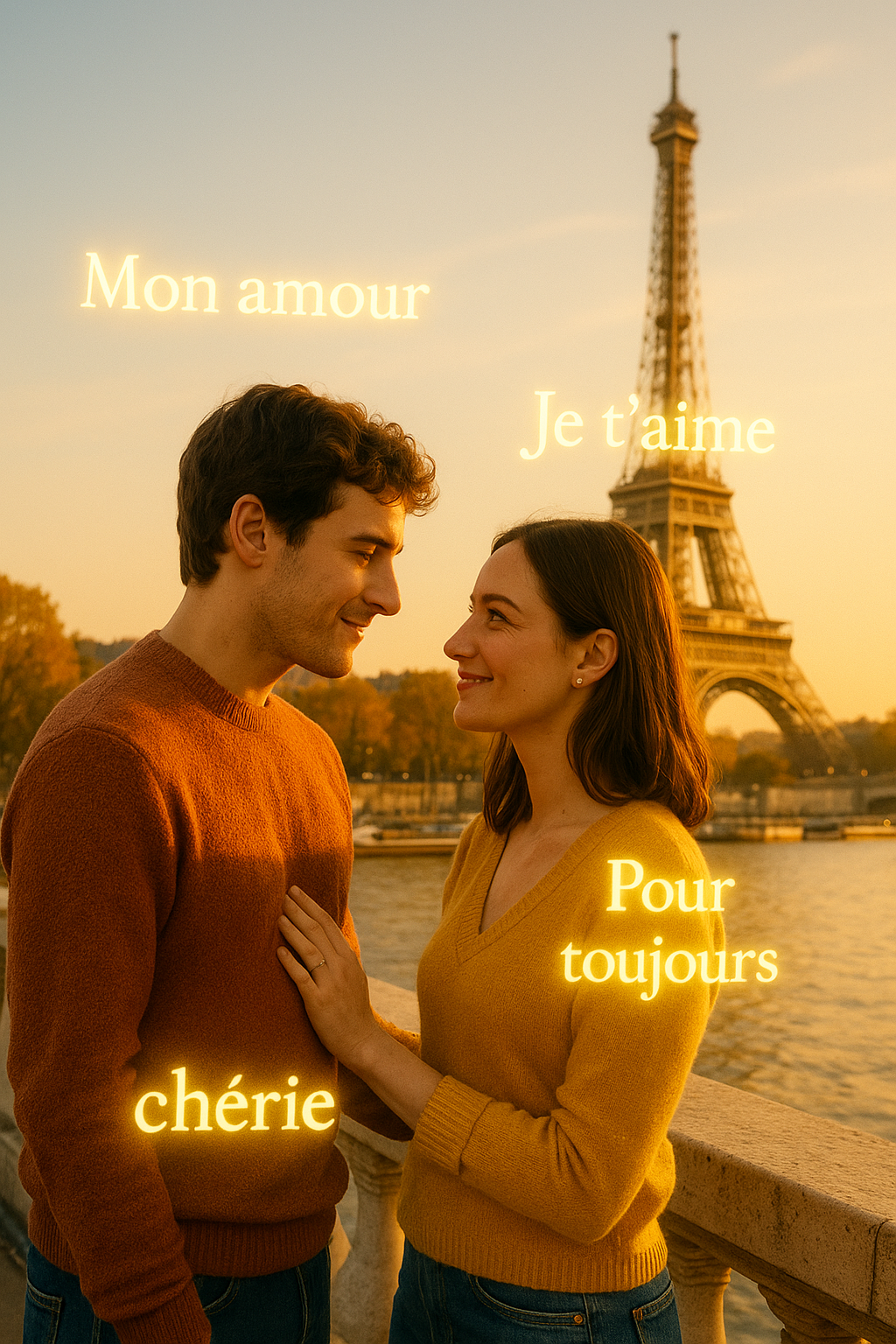
Picture the scene: a candlelit dinner in a Parisian bistro, the soft murmur of French floating in the air—Je t’aime, mon amour, tu es magnifique—and you feel it: this language sings. For centuries, French has held the global title of “the language of love.” From Edith Piaf’s ballads to the sultry cadence of a whispered viens ici, French has charmed poets, seduced travelers, and shaped generations of romantic idealism.
But in today’s globalized, emoji-filled, fast-talking digital world… is French still considered romantic? Has the “language of love” kept its crown? Or has it become just another language of bureaucracy, banking, and train station announcements?
The truth is: French is at a fascinating crossroads. On the one hand, it remains an official language of diplomacy, literature, fashion, and film. On the other hand, native French speakers—especially younger generations—have shifted how they speak, text, and flirt. The French language has evolved. So has its reputation.
In this article, we’ll explore what makes a language “romantic” in the first place and whether French still fits the bill in the 21st century. We’ll look at its history as a Romance language (in the linguistic sense), its cultural associations with love and beauty, and the changes in tone, vocabulary, and expression that modern French has undergone. We’ll also compare how “romantic French” plays out in different settings—literature, real life, pop culture, and yes, dating apps.
Whether you’re a language nerd, a hopeful romantic, or a French learner wondering if you’ll ever sound as seductive as the characters in Amélie, this article is your deep dive into the myth and magic of French romance—linguistically and culturally.
Part I: French as a Romance Language (In the Linguistic Sense)
Let’s start with the facts: French is a Romance language, but not because of its poetic charm.
The term “Romance language” refers to languages that evolved from Vulgar Latin, the spoken Latin of the Roman Empire. French, along with Italian, Spanish, Portuguese, and Romanian, is part of this family. The “romance” in Romance language comes from Romanicus, meaning “in the Roman style.”
So linguistically, French is “romantic” because of its origins—not necessarily its sound.
But French does stand out even among Romance languages. Why?
French's Evolutionary Quirks:
French underwent heavy phonetic erosion, giving it a softer, more fluid sound than its Latin siblings.
Nasal vowels (on, an, in) give it a uniquely “sighing” quality.
Its rhythm is syllable-timed, which makes it sound melodic and even, compared to stress-timed English.
These features contribute to the perception of French as elegant, sensual, and expressive—perfect ingredients for a romantic language.
Part II: The Cultural Myth of French as the Language of Love
Why does French have this particular reputation, above even other Romance languages?
1. French Literature and Poetry
From Victor Hugo to Paul Éluard, French writers have used language as a tool of deep emotional expression. Romanticism (the literary movement) flourished in French in the 19th century, leaving behind a rich archive of longing, passion, and idealism.
2. Cinema and Song
Classic French films like Les Parapluies de Cherbourg or songs like La Vie en Rose created a visual and auditory image of France as a land where feelings are whispered, not shouted.
3. French as a Court Language
In the 17th and 18th centuries, French was the language of diplomacy, refinement, and courtly love across Europe. It shaped manners and speech in royal courts and salons, cementing its link to elegance and seduction.
4. The Allure of Paris
Let’s not overlook the power of branding. Paris, the so-called City of Love, played a huge role in exporting the idea that speaking French = being romantic, fashionable, and cultured.
Part III: Is Modern French Still Romantic?
Here’s where things get interesting. Linguistically, French is still fluid, expressive, and loaded with subtle emotional cues. But like every language, it evolves with its speakers.
The Rise of Verlan and Slang
In contemporary France, especially among youth, the language is more casual, playful, and coded than ever. Words are flipped (verlan), new expressions are born daily, and much of it is far from traditionally romantic.
Example:
Classic: Tu me plais énormément.
Modern: T’es trop bg. (You're hot)
Is that still romantic? Sure—if you understand the code.
Digital Romance in French
Dating apps and texting have changed the game. Emojis, abbreviations, and anglicisms are common. But French texting still carries subtleties—like Bisous (kisses) or Cc (hey), which maintain softness and affection.
Gendered Language and Inclusivity
Modern French grapples with gendered grammar and inclusive alternatives. Words like iel (gender-neutral pronoun) are entering the mainstream. This has opened up new ways to express affection beyond traditional binaries.
So yes, French remains romantic—but it’s adapting, becoming more democratic, playful, and modern in how it expresses love and desire.
Part IV: French Vocabulary That Still Melts the Heart
Despite modern shifts, the French lexicon is full of phrases that convey love with style and subtlety.
💕 Romantic Phrases:
Je t’aime de tout mon cœur. – I love you with all my heart.
Tu me manques. – I miss you (literally: you are missing from me).
Mon chéri / ma chérie. – My darling.
J’ai un faible pour toi. – I have a soft spot for you.
Tu es l’amour de ma vie. – You’re the love of my life.
💌 Flirtatious French:
T’as des beaux yeux, tu sais ? – You have beautiful eyes, you know?
Tu veux boire un verre ? – Want to grab a drink?
Tu me fais craquer. – You make me melt / fall for you.
French excels at expressing affection indirectly—more suggestion than declaration, more poetry than performance.
Part V: Is French More Romantic Than Other Languages?
This is subjective—but here’s what gives French an edge:
✨ The Sound:
French’s musicality, nasal vowels, and liaisons create a murmuring, flowing effect that feels intimate and elegant.
🧠 The Nuance:
French thrives on implication. Even everyday speech has layers of meaning, which lends itself to flirting, seduction, and emotional subtlety.
💬 The Culture of Conversation:
French conversation encourages depth and reflection. It’s a culture where talking about love is itself an art form.
Compare that with more direct or pragmatic languages, and you’ll see why French still ranks high on the romance scale—even if it’s spoken with an occasional wesh wesh or ptdr (LOL).
FAQs About French and Romance
Q: Is French still seen as romantic by native speakers?
A: Yes and no. While younger speakers might find traditional expressions old-fashioned, the cultural association with romance and elegance remains strong.
Q: How has texting changed romantic French?
A: Like everywhere else, texting in French has shortened expressions (e.g., bjr for bonjour, kfé for café), but affection still shines through, especially in sign-offs like bisous, je t’embrasse, and emojis.
Q: Are French speakers more romantic in their communication?
A: Not necessarily more romantic, but they tend to be more nuanced, poetic, and indirect in how they express interest or affection.
Q: Is it possible to sound romantic in French as a non-native speaker?
A: Absolutely! With a bit of practice and attention to rhythm, tone, and cultural context, even beginners can sound genuinely charming.
Q: What are some romantic films or songs to learn from?
A: Try Amélie, La Belle Époque, or La Vie d’Adèle. For music: Edith Piaf, Julien Doré, and Carla Bruni offer lyrical inspiration.
Learn the Romance of French—With Substance and Style
At Polyglottist Language Academy, we don’t just teach grammar. We teach the rhythm, elegance, and cultural beauty of the French language—including the art of conversation, expression, and even flirtation.
Our classes—online and in person across Berkeley, San Francisco, Oakland, San Jose, and beyond—are designed for adult learners who want to connect in French, not just translate.
From the first lesson, you’ll speak real French, learn to read between the lines, and discover why this language has captivated the world for centuries.
👉 Explore our French courses and sign up today.
You Might Also Like…
Want to dive deeper into the beauty of French? Check out our other blog articles:
Must-Know French Gestures And Body Language For Travelers
How To Shop At A French Market Like A Local
What Americans Find Most Surprising About France (And How To Prepare)
Using Your French In Real Life: From Check-In To Check-Out
French Supermarket Survival Guide: What To Expect And What To Say
Avoiding Tourist Mistakes In Paris: Cultural Tips That Make A Difference
Navigating French Trains, Metros, And Buses Like A Local
French Etiquette 101: Do’s And Don’ts For Visitors
What To Pack For France: A Seasonal Guide For Smart Travelers
How Much French Do You Really Need To Know For A Trip?
How To Order At A French Café Without Embarrassing Yourself
Is French still romantic? Absolutely.
But it’s not just in the words—it’s in the way they’re spoken.
Learn that, and you’re not just learning French.
You’re learning to speak the language of nuance, connection, and yes—love. 💌
À bientôt chez Polyglottist ! 🇫🇷