
The Magical World of French Onomatopoeia (and Why It Matters)
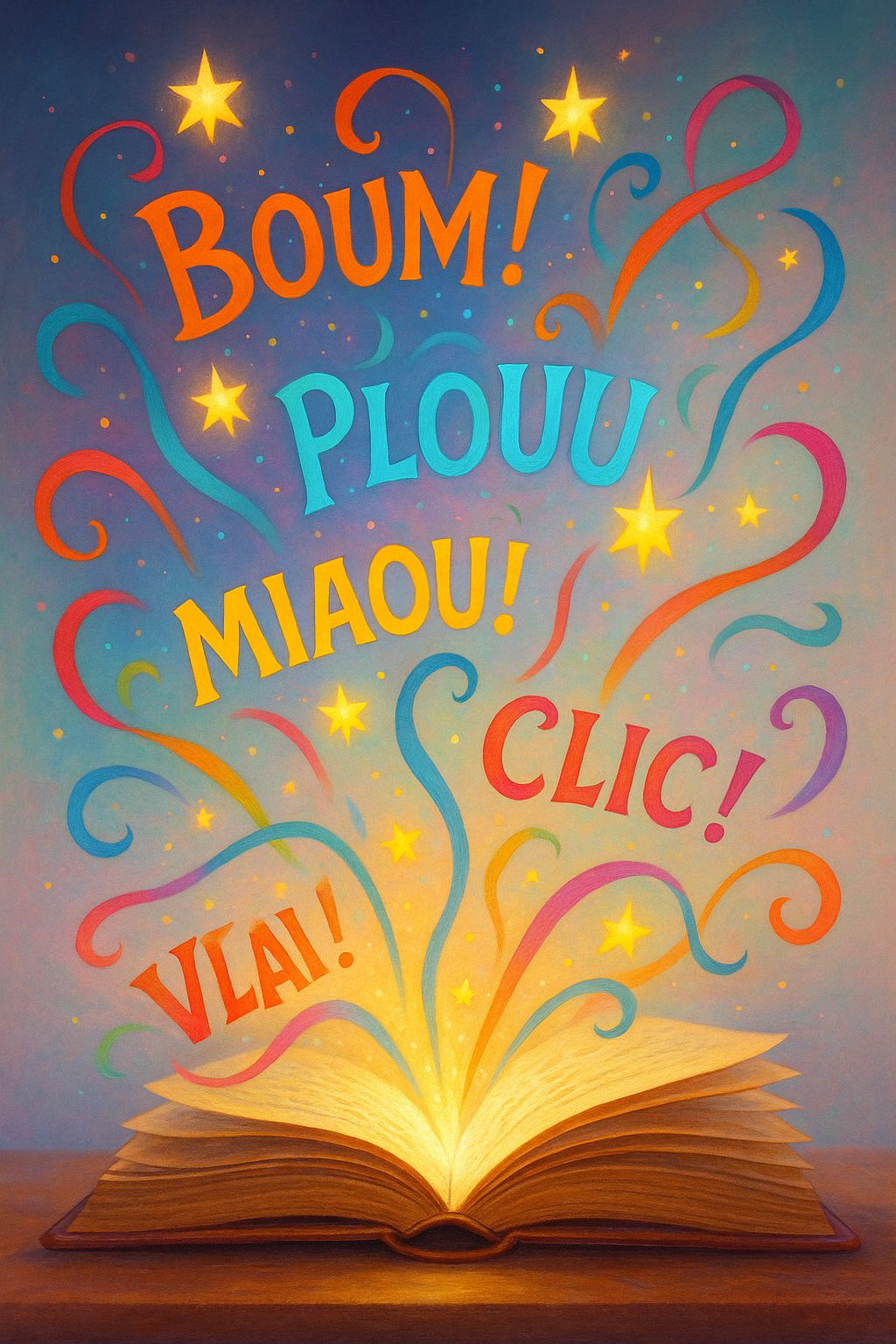
Introduction: Language That Sings, Squeaks, and Hums
Imagine reading a comic strip where someone knocks on a door and you hear toc toc instead of knock knock. A cat meows—not meow, but miaou. Someone sneezes—not achoo, but atchoum! You haven’t entered a parallel universe—you’ve just entered the rich, playful, and often surprising world of French onomatopoeia.
At first glance, onomatopoeia might seem like child’s play—something limited to comic books, fairy tales, or the babblings of toddlers imitating the world around them. But in reality, these sound-symbolic words are linguistic gold. They’re gateways into how a culture hears its surroundings. They reveal the music of daily life in a particular language. And perhaps most importantly for language learners, they teach you how to sound more French—not just in vocabulary or grammar, but in vibe.
You see, onomatopoeia are not universal. A French dog doesn’t say woof—it says ouaf ouaf. French clocks don’t go tick-tock—they go tic tac. This isn't just fun trivia. These seemingly silly sounds shape how French speakers describe emotion, create mood, and tell stories. They're embedded in idioms, children’s songs, and casual expressions. If you ignore them, you're missing out on the very texture of the language.
In this article, we’ll explore the whimsical, expressive, and often surprisingly complex world of French onomatopoeia. From animal sounds to human actions, from environmental noise to emotional nuance, we'll break down why these tiny words matter—and how learning them can instantly make your French more colorful, more authentic, and more alive.
What Is Onomatopoeia, Exactly?
The word onomatopoeia comes from the Greek onomatopoiia, meaning “name-making.” In language, onomatopoeia refers to words that imitate or suggest the sound they describe. English has loads of them: buzz, bang, splash, whisper, hiccup. These are all linguistic attempts to mirror real-world sounds.
French does the same—but the sounds often differ in fascinating ways. That’s because different languages interpret sounds through their own phonetic systems. When a French speaker hears a dog bark, their brain filters it through French phonology. The result? Ouaf ouaf! Not wrong—just French.
Part I: Animal Sounds (Les bruits d’animaux)
Let’s begin with one of the most delightful categories of onomatopoeia—animal sounds. These are often among the first words children learn, and they appear frequently in nursery rhymes, songs, and baby talk. But they’re also useful when telling stories, making jokes, or describing a noisy farm in the countryside.
AnimalEnglish SoundFrench SoundDogWoof woofOuaf ouafCatMeowMiaouRoosterCock-a-doodle-dooCocoricoDuckQuack quackCoin coinCowMooMeuhPigOink oinkGroin groinSheepBaaBêêêFrogRibbitCroac croac
One interesting point? French onomatopoeia often mimic the rhythm and pitch French ears expect. Coin coin may not sound much like a duck to an English speaker, but to a French child, it’s the most obvious thing in the world.
Part II: Human Sounds and Expressions
Human noises are another rich source of French onomatopoeia. Whether it’s the sound of laughter, pain, surprise, or disgust, these expressions are essential to sounding natural in conversation.
Expression Sound in French Meaning / Usage
Laughing Ah ah / Hi hi Laughter (mocking or joyful)
Sneezing Atchoum! A sneeze
Yawning Ouaaah! Yawn
Crying Ouin ouin Wailing like a baby
KissingSmack! / Mwah! Air kiss / cheek kiss
Disgust Beurk! “Yuck!”
Pain Aïe! “Ouch!”
Surprise Oh là là! Astonishment (good or bad)
Thinking Hum… Thinking, hesitation
One of the most iconic? Oh là là! It doesn’t mean “ooh la la” in the sexy English sense—it’s an expression of surprise, frustration, admiration, and more, depending on tone. Want to sound French? Master your oh là là.
Part III: Everyday Sounds
From traffic to technology, French has onomatopoeia for the everyday buzz of life:
Source French Sound Description
Clock ticking Tic tac Tick tock
Doorbell Ding dong Ding dong
Knock on door Toc toc Knock knock
Telephone ringing Dring dring Ring ring.
Gunshot Pan! Bang!
Horn honking Pouet pouet Beep beep
Explosion Boum! Boom!
Fun fact: In French, a siren doesn’t go wee-woo—it goes pin-pon! A great example of how sound perception is culturally shaped.
Part IV: Comic Book Sounds
French comics (bandes dessinées) are full of expressive onomatopoeia. Here are some iconic ones:
Bam! – hitting or crashing
Plouf! – something falling into water
Snif! – sniffing or crying
Zzz… – sleeping or snoring
Vlan! – door slamming or big hit
Crac! – something breaking
Aaaah! – fear, excitement, or horror
Reading Astérix, Tintin, or Titeuf is a great way to encounter these in action. They make the scenes come alive—and help you pick up emotional nuance without even needing a full vocabulary.
Part V: Why Onomatopoeia Matter for Language Learners
1. They’re Fun—and Memorable
Onomatopoeia stick in your brain. Because they mimic real-life sounds, they engage your memory in a multisensory way. That makes them easier to recall—and use.
2. They Teach You French Sounds
Mouth full of vowels and nasals? Many onomatopoeia are built around signature French phonemes. Practicing them improves your accent and rhythm organically.
3. They Add Authenticity
Sprinkling in toc toc or aïe! makes you sound more like a native speaker. Not in a pretentious way, but in an expressive, engaging way that builds rapport.
4. They Reveal Cultural Insight
How a culture hears and imitates the world says a lot. French onomatopoeia show us what French ears prioritize—pitch, melody, exaggeration, rhythm.
5. They Pop Up Everywhere
From informal writing to jokes, children’s books to news headlines (Plouf! Le projet coule déjà), onomatopoeia are everywhere in French media and conversation.
FAQs About French Onomatopoeia
Q: Are French onomatopoeia the same in all Francophone countries?
A: Not always. While miaou is widely understood, Quebecois French or African French may have regional variations, especially for environmental and human-made sounds.
Q: Can I use onomatopoeia in formal writing?
A: Rarely. They’re typically reserved for informal contexts, creative writing, or marketing. But knowing them still boosts your understanding of tone and subtext.
Q: How can I practice French onomatopoeia?
A: Read French comics, watch cartoons or dubbed movies, and listen to how native speakers express surprise, laughter, or sound effects in real life.
Q: Are there idioms that come from onomatopoeia?
A: Yes! Expressions like un boum (a party) or plouf! (something that flopped) come from onomatopoeia but carry extended meanings.
Q: Is there a dictionary of French onomatopoeia?
A: Some exist online or in specialized resources. But the best way to learn them is immersion—comics, pop culture, and conversation.
Ready to Bring French to Life?
At Polyglottist Language Academy, we don’t just teach grammar and vocabulary—we teach you how to live in French. Our classes are conversation-based, culturally rich, and taught by experienced instructors who will help you feel at home in the language from day one.
Whether you're in Berkeley, San Francisco, Oakland, San Jose—or joining us online from anywhere in the world—we offer French courses for all levels. If you want to speak the kind of French that uses plouf, toc toc, and cocorico with confidence and flair, come study with us.
👉 Explore our French courses and sign up today.
You Might Also Like…
Want to dive deeper into French culture and language? Check out our other blog articles:
Must-Know French Gestures And Body Language For Travelers
How To Shop At A French Market Like A Local
What Americans Find Most Surprising About France (And How To Prepare)
Using Your French In Real Life: From Check-In To Check-Out
French Supermarket Survival Guide: What To Expect And What To Say
Avoiding Tourist Mistakes In Paris: Cultural Tips That Make A Difference
Navigating French Trains, Metros, And Buses Like A Local
French Etiquette 101: Do’s And Don’ts For Visitors
What To Pack For France: A Seasonal Guide For Smart Travelers
How Much French Do You Really Need To Know For A Trip?
How To Order At A French Café Without Embarrassing Yourself