
French Eye Contact: How Much Is Too Much?
Introduction: The Power—and Peril—of a Look
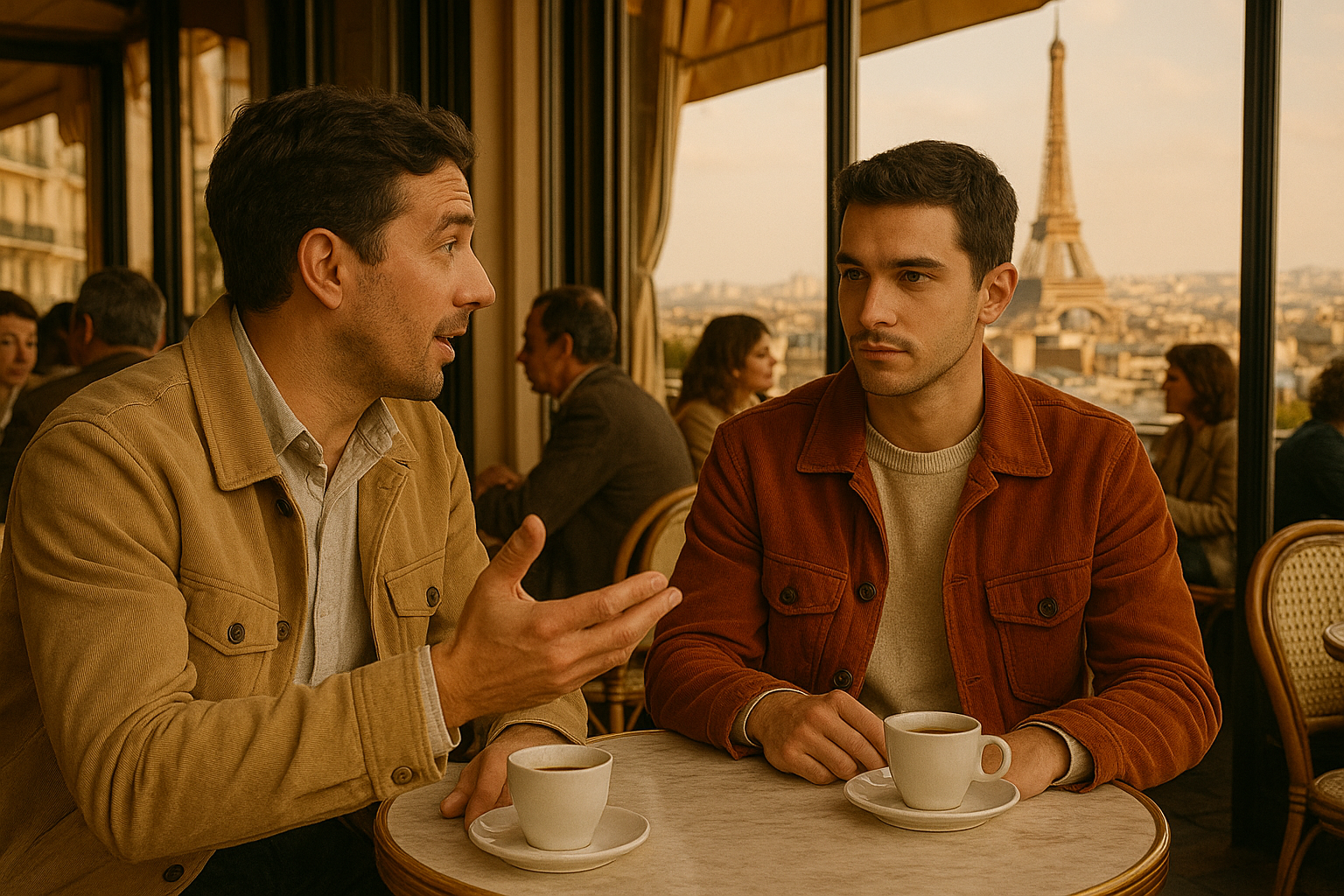
Picture this. You’re sitting in a Paris café, the golden sunlight slanting through wrought-iron balconies. You’re chatting with a French acquaintance, feeling quite proud of your grammar and your perfect pronunciation of “croissant.”
Then you notice something strange. Your conversation partner is looking at you—really looking at you. Steady gaze. No shyness. Meanwhile, you’re trying to decide:
Do you stare back?
Do you look away politely?
Are they flirting?
Or is this just…French?
If you’ve ever wondered whether the French make more eye contact than other cultures, you’re not imagining things. Eye contact in France is a subtle dance, loaded with cultural meaning, and it’s an area where foreigners often stumble.
In some cultures (like Japan or parts of Latin America), sustained eye contact can seem aggressive or disrespectful. In others, like the United States, it signals confidence and trustworthiness. The French fall somewhere in the middle—but with unique nuances that can trip up even the most enthusiastic Francophile.
Too little eye contact, and you risk coming across as secretive or evasive. Too much, and you might be seen as rude—or, worse, flirtatious.
So how do you strike the perfect balance?
This deep dive will guide you through the fascinating terrain of French eye contact: why it matters, how it’s different from what you’re used to, and how to master it without accidentally giving off the wrong signals. Whether you’re chatting with a friend, navigating a business meeting, or trying to figure out if someone’s flirting with you, understanding this tiny—but mighty—element of French communication is crucial.
Let’s unlock the secrets hidden in the French gaze.
Why Eye Contact Matters in French Culture
Eye contact is not merely about looking. In France, it serves several crucial functions:
Shows you’re paying attention
The French expect conversational partners to engage fully. Avoiding eye contact may look like disinterest or boredom.Signals honesty
Looking someone in the eyes is a sign of being straightforward and trustworthy.Establishes connection
Eye contact helps build rapport and a sense of intimacy—even in casual conversations.Sets social boundaries
Too much or too little eye contact can instantly define the tone of your interaction.
Understanding how—and when—to use eye contact is a shortcut to fitting in socially and professionally in France.
French Eye Contact vs. Anglo Eye Contact: The Differences
1. The Gaze is More Direct
Compared to North Americans, the French tend to hold eye contact longer during conversations. They’re not being aggressive—they’re showing engagement.
2. It’s Not Always Smiling
Americans often pair eye contact with frequent smiling. The French smile less reflexively, especially with strangers. A direct look without a smile doesn’t mean someone is unfriendly—it’s normal.
3. Eye Contact Has Layers
French people often use eye contact to:
Assess your sincerity
Challenge your opinion (especially in debates)
Flirt discreetly
Signal subtle social status dynamics
4. Flirting vs. Politeness
One of the biggest sources of confusion for foreigners:
In the U.S., extended eye contact can often signal romantic interest.
In France, someone might simply be expressing attentiveness or interest in your words—not necessarily you as a romantic partner.
The “Look” in French Conversation
How Long is Too Long?
There’s no precise timer for eye contact. But here’s a rough guide:
In casual conversation → Hold eye contact for 2-4 seconds before glancing away briefly.
In business → A steadier gaze is acceptable, especially when making your point.
French speakers often intersperse eye contact with small looks away—to their coffee cup, to the side, to their notepad. It keeps things natural.
The Intensity of the Gaze
French eye contact can feel intense because it’s often accompanied by:
A thoughtful expression
Slight frowning (deep concentration, not anger)
Minimal smiling (compared to some cultures)
Don’t mistake this for hostility—it’s often just attentiveness.
Eye Contact in Arguments
French people love debates. A debate might involve:
Strong eye contact
Raised voices
Rapid gestures
This doesn’t necessarily mean anger. Passionate discourse is part of French culture.
Eye Contact Across Social Contexts
1. Among Friends
Eye contact is essential to show you’re listening.
You can look away while thinking, but don’t avoid someone’s gaze entirely.
2. In Professional Settings
Strong eye contact projects confidence and competence.
Breaking eye contact too often might suggest insecurity.
3. With Strangers on the Street
Here’s where it gets tricky:
In Paris, strangers might lock eyes momentarily as they walk past. It’s not necessarily an invitation for conversation.
In smaller towns, direct eye contact with strangers can be seen as slightly intrusive unless paired with a polite greeting.
4. Flirtation
French flirting is subtle. A lingering look is a classic move—but context is key:
A prolonged gaze in a café, paired with a smile → possibly flirtatious.
A direct, neutral gaze during conversation → usually just attentiveness.
5. Eye Contact in Shops and Markets
Always greet the shopkeeper with a brief look and “Bonjour.”
Sustained eye contact while speaking signals respect and engagement.
Eye Contact Dos and Don’ts in France
✅ Do hold your conversation partner’s gaze when speaking.
It shows you’re present and interested.
✅ Do pair eye contact with polite greetings in shops.
Looking someone in the eye while saying “Bonjour” is polite.
✅ Do break your gaze occasionally.
Constant staring is unsettling.
✅ Do maintain stronger eye contact when debating.
This signals that you’re engaged and confident.
🚫 Don’t stare fixedly without blinking.
It can be interpreted as aggression.
🚫 Don’t avoid eye contact completely.
This might seem suspicious or rude.
🚫 Don’t assume eye contact equals romantic interest.
Context matters.
Eye Contact Across Age and Gender
Gender
Women might keep eye contact shorter in some settings, particularly with strangers, to avoid misinterpretation.
Among friends, both genders engage in strong eye contact.
Age
Younger French people are often more relaxed about intense eye contact.
Older generations might consider very prolonged eye contact with strangers inappropriate.
Non-Verbal Nuances with Eye Contact
French communication isn’t just about words:
Raised eyebrow → curiosity or challenge
Narrowed eyes → skepticism
Slight frown → concentration, not necessarily displeasure
Side glance → subtle humor or irony
Mastering these micro-expressions helps you “read the room.”
Practicing Eye Contact “à la Française”
In Conversation
Try holding eye contact for a few seconds at a time.
Notice how French people look away thoughtfully, then re-engage.
Watch French Films
Observe how actors:
Maintain eye contact
Combine looks with expressions
Navigate debates and arguments
Films like Amélie, La Haine, or Intouchables are great examples.
Practice in Low-Stakes Situations
At cafés
While ordering food
In small talk with acquaintances
The Regional Differences
Parisians may be more direct in their gaze than people in the provinces, who sometimes prefer softer eye contact. Context always matters.
Why Learning Eye Contact Matters for Language Learners
It improves comprehension. Eye contact helps you follow gestures and facial cues.
It boosts confidence. Engaging with people’s eyes makes you feel more part of the conversation.
It prevents misunderstandings. Avoiding eye contact might signal rudeness without you realizing it.
The Emotional Side of Eye Contact
If you’re shy, French eye contact can feel intense. Here’s how to ease into it:
Practice short bursts of eye contact.
Pair your look with a smile to soften it.
Remember, the French expect sincerity more than perfection.
FAQs About French Eye Contact
Q: Why do the French stare so much?
They’re not “staring” so much as maintaining eye contact longer than some cultures. It shows interest and sincerity.
Q: Is eye contact flirting in France?
Sometimes. Context is everything. A lingering gaze paired with a smile might be flirtatious. A neutral gaze during conversation is usually just attentiveness.
Q: Should I look the shopkeeper in the eye?
Absolutely. A brief but direct look plus “Bonjour” is polite.
Q: Do older French people avoid eye contact more?
Some older people might consider intense eye contact too bold, especially with strangers.
Q: Is it rude to avoid eye contact?
Yes—it can appear secretive or rude. Make an effort to look people in the eye.
Q: How can I practice French eye contact?
Watch French films
Observe locals when traveling
Practice short eye contact bursts in conversations
Q: Do French people smile as much as Americans?
No. Smiles in France are more reserved, often reserved for genuine emotion rather than casual politeness.
Q: Is staring acceptable in French arguments?
Yes—debate is part of French culture. Strong eye contact can signal conviction, not hostility.
Ready to Master the French Gaze—and More?
At Polyglottist Language Academy, we believe language learning goes far beyond vocabulary lists. It’s about reading cultural signals, like eye contact, that turn conversations into true communication.
Whether you’re learning online or planning a trip to France, our classes equip you with not only grammar and vocabulary—but also the cultural know-how to connect confidently.
Sign up for our classes today and bring your French conversations to life!
Check Out More of Our Blog!
Love cultural insights? Explore these articles next:
Why Fluent French Isn’t Perfect French—And Why That’s A Good Thing
A Crash Course In “French Filler Words” (Eh Bien, Tu Vois, Genre...)
Street French Vs. School French: What You’ll Hear Vs. What You Learn
What Learning French Teaches You About English (Yes, Really!)
10 “Invisible Words” In Spoken French That Aren’t In Your Textbook
The Sound Of French: How To Train Your Ear To Understand Spoken French Fast
From Oui To Oops: The Funniest Mistakes French Learners Make (And What They Teach Us)