
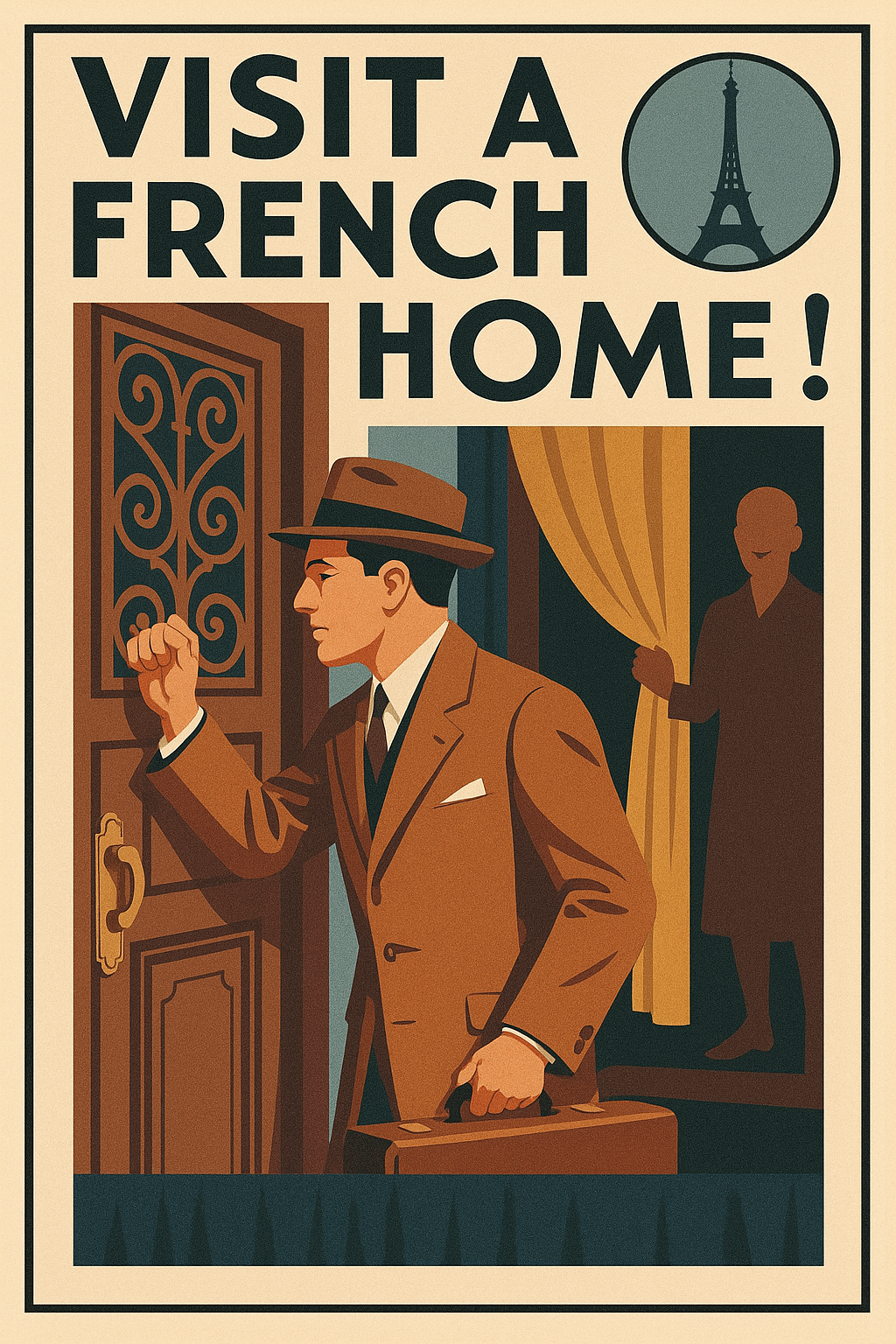
Introduction: A Doorway Into French Culture
Picture this. You’re studying French. You’ve conquered the passé composé, mastered the “R” sound, and can order a croissant with ease. One day, your French friend casually says:
“Tu devrais venir dîner chez moi un soir !”
(You should come have dinner at my place one evening!)
You beam with excitement. An invitation to a French home—it’s practically a golden ticket to the inner sanctum of French culture.
But then, panic sets in. What time should you arrive? Should you bring wine? Flowers? Both? None? Do you kiss everyone on the cheek when you walk in? Is it rude to ask for a tour of the house? Should you offer to help clear the table? What if you accidentally commit a cultural faux pas and doom your budding friendship?
Bienvenue to the world of social etiquette à la française.
Visiting someone’s home in France is a fascinating cultural experience. It’s more than just a meal; it’s a ritual steeped in tradition, unspoken codes, and delicate social expectations. Knowing the rules can mean the difference between being remembered as “the charming foreign friend” and “the one who committed une grosse bêtise.”
The good news? The French are forgiving—especially if you’re clearly making an effort to respect their customs. And that’s what this article is all about.
In this comprehensive guide, we’ll unravel the do’s and don’ts of visiting a French friend’s house. From the moment you receive the invitation to the parting au revoir, you’ll discover how to navigate French hospitality with confidence and grace.
Let’s step over the threshold—and into the beautiful intricacies of French social life.
Before You Go: The Art of the Invitation
1. Confirming the Invitation
Unlike some cultures where casual invitations might be vague or symbolic, a French dinner invitation is often sincere. However, it’s polite to confirm:
“Merci beaucoup pour l’invitation. Ça me ferait très plaisir. C’est toujours bon pour samedi ?”
Even if your friend sounded casual, confirm the date, time, and whether it’s just you or others are invited. French hosts like to plan carefully.
2. Asking What You Can Bring
A classic French custom: Don’t arrive empty-handed.
It’s perfectly acceptable to ask:
“Est-ce que je peux apporter quelque chose ?”
Often, your host will say, “Non, surtout rien !” but bring something anyway (see below).
What to Bring: The Perfect French Host Gifts
Gifts say: Je respecte votre hospitalité. They’re not optional; they’re a mark of politeness.
Here’s what’s safe—and what’s not:
✅ Wine
A bottle of good red or white wine is a safe bet.
Don’t bring cheap supermarket wine.
Avoid bringing wine if your host is a known wine enthusiast—your choice might pale in comparison!
✅ Flowers
A bouquet is lovely.
Avoid chrysanthemums (associated with funerals).
Roses are safe. Lilies can be considered somber.
✅ Chocolate or Pastries
A box of high-quality chocolates.
Pastries from a reputable pâtisserie (but not if your host has already planned dessert).
✅ A Small Gift from Your Country
A specialty food item, tea, or artisanal craft.
🚫 Don’ts
Don’t bring food dishes unless invited to contribute.
Don’t bring perfume or personal items unless you know the person well.
Arriving: Timing Is Everything
1. Don’t Be Too Early
Arriving early is a faux pas. Your hosts may still be getting dressed or setting the table.
Aim to arrive 10-15 minutes late.
This slight delay is polite tardiness.
2. Greetings: Cheek Kisses or Handshakes?
This depends on how close you are:
Close friends → cheek kisses (la bise). Usually 2 kisses (one on each cheek), though this varies by region.
Acquaintances → handshake.
Observe what others do before diving in for kisses!
Inside the House: Navigating French Politesse
1. Shoes On or Off?
Unlike some cultures, the French often keep shoes on indoors, especially during dinners or parties. However, if you see a pile of shoes near the door, take yours off.
When in doubt:
“Est-ce que tu veux que j’enlève mes chaussures ?”
2. Compliment the Home
A polite:
“C’est très joli chez toi !”
“Tu as beaucoup de goût.”
Even if you’re not a design critic, it’s polite to acknowledge your host’s home.
3. Accept the Apéritif
The apéritif is sacred. Don’t decline it unless you have a serious reason (like pregnancy, sobriety, or health).
It might be:
Champagne
Kir
Pastis
Whiskey
Juice for non-drinkers
Sip slowly. The apéritif can last an hour.
The Meal: Table Manners & Conversation
1. Seating Arrangements
Don’t sit wherever you please. Wait for your host to indicate where you should sit.
2. Napkin Etiquette
Place your napkin on your lap immediately.
Never tuck it into your shirt.
3. Don’t Start Eating Immediately
Wait for:
The host to say: “Bon appétit !”
Or for someone else to start.
4. Bread Rules
Place bread directly on the tablecloth, not on your plate.
Tear bread with your fingers; don’t bite into the whole piece.
5. Wine Refills
Don’t refill your glass yourself.
Your host will handle pouring.
6. Eating Pace
Don’t rush.
Meals can last 2-4 hours.
7. Don’t Bring Up Money or Politics
Conversations should be:
Light
Cultural
Personal interests
Art, music, travel
Avoid:
Salary
Personal finances
Politics (unless your host brings it up)
8. Don’t Help Clear the Table (Unless Invited)
In some cultures, guests help clean up. In France, that can embarrass your host. Offer once:
“Je peux t’aider à débarrasser ?”
If declined, respect it.
Dessert & Digestif
The French meal ends with:
Cheese
Dessert
Coffee
Digestif (e.g., Cognac)
Don’t refuse dessert unless necessary. It’s an important part of hospitality.
Leaving: How and When
1. Don’t Leave Too Abruptly
Leaving right after dessert can feel abrupt. Linger for coffee or conversation.
2. Express Gratitude
Say:
“Merci beaucoup pour cette soirée, c’était délicieux !”
“J’ai passé un moment très agréable.”
A follow-up message the next day is extra polite.
3. Cheek Kisses Goodbye
Again, observe your hosts:
Close friends → cheek kisses
Acquaintances → handshake
The Unwritten Rules
Don’t snoop around the house.
Don’t criticize the food.
Compliment the host’s cooking, even if you didn’t love it.
Visiting a French Home with Kids
Ask if kids are invited.
Don’t assume pets are welcome.
French children usually join adults for meals, though sometimes they’re fed separately.
Regional Differences
Southern France → 3 or even 4 kisses.
Burgundy → wine knowledge matters even more.
Paris → more formal.
When in doubt, observe your host’s signals.
The Bigger Picture: Why It Matters
Understanding these rules isn’t just about avoiding mistakes. It’s about unlocking the deeper layers of French culture:
Respect for private and public spheres.
The ritual of hosting as an art form.
Subtle social signals that convey politeness and elegance.
Mastering these nuances helps you forge real friendships—and shows genuine respect for French customs.
FAQs About Visiting a French Friend’s House
Q: Should I bring a gift even if my host says “rien du tout”?
Yes! It’s polite to bring a small gesture, even if they insist otherwise.
Q: Is it rude to leave before midnight?
Not necessarily—but leaving too soon may seem abrupt. French dinners often last several hours.
Q: Should I kiss everyone when I arrive?
Not always. Observe how others greet each other first.
Q: Can I help clean up?
Offer once—but accept a “no.” Many hosts prefer to handle it themselves.
Q: What if I don’t drink alcohol?
Simply say:
“Je ne bois pas d’alcool, merci.”
It’s accepted and won’t offend.
Q: Is it okay to refuse food?
Avoid refusing unless you have an allergy or dietary restriction. At least taste a small portion.
Q: Can I arrive early?
No. Arrive 10-15 minutes late to respect French etiquette.
Q: Are children usually included?
Always check. French dinners can be adult-only affairs.
Ready to Master French Culture?
At Polyglottist Language Academy, we don’t just teach grammar—we teach you how to live the language. Our French courses immerse you in cultural insights, practical conversations, and real-life etiquette, so you can navigate every social situation with confidence.
Whether you’re a beginner or aiming for fluency, we’re here to help you unlock the true beauty of French culture and language.
👉 Sign up for our classes today!
Check Out More of Our Blog!
If you found this guide helpful, explore more cultural secrets and language tips:
Why Fluent French Isn’t Perfect French—And Why That’s A Good Thing
A Crash Course In “French Filler Words” (Eh Bien, Tu Vois, Genre...)
Street French Vs. School French: What You’ll Hear Vs. What You Learn
What Learning French Teaches You About English (Yes, Really!)
10 “Invisible Words” In Spoken French That Aren’t In Your Textbook
The Sound Of French: How To Train Your Ear To Understand Spoken French Fast
From Oui To Oops: The Funniest Mistakes French Learners Make (And What They Teach Us)