
How to Handle Awkward Language Moments in France (Like a Local Would)
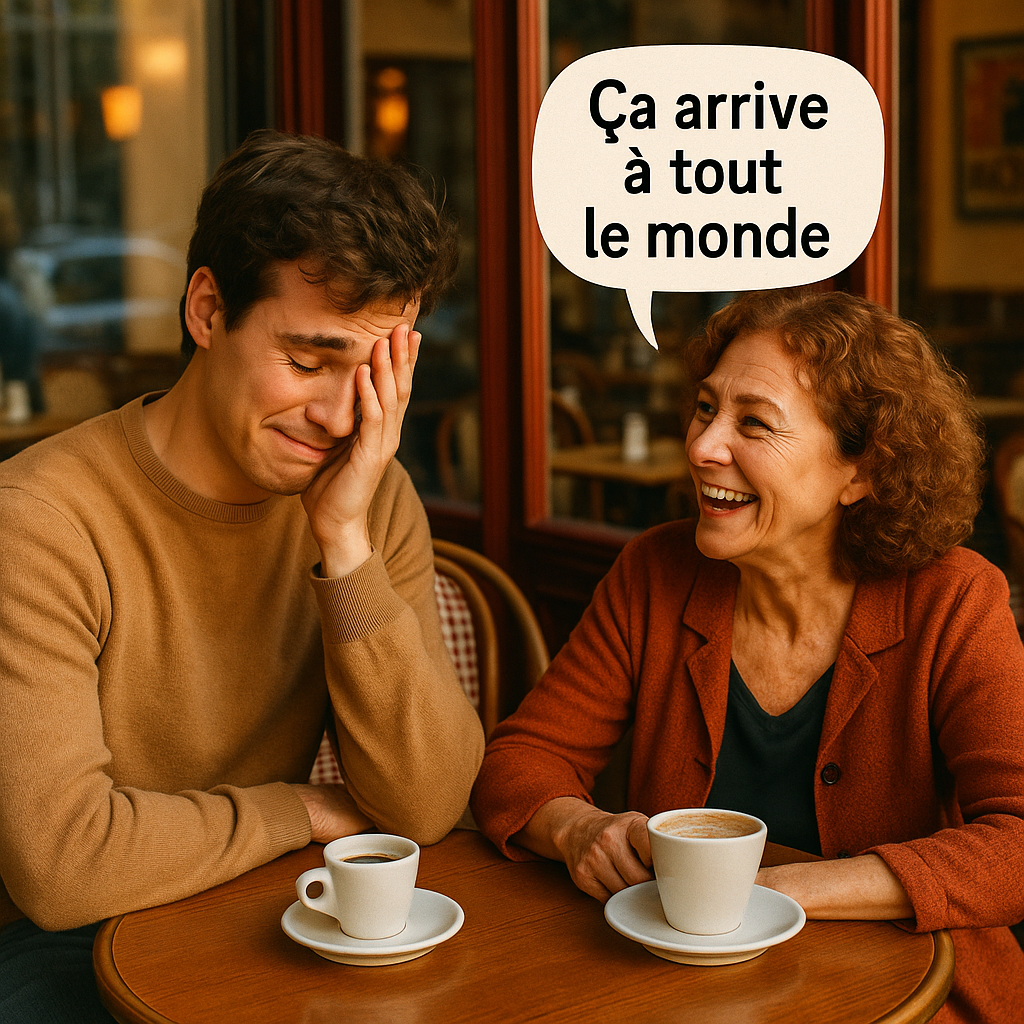
Introduction: Welcome to the Humbling (and Hilarious) Side of Language Learning
You’ve studied the vocabulary. You’ve mastered the irregular verbs. You’ve even practiced your best r sounds in the mirror. And then it happens.
You proudly walk into a bakery in Marseille, smile brightly, and say:
"Je voudrais un pain, s’il vous plaît."
The baker pauses, raises an eyebrow, and replies with a stream of French you don’t understand. You freeze. Panic. Nod blindly. Then walk out not with a baguette… but with a croissant, two cookies, and a confused sense of self.
Sound familiar?
If you’re learning French, these awkward language moments aren’t the exception—they’re the norm. And despite what your inner perfectionist might say, that’s not only okay—it’s essential. Because those cringeworthy, misunderstood, or laugh-out-loud moments are how you grow.
What’s more, the French themselves—yes, even the elegant Parisians and rapid-fire speakers in Lyon—are no strangers to awkwardness. They may be fluent in French, but they’ve had their own moments learning English, Spanish, or German. Language blunders are part of the human experience.
In this article, we’ll help you handle those inevitable awkward moments in France with the grace, humor, and practicality of a local. From mispronunciations to accidental double entendres to completely blanking out in the middle of a sentence—we’ve got you covered.
Whether you’re ordering coffee, making small talk, or just trying to get through a sentence without accidentally saying something risqué, here’s how to navigate the messiness of real-life French with confidence and charm.
PART 1: THE MOST COMMON AWKWARD LANGUAGE MOMENTS (AND WHAT TO DO)
1. You Mispronounce a Word—and It Sounds Dirty
Maybe you meant to say baiser (a kiss) and accidentally said baiser (to have sex—yes, it’s a homonym). Or you asked for du jus de pêche and got a raised eyebrow because you said something more like du jus de paix.
How to handle it like a local:
Laugh. Seriously. The French have a robust sense of humor about language. If someone laughs, just grin and say, “Oups, ce n’est pas ce que je voulais dire !” You’ll earn their respect for owning it.
2. You Freeze and Forget a Simple Word
You’re mid-sentence and suddenly forget how to say “tomato.” Your brain goes blank. Your confidence dips.
How to handle it like a local:
Use description and gestures: “Le légume rouge… comme dans une salade.” Or try: “Je ne sais plus le mot en français, mais c’est comme une pomme rouge, un peu acide…”
Locals do this all the time. It’s not about knowing every word—it’s about communicating.
3. Someone Speaks Rapid-Fire French—and You Understand Nothing
They asked you a question. You heard… maybe one word? You nod politely. Then they ask another. You panic.
How to handle it like a local:
Be direct but kind. Say: “Désolé(e), je suis encore en train d’apprendre. Pouvez-vous répéter doucement ?” Most people will slow down, rephrase, and be impressed by your effort.
4. You Say “Tu” Instead of “Vous”—Oops
You used informal “tu” with your Airbnb host's elderly neighbor. Cue awkward silence.
How to handle it like a local:
Apologize gently: “Ah pardon, je voulais dire ‘vous’.” Then smile. Everyone makes this mistake. If you’re friendly and polite, it’s quickly forgiven.
5. You Get the Gender of a Noun Wrong
You say “le voiture” instead of “la voiture.” Your French teacher corrects you. Again.
How to handle it like a local:
Don’t obsess. Even native French speakers mess this up in casual speech. Just say “Ah oui, la voiture. Merci.” and move on.
6. You Accidentally Agree to Something You Didn’t Understand
You nod “oui” when your host asks if you like andouillette (a strong-smelling sausage made with intestines). It arrives. You wish you hadn’t.
How to handle it like a local:
It’s okay to backtrack. Say: “Ah, je croyais que c’était autre chose. Je vais juste goûter un petit morceau !” The French appreciate honesty over forced politeness.
PART 2: MINDSETS THAT MAKE AWKWARD MOMENTS EASIER
🧠 The “It’s Not a Performance” Mindset
Language learning isn’t theater. You’re not being judged on perfection—just effort. Locals aren’t grading your grammar. They’re noticing your intention.
🎭 Use Humor as a Superpower
The French admire wit. If you can laugh at your own mistake—“J’ai demandé un câlin au lieu d’un calin… oups !”—you’ll win people over.
🧘 Pause, Breathe, Rephrase
When things go wrong, don’t rush to cover it up. Pause. Smile. Try again. Fluency isn’t about speed—it’s about clarity and confidence.
🤝 Lean into Connection, Not Perfection
Your goal isn’t to pass a test. It’s to connect. And nothing connects people faster than vulnerability and a shared laugh.
FAQs
Q: What if someone switches to English when I’m trying to speak French?
A: Politely say: “Je préfère pratiquer mon français, si c’est possible.” Most people will respect your wish and switch back.
Q: What’s the best response when I don’t understand?
A: Try: “Je ne suis pas sûr(e) de comprendre. Pouvez-vous répéter différemment ?” or “Est-ce que vous pouvez parler un peu plus lentement ?”
Q: How do I bounce back after making a big mistake?
A: Acknowledge it, laugh if appropriate, and keep going. Confidence builds from surviving awkward moments, not avoiding them.
Q: Are the French judgmental about bad French?
A: Not usually. If you’re polite, respectful, and trying, most will appreciate your effort—even if they correct you.
Q: Should I memorize set phrases to avoid mistakes?
A: Yes—but be ready to adapt. Memorized phrases help you start, but real conversation involves flexibility.
Q: What if I accidentally offend someone?
A: Apologize sincerely: “Je suis désolé(e), ce n’était pas mon intention.” People are forgiving if you’re kind and own it.
Q: Is it better to speak slowly or quickly?
A: Speak slowly and clearly. Rushing often leads to more mistakes. Locals will appreciate your clarity.
Q: Will my accent be a problem?
A: Not at all. Accents are natural. What matters more is pronunciation clarity, not sounding native.
Want to Master Real-Life French—Including the Awkward Bits?
At Polyglottist Language Academy, we prepare you for real-world French. Our small group and private classes go beyond textbook grammar. We teach you how to respond to the unexpected, recover from awkwardness, and engage confidently with native speakers.
We offer flexible options online and in person in Berkeley, San Francisco, Oakland, San Jose, and Marin—with a focus on real conversation and cultural nuance.
👉 Sign up today and learn to speak French with fluency and resilience.
Keep Growing with These Popular Articles:
Must-Know French Gestures And Body Language For Travelers
How To Shop At A French Market Like A Local
What Americans Find Most Surprising About France (And How To Prepare)
Using Your French In Real Life: From Check-In To Check-Out
French Supermarket Survival Guide: What To Expect And What To Say
Avoiding Tourist Mistakes In Paris: Cultural Tips That Make A Difference
Navigating French Trains, Metros, And Buses Like A Local
French Etiquette 101: Do’s And Don’ts For Visitors
What To Pack For France: A Seasonal Guide For Smart Travelers
How Much French Do You Really Need To Know For A Trip?
How To Order At A French Café Without Embarrassing Yourself