
The Real Meaning Behind “La Dolce Vita”—and How to Talk About It in Italian
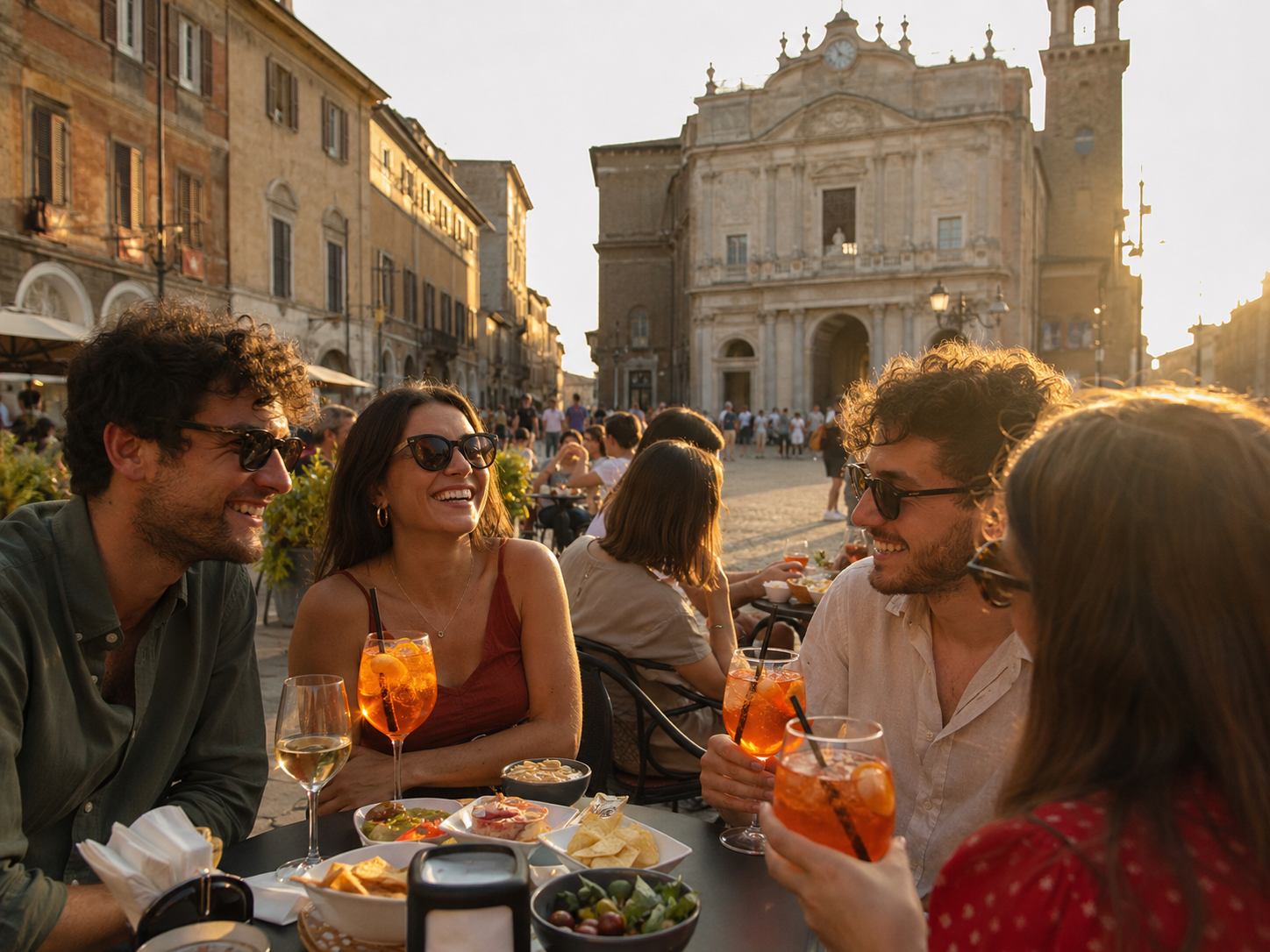
Few Italian phrases have traveled the world as beautifully as la dolce vita. Even people who have never taken an Italian class often recognize it. The phrase appears on travel posters, restaurant menus, fashion campaigns, perfume ads, vacation blogs, and glossy Instagram captions under photos of espresso cups, golden beaches, cobblestone streets, and late-night dinners in Rome. To English speakers, it often sounds instantly romantic. It seems to promise a world where life is slower, food tastes better, people dress better, sunlight falls more softly, and every ordinary afternoon has the possibility of becoming cinematic.
But what does la dolce vita really mean?
The simplest translation is “the sweet life.” That is accurate—but only in the most basic sense. Like many beautiful phrases in another language, the literal translation gives us the doorway, not the whole house. If we stop at “the sweet life,” we may imagine only luxury: designer sunglasses, expensive wine, summer vacations, elegant hotels, and beautiful people living without stress. That image is not completely unrelated to the phrase, especially because of the global fame of Federico Fellini’s 1960 film La Dolce Vita. But it is also incomplete.
In Italian culture, la dolce vita is not only about glamour. It is not simply about money, status, or vacation. It can refer to something much more human and much more accessible: the ability to enjoy life’s pleasures, to savor time, to appreciate beauty, to share food and conversation, to linger instead of rushing, and to notice the sweetness that already exists in ordinary life.
That sweetness might be a morning espresso at the bar before work. It might be a long Sunday lunch with family. It might be a walk through the historic center of a city when the light turns golden in the early evening. It might be the sound of friends laughing over aperitivo, the pleasure of speaking slowly with someone you love, or the quiet joy of doing one thing at a time. It might be a good meal, yes—but also a good conversation. It might be a view of the sea—but also a sense of belonging. It might be travel—but also the art of being present where you already are.
For language learners, la dolce vita is especially interesting because it shows how vocabulary and culture cannot be separated. You can translate the words, but to understand the phrase, you have to understand the world around it: Italian food culture, social rhythms, family life, beauty, leisure, film history, and the emotional tone of everyday Italian expressions.
Learning Italian is not just learning how to say hello, order pasta, or conjugate verbs. It is learning how another culture organizes experience. It is learning that a word like dolce can mean sweet in taste, gentle in personality, soft in sound, tender in memory, and pleasurable in life. It is learning that a phrase can be both serious and playful, nostalgic and modern, poetic and ironic. It is learning that language gives us not only grammar, but also a new way to think about what makes life meaningful.
So let’s go beyond gelato, sunsets, and postcard Italy. Let’s explore the real meaning behind la dolce vita, how the phrase works in Italian, how it became famous, how Italians might use it today, and how you can talk about the sweet life naturally in Italian.
What Does “La Dolce Vita” Literally Mean?
The phrase la dolce vita is made of three simple words:
La means “the.”
Dolce means “sweet,” “gentle,” “pleasant,” or “soft.”
Vita means “life.”
So, literally, la dolce vita means “the sweet life.”
Grammatically, the phrase is feminine singular because vita is a feminine noun in Italian. That is why we use la, the feminine singular definite article. You say:
la vita — the life
una vita — a life
la dolce vita — the sweet life
The adjective dolce is also interesting. In Italian, many adjectives change depending on whether the noun is masculine or feminine, singular or plural. But dolce has the same form for masculine and feminine singular nouns. For example:
un ragazzo dolce — a sweet/gentle boy
una ragazza dolce — a sweet/gentle girl
In the plural, however, it becomes dolci:
ragazzi dolci — sweet/gentle boys
ragazze dolci — sweet/gentle girls
vite dolci — sweet lives
One thing English speakers should notice is that dolce is not only about sugar. Yes, it can describe a sweet dessert or a sweet drink. But it can also describe personality, tone, sound, emotion, or atmosphere.
For example:
il dolce — dessert
un vino dolce — a sweet wine
una persona dolce — a sweet or gentle person
una voce dolce — a soft, sweet voice
un ricordo dolce — a sweet or tender memory
una vita dolce — a sweet or pleasant life
This flexibility is part of what makes la dolce vita so expressive. It does not simply mean life full of sugar or indulgence. It suggests a life that feels pleasant, gentle, rich, beautiful, and emotionally satisfying.
Why Is It “La Dolce Vita” and Not “La Vita Dolce”?
Italian adjectives usually come after the noun. For example, you would normally say:
una casa bella or more naturally una bella casa depending on nuance
un libro interessante — an interesting book
una giornata lunga — a long day
una persona gentile — a kind person
However, some adjectives can come before or after the noun, and the position can change the feeling of the phrase. Dolceis one of those adjectives that can appear in different positions.
Compare:
una vita dolce
This sounds more descriptive: a sweet, pleasant, or gentle life.
una dolce vita
This sounds more emotional, poetic, or stylized: a sweet life, a life with a special atmosphere.
And then we have the fixed cultural expression:
la dolce vita
This phrase has become almost symbolic. It is not just any pleasant life. It evokes Italy, beauty, leisure, pleasure, Rome, cinema, café culture, conversation, and a certain way of living. The word order helps give the phrase its elegant and memorable quality. It sounds less like a plain description and more like an idea.
This is one reason language learners should be careful with direct translation. If you want to say “I want to enjoy life,” it may be more natural in Italian to say:
Voglio godermi la vita.
I want to enjoy life.
Or:
Voglio vivere bene.
I want to live well.
You could say:
Voglio vivere la dolce vita.
I want to live the sweet life.
But depending on context, that might sound a little cinematic, humorous, or dramatic. It is not wrong, but it has a tone. Italian, like every language, is not only about correct grammar. It is also about knowing what a phrase feels like.
The Cultural Meaning of “La Dolce Vita”
At its heart, la dolce vita is about savoring life. It is about refusing to reduce life to productivity, schedules, obligations, and stress. It suggests that beauty, pleasure, food, friendship, rest, and conversation are not luxuries added after “real life” is finished. They are part of real life.
For many people outside Italy, this idea is deeply appealing. Modern life often feels rushed. We eat quickly, answer messages constantly, work too much, and measure success by how busy we are. In that context, la dolce vita feels like an antidote. It invites us to ask: What if a good life is not only about achieving more? What if it is also about tasting, noticing, lingering, and connecting?
In Italian culture, this might appear in many everyday rituals.
There is the morning caffè al bar, often taken standing at the counter, brief but meaningful. There is l’aperitivo, the pre-dinner drink with snacks that is as much about social life as food. There is la passeggiata, the evening walk through town, especially in smaller cities and historic centers. There is the long meal, where the point is not only eating, but being together. There is the importance of beauty in public spaces: piazzas, churches, balconies, fountains, markets, and narrow streets where daily life unfolds against centuries of history.
Of course, we should avoid romantic stereotypes. Italians are not all living in a permanent vacation scene. Italy has work stress, traffic, bureaucracy, economic pressures, family responsibilities, and all the problems of modern life. Most Italians are not spending every afternoon drinking wine in a sunlit piazza. But cultural ideals matter. La dolce vita represents an aspiration toward quality of life. It reminds us that a life can be rich not only because of what we own, but because of how deeply we experience it.
A beautiful meal, a well-made coffee, a conversation with a friend, a walk after dinner, a few minutes in the sun—these are small things. But in the philosophy of la dolce vita, small things are not insignificant. They are the texture of a life well lived.
Fellini’s La Dolce Vita: Glamour, Rome, and Emptiness
No discussion of la dolce vita is complete without Federico Fellini’s famous film La Dolce Vita, released in 1960. The film played a huge role in making the phrase internationally famous.
Set in Rome, the movie follows Marcello, a journalist moving through the world of celebrities, aristocrats, nightlife, parties, media, and desire. The Rome of the film is glamorous, seductive, and unforgettable. It is full of beautiful people, late nights, elegant clothes, photographers, fountains, and conversations that seem both exciting and empty.
One of the most iconic scenes in cinema history shows Anita Ekberg’s character Sylvia entering the Trevi Fountain at night, calling Marcello to join her. The image has become almost inseparable from the global fantasy of Rome: mysterious, sensual, romantic, and larger than life. Many people who have never seen the film still recognize the atmosphere it created.
But Fellini’s film is not simply a celebration of pleasure. In fact, it is much more complicated. The glamour in La Dolce Vita often hides loneliness, boredom, spiritual emptiness, and emotional confusion. The characters chase excitement, but they do not always find meaning. They move from party to party, encounter to encounter, image to image—but the sweetness of life often remains out of reach.
This is important because many English speakers use la dolce vita as if it simply means “having a fabulous time in Italy.” Fellini’s film suggests something darker and more subtle. It asks whether a life devoted only to pleasure can become empty. It shows the difference between true sweetness and surface glamour.
That tension still shapes the phrase today. La dolce vita can mean beauty and pleasure, but it can also carry nostalgia or irony. It can describe a real moment of joy, but it can also hint at a fantasy that may not be as simple as it looks.
“La Dolce Vita” vs. “The Good Life”
English has several expressions that seem close to la dolce vita:
the good life
the sweet life
living well
the art of living
enjoying life
But none of these is a perfect match.
“The good life” in English often suggests comfort, success, financial security, or an ideal lifestyle. It can sound practical or aspirational: a nice house, enough money, good health, good food, time to travel.
“The sweet life” sounds more playful and indulgent. It may suggest luxury, pleasure, or not having many responsibilities.
“Living well” sounds balanced and healthy. It can suggest wellness, good habits, meaningful relationships, and a satisfying rhythm of life.
La dolce vita includes pieces of all of these, but it has its own emotional flavor. It is more poetic than “the good life,” more cultural than “the sweet life,” and more sensual than “living well.” It carries images of Italy, but also a philosophy: life should be tasted, not merely managed.
A useful way to think about it is this:
The good life often asks, “What do you have?”
La dolce vita asks, “How do you experience life?”
That difference matters. You do not need to be wealthy to experience a moment of la dolce vita. You can experience it in a simple coffee, a beautiful view, a long conversation, a home-cooked meal, or a Sunday with no rush. The phrase is not only about luxury. It is about attention.
Do Italians Actually Say “La Dolce Vita”?
Yes, Italians know and use the phrase, but not always in the way tourists imagine. Because it is so famous, la dolce vita can sound cinematic, nostalgic, playful, or even a little ironic.
For example, imagine someone sitting in the sun after a stressful week, drinking a coffee and finally relaxing. They might smile and say:
Questa è la dolce vita.
This is the sweet life.
The tone might be sincere, but also slightly humorous. They are not claiming to be a movie star. They are simply enjoying a small moment of pleasure.
You might also hear the phrase used ironically:
Non è proprio la dolce vita.
It’s not exactly the sweet life.
Someone might say this while dealing with a difficult commute, a pile of paperwork, a rainy vacation, or a stressful day. In this case, the phrase works because everyone understands the contrast between the ideal and reality.
Here are some useful sentences:
La dolce vita non significa solo lusso.
La dolce vita doesn’t only mean luxury.
Dopo una settimana di lavoro, un caffè al sole è la dolce vita.
After a week of work, a coffee in the sun is the sweet life.
Vorrei vivere una vita più tranquilla.
I would like to live a calmer life.
Voglio godermi la vita.
I want to enjoy life.
Per me, la dolce vita è stare con le persone che amo.
For me, la dolce vita is being with the people I love.
Notice that the phrase can be used directly, but Italian also has many other expressions that may sound more natural in everyday conversation.
Italian Expressions Related to “La Dolce Vita”
If you want to talk about enjoying life in Italian, do not rely only on la dolce vita. Here are some useful expressions that communicate related ideas.
Godersi la vita
Godersi la vita means “to enjoy life.” This is one of the most practical phrases for learners.
Voglio godermi la vita.
I want to enjoy life.
In vacanza mi godo la vita.
On vacation, I enjoy life.
The verb godersi is reflexive and means to enjoy something for oneself. You can also say:
Mi godo il caffè.
I’m enjoying my coffee.
Ci godiamo il tramonto.
We’re enjoying the sunset.
Vivere bene
Vivere bene means “to live well.” It can refer to comfort, health, balance, or quality of life.
Per me vivere bene significa avere tempo per la famiglia.
For me, living well means having time for family.
Non voglio solo lavorare. Voglio vivere bene.
I don’t want only to work. I want to live well.
Prendere la vita con calma
This means “to take life calmly” or “to take life easy.”
Devi prendere la vita con calma.
You have to take life calmly.
In Italia ho imparato a prendere la vita con calma.
In Italy, I learned to take life calmly.
Prendersela comoda
This expression means “to take it easy” or “not to rush.”
Oggi ce la prendiamo comoda.
Today we’re taking it easy.
È domenica. Prendiamocela comoda.
It’s Sunday. Let’s take it easy.
Piano piano
Piano piano literally means “slowly slowly,” but it is often used to mean “little by little” or “gradually.”
Imparo l’italiano piano piano.
I’m learning Italian little by little.
Piano piano, tutto diventa più facile.
Little by little, everything becomes easier.
Stare in compagnia
This means “to spend time with others” or “to be in company.”
Mi piace stare in compagnia degli amici.
I like spending time with friends.
La domenica stiamo in compagnia della famiglia.
On Sundays, we spend time with family.
Fare una passeggiata
This means “to take a walk.”
Facciamo una passeggiata dopo cena?
Shall we take a walk after dinner?
La passeggiata serale è uno dei piaceri della vita.
The evening walk is one of life’s pleasures.
Che vita!
This means “What a life!” The meaning depends on tone. It can express admiration, envy, humor, or complaint.
Sempre in viaggio? Che vita!
Always traveling? What a life!
Beato te / Beata te
This means “lucky you.” Use beato te when speaking to a man and beata te when speaking to a woman.
Vai in Italia per un mese? Beata te!
You’re going to Italy for a month? Lucky you!
These expressions help you sound more natural. Instead of using la dolce vita in every sentence, you can talk about the same idea in many different ways.
Vocabulary for Talking About “La Dolce Vita” in Italian
Here is a useful vocabulary list for learners who want to talk about pleasure, beauty, food, relaxation, and daily life in Italian.
Food and Drink
il caffè — coffee
il cappuccino — cappuccino
il cornetto — Italian croissant-like pastry
l’aperitivo — pre-dinner drink and snacks
il vino — wine
la pasta — pasta
il gelato — gelato
il pranzo — lunch
la cena — dinner
il dolce — dessert
assaggiare — to taste
mangiare bene — to eat well
Example:
L’aperitivo con gli amici è uno dei piccoli piaceri della vita.
Aperitivo with friends is one of life’s small pleasures.
Leisure and Relaxation
il tempo libero — free time
rilassarsi — to relax
fare una pausa — to take a break
riposarsi — to rest
una giornata tranquilla — a calm day
un weekend fuori — a weekend away
Example:
Dopo una settimana intensa, ho bisogno di rilassarmi.
After an intense week, I need to relax.
Beauty and Travel
la piazza — square
il centro storico — historic center
la fontana — fountain
il panorama — view
il tramonto — sunset
la passeggiata — walk
viaggiare — to travel
scoprire — to discover
Example:
Mi piace fare una passeggiata nel centro storico al tramonto.
I like taking a walk in the historic center at sunset.
Family, Friends, and Connection
la famiglia — family
gli amici — friends
l’amicizia — friendship
stare insieme — to be together
chiacchierare — to chat
condividere — to share
ridere — to laugh
Example:
Per me, la dolce vita è stare insieme e ridere senza fretta.
For me, la dolce vita is being together and laughing without hurry.
Conversation Practice: Talking About “La Dolce Vita” in Italian
Dialogue 1: At a Café
Anna: Che bella giornata! Prendiamo un caffè fuori?
Marco: Volentieri. C’è un tavolo al sole.
Anna: Perfetto. Dopo una settimana di lavoro, questo è proprio quello che mi serve.
Marco: Un caffè, un po’ di sole, due chiacchiere… questa è la dolce vita.
Anna: Sì, ma una dolce vita semplice.
Marco: La migliore, secondo me.
Translation
Anna: What a beautiful day! Shall we have a coffee outside?
Marco: Gladly. There’s a table in the sun.
Anna: Perfect. After a week of work, this is exactly what I need.
Marco: A coffee, a little sun, a chat… this is la dolce vita.
Anna: Yes, but a simple sweet life.
Marco: The best kind, in my opinion.
Dialogue 2: Talking About Work-Life Balance
Luca: Lavori sempre tantissimo. Non sei stanca?
Sara: Sì, infatti. Voglio cambiare ritmo.
Luca: Che cosa vuoi fare?
Sara: Voglio godermi di più la vita. Uscire, cucinare, vedere gli amici, fare passeggiate.
Luca: Quindi vuoi vivere la dolce vita?
Sara: Non proprio una vita di lusso. Una vita più equilibrata.
Luca: Allora sì, questa è la vera dolce vita.
Translation
Luca: You always work so much. Aren’t you tired?
Sara: Yes, actually. I want to change my rhythm.
Luca: What do you want to do?
Sara: I want to enjoy life more. Go out, cook, see friends, take walks.
Luca: So you want to live la dolce vita?
Sara: Not exactly a life of luxury. A more balanced life.
Luca: Then yes, that is the real la dolce vita.
Common Mistakes English Speakers Make
Mistake 1: Thinking It Only Means Luxury
Many learners assume la dolce vita means yachts, champagne, designer clothes, and expensive vacations. It can suggest glamour, especially because of Fellini’s film and tourism advertising, but the deeper meaning is broader. It can also mean enjoying simple pleasures and living with more presence.
Better idea:
La dolce vita può essere semplice.
La dolce vita can be simple.
Mistake 2: Translating Word for Word Too Often
English speakers sometimes try to create phrases by translating directly from English. But Italian has its own natural expressions. Instead of forcing sweet life into every sentence, try:
Voglio godermi la vita.
I want to enjoy life.
Voglio vivere bene.
I want to live well.
Oggi me la prendo comoda.
Today I’m taking it easy.
Mistake 3: Confusing “Dolce” as an Adjective and a Noun
Remember:
dolce as an adjective means sweet, gentle, pleasant, or soft.
il dolce as a noun means dessert.
So:
una persona dolce — a sweet person
un dolce al cioccolato — a chocolate dessert
Mistake 4: Overusing the Phrase
Because la dolce vita is famous, learners may want to use it constantly. But in Italian, it can sound dramatic, cinematic, touristy, or humorous depending on context. Use it when the tone fits, but also learn related expressions like godersi la vita, vivere bene, and prendersela comoda.
Mistake 5: Forgetting That Tone Matters
Questa è la dolce vita can be sincere, funny, nostalgic, or ironic. Tone and context matter. If you say it while drinking coffee in the sun, it sounds charming. If you say it after a chaotic day, it may sound sarcastic. That flexibility is part of the phrase’s beauty.
Why “La Dolce Vita” Still Matters Today
The phrase la dolce vita remains powerful because it speaks to a very modern longing. Many people today are tired of rushing. They want lives that feel fuller, not just busier. They want travel that is not just sightseeing, but immersion. They want meals that are not just fuel, but experience. They want language learning that is not just memorization, but connection.
This is one reason Italian continues to attract so many adult learners. People are not drawn to Italian only because it is useful for travel, though it certainly is. They are drawn to Italian because the language carries beauty, music, history, food, art, cinema, and emotion. Italian makes ordinary things sound expressive. It invites you to pay attention to pleasure, tone, gesture, and rhythm.
When you learn Italian, you begin to understand that la dolce vita is not just a phrase printed on a postcard. It is a cultural idea. It is a way of speaking about life that values experience over speed, quality over quantity, and connection over constant productivity.
You do not have to move to Rome to understand la dolce vita. You can begin by learning the language. You can begin by making coffee more slowly, cooking with more attention, calling a friend, taking a walk, or learning how to say what you love in Italian.
Maybe the real dolce vita is not a perfect life. Maybe it is a life we learn to taste.
FAQs About “La Dolce Vita”
What does “la dolce vita” mean in English?
La dolce vita literally means “the sweet life.” Culturally, it refers to enjoying life, appreciating beauty, savoring pleasure, and living well. It can suggest glamour, but it does not only mean luxury.
Do Italians really say “la dolce vita”?
Yes, Italians know and use the phrase, but it often has a nostalgic, cinematic, playful, or ironic tone. It is not something people say constantly in everyday conversation, but it can be used naturally in the right context.
Is “la dolce vita” from a movie?
The phrase existed before the film, but Federico Fellini’s 1960 movie La Dolce Vita made it famous around the world. The film shaped the global image of the phrase, especially its association with Rome, glamour, nightlife, and celebrity culture.
Does “dolce” mean sweet or dessert?
Both. As an adjective, dolce means sweet, gentle, pleasant, or soft. As a noun, il dolce means dessert. Context tells you which meaning is intended.
How do you say “I want to enjoy life” in Italian?
A natural way to say it is:
Voglio godermi la vita.
This means “I want to enjoy life.” You can also say:
Voglio vivere bene.
I want to live well.
What are some Italian phrases related to “la dolce vita”?
Useful expressions include:
godersi la vita — to enjoy life
vivere bene — to live well
prendere la vita con calma — to take life calmly
prendersela comoda — to take it easy
fare una passeggiata — to take a walk
stare in compagnia — to spend time with others
piano piano — little by little
Is “la dolce vita” only about Italy?
The phrase is Italian and strongly connected to Italian culture, but the idea can speak to anyone. It is about savoring life, appreciating beauty, and making space for pleasure and connection. Learning Italian helps you understand the phrase in its original cultural and emotional context.
Learn Italian and Discover Your Own “Dolce Vita”
At Polyglottist Language Academy, we offer Italian classes for adults who want more than memorized travel phrases. Our classes help students build confidence with pronunciation, grammar, vocabulary, listening, and conversation, while also exploring the culture behind the language. Whether you are a complete beginner, a returning learner, or someone preparing for travel, our small-group and private Italian classes can help you move forward with clarity and joy.
We offer language classes online and in the San Francisco Bay Area, including Italian and other world languages. If you are ready to understand Italian not only as a language, but as a way of seeing life, we would love to welcome you.
Explore our current Italian classes here:
Italian Classes at Polyglottist Language Academy
Check out our other blog articles for more inspiration:
From Ciao To Arrivederci: How To Master Italian Greetings And Goodbyes
Using “Piacere” Correctly In Italian (It’s Not Just ‘To Like’)
Aperitivo, Passeggiata & More: Everyday Italian Culture Through Language
Valle D’Aosta: Castles, Mountains, And The Taste Of Fontina Cheese
From Opera To Espresso: Explore Italian With Classes In Oakland
How To Ask Questions In Italian: Grammar, Tone, And Intuition