
How the French Talk About Food: Expressions, Rituals, and Respect
Introduction: Why Talking About Food is Talking About Life
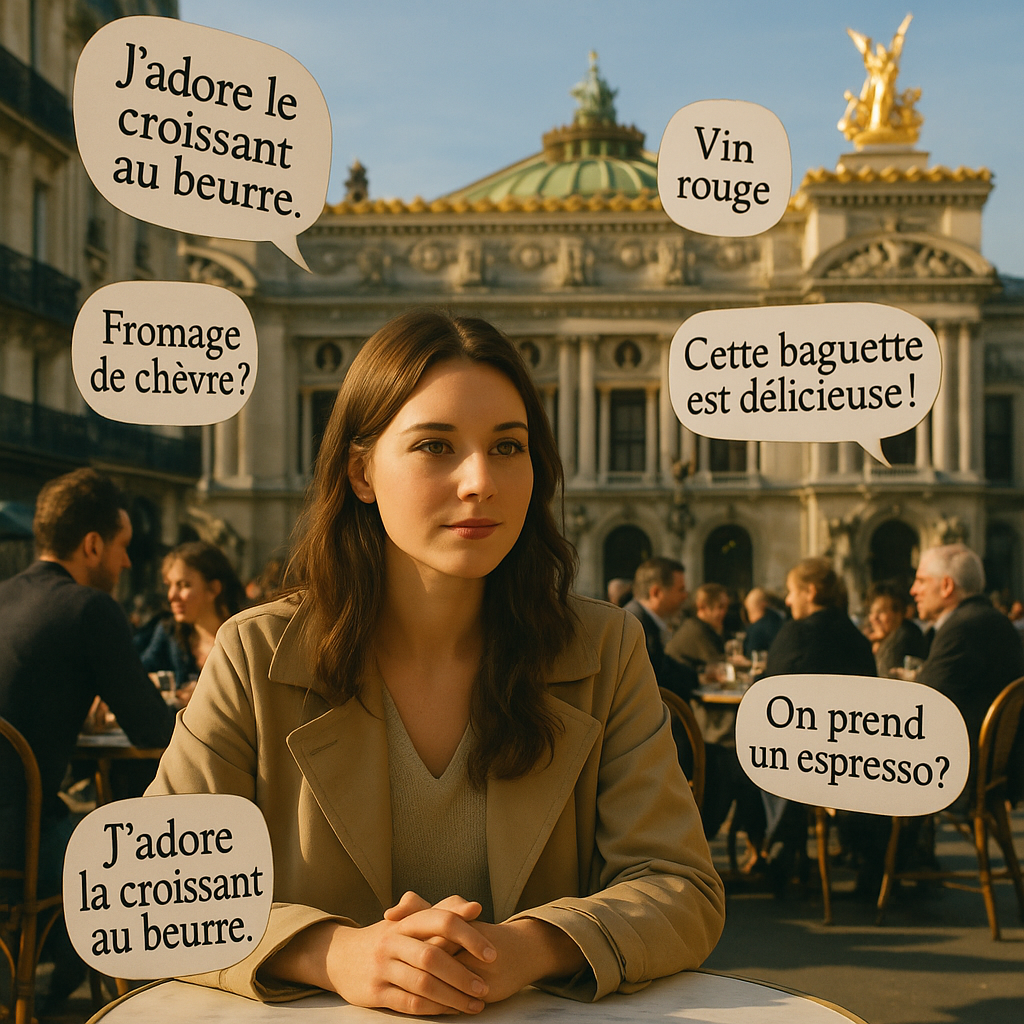
Picture yourself sitting at a sun-dappled table on a Parisian terrace. A gentle breeze carries the scent of baking bread, coffee, and something caramelizing to perfection in a distant kitchen. Around you, snippets of conversation float through the air—not about politics, business, or the weather, but about food. The best place for oysters in Normandy. The perfect balance of acidity in a vinaigrette. Whether a certain boulangerie’s baguette deserves its local reputation.
In France, talking about food is never merely about eating. It’s an art, a ritual, and a language of its own. French people don’t simply consume meals—they analyze them, debate them, praise them, critique them. Food discussions are woven into daily life, connecting friends, family, and even strangers around tables small and grand.
To outsiders, this devotion can seem extravagant. But for the French, it’s a natural extension of how they value beauty, craftsmanship, and the pleasures of the senses. Whether it’s discussing a simple roast chicken, the correct way to slice cheese, or the layered flavors of a Bordeaux wine, the conversation is never just about sustenance. It’s about heritage, artistry, and respect—for the ingredients, for the people who grow and prepare them, and for the rituals that elevate everyday life.
Learning how the French talk about food gives you a window into French culture, values, and language. It also provides you with practical vocabulary and expressions you’ll hear in markets, restaurants, and even casual social gatherings. So, whether you’re planning a trip to France, studying French for professional reasons, or simply fascinated by the country’s culinary mystique, understanding how the French talk about food is essential—and utterly delightful.
In this article, we’ll explore the expressions, rituals, and cultural attitudes that shape how French people discuss, celebrate, and even argue about food. We’ll uncover the vocabulary that goes far beyond “délicieux” and learn how food talk intertwines with identity, emotion, and community. Ready to feast on some linguistic and cultural insights? Let’s begin.
Part 1: Vocabulary and Expressions – Talking Like a Gourmand
Beyond “Bon Appétit”
Many learners know the classic Bon appétit! (“Enjoy your meal!”) But French food conversation is full of expressions that reveal deeper subtleties. Here are some you’ll hear often:
C’est un régal !
“It’s a treat!” Used when a dish is exceptionally good.Ça se mange sans faim.
“It’s so good you could eat it even if you’re not hungry.”C’est fondant.
“It melts in the mouth.” (Describing tender meats, chocolates, pastries.)Ça croustille.
“It’s crispy/crunchy.”C’est lourd.
“It’s heavy.” Often a polite critique of a dish that’s too rich.C’est léger.
“It’s light.” A compliment, especially for desserts.Un peu trop salé / sucré.
“A bit too salty / sweet.”Ça manque de…
“It lacks…” A polite way to critique a dish (e.g. “Ça manque de sel.”)Bien assaisonné.
“Well-seasoned.”C’est une tuerie ! (colloquial)
“It’s a killer!” Used for spectacularly good food.
French people delight in being precise about taste, texture, and balance. They avoid general words like “good” and instead reach for specific terms that describe mouthfeel, aromas, and aftertaste.
The Language of Pairings
The French are passionate about food pairings—particularly food and wine:
Accord mets-vins — The art of matching dishes and wines.
Un vin qui se marie bien avec… — “A wine that goes well with…”
Harmonieux — Describes a balanced pairing.
Un mariage réussi — “A successful match.”
At dinner parties, you might hear debates about which cheeses go best with which wines or whether a certain dish pairs better with white or red. It’s not snobbery—it’s cultural curiosity and pride in culinary tradition.
Talking About Cooking
French conversations often turn toward preparation methods:
Saisir la viande — “Sear the meat.”
Cuire à feu doux — “Cook on low heat.”
Blanchir — “To blanch.”
Napper de sauce — “Coat with sauce.”
Caraméliser — “To caramelize.”
Even casual cooks speak with a chef’s vocabulary, reflecting how deeply food knowledge is embedded in everyday life.
Part 2: Rituals and Respect Around Food
Meals as Sacred Time
In France, meals are not rushed. Lunchtime can still stretch over an hour—even two. Dinner is often an event, with several courses and lingering conversation. The idea of eating at your desk horrifies many French people.
At family meals, everyone waits for Bon appétit ! before starting. Eating before others arrive or before the host signals it’s time is seen as impolite. Conversation flows, but certain topics—like money or politics—may be avoided if they could disturb the enjoyment of the meal.
The Art of Eating Cheese
Cheese is almost a religion in France. Knowing how to talk about cheese—and how to serve it—is crucial.
Couper le fromage (cutting the cheese) must respect its shape. For example:
Round cheeses: Cut like slices of pie.
Log-shaped cheeses: Cut slices perpendicular to the length.
Wedge-shaped cheeses: Cut in wedges so each slice has a bit of rind and center.
Cheese is usually served before dessert, not after. And conversations about cheese often involve:
Affinage — The ripening or aging process.
Pâte molle / pâte dure — Soft or hard cheese texture.
Goût puissant — A strong taste.
Corsé — Robust or full-bodied flavor.
Dining Out: Restaurants and Etiquette
When dining out, French diners often discuss the menu in detail:
Tu prends quoi ? — “What are you getting?”
On partage ? — “Shall we share?”
C’est maison ? — “Is it homemade?”
Ça vient d’où ? — “Where does it come from?”
Waiters in France are professionals, and the relationship between server and diner carries mutual respect. Being polite, saying Bonjour and S’il vous plaît is essential.
Part 3: Cultural Attitudes – Food as Identity and Heritage
Regional Pride
French people often identify strongly with their regional culinary traditions:
A person from Lyon may boast of their city’s bouchons and quenelles.
Someone from Alsace might rave about choucroute garnie.
In Provence, conversations turn to bouillabaisse and olive oil.
When French people talk about food, they’re often talking about home, family, and personal history.
Respect for the Craft
In France, a chef, baker, or cheesemaker is not simply someone who cooks or sells food. They’re artisans who deserve respect:
Artisan boulanger — A baker who makes bread from scratch.
Maître fromager — Master cheesemonger.
Chef étoilé — Starred chef, recognized by Michelin.
The French admire not only the end product but also the skill and tradition behind it. Conversations about food often involve references to where it came from, who made it, and how.
The Importance of Quality
French people care deeply about quality ingredients:
Produits de saison — Seasonal products.
Produits locaux — Local products.
Bio — Organic.
Markets are lively places where vendors and customers chat about where vegetables were grown, how the fish were caught, or whether the strawberries are truly fraises de Plougastel.
Part 4: The Emotional Side of Food Talk
Food and Nostalgia
Food in France carries powerful emotional weight. Many expressions evoke memories:
Le goût de mon enfance.
“The taste of my childhood.”Comme faisait ma grand-mère.
“Like my grandmother used to make.”
Food connects people across generations and is a way of passing down culture and love.
Compliments and Criticism
French people appreciate honest feedback about food—but delivered tactfully. Compliments are specific and sincere. Criticism, if necessary, is polite and measured:
Ce n’est pas trop à mon goût.
“It’s not really to my taste.”Je préfère quand c’est plus…
“I prefer when it’s more…”
Being overly enthusiastic or exaggerating praise can come across as insincere.
Part 5: How to Practice Talking About Food
Want to sound more French when discussing food? Try these exercises:
Describe your meal every day. Even in your native language, practice describing taste, texture, and smell.
Read French menus. Note how dishes are described.
Watch French cooking shows. Shows like Top Chef France or Les Carnets de Julie are great for vocabulary.
Listen to French food podcasts. E.g. On Va Déguster.
Visit a French market. Observe how vendors and customers talk about produce.
Conclusion: More Than Just a Meal
For the French, food is so much more than what’s on the plate. It’s conversation, community, heritage, artistry, and respect. Learning how the French talk about food deepens not only your language skills but also your understanding of the values that shape French society.
So next time you sit down to a meal, take a moment to talk about it—the flavors, the ingredients, the memories it brings. You’ll not only sound more French—you’ll live more French.
FAQs
Q: Is it true French people talk about food all the time?
Yes! Food is a central topic of conversation, from casual chats to heated debates.
Q: How do I compliment food politely in French?
Use phrases like C’est un régal ! or C’est délicieux ! and be specific about what you liked.
Q: Why do French people avoid certain topics during meals?
Meals are sacred time for enjoyment. Topics that could cause stress or arguments—like politics or money—are often avoided.
Q: Is it rude to ask for substitutions in a French restaurant?
Generally, yes. In France, the chef’s vision for a dish is respected, and substitutions are uncommon.
Q: Do all French people know how to cook?
Not necessarily, but many have strong opinions about how things should be cooked!
Q: Why is cheese served before dessert?
It’s tradition. Cheese acts as a savory “pause” before finishing with something sweet.
Q: How do French people feel about fast food?
It’s popular among younger generations, but many older French people prefer traditional meals.
Q: Are food conversations only for gourmet meals?
No! Even simple meals can spark passionate discussions.
If you’re passionate about learning French not just as a language, but as a window into culture and daily life, Polyglottist Language Academy can help you dive deep. Our classes go beyond textbooks, immersing you in the language as it’s truly spoken—including the delicious world of French food talk!
👉 Ready to speak French like a local gourmand? Sign up for our classes today!
Check out our other blog articles for more fascinating insights into French language and culture:
Learning French For Travel: The Fast-Track Plan For Last-Minute Trips
When French Gets Philosophical: How To Talk About Life, Love, And Meaning
French For Abstract Thinkers: Expressing Complex Ideas Like A Native
Why Fluent French Isn’t Perfect French—And Why That’s A Good Thing
Street French Vs. School French: What You’ll Hear Vs. What You Learn
What Learning French Teaches You About English (Yes, Really!)
10 “Invisible Words” In Spoken French That Aren’t In Your Textbook
From Oui To Oops: The Funniest Mistakes French Learners Make (And What They Teach Us)
Bon appétit—and bonne lecture!