
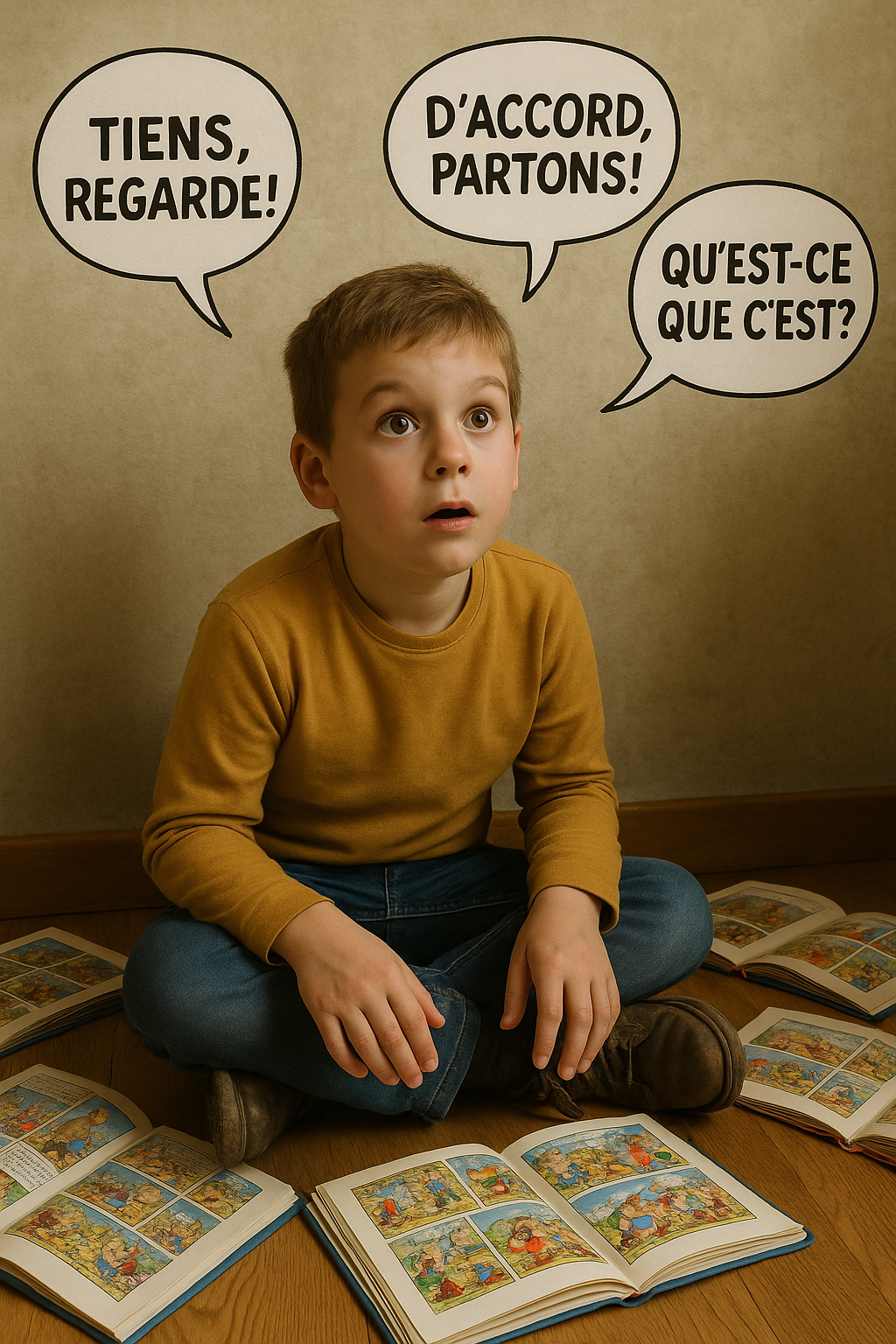
Introduction: Not Just for Kids
Think cartoons are just Saturday morning filler for kids munching cereal in front of the TV? Think again.
Imagine this: You’re sprawled on your couch in Oakland, Netflix cued up to a colorful animation. Characters with oversized eyes, exaggerated gestures, and catchy theme songs zip across the screen. It might look childlike, but listen carefully. There’s sophisticated humor. There’s clever wordplay. There’s a sly nod to French politics. There’s even philosophy.
French cartoons (dessins animés) have long been a mirror of French culture, creativity, and linguistic nuance. For language learners, they’re a goldmine—not only because they expose you to authentic spoken French but because they reveal the very heart of how the French see the world.
French animation is a vast universe. From the wacky misadventures of Astérix and Obélix, to the philosophical reflections in Les Mystérieuses Cités d’Or, to the stylish modern tales of Miraculous Ladybug, French cartoons offer stories that are funny, clever, and often deeply cultural. Even seemingly simple shows like Titeuf or Barbapapa reflect family life, schoolyard dynamics, or quintessentially French ways of dealing with life’s dilemmas.
Unlike some English-language cartoons, which often shy away from controversial topics, French animation often wades boldly into satire, social commentary, or cultural critique. Even children’s cartoons can tackle complex themes, teaching kids—and adults—how to navigate society, history, and relationships with an unmistakably French lens.
In this article, we’ll explore how French cartoons can be one of your best tools for learning the language and discovering the culture. We’ll discuss why cartoons work so well for language learners, highlight some classics and modern hits, and give you practical strategies for turning entertainment into education. Whether you’re a casual viewer or a serious language student, prepare to see cartoons in a whole new light.
So grab some popcorn—or perhaps a croissant—and let’s dive into the colorful, captivating world of French animation!
1. Why French Cartoons Are Fantastic for Language Learning
Natural Speech at a Manageable Pace
Cartoons are perfect for language learners because dialogue is typically clear and expressive. Characters often articulate words distinctly, making it easier to pick up pronunciation and intonation.
Unlike rapid-fire adult dramas or news broadcasts, cartoons tend to use shorter sentences and more visual context clues, helping you guess meaning even if you don’t understand every word.
Everyday Vocabulary and Slang
Even kid-friendly cartoons introduce useful everyday vocabulary and colloquial expressions you’ll never find in textbooks. Want to sound truly French? Shows like Titeuf or Les Sisters are loaded with real-life language used by kids and families.
Cultural Reference Points
Cartoons reflect the humor, values, and social norms of the culture that created them. Watching French cartoons exposes you to cultural touchstones—whether it’s national pride in Astérix, the urban Parisian life in Miraculous Ladybug, or the existential humor in Les Shadoks.
Motivation Through Entertainment
Learning French shouldn’t feel like a chore. Cartoons keep you engaged and entertained, making language acquisition feel less like homework and more like fun.
Visual Reinforcement
Because cartoons are visual, they help reinforce meaning. Facial expressions, gestures, and scene context all give clues that help you follow the story—even if you’re missing vocabulary.
2. Classic French Cartoons and What They Teach Us
Astérix le Gaulois
First appearance: 1959 (comic), with numerous cartoon adaptations since.
Astérix, the brave little Gaul, and his giant sidekick Obélix are cultural icons in France. The cartoons are a treasure trove for learners:
Historical vocabulary about Romans, Gauls, and ancient Europe.
Satirical humor poking fun at bureaucracy, foreign cultures, and politics.
Rich language full of puns and wordplay.
Watching Astérix helps you understand the French love for satire and their playful approach to history.
Les Shadoks
A surreal animated series from the late 1960s, Les Shadoks features strange bird-like creatures who speak in absurdist, repetitive language.
Why it’s useful:
Teaches the rhythm and sound of spoken French in a humorous, simplified way.
Exposes learners to dry, philosophical French humor.
Shows cultural acceptance of the absurd—a beloved aspect of French comedy.
Barbapapa
Created in the 1970s, Barbapapa features shape-shifting creatures and gentle storylines.
Good for:
Beginners, thanks to simple sentences and gentle pace.
Learning family vocabulary and everyday objects.
Understanding French ideas about harmony, community, and cooperation.
Les Mystérieuses Cités d’Or
This 1980s adventure series follows a Spanish boy searching for the mythical Cities of Gold in South America.
Language benefits:
Slightly more advanced dialogue for intermediate learners.
Historical and geographical vocabulary.
Exposure to complex narrative structures.
Culturally, it reflects French curiosity about history, adventure, and philosophical questions about civilization.
3. Modern French Cartoons Worth Watching
Miraculous Ladybug
One of France’s most internationally successful modern cartoons, Miraculous Ladybug follows Parisian teens Marinette and Adrien, who secretly fight supervillains as Ladybug and Cat Noir.
Great for learners because:
It’s contemporary, urban French—slang, teenage expressions, and modern cultural references.
It showcases daily life in Paris—school, friendships, romance.
The language level ranges from beginner-friendly conversations to more advanced storytelling.
Les Sisters
Based on a popular comic series, Les Sisters chronicles the hilarious daily battles and love between two sisters, Wendy and Marine.
Perfect for:
Learning informal family language and expressions.
Understanding sibling dynamics—a universal theme with a French twist.
Picking up conversational speech used by young people.
Titeuf
A hugely popular series about a spiky-haired boy navigating the trials of childhood and pre-adolescence.
Why watch it:
It’s loaded with colloquial language and slang.
Explores social issues, family relationships, and school life from a French child’s perspective.
Helps learners understand humor and irony in French culture.
Wakfu
An animated fantasy series that originated as a video game, Wakfu combines action, adventure, and humor.
Language benefits:
More complex dialogue, suitable for intermediate or advanced learners.
Rich vocabulary related to fantasy and adventure.
Introduces cultural themes of heroism, loyalty, and community.
4. Cultural Insights Hidden in Cartoons
French cartoons are not just entertainment—they’re cultural documents. Here’s what you’ll learn about the French mindset:
Satire and Humor: Even kid-friendly shows often poke fun at authority or social norms.
Love of History: Many cartoons blend fiction and history, reflecting French pride in their past.
Philosophy: French cartoons sometimes veer into existential questions or moral dilemmas—even for children!
Collective vs. Individual: Stories often emphasize community, solidarity, and working together.
Emotional Realism: Unlike some American cartoons that gloss over difficulties, French animation often depicts real emotional struggles and ethical decisions.
5. How to Use French Cartoons for Learning
Choose the Right Level
Beginners: Try Barbapapa or Les Sisters.
Intermediate: Go for Titeuf, Miraculous Ladybug, or Les Mystérieuses Cités d’Or.
Advanced: Dive into Astérix movies or Les Shadoks.
Use Subtitles Strategically
Start with French audio and French subtitles.
Progress to watching without subtitles as you grow comfortable.
Avoid relying on English subtitles—they can be misleading or too simplified.
Repeat and Shadow
Watch episodes multiple times. Repeat lines aloud (shadowing) to improve pronunciation and intonation.
Keep a Vocabulary Notebook
Note down phrases you hear repeatedly. Cartoons are great for learning idiomatic expressions.
Watch Short Clips
Even five-minute clips can be powerful language practice.
Don’t Get Discouraged
You won’t understand everything at first. Keep going—it’s about exposure, not perfection.
6. Why Cartoons Might Be Your Secret Weapon
Many adult learners feel embarrassed watching cartoons. Don’t be. French cartoons are:
Efficient Learning Tools: Short, focused bursts of language exposure.
Accessible: Many are on YouTube, streaming platforms, or official networks.
Fun: You’ll learn more when you’re entertained.
Culturally Insightful: Cartoons reveal the heart of how a culture sees itself—and others.
FAQs: Learning French with Cartoons
Q: Are French cartoons only for kids?
A: Absolutely not! Many French cartoons appeal to all ages, blending humor, philosophy, and satire that adults love.
Q: Can I really improve my French by watching cartoons?
A: Yes! Cartoons expose you to real spoken French, useful vocabulary, and cultural references. They’re one of the best ways to train your ear and improve comprehension.
Q: Which cartoon should I start with as a beginner?
A: Try Barbapapa or Les Sisters. They use simple sentences and everyday vocabulary.
Q: How often should I watch?
A: Even 10-15 minutes daily can boost your comprehension. Consistency matters more than long sessions.
Q: Should I watch with or without subtitles?
A: Start with French subtitles. As you improve, challenge yourself by removing them.
Q: Are cartoons better than movies for learning French?
A: Both are useful, but cartoons often speak more clearly, use simpler vocabulary, and offer visual clues that help you understand the story.
Q: Will I learn slang from cartoons?
A: Yes! Especially shows like Titeuf or Les Sisters are full of colloquial expressions and slang.
Q: Where can I find French cartoons online?
A: Check Netflix, YouTube, France Télévisions’ streaming apps, and DVD collections. Many shows have official YouTube channels.
Dive Into French Culture with Polyglottist Language Academy
At Polyglottist Language Academy, we believe learning French should be exciting and culturally rich. That’s why our courses integrate media like cartoons, films, and music to bring French to life—not just as a language, but as a vibrant culture.
Our small-group and private classes help you navigate spoken French, understand cultural references, and gain the confidence to converse naturally. Whether you’re a total beginner or brushing up on advanced skills, we’ll help you achieve fluency—and have fun doing it.
Join Polyglottist Language Academy today!
Check Out More Articles on Our Blog!
Continue exploring the fascinating world of French language and culture: