
Why French People Love Talking Politics at Dinner (and How to Join In)
Introduction: The Symphony of Debate Over Boeuf Bourguignon
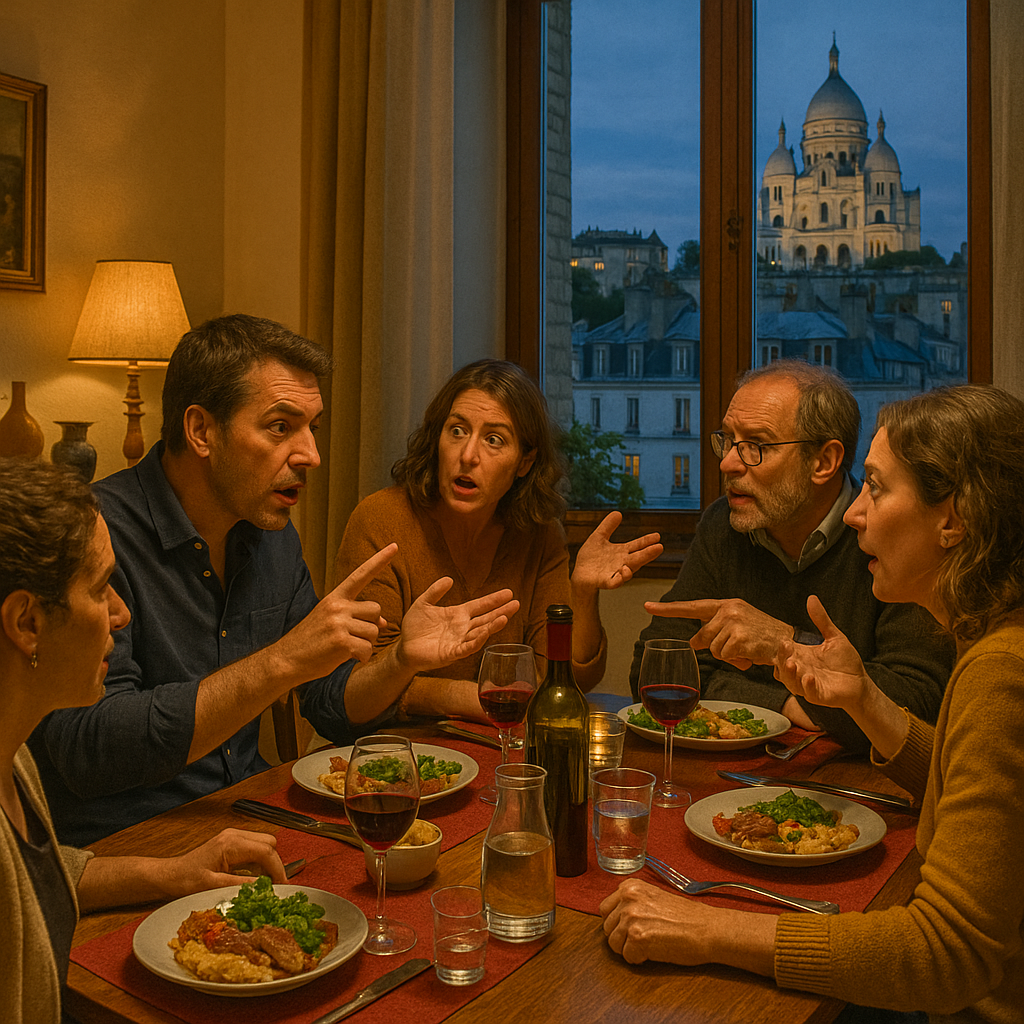
Picture this: you’re invited to a dinner party in Paris. The table is set with crisp linen napkins, flickering candles, and glasses brimming with red wine. Delicious aromas drift from the kitchen—garlic, thyme, and sizzling duck confit. You lean in, expecting conversations about art, cuisine, or perhaps weekend plans.
Instead, your host suddenly declares, “Macron est un président technocratique!” Across the table, someone responds, “Ah non, pas du tout, c’est bien plus compliqué!” Forks pause midair. Voices rise, hands gesticulate. The atmosphere sizzles—not just from the boeuf bourguignon but from the passionate debate now spiraling into tax reform, social justice, and the European Union.
Welcome to the world of French dinner table politics.
For many foreigners, this can feel shocking. Isn’t dinner supposed to be polite? Aren’t politics too personal? In many cultures, political talk is taboo—something best avoided in polite company. Not so in France. Here, politics isn’t just tolerated at the dinner table—it’s practically a sport.
French people love discussing politics because:
They value debate as a sign of intelligence.
They see politics as intertwined with daily life.
Historical events have made political consciousness part of national identity.
They genuinely enjoy intellectual sparring.
The result? Dinner conversations in France are lively, passionate, and sometimes heated—but rarely taken personally. Disagreeing is part of connecting, not a cause for estrangement.
If you’re a language learner or a traveler in France, joining these conversations can feel intimidating. What if you say the wrong thing? What if you offend someone? The good news is: French people respect those who engage—even imperfectly—in debate. They admire curiosity, thoughtful arguments, and a willingness to listen.
In this article, we’ll explore:
Why politics is such a beloved dinner topic in France
Historical and cultural roots of this phenomenon
Typical political topics you might encounter
How to join in confidently—and respectfully
Essential phrases and strategies for navigating political debates
So pour yourself a glass of Bordeaux, pull up a chair, and let’s dive into why French people can’t help themselves from turning dinner into a spirited political salon.
Politics as a French National Pastime
In France, discussing politics is more than chatter—it’s practically a civic duty.
The Intellectual Tradition
French culture celebrates l’esprit critique—critical thinking. From philosophers like Voltaire and Rousseau to today’s public intellectuals, the French value:
Questioning authority
Debating ideas
Analyzing social structures
Even casual conversations are infused with references to history, philosophy, and policy. Debating politics demonstrates:
Intelligence
Engagement with society
Personal conviction
Historical Context
France’s turbulent history has left deep political scars:
The French Revolution (1789) reshaped notions of citizenship, rights, and the role of the state.
Successive republics, monarchies, and empires fostered skepticism toward authority.
The May 1968 protests left a lasting culture of political activism.
These events ingrained the idea that politics is everyone’s business. French people often see silence as complacency.
Politics and French Identity
To many French citizens, political debate is tied to identity and civic pride.
Voting is viewed as sacred.
Citizens are proud to express political opinions—even in private settings.
Political alignment often shapes social circles, news consumption, and cultural references.
Discussing politics isn’t taboo—it’s a way of participating in democracy.
The Dinner Table as a Forum
Why do French people choose dinner as their political stage? Because mealtimes are sacred—and deeply social.
Meals Are Community Rituals
A typical French dinner:
Lasts 2–3 hours
Includes multiple courses
Encourages lively conversation
While Americans might prefer safe small talk, French dinners are built for depth and debate.
Food and Debate Go Hand in Hand
There’s a historical connection between food and revolutionary thinking:
Salons of the Enlightenment featured both intellectuals and lavish meals.
Cafés were hotbeds of revolutionary planning.
Parisian bistros remain places for passionate discussions.
For French people, a meal without debate can feel incomplete.
What Topics Come Up?
At a French dinner, politics might appear in many forms. Typical topics include:
National Politics
Presidential approval ratings
Pension reform
Labor strikes
Tax policies
Social Issues
Immigration
Secularism (laïcité)
Feminism and gender equality
Environmental policies
European Union
France’s relationship with Brussels
The eurozone economy
Border policies
International Affairs
U.S. elections
Middle East conflicts
Global climate agreements
Local Issues
Mayoral elections
Housing prices
School reforms
French Debate Style: Passionate but Polite
French political debates are often:
Animated and loud
Filled with interruptions
Supported by references to news articles, statistics, or philosophers
Conducted with rhetorical flair
However, there’s a crucial rule:
Disagreement ≠ personal attack.
French people can argue fiercely, then clink glasses and move on. It’s rarely personal.
The Risk of Going Too Far
Despite the openness, certain lines shouldn’t be crossed:
Personal insults
Overly aggressive tone
Ignoring social signals when people want to change topics
French people love debate—but they also appreciate tact.
How to Join In: Tips for Non-French Speakers
Listen First
If you’re new to French dinner debates:
Observe the rhythm of conversation.
Notice how people disagree politely.
Pick up vocabulary and phrases.
Ask Questions
Show curiosity rather than asserting strong opinions:
“Pourquoi tu penses ça ?” (Why do you think that?)
“Tu peux expliquer un peu plus ?” (Can you explain a bit more?)
French people appreciate engaged listeners.
Share Personal Observations
Even beginners can contribute:
“Aux États-Unis, c’est différent…” (In the U.S., it’s different…)
“J’ai lu un article qui disait…” (I read an article that said…)
Sharing perspectives makes you part of the conversation.
Be Ready for Rapid Fire
French discussions are fast-paced. Don’t be discouraged if:
People interrupt
You miss parts of the conversation
Someone challenges your viewpoint
Stay calm. It’s all part of the game.
Stay Neutral on Sensitive Topics (If Unsure)
While debate is welcome, certain topics can become heated:
Immigration
Religion
National identity
If you’re not confident, it’s wise to observe rather than dive in deeply.
Useful Phrases for Political Debate
Expressing Opinion
“Je pense que…” – I think that…
“À mon avis…” – In my opinion…
“Je ne suis pas d’accord.” – I don’t agree.
Disagreeing Politely
“Oui, mais…” – Yes, but…
“Je vois ce que tu veux dire, mais…” – I see what you mean, but…
“C’est plus compliqué que ça.” – It’s more complicated than that.
Seeking Clarification
“Comment ça ?” – How so?
“Peux-tu expliquer ?” – Can you explain?
“Pourquoi dis-tu ça ?” – Why do you say that?
Softening Your Language
“Il me semble que…” – It seems to me that…
“Je crois que…” – I believe that…
“Je ne suis pas sûr, mais…” – I’m not sure, but…
Cultural Differences: French vs. American Dinner Talk
American Style
Avoids politics in polite company
Sticks to safe topics (weather, sports)
Values harmony over confrontation
French Style
Embraces debate
Views disagreement as stimulating
Sees political discussion as intellectual exercise
Why You Should Join In
Engaging in French political conversations:
Deepens your understanding of French culture
Builds vocabulary for real-life topics
Helps you connect on a meaningful level
Demonstrates respect for local customs
Don’t be afraid. Even mistakes show courage—and earn respect.
Learning French for Real-Life Conversations
If you dream of confidently joining French dinner debates, consider:
Practicing debate vocabulary
Watching French news channels
Reading French newspapers
Participating in language exchange groups
Courses like those at Polyglottist Language Academy help students:
Understand political vocabulary
Learn cultural references
Practice polite disagreement
Build confidence in conversational settings
FAQs About French Dinner Table Politics
Q: Is it rude to talk about politics in France?
A: Not at all. It’s expected and even enjoyed, especially during meals.
Q: What if I don’t speak French fluently?
A: That’s okay! Ask questions, listen carefully, and contribute what you can. French people appreciate effort.
Q: Are political discussions in France always heated?
A: They’re often lively, but not necessarily hostile. Disagreement is normal and rarely personal.
Q: What topics should I avoid?
A: Religion and immigration can be sensitive. Approach cautiously unless you’re sure of your ground.
Q: Do French people expect foreigners to share opinions?
A: They love hearing outside perspectives but won’t force you to join in. Listening is perfectly acceptable.
Q: How can I prepare to discuss politics in French?
A: Read news in French, learn debate phrases, and practice discussing current events.
Q: Will disagreeing offend French people?
A: No—if done politely. Debate is seen as engaging, not rude.
Q: Are there regional differences in how politics is discussed?
A: Parisians may be more direct. Smaller towns might be slightly more reserved, but political talk is widespread.
Ready to Dive Into French Debates?
At Polyglottist Language Academy, we believe that learning French is more than memorizing verbs—it’s about connecting with real people and real conversations.
Our French classes:
Teach authentic conversation skills
Explore cultural insights, including dinner-table debates
Help you speak with confidence—even about politics!
Why settle for textbook French when you could be holding your own over boeuf bourguignon?
👉 Sign up for our French classes today!
And if you’re hungry for more fascinating insights into French culture and language, check out these articles on our blog: