
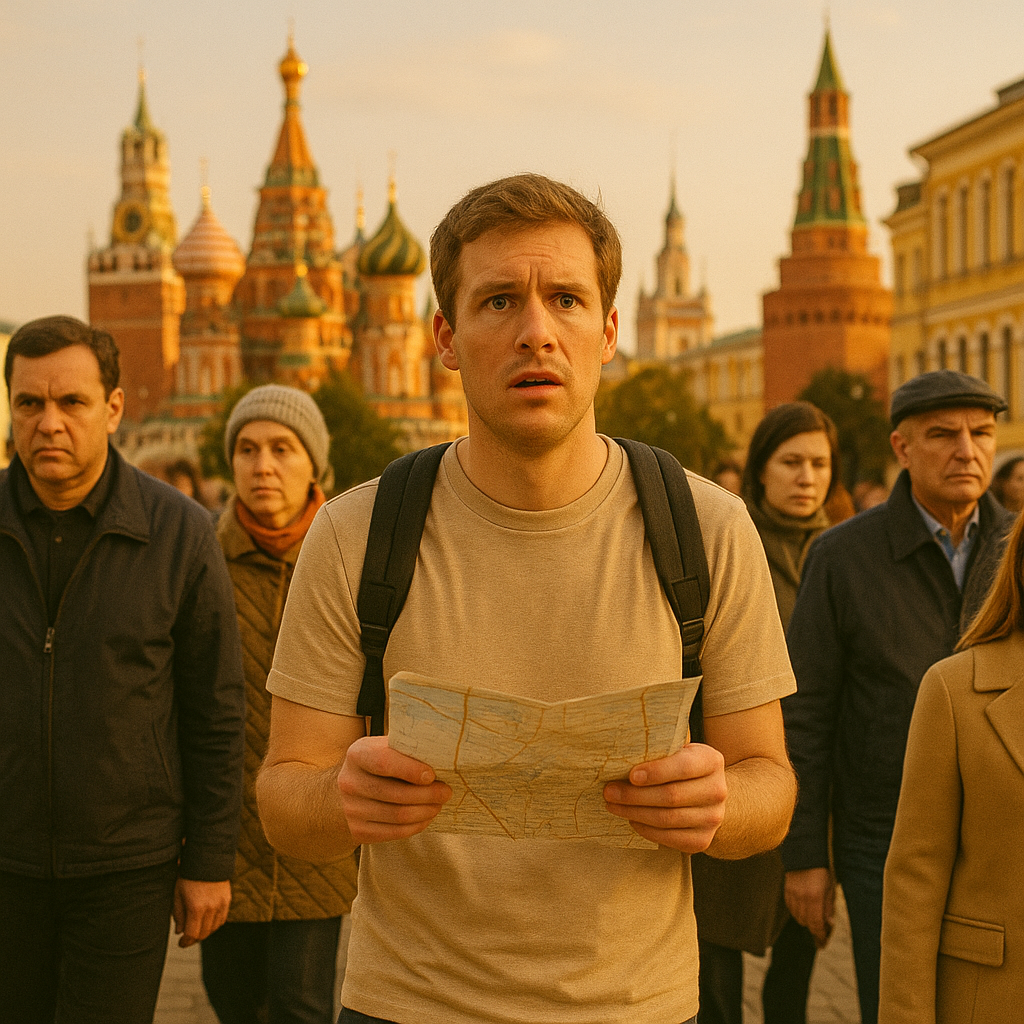
Why do Russians seem distant in public? And why do Americans feel awkward abroad? Learn how Russians approach personal space, silence, and social cues—and what it teaches us about cultural norms.
Introduction: When Silence Isn’t Awkward and Staring Isn’t Rude
You’re in a Moscow metro car. It’s packed, silent, and everyone is staring straight ahead—or at you. No one is smiling. No one is making small talk. If someone accidentally brushes against you, they don’t say “sorry.” You feel tense, maybe even a little offended.
But look closer.
That silence? It’s intentional. That expressionless face? It’s neutral, not angry. That lack of chit-chat? It’s respect for your peace and autonomy.
For Americans, public life in Russia can feel disorienting. We’re used to smiling at strangers, saying “excuse me,” and filling awkward silences with small talk. But in Russian culture, the unspoken rules of public space are different—quiet, reserved, observant, and deeply ingrained.
Understanding how Russians navigate public space isn’t just about etiquette—it reveals an entire cultural mindset. It shows how Russians manage privacy, express respect, and prioritize function over friendliness. And it highlights why Americans often feel “cold-shouldered” in Russia, while Russians may find American friendliness suspicious or overwhelming.
In this deep-dive, we’ll explore the social codes that govern Russian public life: why people don’t smile, how they manage personal space, what counts as polite, and what Americans often misread. By the end, you’ll not only know what to expect—you’ll also gain valuable insight into a culture that expresses warmth in ways that don’t always look familiar.
Part 1: Silence, Stillness, and the Russian Respect for Space
1. Silence Is Golden—Not Awkward
In Russian public life, silence isn’t a void to fill. It’s a form of respect. On buses, in elevators, and even in cafes, the default mode is quiet observation. People don’t strike up conversations with strangers unless necessary. Talking loudly in public is often seen as childish, self-centered, or inconsiderate.
🧠 Why it matters: Americans often interpret silence as discomfort or coldness. But for Russians, it signals maturity and composure. You don’t impose your energy on others unnecessarily.
2. Facial Expressions Are Reserved in Public
If you walk through a Russian street smiling at everyone, you may be viewed as naïve or even a bit odd. In Russian culture, smiling at strangers isn’t a social reflex—it’s a meaningful gesture reserved for genuine connection.
A blank or serious expression in public isn’t unfriendly. It’s a sign that you’re focused, composed, and not performing emotion for strangers.
🧠 Cultural contrast: In the U.S., smiling is often used to appear approachable. In Russia, it's used to reflect actual feelings. A Russian might think, “Why smile at someone I don’t know and have no reason to be happy with?”
3. Personal Space Is Managed Differently
In Russia, the concept of personal space is more fluid. People will often stand closer in lines, lean in on public transport, or push past without apology—especially in urban settings.
This isn’t rude. It’s practical. In crowded conditions, constant apologies and maneuvering would be inefficient.
But ironically, while physical closeness is tolerated, emotional distance is maintained. People may stand shoulder to shoulder on a train but never make eye contact or speak.
🧠 Tip: Don’t expect verbal apologies for jostling. Just adjust and blend in—it’s not personal.
Part 2: Why Americans Often Feel Out of Place
1. The “Friendly Stranger” Script Doesn’t Translate
In the U.S., casual social cues like smiling, small talk, and eye contact create a shared sense of friendliness. Saying “Hi” to the cashier, making weather-related remarks, or complimenting a stranger’s shirt is part of our cultural default.
In Russia, this kind of behavior can feel intrusive or fake. Russians tend to value sincerity over social grease. A compliment from a stranger may raise eyebrows. Friendly chatter with someone you’ve just met can feel overly familiar.
🧠 Outcome: Americans in Russia often feel ignored or brushed off. Russians in the U.S. may feel pressured to perform friendliness they don’t feel.
2. Over-Apologizing and Over-Thanking Can Seem Excessive
Americans often say “sorry” and “thank you” reflexively, even for minor things: brushing someone’s shoulder, receiving a napkin, or passing by. In Russia, these words are reserved for meaningful moments.
Over-apologizing or over-thanking may make you seem overly eager or emotionally needy. A Russian may wonder: “What are they apologizing for? They didn’t do anything wrong.”
🧠 Strategy: Save “sorry” and “thank you” for when you really mean it. Russians appreciate authenticity over politeness theater.
3. Loudness Is Associated with Immaturity
American tourists are often easy to spot: not just by accent, but by volume. Speaking loudly in public is considered impolite in many Russian contexts. It draws unnecessary attention and is seen as a disruption to the shared social environment.
Russians tend to speak more softly in public, especially in enclosed spaces.
🧠 Tip: Dial it down. Adapting to a quieter volume helps you blend in—and be taken more seriously.
Part 3: How Russians Use Public Space as Shared Territory
1. “Mind Your Own Business” as a Social Virtue
Russians tend to take a hands-off approach to public behavior. If someone is dressed unusually or talking to themselves, others won’t interfere. There’s no impulse to “check in,” comment, or confront.
The logic? Everyone has their own struggles. Let people be. Don’t stare, don’t interfere, and don’t insert yourself unless someone is clearly in danger.
🧠 Takeaway: Mind your own business is not indifference—it’s respect for privacy in shared space.
2. Function Over Form
Public behavior in Russia tends to prioritize function over aesthetic. You won’t see people grinning through discomfort or pretending everything is fine. If someone is tired, they’ll show it. If they’re irritated, they won’t hide it behind pleasantries.
That applies to dress, too: comfort and utility are often prioritized over presentation in everyday life.
🧠 Don’t mistake practicality for coldness. Russian public demeanor may seem unadorned, but it’s sincere.
3. Public Space Isn’t for Making Friends—It’s for Getting Somewhere
In American culture, we often treat public space as a potential site for connection. “You never know who you’ll meet!” In Russian culture, public space is about getting from A to B. People are courteous, but not looking to make new friends in line at the post office.
🧠 Adjust expectations. In Russia, warmth is expressed in private, trusted contexts—not in random public interactions.
Part 4: What Americans Can Learn From the Russian Approach
1. Privacy Is a Form of Respect
While Americans often equate friendliness with respect, Russians flip the script: respect is not imposing on others. You don’t need to smile, engage, or comment. You just need to give others their psychological space.
2. Stillness Isn’t Cold—It’s Composed
Stillness, silence, and lack of expression in public aren't signs of emotional distance. They reflect a cultural value of self-possession, emotional restraint, and maturity.
3. Friendliness Doesn’t Always Equal Connection
In the U.S., warmth is the starting point. In Russia, it’s the reward for closeness. Russian friendships are deep, loyal, and enduring—but they’re built over time, not sparked by a compliment or smile.
FAQs: Russian vs. American Public Behavior
Q: Is it true that Russians never smile in public?
A: Not never—but rarely. Smiles are used sincerely, not automatically. They’re reserved for people you know or genuinely warm moments.
Q: Why don’t Russians apologize when bumping into someone?
A: In crowded spaces, apologies aren’t expected for minor contact. It’s seen as normal rather than rude.
Q: Do Russians think Americans are “too friendly”?
A: Some do. Over-friendliness can be interpreted as superficial or insincere, especially early in a relationship.
Q: How should I behave on public transport in Russia?
A: Be quiet, avoid eye contact, move efficiently, and don’t expect casual conversation. Be alert and respectful.
Q: Are Russians less polite than Americans?
A: Not at all. Their definition of politeness is different: it’s about respect for boundaries, not overt friendliness.
Interested in Russian Culture and Language? Join Polyglottist Language Academy
At Polyglottist Language Academy, we teach more than just Russian grammar. Our courses help you:
Understand real-world cultural norms
Navigate Russian spaces with confidence and awareness
Speak authentically and respectfully in any setting
Decode subtle social cues that textbooks miss
Join our small-group or private classes in Berkeley, Oakland, San Francisco—or study online from anywhere in the world.
👉 Ready to learn Russian the smart, cultural way? Sign up for a Russian class today at Polyglottist Language Academy.