
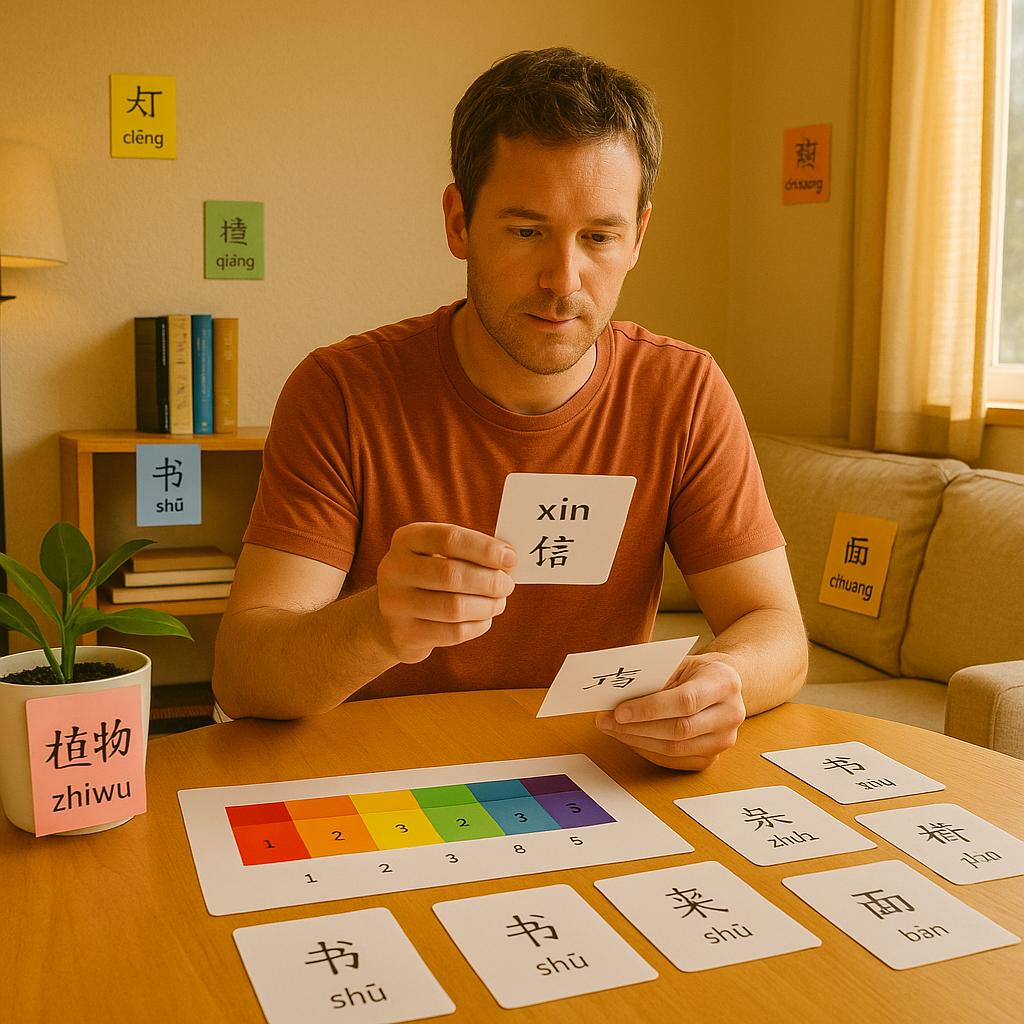
How to use images, color, and spatial memory to learn Mandarin faster and more effectively
🧠 Introduction: See It, Learn It—Why Visual Learners Have an Edge in Mandarin
If you're a visual learner, you probably know it already. You remember faces better than names. You organize your life with color-coded calendars. And you’ve always preferred maps over written directions.
So what happens when a visual learner starts studying Mandarin Chinese—a language that’s famously tonal, character-based, and so different from English that it can feel like landing on another planet?
Surprisingly, you might actually have a hidden advantage.
Mandarin is a visually rich language. From the characters (汉字) that evolved from ancient pictographs, to the tonal system that can be represented graphically, there are countless ways for visual learners to excel. The key is using the right tools and strategies that align with how your brain processes information.
Whether you’re just starting your Mandarin journey or trying to break out of the intermediate plateau, this article will guide you through the most effective tools and techniques for visual learners. With the right approach, Mandarin doesn’t have to feel abstract or overwhelming—it can become intuitive, colorful, and even fun.
🎨 Best Mandarin Learning Tools for Visual Learners
1. Pleco App with Character Stroke Diagrams
Pleco is more than just a dictionary—it’s a visual learning powerhouse. Its stroke order animations show you exactly how each character is written, which reinforces both memory and handwriting.
Bonus for visual learners: Use the “clipboard reader” to visually follow along with longer passages while tapping unfamiliar words for instant lookup.
2. Skritter for Writing and Retention
Skritter is designed to teach you how to write Chinese characters, stroke by stroke. It uses spaced repetition and real-time visual feedback to help you remember not just what a character means—but how it looks, feels, and flows.
You’ll build muscle memory while engaging your visual-spatial processing.
3. Color-Coded Tone Charts and Flashcards
Mandarin has four main tones, and for visual learners, color-coding them can make all the difference:
1st tone (high-flat): red
2nd tone (rising): orange
3rd tone (falling-rising): green
4th tone (falling): blue
Make flashcards using these colors to anchor tones to visual cues. Some learners even highlight characters in textbooks using these tone colors.
4. Animated Videos and Story-Based Learning
Watch Chinese shows, cartoons, or animated short stories with subtitles in both characters and pinyin. Visual learners benefit from seeing facial expressions, gestures, and context, which reinforce vocabulary and grammar naturally.
Great platforms include:
YoYo Chinese (video-based courses)
Netflix (choose Chinese-language shows with subs)
YouTube channels like Mandarin Corner or Shuoshuo Chinese
5. Infographic-Based Grammar Guides
Instead of dense grammar explanations, try using visual grammar posters or infographics. These simplify complex concepts into flowcharts, tables, or diagrams. Search for visual breakdowns of sentence structures, question forms, or verb patterns.
Sites like Pinterest or language learning blogs often share these for free.
6. Mind Mapping for Vocabulary and Radicals
Use tools like XMind or Miro to create digital mind maps of vocabulary clusters. Visualizing how words connect (e.g., food → fruit → apple, orange, banana) helps your brain store and retrieve language more efficiently.
Also try mapping Chinese radicals, the building blocks of characters, to better decode unfamiliar characters.
7. Use Stickers and Labels in Your Home
Print or write Mandarin labels for household objects—door (门), mirror (镜子), fridge (冰箱), etc. Seeing these daily creates visual immersion without extra effort. It’s low-tech but incredibly effective.
💡 Bonus Tips for Visual Mandarin Learners
Make your own visual flashcards with hand-drawn characters and illustrations.
Highlight pinyin and tones in different colors in your notebooks.
Track your progress visually with charts or apps that show streaks and milestones.
Record vocabulary in themed notebooks with tabs, stickers, or sketches for added memory boosts.
❓ FAQ: Visual Learning and Mandarin
Q: Are Chinese characters too hard to memorize?
A: Not for visual learners! Characters often have visual clues and logic. With tools like Skritter and radical charts, you can remember them as visual stories.
Q: Do I still need to learn pinyin as a visual learner?
A: Absolutely. Pinyin is the foundation for pronunciation. Use it in combination with visuals—like colored tone marks—to lock in pronunciation.
Q: Can I learn Mandarin without writing characters?
A: You can focus on speaking first, but visual learners often enjoy writing characters—it becomes an art form and a memory tool.
Q: How long does it take to notice progress with visual learning tools?
A: Most learners notice improvement in retention and recognition within weeks, especially if they study consistently and visually reinforce daily lessons.
Q: What if I’m not artistic?
A: No need to be! Even simple color codes, icons, or diagrams can transform abstract information into something concrete and memorable.
🏫 Want to Learn Mandarin Your Way?
At Polyglottist Language Academy, we understand that not everyone learns the same way. That’s why our Mandarin classes are tailored to suit different learning styles—including visual learners. Our instructors use images, diagrams, color cues, and character-writing techniques to help you absorb Mandarin more intuitively.
📍 Join our small-group or private classes in Berkeley or online from Oakland, San Francisco, San Jose, or from anywhere.
👉 Click here to enroll today and learn Mandarin in a way that finally makes sense to your brain.
📚 Keep Exploring: Mandarin Tips and Cultural Insights
What To Expect In Your First Adult Mandarin Class (And Why You’ll Love It)
How Mandarin Can Boost Your Career In The Bay Area Tech And Business Scene
Why Learning Mandarin As An Adult Is More Doable Than You Think
From Dumplings To Dialogues: How To Speak Mandarin At Bay Area Restaurants
Best Mandarin Classes For Busy Professionals In The Bay Area