
How to Survive Your First French Dinner Party
Introduction: More Than Just a Meal
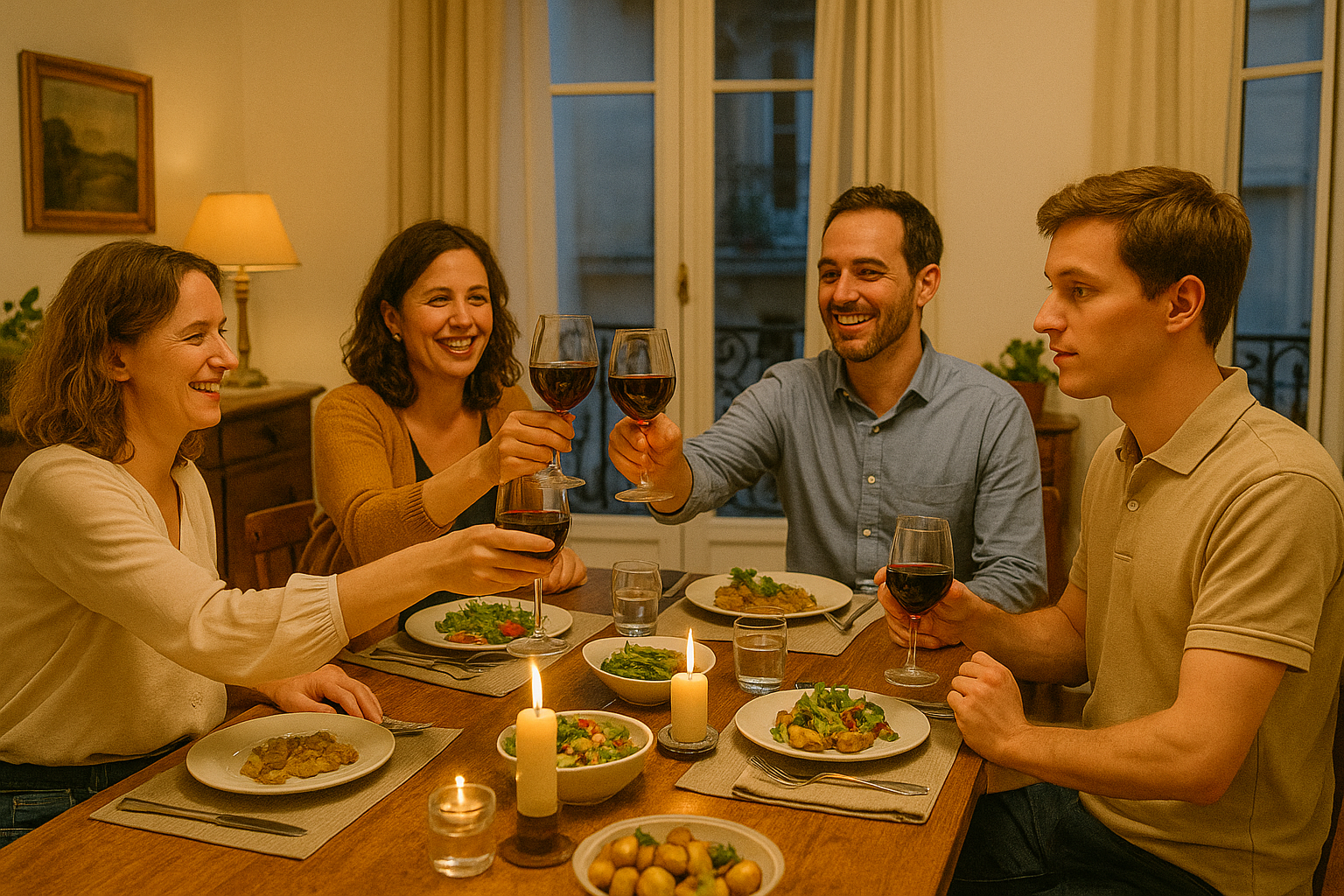
Imagine receiving an invitation to a French dinner party. You’re excited, maybe even a little honored. After all, being invited to un dîner—not a casual lunch, not drinks at a bar, but a full-on dinner in someone’s home—is no small thing in France. It means you’re not just a tourist anymore. You’re being welcomed into a core part of French life.
But as the evening approaches, the nerves set in. What time should you arrive? What should you bring? Will you be expected to speak French the whole time? What if you accidentally commit a faux pas and offend the host—or worse, the cook?
Don’t panic. You’re not alone.
French dinner parties are renowned for their structure, sophistication, and layers of unspoken etiquette. They’re not formal in the stiff, tuxedo-wearing sense (though they can be), but they are structured. There are expectations—some explicit, many unwritten—that govern everything from conversation topics to how you hold your wine glass.
For Americans and others accustomed to informal gatherings and buffet-style grazing, the formality and ritual of a French dinner party can come as a surprise. But understanding the rules isn’t about restricting your behavior—it’s about knowing how to show respect, connect meaningfully, and enjoy one of the most rewarding social experiences France has to offer.
In this guide, you’ll learn exactly how to navigate your first French dinner party—from the moment the invitation arrives to the final bonne nuit. Whether you're living in France, visiting friends, or learning the language and culture from afar, this is your roadmap to surviving—and savoring—your seat at the table.
Part 1: Before the Party—What to Know and What to Bring
1. Don’t Arrive Early
In France, arriving on time actually means arriving 10–15 minutes late. Showing up early might catch your host still prepping in the kitchen—and that’s considered awkward. If you're running more than 20 minutes late, do send a quick message to let them know.
2. Always Bring a Gift
A small gift is expected. Common options include:
A bottle of wine (ask if it should be served with dinner or saved for later)
A box of chocolates
A bouquet of flowers (avoid chrysanthemums—they’re for funerals)
A good-quality candle or tea
Try to avoid bringing dessert unless you’re specifically asked to. French hosts typically plan the entire menu in advance, and surprise additions can disrupt the flow.
3. Dress with Casual Elegance
Think polished but not flashy. Jeans may be okay in casual settings, but avoid sneakers or overly sporty attire. French style favors muted tones and tailored silhouettes. Aim to look effortlessly well put-together.
Part 2: The Flow of the Evening—Course by Course
French dinners often follow a classic sequence:
Apéritif (Pre-dinner drink)
You’ll be offered a small drink—wine, champagne, or kir (white wine with blackcurrant liqueur)—alongside light snacks like olives, nuts, or small toasts. This is a warm-up for the main meal, not the time to fill up.Entrée (Starter)
Often something light: a salad, pâté, quiche, or soup.Plat principal (Main dish)
The centerpiece of the meal—meat or fish, often with seasonal vegetables. Vegetarian dishes are becoming more common, but still not a given.Fromage (Cheese course)
Served after the main dish and before dessert. Expect at least three types of cheese, usually with bread (not crackers). Do not cut off the "nose" (pointed end) of a wedge of cheese—it’s a known faux pas.Dessert
Often homemade or from a local pâtisserie. This might be a tart, mousse, or fruit-based dish.Digestif (After-dinner drink)
Optional, but frequently offered—think cognac, Armagnac, or herbal liqueurs like Chartreuse.
Part 3: Conversation Etiquette—What to Say (and Not to Say)
1. Start with Polite Small Talk
The first course is not the time to launch into political debates. Start with light, respectful topics like travel, books, cinema, or the food itself.
2. Avoid Overly Personal Questions
Unlike Americans, the French generally avoid talking about work at the dinner table. Steer clear of money, religion, or asking what people do for a living—unless it comes up naturally.
3. Be Ready for Spirited Discussion
Once the meal is underway, don’t be surprised if the conversation gets philosophical or politically charged. This isn’t considered rude—it’s a form of intellectual play. You can disagree, but do so with tact and logic, not emotion.
4. Let Everyone Speak
Don’t dominate the conversation. French dinner talk is like a well-orchestrated roundtable—everyone should get a chance to shine.
Part 4: Table Manners and Body Language
Keep your hands visible on the table—rested near your plate, not in your lap.
Don’t start eating until the host says “Bon appétit!”
Break your bread by hand, not with a knife.
Use utensils properly—knife in the right hand, fork in the left.
Finish everything on your plate unless you have a compelling reason not to.
Offer compliments sincerely, but sparingly—too much praise can seem insincere.
Part 5: After Dinner—When and How to Leave
French dinner parties can last 3–5 hours, often ending well past midnight. If you need to leave early, say so at the beginning. Otherwise, wait for natural cues that the evening is winding down—dessert has been served, digestifs poured, conversation slowed.
When you leave, thank your host warmly:
Merci beaucoup pour cette soirée—c’était vraiment délicieux et très agréable.
(Thank you so much for this evening—it was truly delicious and very enjoyable.)
Follow up with a message the next day to express your thanks again. It’s a small gesture that goes a long way in French hospitality.
FAQs
Q: Can I speak English at a French dinner party?
A: If your host invited you knowing you’re a learner, speaking some French will be appreciated—but many guests may switch to English to make you feel comfortable. Don’t be afraid to try!
Q: Is it okay to refuse certain foods?
A: Yes, but politely. Say “Je suis désolé(e), je ne mange pas de…” (I’m sorry, I don’t eat…). Most hosts will understand, though it’s best to let them know dietary restrictions ahead of time.
Q: How formal are French dinner parties really?
A: It depends on the host. Some are very relaxed, others more traditional. When in doubt, err on the side of politeness and formality.
Q: Should I bring wine? What kind?
A: Yes, wine is a safe and appreciated gift. A bottle of red from a respected French region (like Bordeaux, Rhône, or Burgundy) is a classic choice. Ask the host if it should be served with the meal or saved for another occasion.
Q: Can I help clean up?
A: Offer once (“Je peux aider ?”), but don’t insist. In many cases, the host will politely refuse. Helping too much can make them feel like they’ve failed in their role as host.
Q: Is it okay to toast?
A: Absolutely. Wait for the host or someone else to start the toast, then raise your glass, make eye contact, and say “Santé !”
Q: Do I need to bring a host gift every time?
A: Yes, for a dinner party in someone’s home, it’s expected—even if it’s your second or third time being invited.
Q: What if I don't drink alcohol?
A: No problem. Politely decline by saying “Je ne bois pas d’alcool, merci.” Most hosts will have alternatives.
Want to Feel More at Home at the French Table?
At Polyglottist Language Academy, we don’t just teach grammar and vocabulary—we teach you how to live in the language. From navigating a French dinner party to mastering real conversation, our classes are designed to prepare you for real-world cultural interactions.
Whether you’re in Berkeley, Oakland, San Jose, Marin—or joining us online—you’ll find expert instruction, warm community, and plenty of real-life French that goes beyond the textbook.
👉 Sign up for a class today and make your next dinner party in France a confident, delicious success.
You Might Also Like:
📘 French Etiquette 101: Do’s And Don’ts For Visitors
🎧 Thinking Of Moving To France? 10 Things To Know Before You Go
🤔What To Pack For France: A Seasonal Guide For Smart Travelers
😂 How Much French Do You Really Need To Know For A Trip?
🇫🇷 How To Blend In While Traveling In France (Hint: It's Not Just About Clothes)
🔡 How Polyglottist Language Academy Makes French Learning Feel Like Travel
📚 Bay Area French Cafés, And Cultural Events You’ll Love
🛍️The French Riviera: Where Writers, Painters, And Celebrities Found Paradise