
Rice or Noodles? The Surprising Differences Between Northern and Southern Chinese Cuisine
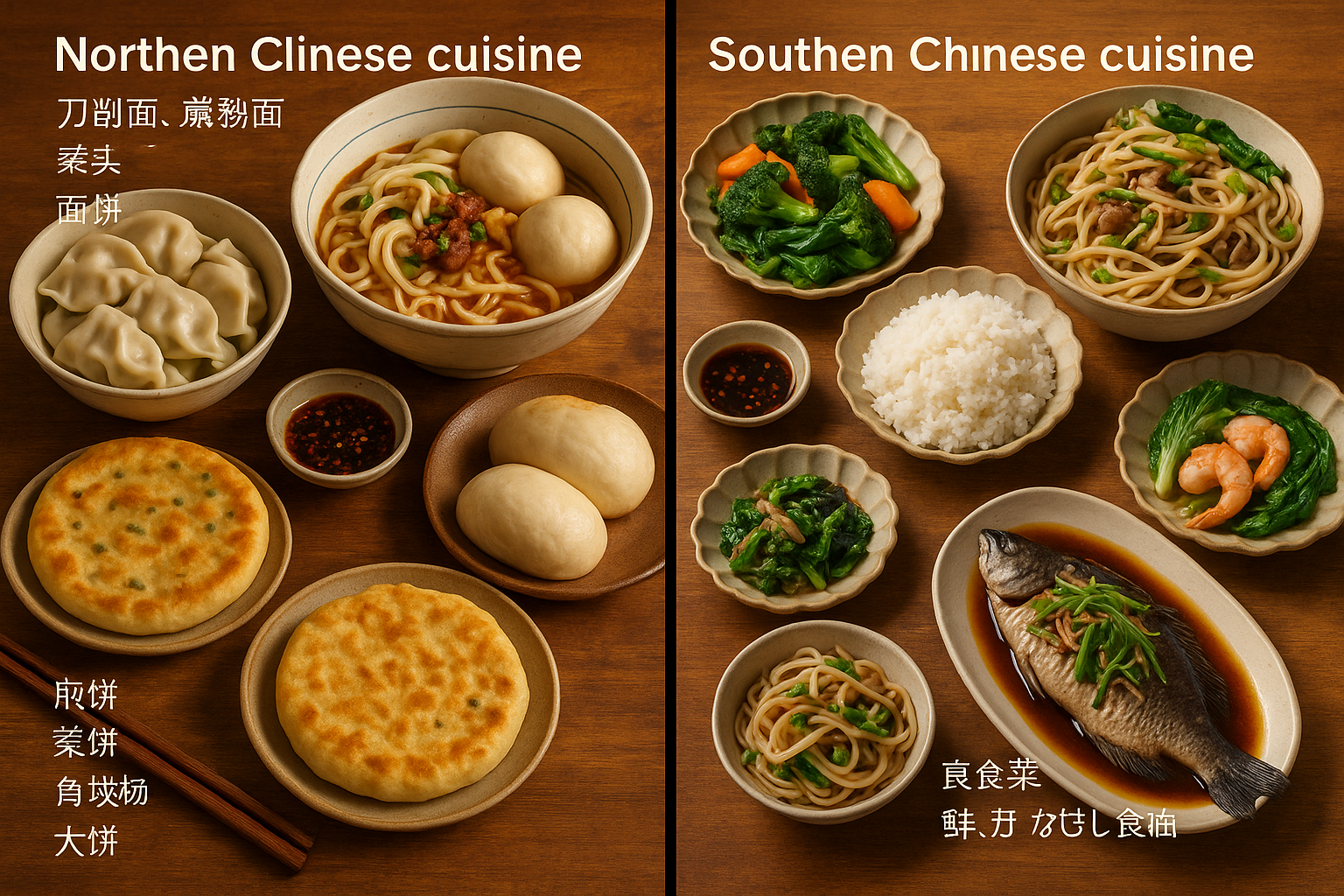
How geography, climate, culture, and history shape two distinct (and delicious) culinary worlds in China.
Introduction: A Country United by Chopsticks, Divided by Grains
“Have you eaten yet?” may be the Chinese equivalent of “How are you?”—but depending on where you are in China, the answer might look very different on the plate.
Travel north, and you’ll find hearty hand-pulled noodles, steamed buns, dumplings, and rich, savory sauces. Travel south, and suddenly you’re in the land of fragrant rice, delicate seafood, stir-fried greens, and subtly layered flavors.
If you’ve ever wondered why Chinese food can feel so wildly different from one city to the next, you’re not imagining it. Northern and Southern Chinese cuisine are not just two sides of the same coin—they’re two culinary philosophies shaped by geography, climate, agriculture, and centuries of cultural development.
In fact, the north-south food divide is one of the most defining—and fascinating—aspects of Chinese culture. It affects what people eat, how they cook, how they socialize, and even what they consider “comfort food.”
So, are you a noodle lover or a rice devotee? Or maybe both? In this deep-dive guide, we’ll explore the key differences between Northern and Southern Chinese cuisines, the historical and cultural reasons behind them, and what you need to try if you want to experience the full flavor spectrum of this enormous country.
Let’s dig in.
1. Geography Shapes the Pantry
Northern China: Wheat Fields and Cold Winters
The north includes provinces like:
Beijing
Tianjin
Hebei
Shanxi
Inner Mongolia
Shandong
Shaanxi
The terrain here tends to be flat and dry, with harsh winters and shorter growing seasons. Historically, wheat was easier to grow than rice, and that shaped the cuisine.
Staples of the North:
Noodles (刀削面, 拉面)
Steamed buns (馒头)
Dumplings (饺子)
Pancakes (煎饼)
Flatbreads (大饼)
Meals in the north are often hearty, salty, and filling—designed to keep people warm and fueled through cold seasons.
Southern China: Rivers, Rain, and Rice Terraces
The south includes regions like:
Guangdong
Guangxi
Fujian
Hunan
Jiangxi
Zhejiang
Yunnan
These areas are warmer and wetter, perfect for rice cultivation, vegetables, tropical fruits, and freshwater seafood. The cuisine here emphasizes freshness, balance, and lighter flavors.
Staples of the South:
White rice (米饭)
Rice noodles (米粉, 河粉)
Stir-fried vegetables
Fresh fish and shellfish
Soy-based sauces and subtle aromatics
Meals in the south are typically lighter and more delicate, with an emphasis on freshness and natural taste.
🌾 In short: North = wheat and warmth. South = rice and refinement.
2. Iconic Dishes That Tell the Story
What to Eat in the North
Beijing zhajiangmian (炸酱面): Wheat noodles with soybean paste and pork
Lamb skewers (羊肉串): Popular street food with cumin and chili
Dumplings (水饺): Especially during Chinese New Year
Roujiamo (肉夹馍): Shaanxi’s “Chinese hamburger”
Shandong pancakes: Crispy, layered, and perfect for savory fillings
What to Eat in the South
Dim sum (点心): Cantonese bite-sized dishes served with tea
Sweet and sour pork (糖醋里脊): A balance of flavors perfected in southern kitchens
Guilin rice noodles (桂林米粉): A southern breakfast classic
Dongpo pork (东坡肉): Braised pork belly from Hangzhou
Wonton soup (馄饨汤): Light, clear, and comforting
Each dish reflects more than just local ingredients—it carries the weight of climate, trade routes, and historical preference.
3. Flavor Profiles: Bold vs. Subtle
Northern Cuisine
Bold, salty, and savory
Heavy use of soy sauce, vinegar, and garlic
Often meat-heavy, especially lamb and pork
Pickled vegetables are common due to cold winters
Southern Cuisine
Balanced, layered, and fresh
Emphasis on umami with lighter seasoning
Sweetness and sourness more common
Greater variety of vegetables and seafood
Think of it this way:
Northern dishes announce themselves with bold flavors and sturdy textures.
Southern dishes reveal themselves with complexity and refinement.
4. Dining Customs and Culture
North
Meals are often centered around dumplings or noodles, especially for holidays.
Family meals are warm, social, and filling—perfect for cold evenings.
“Face” (mianzi) is shown through hosting abundant, hearty meals.
South
Emphasis on presentation and elegance in both home and restaurant meals.
Tea culture is stronger in the south, especially in places like Guangdong and Fujian.
Meals are more seasonal, reflecting market-fresh availability.
🎎 Even dining table layouts differ—Southern banquets often feature more courses, while Northern meals may focus on larger, shared portions.
5. Regional Cuisine within the Divide
In the North:
Shandong cuisine: Savory, crisp, with an emphasis on seafood and vinegar
Shaanxi cuisine: Noodle-rich, bold flavors, heavy chili and garlic
Beijing cuisine: Imperial dishes, roasted meats, and dumplings
In the South:
Cantonese cuisine (Guangdong): Light, sweet, and steamed
Fujian cuisine: Soups, seafood, and fermented sauces
Hunan cuisine: Spicy, sour, and intense—often mistaken for Sichuan
Zhejiang cuisine: Balanced, mild, with a focus on seafood and freshness
🍽️ Each region tells its own culinary story—but the north-south split is the underlying theme.
6. How to Experience Both on One Trip
If you’re planning a visit to China, the best way to truly understand this culinary contrast is to build it into your itinerary.
Sample Itinerary:
Days 1–4: Beijing (Northern cuisine)
Try zhajiangmian, dumplings, lamb skewers
Day 5–6: Xi’an (Shaanxi cuisine)Eat roujiamo, biangbiang noodles, and liangpi
Days 7–10: Guangzhou or Hong Kong (Southern cuisine)Explore dim sum, rice congee, steamed fish
Days 11–14: Hangzhou or GuilinSavor Dongpo pork, rice noodles, and seasonal greens
🧳 Tip: Internal flights or high-speed trains make this culinary tour possible in under two weeks.
7. What Does This Mean for Mandarin Learners?
Northern and Southern dialects (and even vocabulary for food) can differ significantly, so understanding local terminology helps:
面 (miàn) – noodles (common in the North)
饭 (fàn) – rice or meal (more prominent in the South)
饺子 (jiǎozi) – dumplings
粉 (fěn) – rice noodles (used more in Southern cuisine)
粥 (zhōu) – congee or rice porridge
Knowing which terms to use where helps you order food with confidence and understand the culinary context of each region.
FAQs: North vs. South in Chinese Cuisine
Is it really a strict divide—rice in the South and noodles in the North?
Not completely. You’ll find rice in the North and noodles in the South, but the dominant grain and food culture do tend to follow this pattern historically and culturally.
Which cuisine is spicier?
Generally, Southern regions like Hunan and Sichuan are known for heat, while most Northern food is milder or focused on salty/umami profiles.
Is Cantonese food the same as Southern food?
Cantonese cuisine is one branch of Southern food, known for its subtle seasoning, fresh seafood, and emphasis on steaming.
Are there big differences in how food is cooked?
Yes. Northern cuisine uses more boiling, stewing, and roasting, while the South favors stir-frying, steaming, and braising.
Which cuisine is more vegetarian-friendly?
Southern cuisine often features more vegetables and tofu, making it slightly easier for vegetarians. However, meat is common in both.
Can I experience both cuisines in one city?
Yes—in big cities like Shanghai, you’ll find restaurants from across the country. But the best regional food is found in its home province.
Does dialect affect food names?
Sometimes! For example, the word for “wonton” is 馄饨 (húntún) in Mandarin, but it may be pronounced differently or written differently in regional dialects.
Is one cuisine healthier than the other?
Southern cuisine is often considered lighter and more vegetable-focused, but both offer healthy options depending on preparation.
Want to Taste—and Talk—Your Way Through China?
Whether you’re craving fluffy baozi in Xi’an or fragrant rice dishes in Hangzhou, knowing even a bit of Mandarintransforms your culinary adventure. You’ll be able to:
Order like a local
Read menus with confidence
Ask vendors about ingredients
Appreciate the culture behind the cuisine
At Polyglottist Language Academy, we offer Mandarin classes for food lovers, travelers, and curious learners—both online and in-person across the Bay Area. Join us and bring your taste for adventure to life with language.
👉 Sign up today to start learning Mandarin and discovering the stories behind every bite of Chinese cuisine.
📚 Explore More from Our Blog:
What To Expect In Your First Adult Mandarin Class (And Why You’ll Love It)
How Mandarin Can Boost Your Career In The Bay Area Tech And Business Scene
Why Learning Mandarin As An Adult Is More Doable Than You Think
From Dumplings To Dialogues: How To Speak Mandarin At Bay Area Restaurants
Best Mandarin Classes For Busy Professionals In The Bay Area