
What French Dining Etiquette Reveals About French Values
Introduction: More Than Just a Meal
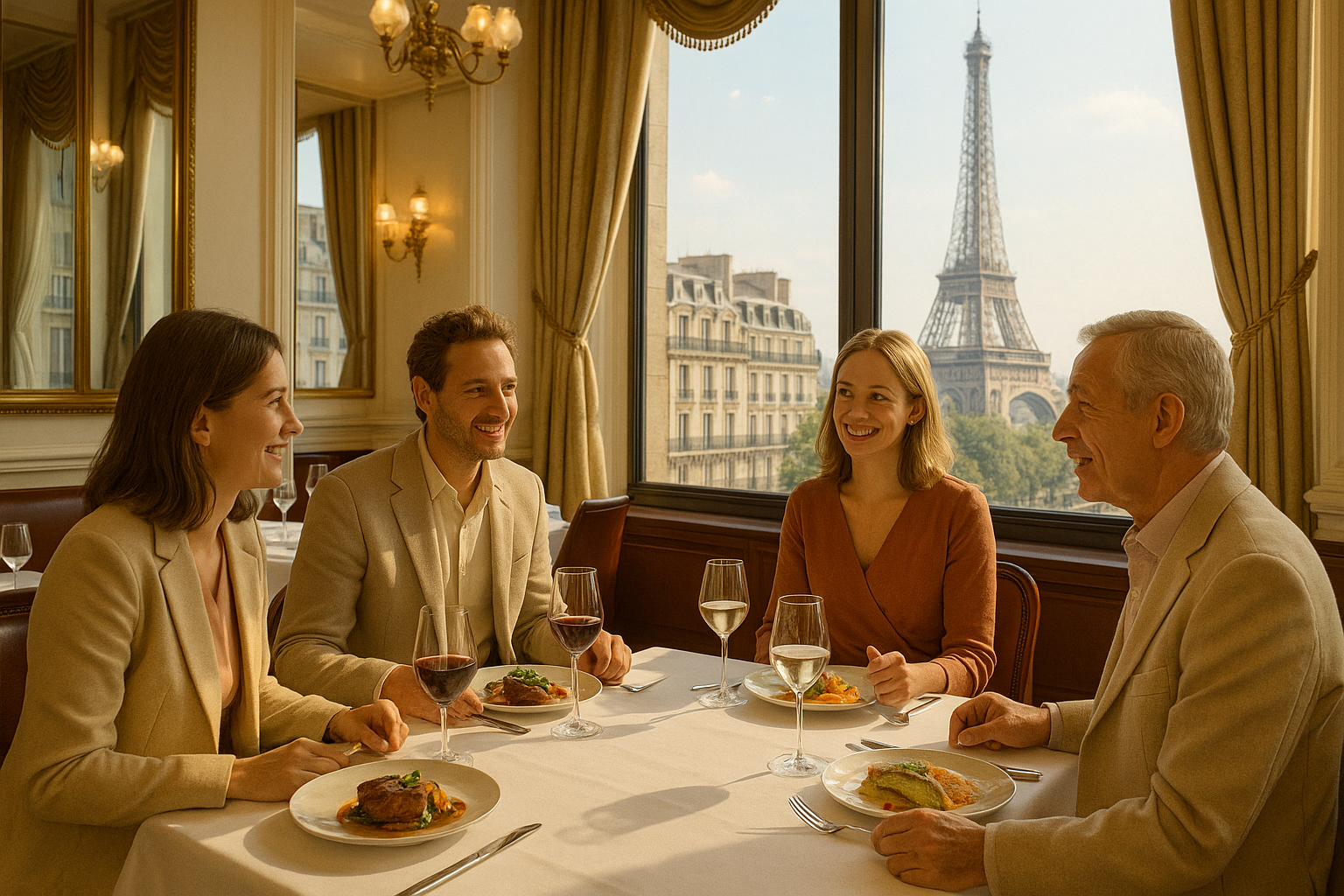
Step into a French dining room at 8:00 PM. The table is impeccably set. The glasses are polished. The bread has its own plate. There’s likely a bottle of wine breathing. Conversation flows—not about work or the latest gadget, but about ideas, news, art, politics, or the food itself. No phones are on the table. No one’s in a rush. The meal might last two hours. It might last four. What’s clear from the very first bite is that this is more than dinner—it’s a ritual, a performance, a way of life.
To the French, how you eat is as important as what you eat. Dining is an art form and a deeply social act. It is where manners, culture, and values converge—elegantly, consistently, and sometimes, quite unspokenly. If you’re invited to a French home or dine in a French restaurant, you’re not just eating—you’re stepping into a centuries-old cultural tradition.
Why does dining etiquette matter so much in France? Because it reflects something deeper: respect for the moment, for others, for history, and for beauty. Whether it's how you cut your cheese, where you place your hands, or what time you arrive, each tiny rule tells you something about what the French value—and what they expect from one another.
In this article, we’ll go far beyond forks and knives. We’ll explore the surprising insights French dining etiquette gives us into French social structure, relationships, time, conversation, and national identity. If you’ve ever felt awkward at a French table—or you’re planning your next trip and want to do it right—this cultural deep dive will help you savor every moment.
Part 1: Punctuality (and Tardiness) Says It All
In the U.S., arriving 10 minutes early is polite. In Germany, it’s expected. But in France? Arriving on time for a dinner party can actually be awkward.
There’s a tradition—especially when dining at someone’s home—of arriving about 10 to 15 minutes late. Why? Because coming exactly on time might catch your host still preparing, and arriving too early can be seen as intrusive. Those few extra minutes signal that you understand the rhythm of the evening. It shows respect for the host’s space and time.
But make no mistake: this unspoken rule doesn’t mean that time is casual. It means it’s curated. The French view social time not as mechanical, but as something intentional and organic. Everything has its moment—and rushing it would ruin the experience.
Part 2: Table Setting as Social Code
The typical French table is a lesson in understated precision. You’ll notice:
No napkins in laps before everyone is seated. Wait for the host’s cue.
Forks and knives placed just-so. Forks face down, knives to the right.
Bread placed directly on the tablecloth, not on a plate.
Hands visible at the table, resting on the edge—not in your lap.
These are not arbitrary customs. Each one signals a key value.
Visibility of hands comes from old European traditions of openness and trust—if your hands are visible, you're not hiding anything (literally or figuratively). Bread on the table? It represents rustic hospitality and cultural memory. Tablecloths serve as both a literal and symbolic canvas for the shared experience to unfold.
Part 3: The Sacred Sequence of Courses
A traditional French meal unfolds like a symphony: measured, refined, deliberate.
The classic sequence includes:
Aperitif – light drinks and small nibbles to stimulate conversation and appetite
Entrée (starter) – often something cool or light
Plat principal (main course) – the star of the meal
Fromage (cheese course) – yes, after the main
Dessert – modest and never overwhelming
Digestif – optional, often a small liqueur
The meal is paced with conversation and pauses, not just to enjoy each dish but to honor the social space the meal creates. The French approach to eating reveals a core value: pleasure must be savored, not rushed.
Unlike the grab-and-go culture so common in other countries, French meals are about presence, not productivity.
Part 4: Conversation Rules (and Subtleties)
French dining isn’t just about food—it’s about dialogue. But beware: this is not the time to bring up your job title or gym routine.
Here’s what French people value in dinner table conversation:
Ideas over anecdotes – talk politics, art, philosophy, or global issues
Wit over small talk – humor is prized, but so is cleverness
Debate over agreement – disagreement is welcome, if it’s thoughtful
Balance over domination – don’t monopolize. Ask questions. Take turns.
Talking too much about money or asking personal questions too soon can seem gauche. The table is a space to demonstrate who you are intellectually, not just biographically.
Part 5: How You Eat Matters
Let’s talk about physical etiquette:
Cut and eat one bite at a time. Don’t slice up your whole plate at once.
Use a knife and fork for most things, even pizza or fruit in formal settings.
Don’t butter bread like a roll. Tear a piece, butter just that piece.
Don’t over-compliment. One or two sincere compliments are enough—gushing can seem insincere.
These behaviors are less about rules and more about harmony. French table manners are designed to make the meal graceful, elegant, and fluid. It’s about being in sync with others.
Part 6: Why French Dining Is So Different
So why is French etiquette so carefully maintained—even in casual meals?
Because for the French, meals are one of the last sacred rituals of daily life. The dining table is a space where:
Tradition is preserved
Time is reclaimed
Social bonds are renewed
Aesthetic pleasure is shared
Compare this to many Anglo cultures where meals are sometimes utilitarian: rushed, multi-tasked, solo. In France, eating alone is fine, but eating without joy or care is almost taboo.
Meals are not something to “get through”—they’re something to celebrate.
Part 7: Restaurants, Cafés, and “Rules” Abroad
Dining out in France comes with its own etiquette expectations:
Don’t expect constant waiter attention. In France, servers give you space.
Don’t ask for substitutions. Menus are viewed as curated offerings, not pick-and-choose options.
Always greet the staff. Say bonjour when entering and au revoir when leaving.
Take your time. Meals are meant to be lingered over. Rushing is discouraged.
Ask for the check. Waiters won’t bring it until you request it—it’s considered impolite to rush you.
Even in cafés, where things are more casual, time is treated with dignity. Nursing a coffee for an hour is perfectly acceptable. You’re not paying for the drink—you’re paying for the space.
Part 8: What This Reveals About French Values
French dining etiquette isn’t just about doing things “correctly.” It expresses values that shape the national psyche:
Aesthetics matter. From plating to table setting, beauty enhances life.
Time is precious. Meals are one of the few areas where time is respected rather than optimized.
Intellect is social. Conversation over meals is a showcase of thought, not just personality.
Tradition matters. Etiquette links the present with the past—meals become a form of continuity.
Restraint is elegance. Too much, too fast, too loud—these are signs of vulgarity, not abundance.
By following the etiquette, you’re not just showing respect. You’re participating in a shared cultural philosophy.
FAQs
Q: Is it really rude to put your hands in your lap in France?
A: Yes, in formal settings, it’s considered more polite to keep your hands visible, resting lightly on the table. It signals openness and engagement.
Q: Should I bring a gift if invited to a French home?
A: Absolutely. Wine, flowers (but not chrysanthemums), or chocolates are appropriate. Avoid arriving empty-handed.
Q: Is it rude to ask for the check quickly in a French restaurant?
A: It’s not rude, but it breaks the unspoken rhythm of the meal. Waiters won’t bring it unless asked, as they don’t want to seem like they’re rushing you.
Q: Can I decline cheese or wine if I’m full or don’t drink?
A: Yes, but do so gracefully. Say something like, “Je suis désolé, je n’ai plus de place” (Sorry, I don’t have any room left). It’s about politeness, not pressure.
Q: What if I accidentally break a rule?
A: Most French people are forgiving of foreigners who are clearly trying. Making an effort to observe etiquette is more important than perfection.
Q: Do kids in France learn this etiquette too?
A: Yes—early and consistently. Children are taught to sit properly, wait their turn to speak, and eat with utensils from a young age.
Q: Is it okay to leave food on my plate?
A: It’s better to finish what you take, especially in someone’s home. But leaving a tiny bit can signal you’re full without being wasteful.
Q: Can I toast with water?
A: Traditionally, no—it's considered bad luck. If you don’t drink alcohol, just raise your glass and smile.
Savor Language and Culture with Us
At Polyglottist Language Academy, we know that language is only part of the story. To truly speak French, you need to live French—and that includes knowing how to dine like a local, understand cultural signals, and connect over meals and conversation.
Our French classes, offered in the San Francisco Bay Area (Berkeley, Oakland, San Jose, Marin) and online, go beyond the textbook. We teach you how to speak with nuance, listen with understanding, and appreciate the full beauty of French culture—table manners included.
👉 Sign up today and discover how to live the language, not just learn it.
Hungry for More? Explore These Posts:
📘 French Etiquette 101: Do’s And Don’ts For Visitors
🎧 Thinking Of Moving To France? 10 Things To Know Before You Go
🤔What To Pack For France: A Seasonal Guide For Smart Travelers
😂 How Much French Do You Really Need To Know For A Trip?
🇫🇷 How To Blend In While Traveling In France (Hint: It's Not Just About Clothes)
🔡 How Polyglottist Language Academy Makes French Learning Feel Like Travel
📚 Bay Area French Cafés, And Cultural Events You’ll Love
🛍️The French Riviera: Where Writers, Painters, And Celebrities Found Paradise