
Why Russians Love Poetic Toasts: Language, Emotion, and Social Bonding
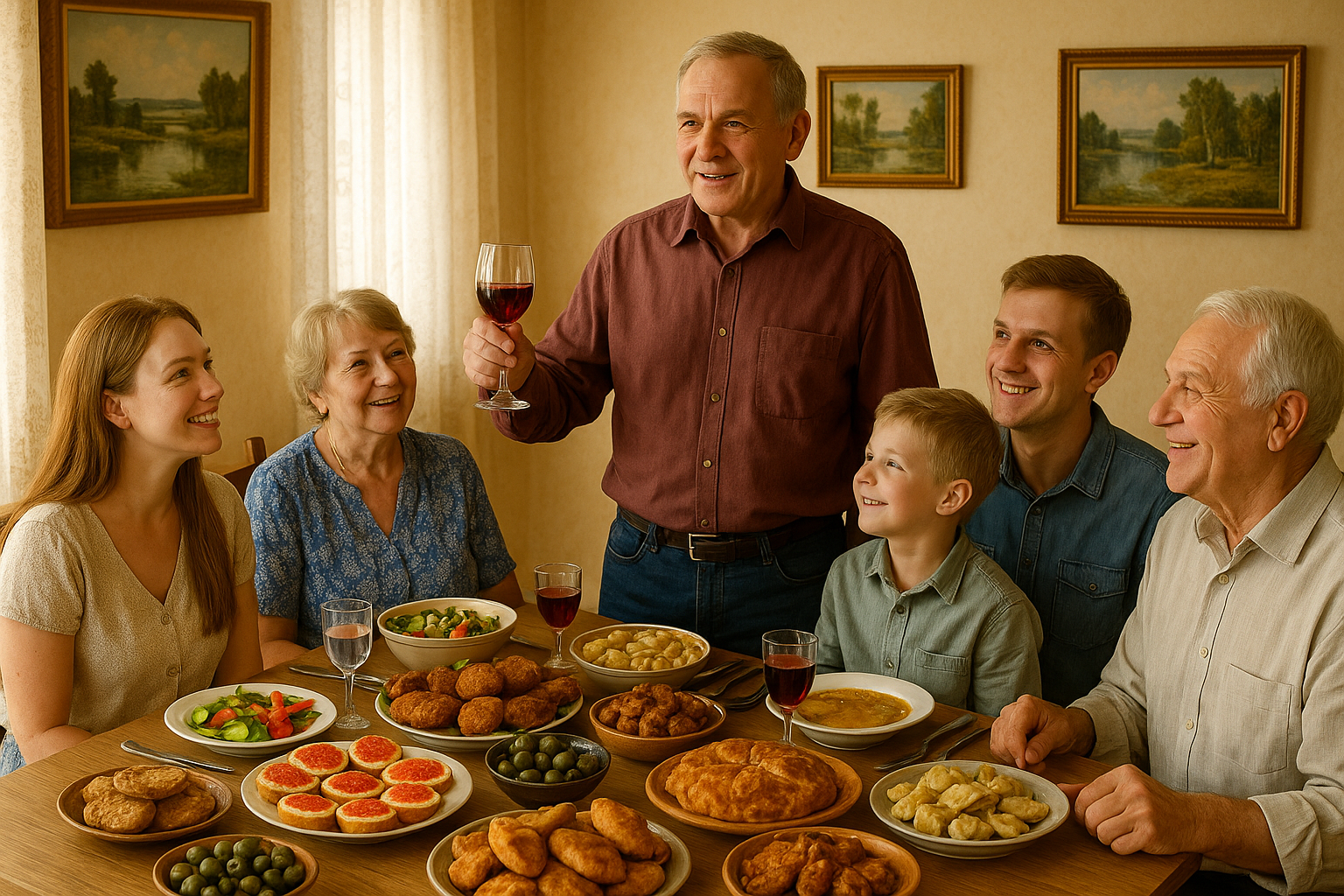
Discover why poetic toasts are central to Russian culture. Learn how language, tradition, and emotional expression turn a drink into a shared ritual of connection.
If you’ve ever sat at a Russian table—whether during a birthday, wedding, or holiday—you know that the drinking is never just drinking. It’s not about shots, rounds, or mindless toasts of “Cheers!” Instead, it’s about words. Long, lyrical, often humorous or profound words.
This is the world of the Russian toast (тост)—a spoken art form somewhere between speech, poem, and performance.
In Russia, raising a glass is almost always accompanied by a few carefully chosen lines. These aren’t just offhand comments or throwaway phrases. They are mini-rituals, deeply embedded in the cultural fabric and designed to strengthen the social bond, elevate the moment, and reveal the speaker’s character and sincerity. Often, these toasts are poetic. Rhymed. Philosophical. Emotional. Sometimes improvised, sometimes memorized, sometimes adapted from folklore or literature.
But why? Why are poetic toasts so essential to Russian gatherings? And what do they reveal about the Russian relationship to language, feeling, and togetherness?
In this article, we’ll explore the cultural, historical, and linguistic roots of the Russian toast—and how learning to give one is a gateway into the Russian soul.
1. The Cultural Role of Toasts in Russian Life
In the West, toasts often play a minor role: a quick “cheers” before diving into the food. In Russia, they are essential.
Occasions That Involve Toasting:
Weddings
Birthdays
New Year’s Eve
Commemorations and memorials
Business dinners
Even informal family meals
Each round of drinks requires a new toast. And often, a different speaker. It becomes a form of turn-taking, with each person honoring the group, the occasion, or a shared value.
2. Why Are Toasts So Important in Russia?
A. Language as a Social Ritual
In Russian culture, language is a tool not just for communication but for connection. Speaking well—eloquently, thoughtfully, and poetically—is a sign of depth and sincerity.
B. Toasts as Emotional Expression
Russians are known for their emotional depth. Toasts allow people to express things that might otherwise be difficult: love, pride, gratitude, sorrow. They’re a sanctioned way to be vulnerable.
C. Toasts as Performative Culture
Giving a good toast is a skill. It can elevate your status at a table, show wit or wisdom, and demonstrate cultural competence.
D. A Holdover from Oral Traditions
In pre-literate times, verbal art carried communal memory. Rhymes made it easier to remember wisdom, values, or ancestral pride. Toasts still carry this echo.
3. The Structure of a Russian Toast
A good Russian toast often follows a familiar rhythm. It’s not random—it’s an art form.
Elements:
Set-up or reflection – A short story, memory, or proverb
The point – What we are toasting: love, health, friendship, family, courage
The climax – Often a poetic twist or surprising insight
The invitation – "Давайте выпьем за..." (Let’s drink to...)
Example (translated):
“Life is like a river: sometimes calm, sometimes stormy. But may we always sail it together, never losing sight of each other. Let’s drink to friendship that weathers every current.”
It may rhyme in Russian, carry double meanings, or subtly reference literature or history.
4. Why Poetic Toasts? The Power of Rhyme and Rhythm
Poetry is highly valued in Russian culture. Think Pushkin, Lermontov, Akhmatova. Poetic speech is not reserved for academia—it’s part of everyday life.
What Poetry Adds:
Musicality – Makes the toast pleasing to the ear
Memorability – Easier to recall at key moments
Emotional weight – Rhymed speech feels more intentional, more sincere
Group cohesion – Builds shared emotion around a verbal performance
In short, when someone gives a poetic toast, they’re not just filling a silence—they’re creating a moment.
5. Famous Russian Toast Styles and Phrases
Common Toasts:
"За здоровье!" – To health!
"За любовь!" – To love!
"За родителей!" – To parents!
"За настоящую дружбу!" – To true friendship!
More Poetic Examples (Translated):
"Let our glasses be full and our hearts even fuller. Let’s drink not to forget, but to always remember."
"Time flies, but memories stay. Let’s toast to the days we’ll never want to forget."
"To bridges we haven’t burned, and roads we’ve yet to walk."
6. Toasts and Generational Wisdom
Older Russians, especially men, are often considered masters of the toast. Many grew up in a culture where toasting was a rite of passage.
Observations:
Older toasts are often longer, with references to war, poetry, or hard times
Younger generations may be more ironic or humorous, but still respectful
Toasts are still expected at major life events, even in urban, secular circles
Even today, a well-spoken toast is a sign of emotional intelligence and cultural literacy.
7. Learning to Give a Russian Toast: A Language Learner’s Goldmine
Benefits:
Practice speaking in full sentences
Learn cultural idioms and emotional vocabulary
Gain confidence in speaking in front of a group
Understand the rhythm and musicality of Russian speech
Tips:
Memorize 1–2 short toasts before your next Russian event
Start with basic toasts (health, friendship, love)
Listen to native speakers and take note of phrasing
Practice reciting aloud, focusing on rhythm and emotion
Even non-native speakers who try are often warmly appreciated.
FAQs: Russian Toasts and Cultural Insight
Q: Do Russians really give toasts at every meal?
A: Not every meal, but almost every celebratory meal or formal gathering. Toasts are expected at holidays, weddings, birthdays, and even business dinners.
Q: Do you have to drink alcohol to give a toast?
A: No. While vodka is traditional, toasting can be done with any beverage. The gesture matters more than the drink.
Q: What happens if you don’t give a toast?
A: If it’s your turn or your honor is being celebrated, people may expect you to say something. A short, sincere toast—even in English—is better than staying silent.
Q: Is humor acceptable in a toast?
A: Yes, especially among friends. But humor should be thoughtful, respectful, and well-timed.
Q: Can women give toasts in Russian culture?
A: Absolutely. While older traditions may have leaned male-dominant, today both men and women participate equally.
Ready to Speak with Heart in Russian?
At Polyglottist Language Academy, we teach more than just grammar—we teach connection.
🇷🇺 Our Russian classes include real-world speaking practice, including cultural traditions like toasts, poetry, and everyday expressions.
🎓 Small group and private lessons available in Berkeley or live online.
🗣️ Learn to speak confidently—and meaningfully—in any setting.
Join us today and raise your first toast the Russian way: with depth, wit, and a warm heart.