
Beginner’s Guide to French Menus: What Those Fancy Words Really Mean
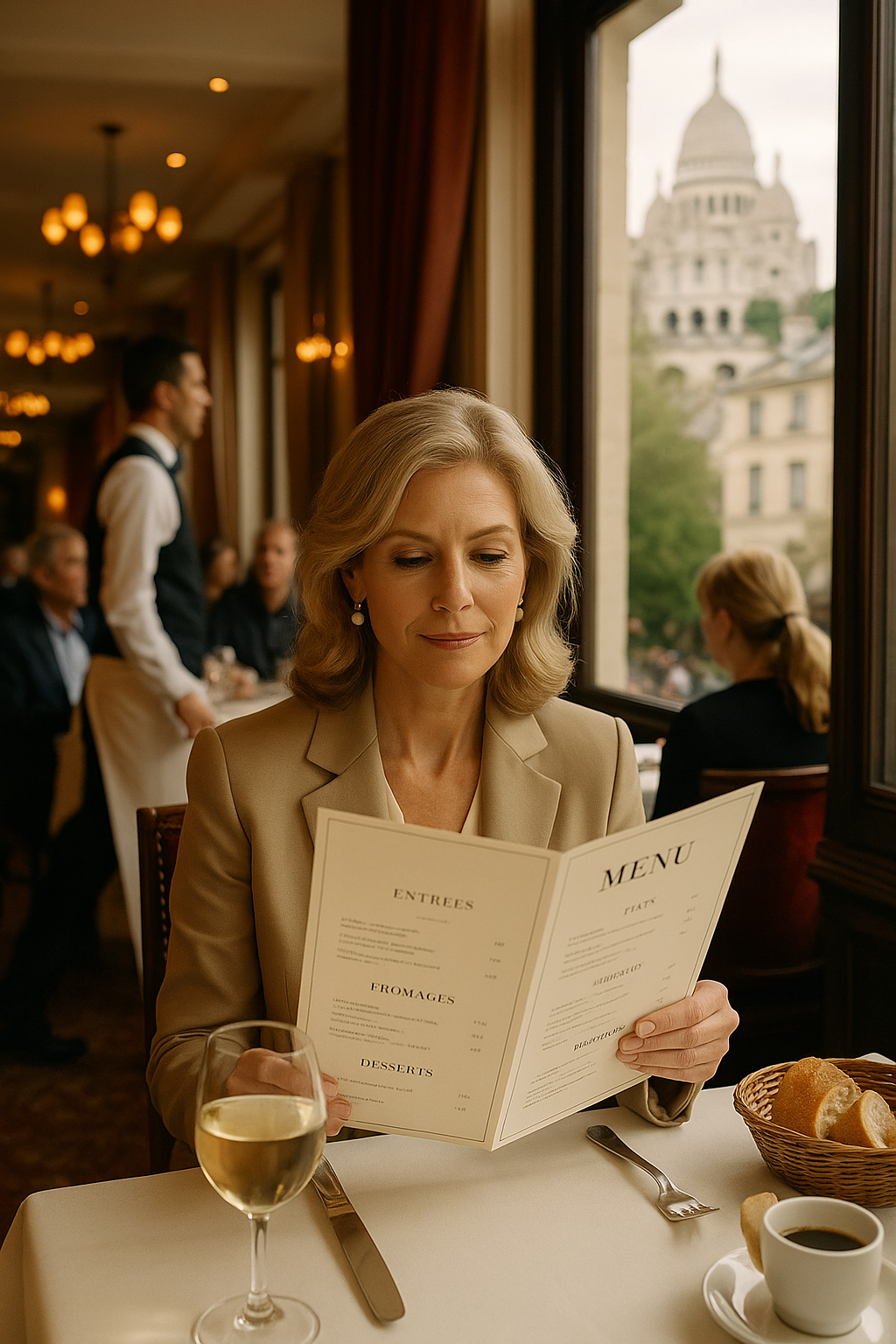
Struggling to understand French menus? Discover the essential words and phrases you need to decode menus, order confidently, and enjoy French dining culture. Perfect for travelers and learners.
🍽️ Introduction: When Dining in France Feels Like a Grammar Test
You sit down at a cozy French bistro, eager to enjoy your first real meal in France. The waiter hands you a beautifully printed menu full of elegant script, and then it hits you: You have no idea what you're reading.
You scan words like entrée, plat du jour, confit de canard, and tarte Tatin with growing confusion. Is an entrée a main dish or a starter? What exactly is fromage de chèvre, and why does terrine sound like something from a chemistry class?
If you’ve ever stared blankly at a French menu wondering what to order—or worse, accidentally ordered something you didn't expect—you’re not alone.
French menus are not just lists of food. They are cultural artifacts filled with tradition, regional nuance, and a particular kind of culinary poetry. But they can also feel like linguistic minefields for beginners.
The good news? With a little guidance, anyone can learn to navigate a French menu with confidence.
In this guide, we’ll walk you through the basics of reading a French menu, explain common (and confusing) terms, and offer tips on how to order like a local. Whether you're heading to Paris, Lyon, or your neighborhood French bistro, this article will make your next dining experience easier, tastier, and more enjoyable.
Bon appétit!
🍽️ 1. The Structure of a French Menu
French menus are organized differently than their American or British counterparts. Understanding the typical layout is the first step toward ordering confidently.
Common Sections:
L’Entrée: The starter or appetizer. This can be a soup, salad, or small plate.
Le Plat Principal: The main course. Usually meat or fish with a side.
Le Fromage: A cheese course. Offered before dessert.
Le Dessert: Sweets like tarts, cakes, mousse, or fruit.
Les Boissons: Drinks (includes wine, soft drinks, water).
Le Menu / La Formule: A fixed-price combination of courses (e.g., Entrée + Plat or Plat + Dessert).
Note: In France, entrée means starter, not main dish!
🍔 2. Menu Vocabulary Cheat Sheet
Here are essential French food terms you’ll see again and again:
Entrées (Starters):
Soupe à l'oignon – Onion soup (with cheese and crouton)
Terrine – Pâté-like cold meat dish
Salade de chèvre chaud – Warm goat cheese salad
Quiche lorraine – Savory egg and bacon tart
Plats Principaux (Main Courses):
Confit de canard – Duck cooked in its own fat
Steak frites – Steak and fries
Boeuf bourguignon – Beef stew in red wine sauce
Poisson du jour – Fish of the day
Fromages:
Brie, Camembert, Roquefort, Comté – Popular French cheeses
Desserts:
Crème brûlée – Burnt cream custard
Tarte Tatin – Upside-down caramelized apple tart
Mousse au chocolat – Chocolate mousse
Drinks:
Eau plate – Still water
Eau gazeuse – Sparkling water
Vin rouge/blanc/rosé – Red, white, rosé wine
🧑🍽️ 3. How to Order Like a Local
French dining is an experience, not a rush. Here’s how to get it right:
Wait to be seated. Don’t choose your own table unless invited.
Use polite phrases. Say Bonjour, S'il vous plaît, and Merci.
Ask questions. It’s fine to ask Qu’est-ce que c’est ?
Take your time. Meals often last 1.5 to 2 hours.
You must ask for the bill. Say L’addition, s’il vous plaît.
Bonus: Don’t expect substitutions. French chefs pride themselves on harmony of flavors.
🌽 4. Understanding Daily Specials
Le plat du jour = Dish of the day.
Many restaurants offer a daily special written on a chalkboard. This is usually fresh, seasonal, and often the best value.
Also look for:
Menu du jour – A fixed two- or three-course meal
Formule – Choose between starter + main or main + dessert for a set price
These menus are common at lunch and ideal for trying local specialties.
🍷 5. Wine and Water Basics
In France, water and wine are treated with ceremony:
Carafe d'eau – Free tap water. Always ask for this.
House wine (vin de la maison) is often excellent and affordable.
Wine is typically ordered by the glass (verre), half-liter (demi), or liter (litre).
Servers expect you to enjoy both food and wine together. Ask for pairings if unsure.
🎉 6. Dining Etiquette 101
Bread goes directly on the table, not on your plate
Use utensils for everything—even pizza
Keep your hands on (not under) the table
Say Santé ! when toasting
Don’t rush—coffee may be served long after dessert
Dining is a social affair. Enjoy the pacing and observe how locals interact.
🤠 7. What to Watch for as a Beginner
Confusing words:
Entrée = Starter (not main dish!)
Laitue = Lettuce, not milk
Rôti = Roasted (not raw)
Common surprises:
Salads can be large and rich
Duck is common and often delicious
Portions are smaller but richer
Ice cream is usually gourmet (glace artisanale)
When in doubt, politely ask your server. They’re usually happy to help.
❓ FAQs: French Menu Basics
Do I need to speak French to order in a restaurant?
Not necessarily, but it helps. Even knowing basic phrases makes a big difference.
What is the difference between menu and carte?
Carte means the full menu; menu refers to a fixed-price meal option.
Is tipping required?
Service is included, but rounding up or leaving €1-3 is appreciated.
Can I take leftovers home?
It’s not standard in France, but it’s becoming more accepted.
What if I have dietary restrictions?
Look for symbols (V for vegetarian) or ask: Est-ce que ce plat contient du gluten/lait/etc.?
🏫 Learn French with Polyglottist Language Academy
Whether you're preparing for a trip to France or simply love food and language, our French classes will help you:
Decode menus with ease
Pronounce dishes like a local
Understand dining etiquette
Build confidence in real-life conversations
We offer in-person classes in Berkeley, San Francisco, Oakland, and San Jose, plus flexible online options. Our small group sizes (3–6 students) mean personal attention and faster progress.
🎓 Start learning today and eat like a local tomorrow!
👉 Sign up for our French classes here
📖 Explore More from Our Blog
From Baguette To Bureaucracy: 10 Everyday French Words With Unexpected Origins
How To Think In French: 7 Mental Shifts That Will Change How You Learn
Menus don’t need to be intimidating. With a little vocabulary and cultural insight, every meal becomes a learning experience—and a pleasure.