
Normandy: From Camembert to the D-Day Beaches
Introduction: A Land of Soft Cheese and Hard History
Normandy is a place that demands to be experienced in contrasts. It is soft and strong, serene and stormy, timeless and steeped in the weight of history. Where else can you find rolling green hills studded with black-and-white cows producing some of the world’s most beloved cheeses—while just miles away, waves crash against beaches that once ran red with the sacrifice of thousands?
This is the paradox of Normandy, and it’s what makes the region so deeply compelling. It is France at its most pastoral and its most poignant. A place where every bite of Camembert or sip of Calvados holds centuries of tradition—and every gust of coastal wind carries stories of courage and liberation.
Travelers come for many reasons: to see the majestic Mont-Saint-Michel rising like a dream from the sea mist; to wander the half-timbered streets of Honfleur; to stand in silent awe at Omaha Beach. But what they discover is more than a checklist of landmarks. They find a living, breathing region where culture and memory entwine, where beauty is both comforting and charged.
Normandy isn’t just a chapter in a guidebook. It’s an invitation: to slow down, to taste deeply, to reflect, and to remember.
It’s also a region that resists simplification. While Paris dazzles with urban energy and Provence seduces with sun-drenched vineyards, Normandy works its magic in subtler, more emotional ways. It whispers instead of shouts. It invites you to step off the tourist treadmill and linger in places where stories linger—on a cobblestone alley in Rouen, in the cool hush of a medieval church, or among the windswept dunes that once bore the weight of history.
The food is rich but rustic, the landscapes dramatic yet peaceful. Here, a wedge of cheese becomes a cultural artifact. A glass of cider becomes a lesson in terroir. Even the smallest village has layers of meaning waiting to be discovered—from Viking roots and medieval strongholds to Impressionist inspiration and wartime resilience.
What makes Normandy unforgettable is its emotional range. It’s a place that feeds both the senses and the soul. One minute you’re watching the tide rush across the sands at Mont-Saint-Michel like a living creature, the next you’re contemplating the serenity of a military cemetery. Normandy doesn’t curate its experiences to be tidy—it allows them to be fully felt. It asks you to be present, to taste, to walk, and to listen.
Whether you’re a food lover, a history buff, an art enthusiast, or a reflective traveler seeking depth, Normandy gives you space to encounter France on your own terms. This is a region where the land speaks—and what it says is both nourishing and profound.
In this article, we’ll travel through Normandy’s many faces. We’ll taste its cheeses and ciders, walk through medieval towns and hedgerow-lined fields, visit the dramatic cliffs of Étretat, and pay our respects at the hauntingly peaceful American cemetery. From Camembert to the D-Day beaches, we’ll explore how Normandy remains one of France’s most unforgettable regions.
1. The Cheese That Built a Reputation: Camembert and Beyond
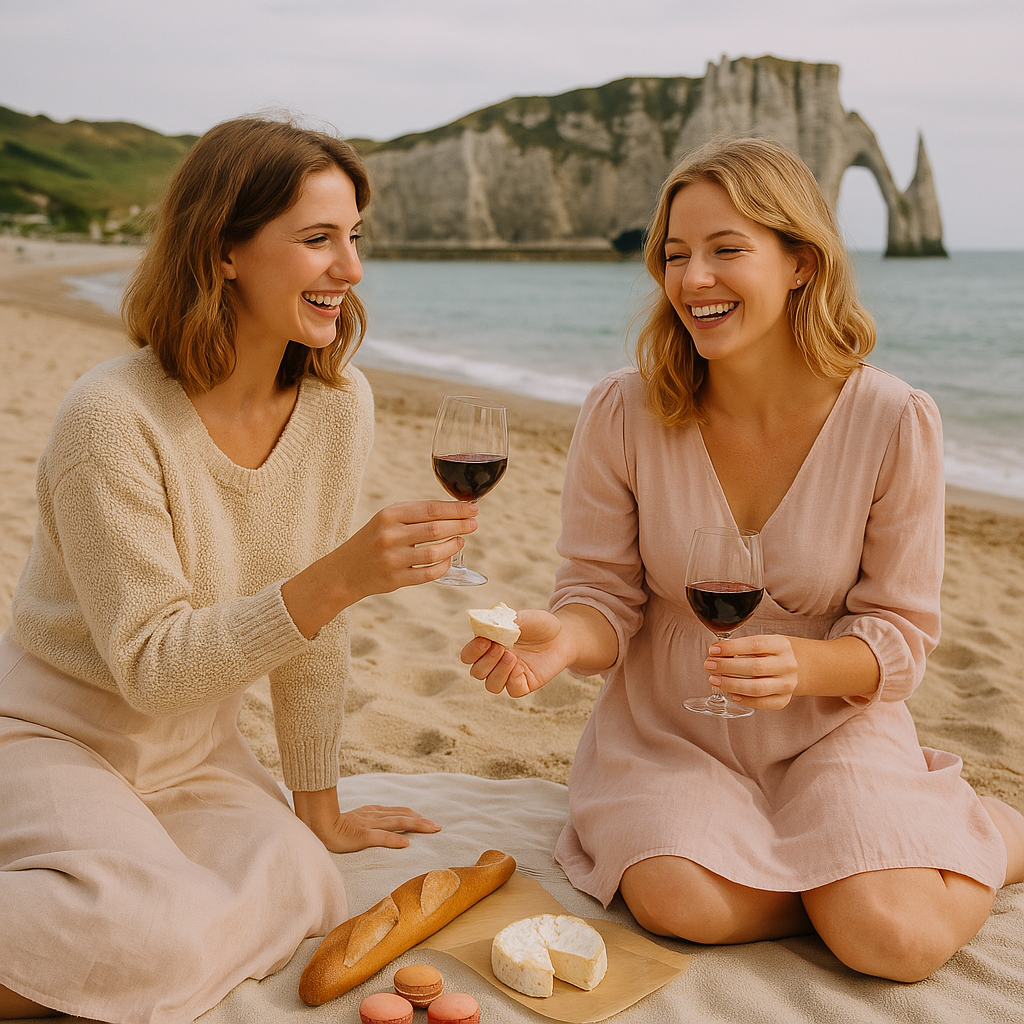
Normandy is synonymous with cheese, and no cheese is more iconic than Camembert. Invented in the late 18th century by Marie Harel, this soft, bloomy-rind cheese is a national treasure. When you bite into a perfectly ripened Camembert, you're tasting the terroir—the lush pastures, salty sea breezes, and centuries of craftsmanship.
But Camembert is only the beginning. The region is home to three of France’s 46 AOP (Appellation d'Origine Protégée) cheeses:
Camembert de Normandie: Made from raw milk and hand-ladled, it’s the real deal (not to be confused with supermarket imitators).
Pont-l'Évêque: A square-shaped, washed-rind cheese with a creamy center and pungent aroma.
Livarot: Known as "the colonel" due to its five bands of reed wrapping, this orange-hued cheese has a bold flavor that pairs beautifully with cider.
You can visit cheese farms, attend festivals (like the Fête du Fromage in Vimoutiers), and even tour the Camembert Museum to learn how this humble product became a symbol of French heritage.
2. A Taste of the Land: Apples, Cider, and Calvados
Normandy is apple country. Drive through the Pays d’Auge in spring, and you’ll see orchards in full blossom; visit in autumn, and the scent of ripe fruit lingers in the air.
From these apples come some of the region’s most celebrated drinks:
Cidre brut: A dry, sparkling apple cider that pairs wonderfully with galettes or cheese.
Poiré: A lighter, more delicate pear-based cousin of cider.
Calvados: A potent apple brandy aged in oak barrels, perfect for sipping or flambéing your crêpes.
Many farms offer tastings along the Route du Cidre, a scenic trail through charming villages like Beuvron-en-Auge and Cambremer. You can watch the cider-making process, meet local producers, and of course, bring home a bottle or three.
3. The Beauty of the Coast: Étretat, Honfleur, and Beyond
Normandy’s coastline is as varied as its history. In the north, the white cliffs of Étretat rise like cathedral spires above the sea. Artists like Monet and Courbet were captivated by their dramatic forms, and you will be too.
Farther south lies Honfleur, a postcard-perfect harbor town with slate-roofed houses reflected in the still waters. It’s a place to stroll, to sketch, to sip café crème and watch the world go by.
Other coastal gems include:
Deauville and Trouville: Sister resort towns known for beaches, boardwalks, and Belle Époque charm.
Barfleur: A tiny fishing port named one of the most beautiful villages in France.
Granville: A fortified town with a rich maritime history and sweeping ocean views.
Whether you’re into surfing, sailing, or simply breathing salty air, Normandy’s coast offers beauty and tranquility in equal measure.
4. A Walk Through Time: Medieval Towns and Norman Heritage
History in Normandy doesn’t begin with the 20th century. The region has deep medieval roots, evident in its towns, abbeys, and castles.
Highlights include:
Bayeux: Home to the world-famous Bayeux Tapestry, which tells the story of the Norman conquest of England in 1066.
Rouen: Where Joan of Arc was tried and burned at the stake. Its Gothic cathedral inspired dozens of Monet’s paintings.
Domfront: A hilltop town with a ruined fortress and cobblestone streets.
And of course, there is Mont-Saint-Michel, a gravity-defying abbey perched on a tidal island. It’s one of France’s most visited sites, and for good reason. Arrive early or stay overnight to experience its quiet majesty without the crowds.
5. D-Day Beaches: Remembering Sacrifice and Liberation
No visit to Normandy is complete without honoring its role in World War II. On June 6, 1944, Allied forces landed on five beaches—Utah, Omaha, Gold, Juno, and Sword—in the largest amphibious invasion in history.
Today, these beaches are places of quiet reflection. The Normandy American Cemetery at Colleville-sur-Mer, with its rows of white crosses, is a deeply moving site. Nearby museums like the Mémorial de Caen and the Overlord Museumprovide context and personal stories.
Key stops include:
Pointe du Hoc: Cliffs scaled by U.S. Rangers under heavy fire.
Arromanches: Site of the ingenious floating Mulberry harbors.
Pegasus Bridge: Seized in the first moments of the invasion by British airborne troops.
These aren’t just historic sites—they are reminders of courage, collaboration, and the cost of freedom.
Conclusion: Normandy Is More Than a Region—It’s an Experience
Normandy invites you to slow down, taste deeply, and walk with reverence. Its cheeses and ciders nourish the body. Its villages and coastlines feed the soul. Its battlefields and memorials demand that we remember.
It is a place where history isn’t just preserved—it is lived. Where beauty and bravery share the same fields. Where you can spend a morning in a fromagerie and an afternoon at Omaha Beach, and somehow both feel equally sacred.
So come for the Camembert. Stay for the stories. And leave with a heart full of both flavor and remembrance.
Want to Connect Deeper with French Culture?
At Polyglottist Language Academy, we believe language is the gateway to experiences like Normandy—whether you're wandering medieval towns, conversing with a cheesemaker, or reading plaques at D-Day memorials. Our immersive, practical classes help you speak with confidence and cultural depth.
Further Reading on the Blog:
In-Person French Classes In Berkeley – Small Groups, Expert Instructors
French False Friends: Common Grammar Mistakes & How To Avoid Them
How To Soften Your Speech In French Using The Conditional Tense
How To Form And Use The French Past Tenses: Passé Composé Vs. Imparfait
Mastering The Passive Voice In French: Forming And Using It Correctly