
The Age of Discoveries: How Portugal Changed World History
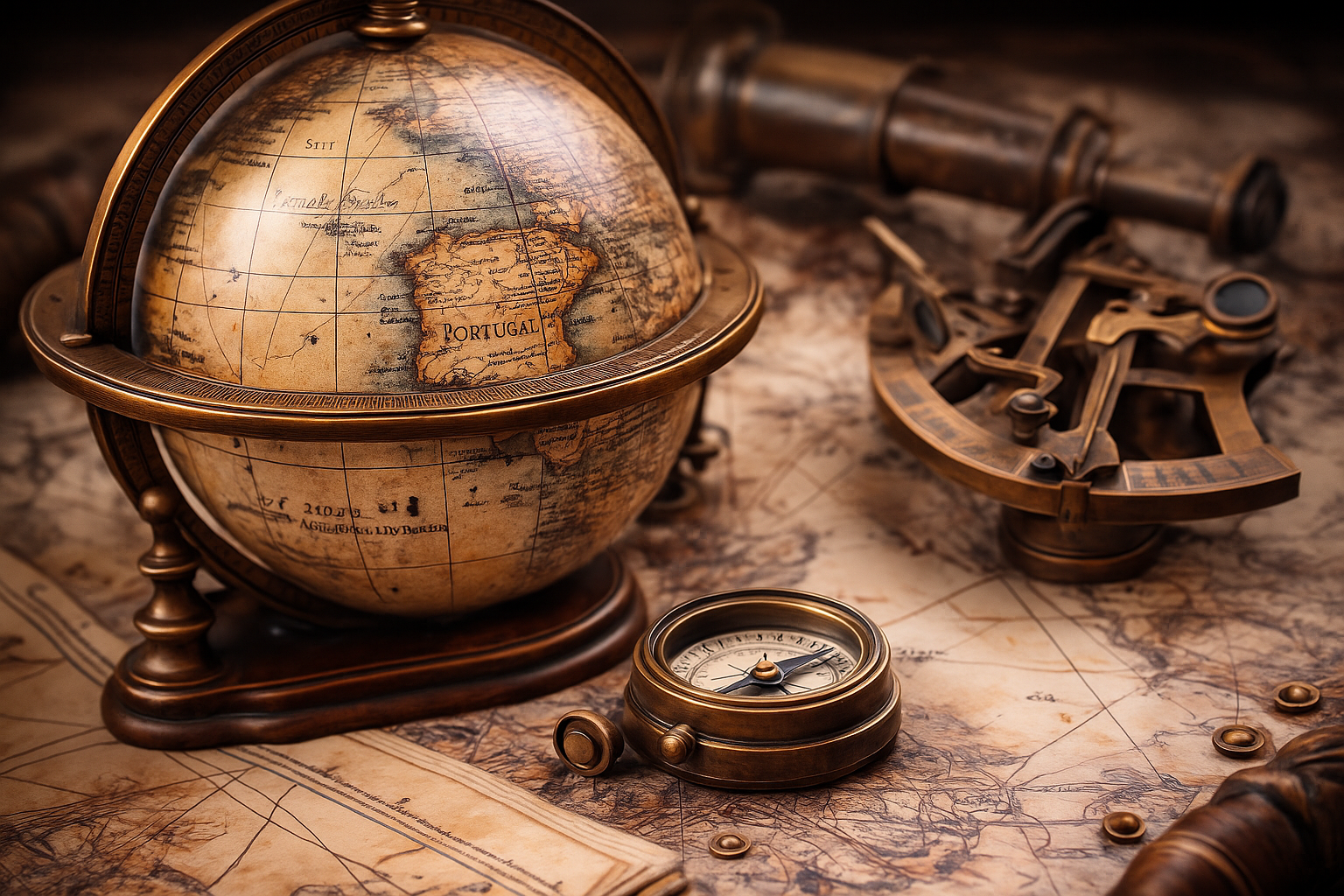
The story of how a small Atlantic nation perched on the western edge of Europe reshaped global trade, reimagined geography, expanded scientific knowledge, and connected continents that had previously known nothing of one another begins with a single, astonishing truth: Portugal, a country smaller than many modern U.S. states and far poorer than the great empires of its time, somehow became the launchpad of one of the most transformative periods in human history—the Age of Discoveries, an era that rewrote the map of the world, redrew political boundaries, and created cultural encounters still felt today in languages, cuisines, religions, and global identity itself. Before Spain seized the spotlight with the voyages of Columbus, before the British and the Dutch built their colonial networks, and long before globalization became a buzzword, Portugal had already set the world in motion, sailing into the unknown with a mix of bold ambition, fearlessness, technological innovation, and relentless curiosity.
What Portugal achieved between the 15th and 16th centuries is nothing short of extraordinary. Its explorers charted empty spaces on European maps, created sea routes that bypassed empires and monopolies, and bridged continents that had never met. They crossed oceans that scholars believed impossible to navigate, documented winds and currents that mariners still use today, and gathered knowledge that helped usher in the modern era. But beyond the tales of bravery and adventure lies a more profound question: Why Portugal? Why did such a small nation, with limited resources and a population barely over a million people, become the pioneer of global exploration?
The answer lies in a combination of geography, political will, scientific innovation, and a fiercely maritime culture that shaped Portugal’s identity long before the world paid attention. As the westernmost point of continental Europe, Portugal faced the Atlantic head-on; its fishermen and merchants had navigated turbulent seas for centuries, honing skills that would become essential to oceanic exploration. Its rulers—particularly Prince Henry the Navigator—recognized that knowledge was power, funding nautical schools, mapmaking centers, and expeditions that pushed farther and farther down the African coast. Its shipwrights perfected vessels capable of long ocean voyages, like the caravel and later the nau, which could withstand currents and cross entire oceans. And its explorers possessed something that cannot be quantified but is essential to every great historical leap: an openness to risk, a readiness to fail, and a willingness to step into the unknown.
Yet the Age of Discoveries is not just a triumphant story—it is complex, contradictory, and deeply consequential. Portugal’s voyages led to trade, cultural exchange, scientific advancement, and global connection, but they also played roles in colonization, conflict, and the transatlantic slave trade. Understanding the Age of Discoveries requires recognizing both its innovations and its shadows, its achievements and its costs. What is undeniable, however, is the magnitude of its impact: it set in motion the globalization of the world.
This article will take you through the fascinating journey of how Portugal changed world history—from the earliest Atlantic explorations to Vasco da Gama’s bold voyage to India; from the rise of a global trading empire to linguistic and cultural legacies visible across continents today. By the end, you will understand why Portuguese is spoken in countries across Africa, Asia, and South America; why spices from India transformed European cuisines; why new maps, new sciences, and new trade routes reshaped economic power; and why the Age of Discoveries remains one of the most influential chapters in the human story.
Let’s begin with the roots of Portugal’s unprecedented maritime ambition.
1. THE WORLD BEFORE PORTUGAL SET SAIL
To understand how revolutionary Portugal’s accomplishments were, we need to look briefly at the global landscape before the 1400s.
1.1 Europe’s Limited Geography
Europeans believed the world was far smaller and far more dangerous than it truly was. Much of Africa was unknown. Asia was reachable only through dangerous overland routes controlled by rival empires. The Atlantic Ocean was considered terrifying—some believed monsters lived beyond the horizon.
1.2 Trade Was Controlled by Powerful Empires
The Islamic empires—Ottomans, Mamluks, and others—controlled the spice routes, silk routes, and luxury goods trade. Europe depended on them for pepper, cinnamon, silk, and other prized imports.
Portugal saw an opportunity: reach India and Asia without crossing land, without negotiating with middlemen.
1.3 New Curiosity About Science
Advances in astronomy, mathematics, and navigation were emerging. Europeans began to question old assumptions and search for new knowledge.
Portugal would be the first to act on these new ideas.
2. PORTUGAL’S UNIQUE ADVANTAGES
Why Portugal, and not France, or England, or Venice?
2.1 Geography: The Gateway to the Atlantic
With a long coastline and strong winds blowing outward, Portugal was perfectly positioned for Atlantic exploration.
2.2 A Strong Maritime Tradition
Portuguese fishermen had long sailed far into the Atlantic to catch cod, learning currents and mastering rough seas.
2.3 Political Stability
Portugal had stable leadership after the 1383–1385 Crisis and a strategic alliance with England that later helped secure trade and protection.
2.4 Prince Henry the Navigator
The inflection point of Portuguese exploration.
Henry established:
A school for navigation at Sagres
A center for cartography
Shipbuilding innovations
Systematic exploration of Africa’s coast
He personally sponsored over 40 expeditions.
Henry did not sail, but he created the conditions that made exploration possible.
3. TECHNOLOGICAL BREAKTHROUGHS THAT MADE IT ALL POSSIBLE
Portugal’s success did not come from bravery alone—it relied heavily on scientific innovation.
3.1 The Caravel
Light, fast, and maneuverable. Able to sail against the wind using lateen sails. Ideal for exploration.
3.2 The Nau and Carrack
Larger ships developed later for long-distance India and Atlantic voyages.
3.3 Improved Navigation Tools
Astrolabe
Quadrant
Cross-staff
Wind charts
Celestial navigation techniques
3.4 Breakthroughs in Cartography
Portuguese mapmakers were among the best in the world, creating accurate charts that other nations desperately wanted.
4. THE EARLY VOYAGES (1415–1488)
4.1 Conquest of Ceuta (1415)
The symbolic beginning of the Age of Discoveries. Portugal conquered the North African port of Ceuta to control trade.
4.2 Exploration of West Africa
Expeditions sailed farther each year:
Madeira (1419–20)
Azores (1427)
Cape Verde Islands
Senegal and Gambia
Sierra Leone
Gulf of Guinea
These voyages mapped Africa’s previously unknown coastline.
4.3 Reaching the Gold Trade
Portugal wanted direct access to West Africa’s gold. They established trading posts known as feitorias, creating early networks.
4.4 Bartolomeu Dias (1488): Rounding the Cape of Good Hope
Dias achieved what many believed impossible:
He proved that Africa could be circumnavigated, opening the sea route to Asia.
This was the moment the modern world began taking shape.
5. VASCO DA GAMA AND THE SEA ROUTE TO INDIA (1497–1499)
This was the voyage that changed everything.
5.1 Setting Sail Across the Unknown
Da Gama’s fleet left Lisbon with a bold mission: reach India by sea.
5.2 Mastering the Volta do Mar
Using Atlantic winds, they mastered the technique of sailing west outward before turning toward Africa.
5.3 Rounding the Cape
Da Gama crossed rough waters that had defeated many, continuing along Africa’s east coast.
5.4 Reaching Calicut
In May 1498, Vasco da Gama arrived in India.
Europe had finally reached Asia by sea.
5.5 Global Consequences
This moment:
Broke the Islamic monopoly on spice trade
Shifted world power toward Europe
Made Portugal one of the wealthiest nations in the world
Began true global interconnectivity
6. PORTUGAL’S WORLDWIDE EMPIRE
By 1500, Portugal was building an empire stretching across continents.
6.1 Brazil (1500)
Pedro Álvares Cabral reached Brazil, claiming it for Portugal.
6.2 Africa
Portugal established multiple coastal outposts, including:
Angola
Mozambique
Guinea-Bissau
Cape Verde
São Tomé and Príncipe
6.3 India
Key possessions included:
Goa
Diu
Daman
Goa became the capital of the Portuguese empire in Asia.
6.4 Southeast Asia
Portugal reached:
Malacca
Timor
Macau
6.5 Japan
Portuguese traders were the first Europeans to reach Japan (1543), influencing everything from language (tempura, pan/pão) to weaponry.
Portugal’s empire was maritime, not territorial—focused on ports, trade, and sea routes.
7. CULTURAL AND ECONOMIC IMPACTS OF PORTUGAL’S DISCOVERIES
7.1 Trade Networks That Rewired Global Economy
Spices, silk, porcelain, sugar, gold, ivory, and slaves flowed through Portuguese hands.
Europe developed new tastes and new industries.
7.2 Cultural Exchanges
Portuguese influence reached:
Africa
Brazil
India
Sri Lanka
Japan
China
Southeast Asia
They brought:
Christianity
new foods
new words
new technologies
7.3 The Birth of Globalization
For the first time in human history:
✔ Europe, Africa, Asia, and the Americas were connected
✔ Goods, plants, animals, and ideas traveled between continents
✔ Navigation became a scientific field
✔ Empires began to think globally
Portugal helped create the world system we live in today.
8. THE COMPLEX LEGACY: INNOVATION AND CONSEQUENCES
The Age of Discoveries brought progress—but also suffering.
8.1 The Transatlantic Slave Trade
Portugal played a significant role, transporting millions of enslaved Africans to the Americas.
8.2 Colonization and Cultural Imposition
European rule imposed new languages, religions, and cultural systems.
8.3 Knowledge, Science, and Global Exchange
At the same time, knowledge expanded dramatically:
Botany
Cartography
Astronomy
Medicine
The modern scientific worldview emerged, shaped by global contact.
Understanding Portugal’s legacy means recognizing both the achievements and the costs.
9. HOW THE AGE OF DISCOVERIES STILL SHAPES THE WORLD TODAY
9.1 Portuguese as a Global Language
Over 260 million people speak Portuguese today across:
Brazil
Angola
Mozambique
Cape Verde
Guinea-Bissau
São Tomé
Timor-Leste
Macau communities
9.2 Global Cuisine
Foods spread globally:
chili peppers
cassava
sugarcane
citrus fruits
African and Asian spices
9.3 Maritime Science
Modern navigation is built on Portuguese discoveries.
9.4 International Trade
The global supply chain began with maritime exploration.
9.5 Cultural Syncretism
Music, religion, architecture, and language blended across continents.
The world as we know it would be unrecognizable without Portugal’s voyages.
FAQ: The Age of Discoveries
1. Why was Portugal the first European country to explore the oceans?
Because of geography, maritime culture, political stability, and Prince Henry’s leadership.
2. What was Portugal searching for during the Age of Discoveries?
Gold, spices, trade routes, allies, and scientific knowledge.
3. Did Portugal really “discover” countries?
Portugal entered regions already inhabited and already known locally, but it introduced them to global networks.
4. Who was the most important Portuguese explorer?
Vasco da Gama is often considered the most influential due to his voyage to India.
5. What were Portugal’s main colonies?
Brazil, Angola, Mozambique, Goa, Macau, Cape Verde, and others.
6. How did the Age of Discoveries change Europe?
It shifted trade, increased wealth, sparked scientific revolutions, and shaped political rivalry.
7. What negative consequences resulted from the discoveries?
Slavery, colonization, violence, and resource exploitation.
8. Is Portuguese still important today?
Yes—it’s one of the world’s major languages with rapidly growing populations.
Learn Portuguese and Explore World History with Polyglottist Language Academy
If this article inspired you to dive deeper into Portuguese language and culture, there’s no better place to start than Polyglottist Language Academy.
We offer:
✔ Online Portuguese classes
✔ European Portuguese option
✔ Beginner to advanced levels
✔ Cultural workshops on history, travel, and cuisine
✔ Small groups and private lessons
Whether you’re fascinated by the Age of Discoveries, planning a trip to Lisbon or Rio, or simply love learning languages, we invite you to join our growing global community.
👉 Sign up today at Polyglottist Language Academy and start learning Portuguese!
Check Out These Other Articles on Our Blog