
What’s the Difference Between Portuguese and Brazilian Coffee Culture?
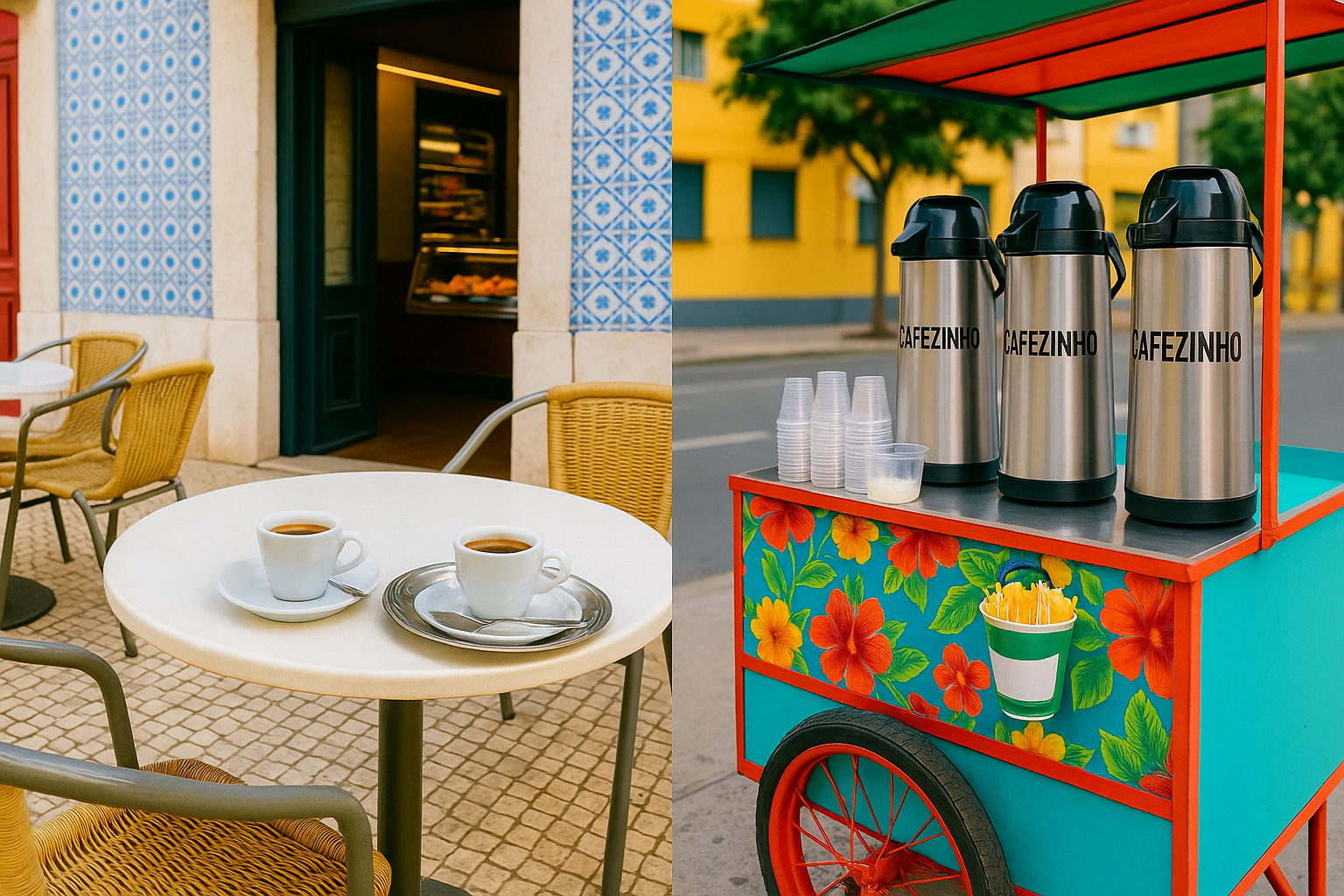
Coffee is not simply a beverage; it is a thread that weaves its way through the history, daily rhythms, and cultural identities of nations. Few countries demonstrate this more vividly than Portugal and Brazil, two Lusophone worlds separated by an ocean but connected by centuries of history—and by coffee. To understand Portuguese and Brazilian culture is to understand how coffee is grown, served, and shared. The contrast between Portugal’s structured espresso rituals and Brazil’s warm cafézinho hospitality is more than just culinary—it is a lens through which we can glimpse their very souls.
Coffee in Portugal is about rhythm, order, and a subtle kind of sociality. It punctuates the day, offering moments of pause without breaking momentum. In Brazil, coffee is about generosity, sweetness, and the joy of gathering. It fills homes, offices, and hearts. Both cultures have elevated coffee far beyond its role as a stimulant; in each place, coffee is identity, ritual, and expression.
This article will explore in depth the fascinating contrasts and overlaps between Portuguese and Brazilian coffee culture. We’ll travel through history, peek inside Lisbon pastelarias and São Paulo offices, and uncover the rituals that give coffee meaning in both countries. By the end, you’ll not only understand how two Portuguese-speaking nations drink their coffee differently—you’ll see how coffee itself tells the story of who they are.
1. The Historical Roots of Portuguese and Brazilian Coffee
Coffee in Portugal: A European Gateway
Coffee first appeared in Portugal in the 18th century, brought from the Ottoman Empire and from colonies like Mozambique. Lisbon, already a hub of global trade, quickly embraced the new drink. Cafés sprang up as intellectual and political centers, much like in Paris and London. Writers, poets, and revolutionaries gathered in Lisbon’s coffeehouses, sipping bitter espressos and debating the fate of the nation.
One famous example is A Brasileira, the legendary café in Lisbon’s Chiado district, where intellectuals like Fernando Pessoa wrote and mused. Coffee in Portugal was always tied to cosmopolitan European café culture, representing sophistication, reflection, and social connection.
Coffee in Brazil: From Colony to Powerhouse
In Brazil, coffee took root literally and metaphorically. Introduced by the Portuguese in the early 18th century, coffee plantations quickly spread, especially in the fertile soils of Rio de Janeiro, São Paulo, and Minas Gerais. By the 19th century, Brazil had become the world’s largest coffee producer—a title it still holds today. Coffee wealth shaped Brazil’s economy, politics, and even its urban development.
But coffee was not only an export; it became the daily drink of the people. Abundant and accessible, it was democratized early on. Unlike in Europe, where coffee was initially a luxury, in Brazil it became a drink for everyone, and with it, a symbol of hospitality.
2. Coffee in Portugal: Precision, Ritual, and the Café
The Espresso Nation
In Portugal, the espresso rules. Known as a bica in Lisbon and a cimbalino in Porto, it is small, strong, and consumed quickly. Most people take their coffee standing at the counter. A Portuguese café is not the kind of place where you linger for hours with a laptop; it is a place of ritual efficiency.
Coffee and the Pastelaria
The pastelaria is Portugal’s temple of coffee and pastry. Whether in Lisbon, Porto, or a village in the Algarve, locals gather for their daily fix accompanied by a pastel de nata, bolo de arroz, or another sweet. Coffee is rarely drunk alone—it is part of a pair, a moment of indulgence that balances the bitterness of espresso with the sweetness of pastry.
A Structured Rhythm
Coffee in Portugal structures the day. A morning bica jumpstarts the commute. A mid-morning break calls for another. Lunch is never complete without an espresso to close the meal. And in the evening, a café descafeinado (decaf) may be taken after dinner. The ritual is ingrained, predictable, and deeply cultural.
3. Coffee in Brazil: Sweetness, Warmth, and Abundance
Cafézinho: More Than a Drink
In Brazil, the word cafézinho carries warmth beyond its diminutive form. A cafézinho is not just “a little coffee”—it is an act of welcome. Offering someone a cafézinho is almost obligatory when they visit your home or office. To refuse is to reject the invitation of hospitality.
How It’s Prepared
Traditional Brazilian coffee is brewed in a cloth filter (coador de pano), creating a smooth, aromatic drink. Sugar is often added directly during brewing, so sweetness becomes inseparable from flavor. Thermoses filled with hot coffee are a staple in homes and workplaces.
Coffee at Work and at Home
Unlike in Portugal, where coffee is strongly tied to cafés, in Brazil it thrives in domestic and professional spaces. At offices, it’s common to pass around a pot of coffee mid-morning or afternoon. At home, no visit is complete without the offering of a steaming cafézinho. Coffee is democratic, omnipresent, and shared.
4. Key Differences in Taste and Style
Portugal: Bitter, strong, concentrated; espresso dominates.
Brazil: Smooth, sweet, often brewed with sugar; cafézinho is king.
The Portuguese palate emphasizes intensity, clarity, and structure. The Brazilian palate embraces warmth, sweetness, and accessibility. These differences reveal broader cultural contrasts: discipline and precision on one side, openness and generosity on the other.
5. Social Rituals: Quick vs. Lingering
In Portugal, coffee is about quick encounters. You stop at the café, exchange a few words with the barista or neighbor, and move on. It is social but efficient.
In Brazil, coffee slows life down. It is the start of conversation, laughter, and connection. A cafézinho might accompany hours of chatting with friends or family. Refills are plentiful, and the coffee itself is just the backdrop to human warmth.
6. Regional Variations
In Portugal
Lisbon: Known for the bica, often paired with pastel de nata.
Porto: Locals order a cimbalino; coffee culture here is tied to traditional cafés.
Algarve: Tourist influence brings cappuccinos and lattes, but locals still stick to espresso.
In Brazil
São Paulo: Urban coffee culture blends traditional cafézinho with modern specialty cafés.
Minas Gerais: Known for coffee farms and high-quality beans, often served with regional cheese and sweets.
Rio de Janeiro: Beachside kiosks serve sweet cafézinho alongside pão de queijo.
7. How to Order Coffee in Portugal vs. Brazil
In Portugal:
Uma bica → An espresso in Lisbon.
Um cimbalino → An espresso in Porto.
Um garoto → Espresso with a splash of milk.
Um galão → Similar to a latte, mostly milk.
Um abatanado → A long espresso (like Americano).
In Brazil:
Um cafézinho → Small, sweetened black coffee.
Um pingado → Coffee with a dash of milk, popular at bakeries.
Café com leite → Coffee with hot milk, served at breakfast.
Um expresso → An espresso, increasingly common in cities.
8. Modern Influences: Specialty Coffee
Both countries are seeing the rise of third-wave coffee shops. In Lisbon, younger generations flock to cafés serving flat whites and cold brew. In São Paulo, specialty roasters emphasize Brazil’s world-class beans, often single-origin and prepared with V60 or Aeropress.
Yet tradition holds strong. Despite trends, most Portuguese still order a bica, and most Brazilians still start conversations with a cafézinho.
9. Coffee as Identity
Portugal’s coffee is a reminder of its European ties—structured, precise, efficient.
Brazil’s coffee reflects its abundance and warmth—sweet, shared, and generous.
Together, they show how one plant can create two very different cultural expressions.
FAQs
1. Why is Brazilian coffee sweeter than Portuguese coffee?
Because sugar is often added during brewing, making sweetness integral to flavor.
2. What’s the difference between a bica and a cafézinho?
A bica is a strong Portuguese espresso; a cafézinho is a small, sweetened Brazilian coffee offered as hospitality.
3. Is espresso common in Brazil?
Yes, especially in urban cafés, though filtered coffee remains dominant.
4. Why do Portuguese drink coffee after meals?
It aids digestion and marks the formal end of a meal.
5. Do Brazilians drink coffee at night?
Yes—cafézinho is offered at all hours, even after dinner.
6. Where do people usually drink coffee in Portugal?
At cafés and pastelarias.
7. Where do people usually drink coffee in Brazil?
At home, in workplaces, and also in cafés.
8. Are specialty coffee shops changing traditions?
Yes, but slowly. Traditional bicas and cafézinhos still dominate daily life.
Conclusion: Two Coffees, Two Worlds
Portuguese and Brazilian coffee cultures show how one shared language can split into two very different rituals. Portugal’s small, structured bica reflects rhythm and precision. Brazil’s sweet, abundant cafézinho reflects warmth and hospitality. To taste coffee in Lisbon or Rio is to taste culture itself.
At Polyglottist Language Academy, we don’t just teach you the grammar of Portuguese—we immerse you in the culture, whether European or Brazilian. Our classes help you not only order coffee correctly but also understand what it means when someone offers you a bica or a cafézinho. Sign up today and let language open doors to both sides of the Lusophone world.
💡 Enjoy this article? Explore more on our blog: